
Research Scientist at @GoogleResearch.
Zürich, Switzerland
Joined July 2009
- Tweets76
- Following94
- Followers503
- Likes103



Matthias Minderer retweeted

Looking for a small or medium sized VLM? PaliGemma 2 spans more than 150x of compute!
Not sure yet if you want to invest the time 🪄finetuning🪄 on your data? Give it a try with our ready-to-use "mix" checkpoints:
🤗 huggingface.co/blog/paligemm…
🎤 developers.googleblog.com/en…

Matthias Minderer retweeted

🔥Excited to introduce RINS - a technique that boosts model performance by recursively applying early layers during inference without increasing model size or training compute flops! Not only does it significantly improve LMs, but also multimodal systems like SigLIP.
(1/N)

Matthias Minderer retweeted

I always dreamed of a model that simultaneously
1. optimizes NLL of raw pixel data,
2. generates competitive high-res. natural images,
3. is practical.
But it seemed too good to be true. Until today!
Our new JetFormer model (arxiv.org/abs/2411.19722) ticks on all of these.
🧵


Have you ever wondered how to train an autoregressive generative transformer on text and raw pixels, without a pretrained visual tokenizer (e.g. VQ-VAE)?
We have been pondering this during summer and developed a new model: JetFormer 🌊🤖
arxiv.org/abs/2411.19722
A thread 👇
1/

Matthias Minderer retweeted
How is next-token prediction capable of such intelligent behavior? I’m very excited to share our work, where we study the fractal structure of language. TLDR: thinking of next-token prediction in language as “word statistics” is a big oversimplification!
arxiv.org/abs/2402.01825

Matthias Minderer retweeted

Excited to share that @Google's OWLv2 model is now available in 🤗 Transformers! This model is one of the strongest zero-shot object detection models out there, improving upon OWL-ViT v1 which was released last year🔥
How? By self-training on web-scale data of over 1B examples⬇️

Matthias Minderer retweeted

I'll give a talk on object-centric models for video and 3D at the @ICCVConference Workshop on Large-scale Video Object Segmentation!
Today @ 3:30pm (Room S02)
Website: youtube-vos.org/challenge/20…
I'll cover DORSal (see below) & recent work from our team on structured video models.


Excited to announce DORSal: a 3D structured diffusion model for generation and object-level editing of 3D scenes.
DORSal is “geometry-free” and learns 3D scene structure purely from data – no expensive volume rendering!
🖥️ sjoerdvansteenkiste.com/dors…
📜 arxiv.org/abs/2306.08068
1/6
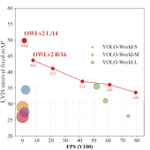
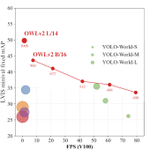
We just open-sourced OWL-ViT v2, our improved open-vocabulary object detector that uses self-training to reach >40% zero-shot LVIS APr. Check out the paper, code, and pretrained checkpoints: arxiv.org/abs/2306.09683 github.com/google-research/s…. With @agritsenko and @neilhoulsby.

Check out NaViT, a Vision Transformer that processes images at their native resolution. Apart from improving efficiency and performance of image-level tasks, pretraining at native resolution also produces better backbones for localization tasks like object detection.


Patch n' Pack: NaViT, a Vision Transformer for any Aspect Ratio and Resolution
paper page: huggingface.co/papers/2307.0…
The ubiquitous and demonstrably suboptimal choice of resizing images to a fixed resolution before processing them with computer vision models has not yet been successfully challenged. However, models such as the Vision Transformer (ViT) offer flexible sequence-based modeling, and hence varying input sequence lengths. We take advantage of this with NaViT (Native Resolution ViT) which uses sequence packing during training to process inputs of arbitrary resolutions and aspect ratios. Alongside flexible model usage, we demonstrate improved training efficiency for large-scale supervised and contrastive image-text pretraining. NaViT can be efficiently transferred to standard tasks such as image and video classification, object detection, and semantic segmentation and leads to improved results on robustness and fairness benchmarks. At inference time, the input resolution flexibility can be used to smoothly navigate the test-time cost-performance trade-off. We believe that NaViT marks a departure from the standard, CNN-designed, input and modelling pipeline used by most computer vision models, and represents a promising direction for ViTs.

Matthias Minderer retweeted

Patch n' Pack: NaViT, a Vision Transformer for any Aspect Ratio and Resolution
paper page: huggingface.co/papers/2307.0…
The ubiquitous and demonstrably suboptimal choice of resizing images to a fixed resolution before processing them with computer vision models has not yet been successfully challenged. However, models such as the Vision Transformer (ViT) offer flexible sequence-based modeling, and hence varying input sequence lengths. We take advantage of this with NaViT (Native Resolution ViT) which uses sequence packing during training to process inputs of arbitrary resolutions and aspect ratios. Alongside flexible model usage, we demonstrate improved training efficiency for large-scale supervised and contrastive image-text pretraining. NaViT can be efficiently transferred to standard tasks such as image and video classification, object detection, and semantic segmentation and leads to improved results on robustness and fairness benchmarks. At inference time, the input resolution flexibility can be used to smoothly navigate the test-time cost-performance trade-off. We believe that NaViT marks a departure from the standard, CNN-designed, input and modelling pipeline used by most computer vision models, and represents a promising direction for ViTs.
Matthias Minderer retweeted

Scaling Open-Vocabulary Object Detection
Proposes OWLv2, which achieves SotA open-vocabulary detection already at 10M examples and further large improvement by scaling to over 1B examples.
arxiv.org/abs/2306.09683

Matthias Minderer retweeted
Scaling Open-Vocabulary Object Detection
paper page: huggingface.co/papers/2306.0…
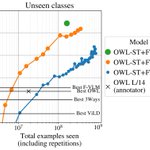
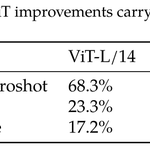
Open-vocabulary object detection has benefited greatly from pretrained vision-language models, but is still limited by the amount of available detection training data. While detection training data can be expanded by using Web image-text pairs as weak supervision, this has not been done at scales comparable to image-level pretraining. Here, we scale up detection data with self-training, which uses an existing detector to generate pseudo-box annotations on image-text pairs. Major challenges in scaling self-training are the choice of label space, pseudo-annotation filtering, and training efficiency. We present the OWLv2 model and OWL-ST self-training recipe, which address these challenges. OWLv2 surpasses the performance of previous state-of-the-art open-vocabulary detectors already at comparable training scales (~10M examples). However, with OWL-ST, we can scale to over 1B examples, yielding further large improvement: With an L/14 architecture, OWL-ST improves AP on LVIS rare classes, for which the model has seen no human box annotations, from 31.2% to 44.6% (43% relative improvement). OWL-ST unlocks Web-scale training for open-world localization, similar to what has been seen for image classification and language modelling.

Matthias Minderer retweeted

1/ There is a huge headroom for improving capabilities of our vision models and given the lessons we've learned from LLMs, scaling is a promising bet. We are introducing ViT-22B, the largest vision backbone reported to date: arxiv.org/abs/2302.05442

Matthias Minderer retweeted
FlexiViT: One Model for All Patch Sizes
abs: arxiv.org/abs/2212.08013
github: github.com/google-research/b…

Matthias Minderer retweeted

Transformers now supports image-guided object detection with OWL-ViT - find similar objects within an image using a query image of your target object.
🔥 Check it out, share it around and let me know what you think!
Colab: colab.research.google.com/gi…
Demo: huggingface.co/spaces/adirik…

Matthias Minderer retweeted

Stop by the Google booth at #ECCV2022 at 3:30 pm today to see a demo presented by Austin Stone, @MJLM3 and @agritsenko about OWL-ViT, a simple and scalable approach for open-vocabulary object detection and image-conditioned detection. Try it yourself at bit.ly/owl-vit-demo.
Matthias Minderer retweeted
OWL-ViT by @GoogleAI is now available @huggingface Transformers. The model is a minimal extension of CLIP for zero-shot object detection given text queries. 🤯
🥳 It has impressive generalization capabilities and is a great first step for open-vocabulary object detection!
(1/2)
Matthias Minderer retweeted

Announcing decoder denoising pretraining for semantic segmentation: arxiv.org/abs/2205.11423
Take a U-Net, pretrain the encoder on classification, pretrain the decoder on denoising, and fine-tune on semantic segmentation. This achieves a new SoTA on label efficient segmentation.
Matthias Minderer retweeted
Simple Open-Vocabulary Object Detection with Vision Transformers
abs: arxiv.org/abs/2205.06230

If you are interested in neural network calibration, please join us now at #NeurIPS2021 poster 27728: eventhosts.gather.town/app/D…
Matthias Minderer retweeted
A few weeks ago, we open-sourced SCENIC, a JAX library/codebase that we like it a lot and wanted to share our joy with the community.
GitHub: github.com/google-research/s…
Paper: arxiv.org/abs/2110.11403

ALT Scenic: A Jax Library for Computer Vision Research and Beyond