

Doing, thinking & writing economic policy - energy, natural resources, trade, industrialization & dev. cooperation at Columbia Uni. https://xitter.cf/t.co/BVXEWXW7Mb
Washington D.C.
Joined January 2011
- Tweets9K
- Following3.3K
- Followers82.6K
- Likes8.9K





Pinned Tweet
My TEDTalk is out this week! I talk about how great power competition could hinder the world's ability to fight climate change and induce a destructive scramble for resources, and I outline steps to take to avert that dystopian future. go.ted.com/LaoAK via @TEDTalks

One of the 4 women in the world that I looked up to humiliated me in public.
I was heartbroken because I worshipped her. But, I learnt the hard lesson of letting go.
And realized that its OK to let go of people, ideas, and organizations that you love when they break your heart
It's so hard to find inspiring people these days. However, I find Ta Nehisi Coates inspiring.
His moral clarity and authenticity are so admirable, even if one disagrees with some of his arguments. His intellect radiates the light that we need in this world
I’m confused here. Why is it a problem that Chinese companies are investing in manufacturing entities and infrastructure in African countries that create jobs to employ Africans (and ultimately reduce the flow of economic migrants to Europe and North America)?

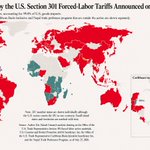
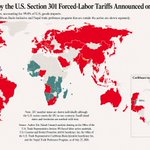
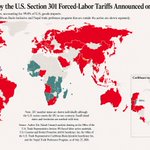
Good @FT article about Chinese companies opening factories in Africa to serve the US market, generally tariff-free b/w AGOA and most African countries not facing Trump 301 tariffs.
US needs to rethink rules of origin—low tariff US-Africa trade should not benefit China….

Hard to disagree parts of the U.S. Treasury Secretary, Scott Bessent’s, remarks during the World Bank/IMF Annual Meetings.
He emphasizes the need to focus “on the sectors most critical to development and industrialization, chief among them reliable and affordable energy”


Here’s the link to the full set of remarks home.treasury.gov/news/press…

Still, I’d like to see more people of African descent tackle economics and economic development topics. There are so few of us writing, publishing, analyzing, etc.
and it’s not easy
Some spaces are shrinking and new ones are opening
The glass is at once half full and empty
One of the best decisions I made was to ensure my book is available in Nigeria…
…and Nigerians are reading it.
It gladdens my heart when I get that random email, every couple of weeks, that says “you changed my perspective… the way I see things”
…and that matters
Zainab Usman retweeted

Thanks to @FareedZakaria @CNN for having me on this morning to help walk about the diesel crisis, Trump’s energy deal w Russia, and the outlook for Hormuz and energy prices.

On GPS, at 10am & 1pm ET today on @CNN: I’ll ask former Canadian Foreign Minister & Deputy Prime Minister @cafreeland about the volatile US–Canada relationship & whether Pres. Trump has fully turned his back on Ukraine. Former Obama White House energy policy official @JasonBordoff discusses the ins & outs of Trump’s Russian diesel deal, and Princeton Near Eastern studies prof. Bernard Haykel explains why wealthy & powerful Saudi Arabia is so vulnerable to attacks by Yemen’s Iran-backed Houthi rebels. As the US struggles to build modern infrastructure, I’ll examine lessons from another Western country with one of the world’s largest & cheapest high-speed train networks: Spain
Zainab Usman retweeted

Tune in again at 1 pm ET on @CNN: CGEP founder @JasonBordoff joins @FareedZakaria on GPS to break down the diesel crisis, Trump's energy deal with Russia, and the outlook for Hormuz and global energy prices.

Thanks to @FareedZakaria @CNN for having me on this morning to help walk about the diesel crisis, Trump’s energy deal w Russia, and the outlook for Hormuz and energy prices.
“Success has many fathers, but failure is an orphan”.
The moral of this story is thus: keep moving forward, don’t stop, despite the set backs.
One step at a time - the step becomes a stride, strides become leaps… and one day you’ll soar.


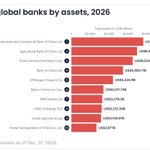
“Top 10 Global Banks by Assets”. H/t @ChinaGSProject from a report published by the @ICIJorg. Link below (I have my thoughts, including critiques of aspects of the report, but some other time).


Zainab Usman retweeted

Highly recommended: youtube.com/watch?v=5lQUuB6Q…
(featuring the brilliant @MssZeeUsman)

From the Jason Arday affair to the recent ad hominem towards Daron Acemoglu, it is no surprise that people have very low trust in the media. US (25%), UK (30%)
At this rate, mainstream print media could go the way of broadcast media which most people have disengaged from.

Zainab Usman retweeted

1. I disagree with Daron Acemoglu on nearly every major policy issue, including AI related issues. (I did not sign the @erikbryn letter because of my fundamental disagreements with it.) But @DAcemogluMIT is a truly outstanding economist, and I greatly admire his academic work and his work as a public intellectual. He is a role model for all economists, especially for those interested in both academic research and in public affairs.
2. The Economist article highlights some important issues facing academic economics: (1) The extent to which publications in elite journals are determined by club dynamics, to take just one example, would shock most professionals who are not economists. (2) The extent to which arguments and analysis and papers are evaluated based on their byline rather than the substance of the work is also shocking. (3) The extent to which hugely successful academic economists who are outside of the most-elite club are unwilling to criticize those in the most-elite club is also surprising.
Each of these three issues poses a clear threat to the ability of the academic economics profession to most efficiently produce new knowledge, which is its mandate and self-professed objective. They also pose a clear threat to the credibility and perceived usefulness of academic research among non-economists.
3. There is a great article to be written about these important, systemic issues: their origins, the status quo, and their consequences. But the article in The Economist about Acemoglu is not that article. I think maybe this is what The Economist was going for? Or maybe not — I am not sure. But if it is what The Economist was going for, then it missed.
4. The Economist is a phenomenal newspaper. I have been a print subscriber for years and I read it every week. It is indispensable and excellent.

Zainab Usman retweeted

Another problem is that of the present. Recently, over the last decade or so, we have had a significant reduction in the number of household surveys conducted in many African countries. In some cases, this is due to conflict or war. In others, it is due to lack of administrative capacity and/or to a lack of interest by the World Bank to push countries harder to collect the data. It will be potentially a big problem. Africa is the only continent with a rising population, and we may know less about income of that population today than ten years ago! We lack good, or any, data for Nigeria, Congo, Sudan, and Tanzania. These four countries alone have 450 million people. This is like the entire European Union.
And there is also the perennial problem of countries like Saudi Arabia and North Korea that have never conducted income surveys. Or countries like Algeria that have, but refuse to share the data with anyone. Or Cuba, which has stopped producing such surveys since the 1990s. And unfortunately, countries that have been in civil or intranational wars, e.g. Libya, Syria, Afghanistan, Palestine. Ukraine obviously cannot realistically do surveys under wartime conditions. The truth is sad: Coverage of national income inequalities is not improving.

I have recently updated the "All the Ginis" database which now contains almost 7,000 Ginis from 180+ countries covering the period 1950-2024.
They are a great tool for regressions that use a synthetic measure of inequality like Gini, for general info on income inequality, and for long-series of Ginis for individual countries.
I explain some of it in this conversation (see below). but I also discuss problems with household surveys, issues with alternative inequality data and other databases, lack of historical data on inequality (very unfortunate), and generally the politics of data production by nation-states.
It is a light conversation & I hope fun to read
stonecenter.gc.cuny.edu/bran…
