

Meteorologist, Purdue alumni, AF veteran, Raspberry Pi enthusiast, high altitude ballooning hobbyist, married and father of two.
Nebraska
Joined May 2010
- Tweets13.2K
- Following314
- Followers830
- Likes16K







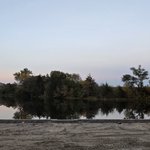
This morning's @NWSOmaha radiosonde landed at the Shenandoah IA airport sondehub.org/26043908

1
5
179
Who messes with prod on a Friday afternoon?

Saturday's briefing finally put a cause on Friday's nationwide ground stop.
Per Sec. Duffy: L3Harris was switching copper lines to fiber at a remote FAA site. A router in that work flooded the network, and radar and comms data went bad across the system. Installer error or faulty router is still undetermined.
As an air traffic control specialist, three things stand out to me:
1. A routine job at one small site took down the national network. That's a single-point-of-failure problem, not just an old-wire problem.
2. The work happened on a Friday afternoon. Duffy says that timing will be reevaluated. It should be. Network cutovers belong in low-traffic windows with a tested rollback.
3. Per Administrator Bedford, maintenance on this network is still logged on paper.
Modernization funding is crucial. But the fastest fix is change control: isolate the work, schedule it overnight, keep a rollback ready, log it digitally.
Controllers and pilots got everyone airborne down safely Friday. The network behind them should be built so one router can't do this again.
Personal views only.
2
111
Mark Conner retweeted

DOT Secretary Duffy says work being done by L3 Harris to cut over an old copper line to fiber at a remote location led to the ground stop.
DOT determining contractor “incompetence” vs installation of faulty router. New router flooded other routers in the ATC system.

Mark Conner retweeted

Today's low 19°F, coldest so far this season. Record low for today -1°F, so it could be much colder. Our fcst warmer than normal all next week. Thanksgiving week fcst highs slightly below normal in the 40s. Possible snow "Black Friday" Nov. 27 in W. Neb. i'lll update this daily.


Mark Conner retweeted

Sorry for the long-ass post, I did some OSINT shit.
I pulled live public flight feeds, weather radar status, and space weather data to see what's actually going on during today's nationwide FAA grounding.
TL;DR: radar, GPS, and weather sensors are all working fine. What broke is the long-distance communications network that lets the FAA's 22 regional air traffic control centers talk to high-altitude planes and hand them off to each other.
When people think of air traffic control, they picture the glass tower at an airport. Those towers only handle takeoffs, landings, and nearby airspace. Once a plane climbs out, it's handed off to one of 22 regional Air Route Traffic Control Centers (ARTCCs) — giant facilities that manage high-altitude cruising traffic across whole regions of the country.
Normally, those 22 centers are regionally isolated: if one loses power or a local fiber line, neighboring centers absorb or route traffic around it. Having all 22 degrade at once is virtually unheard of because it means a shared national backbone failed, leaving no healthy neighbor to take over.
That's why the FAA's Command Center used such stark, blanket wording ("Due to extraordinary circumstances and for reasons of safety... all airports are ground stopped until further notice"*) — it's standard protocol when a national-level freeze has to happen immediately before engineers even know how long repairs will take ("safety issue" means "oh shit, stop" in aviation circles, unlike with AI companies).
All 22 centers losing comms at once is, indeed, "extraordinary circumstances".
Here's what the live data shows:
1. US airspace is emptying out fast.
Normally on a Friday evening, thousands of planes are in the air over the US. In live tracking data from OpenSky Network, the number of airborne planes over the lower 48 is steadily draining as flights land and no new commercial departures take off:
• 6:36 PM EST: 1,083 airborne
• 6:42 PM EST: 1,035 airborne
• 6:49 PM EST: 990 airborne
There are zero emergency distress codes broadcasting.
2. Major airports are, predictably, stacked.
Looking within 30 miles of major hubs around 6:37 PM EST (`adsb.lol`), almost nothing is moving:
• NYC/JFK area: 8 in the air vs. 67 on the ground
• LAX: 14 in the air vs. 40 on the ground
• Dallas (DFW): 7 vs. 36
• Denver (DEN): 13 vs. 29
• Atlanta (ATL): 5 vs. 25
• Chicago (ORD): 9 vs. 24
• DC (DCA): 8 vs. 22
A lot of the coastal airports had to stop accepting diverts.
3. The few planes still taking off are enlightening.
Across the entire US at 6:36 PM, only aircraft were taking off (that is: below 10,000 feet and climbing). They fell into two clear buckets:
• 3 international widebody jets (`DAL281` out of Seattle, `DAL156` out of NYC, and `AFR71E` out of Newark), matching the FAA's note that international flights are being handled case-by-case.
• Small private planes and a couple of business jets flying under VFR (visual flight rules) — essentially, staying below 18,000 feet, where pilots don't need en-route air traffic control clearances.
Honorable mention to the 1 Coast Guard/military helicopter climbing near Tampa, out of 29 military aircraft tracked nationwide.
4. Weather radar isn't down, and there's no solar storm or GPS jamming.
A lot of people wondered if today's FAA ground stop, rumors of a National Weather Service outage, and Microsoft's 365 outage were all connected. Checking the raw feeds:
• Weather radar: 199 out of 208 US Doppler radar stations are actively sending fresh scans (within the last 15 minutes). The "NWS outage" rumors were website and caching glitches, not offline radar hardware.
• GPS & Space Weather: NOAA space weather is completely quiet (`Kp = 0`), and aircraft GPS accuracy readings across the Midwest and Northeast look totally normal.
• Local airport radar & towers: Local FAA ground-station radar broadcasts and local airport control towers are still up and transmitting.
So, local sensors and local towers are fine.
The failure is specifically in the long-haul telecommunications backbone connecting the FAA's 22 en-route centers to their remote radio sites — which is why en-route controller frequencies went quiet while local towers, weather radars, and low-altitude visual flights kept running.
Federal officials say there's no sign of a cyberattack, so we're waiting on the FAA's technical post-mortem for what tripped the national network.
That doesn't rule out a cyberattack as the root cause of the comms outage; it's a "we don't know".
Shoutout to adsb.lol for their free API.


Mark Conner retweeted
In case you heard otherwise, there is no radar outage and radar.weather.gov is fully operational! Outdated content from isolated webpages stating otherwise has been circulating, but NWS radars are operating normally.

Mark Conner retweeted
When you can count the number of aircraft airborne over an entire US state on the fingers of one hand… ✈️🇺🇸
This is Nebraska right now.

Mark Conner retweeted
🇺🇸 Last recorded take-offs at selected US airports:
DEN: 13:38 MT
ORD: 14:15 CT
IAH: 14:39 CT
JFK: 15:35 ET
EWR: 15:35 ET
DCA: 15:35 ET
ATL: 15:37 ET
MIA: 15:36 ET
All times are local.

WTAF

Watch the moment a tanker struck a cruise ship in New Orleans. Rescues are underway.
📷: Kern Studios
wdsu.com/article/mississippi…
2
110
Rescues are underway in New Orleans after a tanker struck a cruise ship on the Mississippi River Friday evening.
📷: Kern Studios wdsu.com/article/mississippi…
26

A solid 12 hrs below freezing last night, with maybe another hour to go. Low of 23 which is the coldest it's been since March 17.

1
2
114
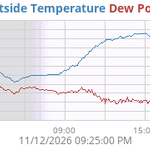
I think we'll get our hard freeze tonight. Dewpoint is falling out from under the temperature #newx

1
101
