

Training 🤖 💻 🧠 to learn 🥼🧪🔬 to build 🧬💊🦠
San Francisco, CA
Joined April 2020
- Tweets519
- Following555
- Followers326
- Likes3K





Nikša Praljak retweeted

How do you train a model to be creative? Dive in to new work from @AlbalakAlon and @kenneth0stanley's Open-Endedness Team.

Do you want your AI model to be more creative?
How would you train it for creativity? What if I told you that directly training a model to be creative can actually prevent the model from reaching its full creative potential?
Think about this: using past examples of creative success as training examples makes similar outputs more likely in the future. But to be creative, reproducing past examples is exactly the opposite of what you want!
This thought experiment led us to what we call the Creative Paradox: "emulating examples of past creative success (even if they were your own successes) can actually prevent you from reaching your full creative potential."
In "Creative Priming: Decoupling Process from Product to Escape the Creative Paradox", we take a different approach: train a creative priming model to guide the creative process, rather than directly generate responses.
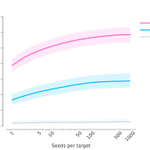
We trained a priming model to make Qwen3-8B more creative, but the principles it learns transfer to frontier API models! With creative priming, API models generate 4.5-10x more semantically distinct responses, with 2.5-4.6x more diversity!
A massive thank you to the whole open-endedness team at @LilaSciences, to everyone who contributed to the paper (Sebastian Gabriel, @Evo_Daveo, @joelbot3000, and @kenneth0stanley ), and to LILA for giving us the space to explore big questions like this (and more!)

ALT Creative priming increases the diversity and distinct clusters for API models
Nvidia board (roman senate) towards Jensen (Julius Caesar)


The NVIDIA Board of Directors has established the National Security and Export Control Oversight Committee. Read the release: nvda.ws/4eErJ5F

1
72
Open models still matter

For my first post, I’m sharing a letter @NVIDIA signed on why open models matter.
AI will transform every industry, power every company, and be built by every country.
Open models strengthen safety and cybersecurity, accelerate innovation and diffusion, and enable sovereignty.
The world needs both frontier closed models and frontier open models.
images.nvidia.com/pdf/Open-W…


1
62
Are there any competitive pickup soccer slack channels or whatsup group chats in San Francisco?! Plzzzz let me in 🙏
1
1
166
Nikša Praljak retweeted

Excited to share research from the Open-Endedness team @LilaSciences!

Research News! Announcing the 1st release of fundamental AI research from the Open-Endedness Team @LilaSciences: a vision-focused blog + 4 preprints. The blog details a broad research agenda for achieving open-endedness while each paper unveils its own novel research direction.
The ideas covered in the papers include:
• a novel approach to training for creativity designed to sidestep a newly-identified problem called the “creative paradox,” which means that directly reinforcing creative outputs can sometimes limit reaching full creative potential;
• an investigation of the advantages of seeing the world through fresh eyes by training an LLM that is intentionally naïve in a certain area (in effect presenting less data as a potential advantage);
• a new kind of training regularization technique for SGD called unified factored organizers (UFOs), which is designed to achieve unified factored representation (UFR) as seen in Picbreeder CPPNs;
• and finally a unique study of catastrophic forgetting that shows that networks with UFR (like those from Picbreeder) are intrinsically resistant to catastrophic forgetting. The inset video on this post is a visualization from that catastrophic forgetting work.
The blog post also includes an interactive “wheel of science” demo.
The implications of these ideas are broad and diverse, but the fun part is that each one opens up its own new research playground - there is a lot of room for further research here!
Moreover, we hope this release also highlights one other important point about AI today: while it may seem that the road ahead is already paved and all that’s left is to drive mindlessly forward, there actually remains a lot of room for new directions and insights in the pursuit of open-endedness and creativity.
This research was possible because @LilaSciences appreciates the critical role of open-ended innovation in the pursuit of scientific superintelligence. The advances you see here are part of this much larger company-wide ambition, which includes AI Science Factories and many other unprecedented components. When this engine is fueled by open-endedness, the result will be much more than a step change.
More advances in open-endedness are coming!
Blog link below 👇
No one cares... Fix the crazy inflation thanks to tariffs and strait of hormuz, sleezy insider trading, the degenerate war mongering behavior, and maybe don't accidently bomb another school of girls (🫤). Then maybe, u can hold onto ur seats.

72


Is there a chance that mathematicians actually solve novel proofs by reviewing proofs by agent swarms and finding missing pieces or contradictions within the AI's proposed proof? This is possible given LLMs sycophancy, right? Sycophancy projected onto mathematical proofs...
68
Nikša Praljak retweeted

Four seasons, one beautiful UChicago. What’s your favorite campus spot to see the seasons change?


That's cool, but what can this model do that others can't? (i.e. what are the new capabilities, results)

We released Carbon-A: a DNA model that proposed over 500M gene candidates across 22k species!!
huggingface.co/spaces/Huggin…
blue: existing annotations in database
green: new annotations by Carbon-A
1
5
632


Don't underestimate developmental biology! Nothing more amazing than a single fertilized egg cell (single!) autonomously orchestrating itself to create complex, 3D morphologies and body plans. How and why this happens, and even what was the origin of this process to me is the biggest biology question!

🎖️ 🏆 Prediction for Nobel Prize in Chemistry🌌 🧠 🧬 :
I think natural science boils down to three major mysteries:
how the universe works,
how cells (neurons) give rise to consciousness,
and how (bio)molecules assemble into life.
1
139
Nikša Praljak retweeted
Green hydrogen currently runs on iridium — one of Earth's rarest metals, a few tonnes mined per year. Our AI-directed lab screened 2,942 catalysts in 3 months and surfaced a palladium-based lead the field had written off, now past 1,000 hours of testing in acid. lila.ai/news/how-an-ai-run-l…

Ummm....this is called an internship. Not necessary for NSF to be involved IMO

In Brief: US @NSF launches a pilot program that gives doctoral students real-world experience in industry as part of their PhD nature.com/articles/s41587-0…
rdcu.be/LspikVc66kTa
4
224
