
Scientist working on Computational Biology, AI, and Cancer Research. Student of Yoga.
Joined June 2021
- Tweets621
- Following1.6K
- Followers183
- Likes2.9K









Pinned Tweet
Thrilled to share our new work now out in @Annals_Oncology! BRIDGE predicts #breastcancer neoadjuvant therapy response from tumor transcriptomics — and BRIDGE-Slide brings this to routine H&E slides via deep learning. No sequencing needed. Precision Oncology, democratized. 🧵👇

🚨 Our pre-proof is out on @Annals_Oncology!
BRIDGE, a framework to quantify intratumoral subtype mixtures in #BreastCancer and predict neoadjuvant response, including directly from H&E slides
Paper: doi.org/10.1016/j.annonc.202…
🧵1/11
Nishanth Ulhas Nair retweeted

This is massive. A story I've been following for years. He thought he had more time but didn't. Alessandro Masullo announces a separate, purely human proof of the Riemann hypothesis. math216.wordpress.com/2026/1…
Nishanth Ulhas Nair retweeted

Guys, this is very serious and you have to read this right now. The Riemann Hypothesis may have just been solved, and if the claim holds, it's an insane achievement.
In mathematics there is a famous problem called the Riemann Hypothesis, and it's about prime numbers. Primes are numbers like 2, 3, 5 and 7 that can only be divided by 1 and themselves. Every other number is built by multiplying them together, so they're the building blocks of all numbers. You can never tell exactly where the next prime will show up, but if you step back, there's a pattern.
Around 1,000, about 1 in 7 numbers is prime. Around a million, about 1 in 14. Around a billion, about 1 in 21. Primes get rarer at a steady, predictable pace.
Because of that pattern, mathematicians can estimate how many primes there are below any number. But the estimate is never exactly right. It's always a little off, and the big question is how far off it can get. Think of flipping a coin 1,000 times. You expect 500 heads, but you'll get something like 480 or 520. It's a little off, but never wildly, and you can predict how far off it will be.
In 1859 a mathematician named Bernhard Riemann found that the prime estimate's error isn't random. It's controlled by a hidden set of special numbers. Where those numbers sit decides how big the error gets. Riemann guessed that every single one of them sits on one straight line. If he's right, the error always stays small, just like the coin, and primes are as orderly as they could possibly be. If even one of those numbers is off the line, the error can grow much bigger, and primes are far messier than we think.
So far computers have found trillions of these special numbers, and every single one is on the line. But there are infinitely many, so checking will never be enough. You need a proof that covers all of them at once. For 167 years nobody has found one. It's one of the seven hardest unsolved problems in mathematics, with a million dollar prize attached.
Now a mathematician has posted a note saying that, working with Claude, he believes he has that proof. He says a computer has already checked every step, and that Claude raced ahead of him near the end. Experts still need to confirm it, but this isn't a random internet claim.
If it holds, it doesn't mean we can predict every prime. It means we finally know the pattern can never go wildly wrong. Thousands of math papers that begin "assuming the Riemann Hypothesis is true" become proven fact overnight. We'd also get firm limits on how far apart primes can be, and a guarantee that a fast method for testing whether a huge number is prime always works. And no, your bank account isn't in danger. Online security depends on how hard it is to break a huge number into its prime factors, and this proof doesn't make that any easier. If anything, it gives the math behind encryption a stronger foundation.
If it holds, this is bigger than one math problem. A question that beat the greatest minds in history for 167 years would have been cracked by a human and an AI in a matter of weeks. If AI can find answers and computers can check them, the limit on science is no longer how smart we are. It's how many good questions we can ask.

Nishanth Ulhas Nair retweeted

"I believe I have, working with Claude, discovered a proof of the Riemann
Hypothesis..."
alpo.ge/remark.pdf
You gotta be kidding me.
QRH was a shock breakthrough. But I expected RH to be years away. If this proof holds up, it shatters every model of reality.
@__alpoge__
Nishanth Ulhas Nair retweeted

Last time, I spoke too candidly in my class (and that went viral).
Today I gave a more structured monologue (with slides, ha ha) on how universities should evolve in the AI era.
All of these are my personal views.
Nishanth Ulhas Nair retweeted
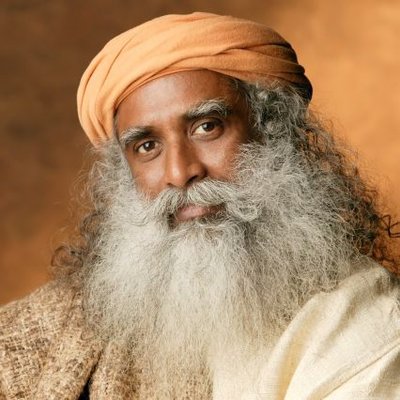
A pleasure and an honour to meet you, Your Excellency President Emmanuel Macron. Gratitude for your warmth and hospitality. Much regard & Blessings. - Sg @EmmanuelMacron

Nishanth Ulhas Nair retweeted

India saw about 496 million people lifted out of poverty between 2011 and 2023 in one of the world’s fastest declines in this metric, the World Bank said, although the gains remain uneven. bloomberg.com/news/articles/…

Nishanth Ulhas Nair retweeted
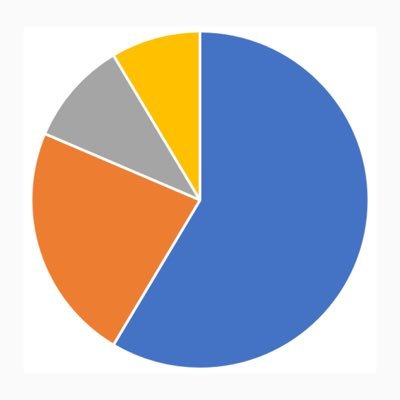
🇮🇳 India lifted 496 million people out of poverty between 2011 and 2023, according to the World Bank’s October 2026 Poverty and Equity Brief.
• Extreme poverty (people living on less than $3 a day) fell from 27.1% to 2.6%
• People living below $4.20 a day fell from 57.7% to 16.1%
• India added 134 million jobs between 2017 and 2023
Nishanth Ulhas Nair retweeted

According to the World Bank, close to 50 crore Indians moved above its lower-middle-income poverty line between 2011–12 and 2023–24.
China’s achievement of lifting approximately 80 crore people out of extreme poverty became central to the global scholarly understanding of its rise. India’s achievement, comparable in its enormous human scale, risks becoming a headline that disappears after a few days. The contrast is surprising, particularly because the way India achieved this deserves sustained examination.
I have heard scholars invoke China’s poverty reduction as an indirect excuse for its one-party dictatorship. Those scholars should pay particular attention to India’s progress while retaining a vibrant democracy, competitive elections and political opposition.
Indian voters demand both liberty and prosperity. Economic performance does not give governments an unrestricted licence to curtail freedoms. The Emergency illustrates this: despite growth of approximately 9% in 1975–76 and stronger industrial production during the Emergency years, voters removed the government in 1977. Economic gains could not secure acceptance of authoritarian rule.
Political arrogance is costly in a system where citizens retain the power to dismiss their rulers. Equally, democratic credentials do not excuse economic mismanagement. Governments face electoral punishment for inflation, declining purchasing power and failure to create economic opportunities.
Liberty and prosperity are therefore not freely exchangeable in India. Voters impose minimum expectations on both. Success in one does not automatically compensate for failure in the other.
These constraints can make policy change slower and political negotiation more demanding. But they also create mechanisms for correction before failure threatens the legitimacy of the entire political system. Citizens can replace the government while preserving the system through which they hold it accountable. That makes development more durable.
India’s poverty reduction deserves to become a serious subject of global scholarship, not a passing news item. The achievement matters. The democratic conditions under which it occurred matter just as much.
Nishanth Ulhas Nair retweeted

Towards P ≠ NP with UCLA Math+AI.
A new challenge is launching on Yukon to improve circuit lower bounds on a specific Boolean family.
Thanks to legendary cryptographer Amit Sahai from UCLA for helping formulate this problem.
yukon.org/circuitbreaker

New challenge on Yukon: Circuit Breaker yukon.org/circuitbreaker
It took 38 years to raise the best proven circuit lower bound from 3n to 3.1n. Days before this launch, an AI model pushed it to 3.5n.
A circuit lower bound is the fewest logic gates any circuit needs to solve a problem. Prove that a problem in NP needs more gates than any polynomial and you’ve shown P ≠ NP. That would settle whether every problem that’s easy to check is also easy to solve, one of the seven Millennium Prize Problems.
We’re still far from that bound. Circuit Breaker, built with UCLA Math+AI, is where the push continues.
“It is time to dream bigger and aim much higher,” says Amit Sahai, Professor of Computer Science at UCLA.
Nishanth Ulhas Nair retweeted

The World Bank’s October 2026 Poverty & Equity Brief records India’s progress as one of the fastest poverty declines in the world.
The report highlights several significant gains:
✅ 49.6 crore people moved above the lower-middle-income poverty line of $4.20 a day between 2011 and 2023, with the poverty rate declining from 57.7% to 16.1%.
✅ Extreme poverty declined from 27.1% to 2.6% over the same period, measured at $3 a day. Both monetary poverty thresholds use 2021 purchasing power parity.
✅ Employment increased by 13.4 crore people between 2017 and 2023, nearly twice the increase in the working-age population.
✅ Rural women accounted for much of the employment gain, entering paid work and increasing the number of earners in their households.
✅ Both rural and urban households experienced substantial welfare gains, with faster progress in rural India narrowing the rural–urban gap.
✅ Access to electricity reached 99% of the population, according to the report’s 2022 survey data.
The World Bank identifies strong consumption growth, rising employment - especially among women—and expanded social transfers, including food subsidies, as major drivers.
Under the leadership of Hon’ble PM Shri @narendramodi, the Government’s sustained policy efforts are yielding tangible results, strengthening the foundations for inclusive growth and greater economic opportunity. This is the reason why NDA govt wins people’s trust and mandate of our citizens.
We remain committed to building on this progress through productive employment, stronger household incomes and effective delivery of public services, so that aspirations of our people are met.
Nishanth Ulhas Nair retweeted
This is so impressive and scary, how AI has become so smart. I love breaking things like this down, so here we go. OpenAI says its AI produced three new discoveries, in maths, computer science and physics, and handed them to some of the world's leading experts to check.
The maths one is about waves. Think of dropping stones into a pond. Sometimes the ripples crash together and form one big spike for a split second. In 1991, a mathematician guessed that these huge spikes can never last long, and that most of the time waves are much calmer than at their wildest moment. It sounds obvious, but proving it has stumped mathematicians for 35 years. Humans managed to prove it for flat, two-dimensional surfaces in 2019. The AI claims to have proven it for every possible number of dimensions. As a bonus, this would also solve a famous puzzle called the Kakeya problem, which asks how little space you need to point a needle in every possible direction. Humans only solved that in three dimensions last year, and it was hailed as a once-in-a-century breakthrough. The AI claims to have solved it everywhere.
The computer science result is the one getting the most attention. For 25 years, the field has assumed that certain puzzles are so hard that the time needed to solve them explodes exponentially, no matter how clever you are. This is the Exponential Time Hypothesis, and hundreds of papers in fields from biology to databases rely on it. The AI claims it is false. The two scientists who proposed it, Russell Impagliazzo and Ramamohan Paturi, are now leading the review alongside MIT's Ryan Williams.
The physics one might be the biggest. Physicists have a rulebook for how the tiniest particles in the universe behave, called the Standard Model. It predicts experiments with incredible accuracy. But here's the strange part: nobody has ever proven that the rulebook actually makes mathematical sense. It's like a recipe that always produces a perfect cake, but no one can explain why it doesn't fall apart on paper. The AI claims to have proven that the rules for the force that glues the centre of every atom together are mathematically sound, along with a version of the whole rulebook. Part of this touches one of the seven Millennium Prize problems, a list of the hardest open problems in maths. A group led by Nobel Prize winner David Gross is now checking it.
Why does this matter? The maths and computer science proofs, and the core of the physics one, were checked by a computer system called Lean that verifies proofs step by step. OpenAI isn't taking credit, and the experts reviewing it are unpaid, independent and free to say what they find. None of this is confirmed yet. But if even one of these holds up, AI has gone from helping scientists to making discoveries humans couldn't, in three fields at once.

Announcing three major scientific discoveries, one each in mathematics (harmonic analysis), computer science (complexity theory), and physics (quantum field theory).
AI starting to help us improve our understanding of the universe! openai.com/index/building-sc…

Nishanth Ulhas Nair retweeted
Many of you don't understand how serious this is, so let me break it down.
In computer science there is a famous kind of puzzle called 3-SAT. You are given a long list of yes-or-no switches and a set of rules about how they must be arranged, and you have to find a combination that satisfies every rule. The obvious way to solve it is to try every combination, but each new switch doubles the number of possibilities, so a puzzle with a few hundred switches would take longer than the age of the universe to brute force.
For decades, the smartest people in the field found clever tricks that made this a little faster, but every trick still hit the same wall: the time required kept exploding as the puzzle grew.
About 25 years ago, two computer scientists, Russell Impagliazzo and Ramamohan Paturi, working with Francis Zane, turned that wall into a formal idea.
They proposed the Exponential Time Hypothesis, which says this explosion is not a failure of human cleverness but a law of nature. No algorithm, however brilliant, will ever solve 3-SAT without the time blowing up exponentially. Nobody could prove it, but almost everyone believed it, and it became one of the foundations of modern computer science.
Researchers used it as a measuring stick. If you could show that solving some other problem quickly would also crack 3-SAT quickly, you had shown that problem was hopelessly hard too. Hundreds of papers, across scheduling, graphs, logic and much more, rest on this one assumption.
Now an internal AI model at OpenAI claims to have broken it. It says it found an algorithm that solves these puzzles meaningfully faster than the hypothesis allows, and it has checked the proof in a computer verification system called Lean.
And here is the remarkable part: the very people who proposed the hypothesis, Impagliazzo and Paturi, along with MIT's Ryan Williams, are now leading the public review of whether a machine has disproved their own idea.
So what happens next? If the disproof holds, a large part of theoretical computer science has to be revisited.
Every result that said "this problem cannot be solved faster, assuming ETH" loses its foundation, and researchers will have to work out which of those walls were real and which were simply where we stopped looking. It does not mean everything becomes easy. The new algorithm is still slow in absolute terms and this is not the famous P versus NP problem being solved.
But it means our map of what is possible was wrong in a place we were very confident about, and it was an AI that redrew it. If the disproof fails, the hypothesis survives and the field breathes out, but we will still have watched an AI produce serious, checkable work on one of the deepest questions in the discipline, closely enough that the founders of the idea had to take it seriously. Either way, something has shifted.

Nishanth Ulhas Nair retweeted

We are announcing three new discoveries in mathematics, computer science, and physics about harmonic analysis, complexity theory, and quantum field theory.
openai.com/index/building-sc…
Thrilled to share our new study in Cancer Research! 🎉
We introduce EXPRESSO, a biologically guided ML framework for predicting treatment response from pretreatment tumor transcriptomes across #cancer types and therapies. @CR_AACR #precisiononcology
doi.org/10.1158/0008-5472.CA…

1
1
140
I’m deeply grateful to all my co-authors for their hard work and dedication. Special thanks to @rlipika, @EMichaelGertz, and @AlejandroSchaf6, who co-led this study with me, and to @EytanRuppin for his incredible mentorship and support. 🙏
1
22
Nishanth Ulhas Nair retweeted
When a young life becomes so poisoned by hate that he plans to kill those he sees as different, it reflects our failure in nurturing the next generation. It is most important that we cultivate a sense of inclusion and work toward raising human consciousness. Our deep gratitude to those who acted promptly to prevent the Aurora attack. – Sg

US: 19 year old charged in alleged mass shooting plot at Hindu Temple in Palatine, Illinois
Read @ANI Story | aninews.in/news/world/us/us-…
#US #Palatine #Illinois

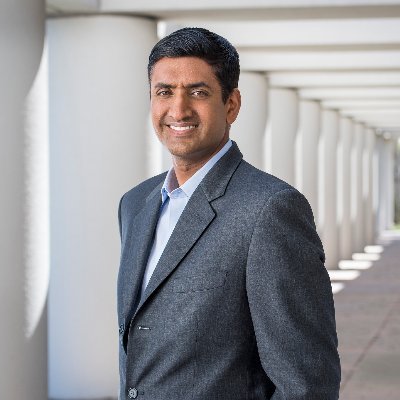
Nishanth Ulhas Nair retweeted
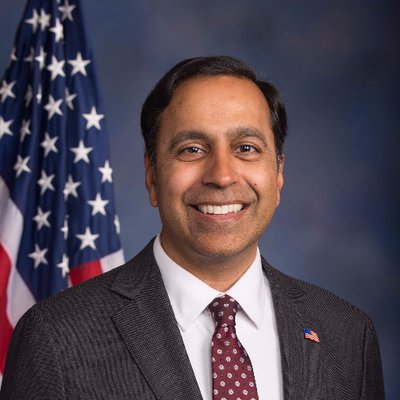
My family and I were worshipping at our Hindu temple in Aurora on Sunday when a white supremacist attempted a mass shooting targeting Indian Americans. I'm grateful to those who helped prevent a tragedy, but we must come together to confront the hatred that put so many innocent lives at risk.

Nishanth Ulhas Nair retweeted

Police in a Chicago suburb announced that they had thwarted a potential mass shooting, arresting a 19-year-old man who they said may have planned to target a Hindu place of worship. cnn.it/4yxDIco

Nishanth Ulhas Nair retweeted

#BREAKING: Potential Mass Shooting Plot Thwarted in Aurora, Illinois.
Authorities say a 19-year-old allegedly plotted a mass shooting targeting a Hindu place of worship. Police reportedly recovered a rifle, hundreds of rounds of ammunition, body armor and a manifesto expressing white supremacist extremism and hostility toward people of Indian descent.
This comes during Navaratri when thousands of Hindus gather for Garba and also just two weeks after a Hindu temple in Ohio was attacked.
We commend law enforcement for swift action. We also urge the community to stay vigilant and Report any potential threat. Every community deserves to worship without fear.
chicago.suntimes.com/crime/2…
