

$MRLN - Building the next great American aerospace prime.
Boston
Joined April 2013
- Tweets5K
- Following1.4K
- Followers2.2K
- Likes3.7K




Matthew George retweeted

Writing this in my personal capacity, but I have been flying these types of aircraft for more than 20 years, with over 8,000 hours, and have reasonable familiarity with how the charter world operates. I feel compelled to post after seeing commentary about the Lear 60 crash, from missile strikes to DEI to critiquing this poor woman’s final radio calls.
That last part is what I find most troubling. She was the second-in-command (SIC), and while she was empowered to point out mistakes as part of good crew resource management, she was doing her job, communicating with ATC right to the end in a terrifying situation. She likely knew before many of those calls that she was going to die. I have heard final calls from friends, from military pilots with thousands of hours in fighter aircraft, and they are just as heartbreaking because they know the end is approaching.
I understand the public interest given the footage and audio. But you do not know the aircraft’s maintenance history, whether there was a structural failure, if any failure was induced by turbulence, overspeed, or overcontrol, or everything happening in that cockpit. I am sure weather will be part of the investigation, but beyond that, it is speculation. The charter industry routinely hires commercial pilots very early in their careers to gain experience alongside an ATP-qualified captain before they move up to the airlines. She would still have the appropriate training, qualifications, and checkouts by an FAA examiner or designee.
Let people investigate, learn, and share the facts. Be respectful to those who perished and the families who carry their memories. God bless them and their loved ones.
Matthew George retweeted

Aerial refueling is essential to US military strategy.
But most of the Air Force's tanker fleet is old, and the force is ill-suited for a large-scale conflict against the PRC.
@timothyawalton and Shane Dennin on how the DoW can transform its aerial refueling architecture ⬇️
I think this is worth a broader conversation. I've gotten routing more times than I would have liked that threads the needle between cells, often justified by "others are getting through the gap". There's a massive delta between what an airliner is going to get through, versus a business jet, versus a light GA aircraft without a stormscope. On the PIC to not accept that, but the swiss cheese will get ya...

I am an en route controller at Houston ARTCC. What frustrates controllers is that aircraft are routed directly through TS all the time. Then pilots then ask us “how are people getting around it?” I took the airline dispatching course at Riddle. I know the dispatchers share 50% of the responsibility for the safety of the flight. To me, sending the pilots the dispatch paperwork with the weather pre flight is just checking a box that alleviates them from liability. At what point are dispatchers going to be responsible for the fact they consistently route aircraft through thunderstorms? When are we going to get to the point of making real safety decisions such as, today isn’t a good day to fly over Florida?
And another thing – The scariest and most unsafe thing I’ve seen in air traffic is when cold fronts come through as a solid squall line well down into the gulf. The Q routes are shut down. Every AC in the air is pushed south into the gulf. Everyone is deviating. I’ve seen a sector get more than 30 handoffs at once. I’ve seen AC deviate so far south they are hugging the FIR (which is non-RADAR with northbound AC coming up from Mexico).
Nothing about flying through thunderstorms is safe. And nothing about every AC in the sky deviating south of a cold front into the gulf is safe. I’ve said it many times before: on weather days there is no way an objective observer could stand in that control room and objectively say that what they are witnessing is a safe operation. Catastrophic loss of life is only because of the sheer skill of the ones behind the RADAR scope and the fact no one dies is NOT the same as a safe ATC operation. And the airlines are 100% complicit in this.
And to that point it isn’t right that ATC pay continues to lag behind inflation year after year. Health insurance goes up more than 10% every year. And every time there is a government shutdown we have to show up for work, used as political leverage, and not get paid until the shutdown ends. Sometimes that means going as long as month on pure savings. We are currently part of the 2027 federal pay freeze with 0% pay raise scheduled.
To be clear, this isn't the fault of the enroute controllers. As @zpfTechnologies points out, this is a situation foisted on them by the airlines. But because the airlines create this deviate as a baselien culture, less capable aircraft and pilots get brought along for the ride without the safety buffer.
Matthew George retweeted

I am an en route controller at Houston ARTCC. What frustrates controllers is that aircraft are routed directly through TS all the time. Then pilots then ask us “how are people getting around it?” I took the airline dispatching course at Riddle. I know the dispatchers share 50% of the responsibility for the safety of the flight. To me, sending the pilots the dispatch paperwork with the weather pre flight is just checking a box that alleviates them from liability. At what point are dispatchers going to be responsible for the fact they consistently route aircraft through thunderstorms? When are we going to get to the point of making real safety decisions such as, today isn’t a good day to fly over Florida?
And another thing – The scariest and most unsafe thing I’ve seen in air traffic is when cold fronts come through as a solid squall line well down into the gulf. The Q routes are shut down. Every AC in the air is pushed south into the gulf. Everyone is deviating. I’ve seen a sector get more than 30 handoffs at once. I’ve seen AC deviate so far south they are hugging the FIR (which is non-RADAR with northbound AC coming up from Mexico).
Nothing about flying through thunderstorms is safe. And nothing about every AC in the sky deviating south of a cold front into the gulf is safe. I’ve said it many times before: on weather days there is no way an objective observer could stand in that control room and objectively say that what they are witnessing is a safe operation. Catastrophic loss of life is only because of the sheer skill of the ones behind the RADAR scope and the fact no one dies is NOT the same as a safe ATC operation. And the airlines are 100% complicit in this.
And to that point it isn’t right that ATC pay continues to lag behind inflation year after year. Health insurance goes up more than 10% every year. And every time there is a government shutdown we have to show up for work, used as political leverage, and not get paid until the shutdown ends. Sometimes that means going as long as month on pure savings. We are currently part of the 2027 federal pay freeze with 0% pay raise scheduled.
Matthew George retweeted

AI models will soon be the world's best hardware designers.
But there is a *lot* more to hardware engineering than just design.
Here's my take on what I see as the next frontier: improving the lossy interface between the digital and physical worlds.


Matthew George retweeted

More than any time in my career, VCs seem to be underwriting other investors’ interest rather than the company itself.

The Aero L-39C Albatros is the newest addition to Merlin's test fleet. Here's why we chose this aircraft 👇

Meet the newest addition to Merlin’s test fleet: the Aero L-39C Albatros.
Serving as our dedicated jet testbed, the L-39 will support development of Merlin Pilot for tactical aircraft and dynamic military missions with its higher speeds, a wider operating envelope, and compressed decision windows.
Read more here. merlinlabs.com/news/merlin-a…
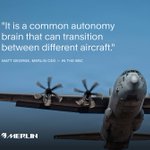
Tactical autonomy has $50B+ in the FY27budget request. We’re early, but expanding from a solid base of development and contracts. The C-130J is a funded, large-aircraft application of the Merlin pilot that is designed to be modular and expandable.

Huge news from over the weekend! Great work to the team. Some thoughts 👇
Over the weekend, Merlin completed the first flight of the next generation of the Merlin Pilot. To our knowledge, it was also the first autonomous flight of a King Air C90, a workhorse of the global ISR fleet.
The software version on board represents a step change in functionality for Merlin, designed not only to fly aircraft autonomously, but to leverage sensors to make mission choices typically reserved for humans. We’re building it to execute missions like maritime search and patrol, one of today’s most pressing security missions, in a fundamentally different way than they are today.
Saturday’s flight kicks off an intense flight test campaign to test the system capability. Importantly, this version of Merlin Pilot lays the groundwork for what we believe could be the United States' first fully autonomous (versus pre-programmed or remotely piloted) operational group 5 platform next year, with thousands of pounds of payload and thousands of miles of range.
Last, but certainly not least, we expect this version of the Merlin Pilot will also help us build the foundation for other tactical applications for our software, on platforms that are markedly different from what we’ve previously flown.
(Cautionary statement regarding forward-looking statements in the first comment.)

This weekend's first flight is the result of a year+ of work by the team, and is a major step forward towards what we believe will be the first large aircraft that can truly fly autonomously for useful missions (making it's own decisions based off of sensors/context/environment)