

Applying 80/20 thinking, deductive logic & big data to investing, crypto, and emerging tech. Isolating the few variables that drive asymmetric outcomes.
Joined November 2021
- Tweets5.6K
- Following798
- Followers901
- Likes10.6K







Pinned Tweet
Most financial commentary is 80% noise and 20% signal.
My goal is to flip that ratio.
Whether I’m analyzing equities, digital assets, or emerging technology, everything I share here is built on four principles:
1. The Pareto Principle (80/20)
In any dataset, market cycle, or portfolio, a vital few variables drive almost all the outcome. Daily price ticks and breaking headlines are mostly distractions. I focus on isolating the 20% that actually moves the needle.
2. Deductive Logic Over Narrative
Instead of chasing hype, I focus on logic-based outcomes—like how AI compute demand forces physical bottlenecks in power grids and raw materials.
3. Big Data & Falsifiable Theses
Opinions are cheap; structured data isn’t. When I’m breaking down a trend or thesis, I care about what the underlying numbers actually say—and what data would prove me wrong.
4. Long-Term Compounding & 1% Adjustments
Good investing looks a lot like farming: you don’t dig up the seeds every morning to check if they’re growing. Instead of short-term trading or chasing overnight pumps, I focus on spotting durable multi-year trends early and making disciplined, 1% improvements to portfolio structure and risk management over time.
My focus:
• Data-driven breakdowns across equities, crypto & innovation
• Long-term portfolio frameworks and asymmetric risk thinking
No paid signal groups. No recycled headlines. Just clear thinking in public.
Always open to pushback and sharp debate. What trend, metric, or bottleneck are you researching heaviest right now?
🤖 Made with AI

87
Last week I shared the 5x20 Framework: five equal buckets, 20% each, rebalanced once a quarter.
These are the five themes I anchor my portfolio around:
• Diversified Core (20%) — Broad market foundation
• Technology (20%) — Compute, software, and AI infrastructure
• Utilities & Energy (20%) — Power generation and grid bottlenecks
• Metals & Materials (20%) — Hard commodities and physical supply
• Digital Assets (20%) — Asymmetric monetary and network exposure
People often question if quarterly rebalancing actually makes a difference in volatile markets. This year is proof.
Earlier in the year, Tech, Metals, and Crypto ran hot while Utilities and Diversified lagged. Instead of guessing a top, my quarterly rebalance automatically trimmed the winners and rotated weight into the laggards.
Now, after the recent pullbacks across Metals, Crypto, and Tech, that same rule is setting up to shift weight right back into strength on sale.
No emotional trades. No predicting headlines. Just systematically selling high and buying low on a calendar schedule.
Which of these five buckets do you think performs best over the next 12 months?
🤖 Made with AI

1
10
My original post outlining the 5 bucket strategy: teapawt.org/OGFarmerMF/status/2122…

What I believe to be the most simple, low stress portfolio strategy...
Most portfolios fail in one of two ways: over-diversifying into 50+ random tickers they can’t track, or over-concentrating into a single hype cycle.
There is a cleaner middle ground built on simple math and quarterly discipline. I call it the 5x20 Framework:
1. Five Uncorrelated Themes (20% each). Instead of betting the farm on one narrative, split capital equally across five distinct structural drivers, pairing a broad market foundation with four targeted growth, infrastructure, hard-asset, and asymmetric sleeves.
2. Pick 3–4 Leaders per Bucket. No sprawling watchlists, just 15 to 20 high-conviction positions total, chosen for multi-year tailwinds rather than short-term headlines.
3. Rebalance Quarterly (Zero Daily Chart-Watching). Once a quarter, trim whatever ran hot and reallocate into whatever lagged.
You systematically sell euphoria and buy quality at a discount, harvesting volatility across uncorrelated buckets without guessing macro tops or bottoms.
Simple rules. Low noise. Built to survive uncertainty rather than predict the future.
Which 5 sectors would you choose to build your portfolio?

5
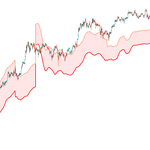
Spot $BTC: $62,678
All-In Production Cost: $66,441
Electrical Cost Floor: $53,132
Status: Accumulation
Most crypto investors spend 14 hours a day glued to 5-minute candles, refreshing alerts, and stressing over every headline.
Stop wasting your time. These simple rule can do the heavy lifting:
• Below All-In Production Cost: Accumulate systematically on a weekly schedule.
• Above All-In Production Cost: Hold or trim into strength according to my portfolio weights.
Why anchor to production cost instead of guessing bottoms?
Because real-world energy and hardware aren't free. When Bitcoin trades below what it costs the average miner to produce it, weaker miners shut off, supply tightens, and historically those levels have marked the best long-term buying zones.
No leverage. No chart-staring. Just physical economics and weekly discipline.
Are you stacking in this zone or waiting for lower?

Most of Crypto Twitter spends 14 hours a day glued to 5 minute candles, refreshing alerts, and stressing over every headline.
That’s 80% noise, and a terrible way to live.
Strip all of that away, and one of the cleanest, most logical ways to approach Bitcoin comes down to checking one single fundamental benchmark once a week: All-In Production Cost.
Here is how a dead-simple, rules-based system works:
• Any week Spot BTC trades BELOW All-In Production Cost:Buy $500. • Any week Spot BTC trades ABOVE All-In Production Cost: Sell $500.
(Scale the dollar amount to fit your portfolio—$50, $500, or $5,000—the logic stays identical.)
One check per week. Five minutes total. Then close the laptop, go touch grass, and live your life.
Why this works from first principles:
1. Economic Gravity (Without Pretending It’s a Magic Floor) Unlike fiat, Bitcoin is anchored to real-world hardware and energy costs. When spot drops below all-in production cost, like right now (~$64.1k spot vs. ~$64.9k all-in cost), it isn’t an automatic bottom. Miners can still sell into fee-subsidized margins, pushing price lower toward pure electrical cost (~$51.9k).
That’s the entire point of scaling in $500/week: if miner selling pushes price deeper into that value band, the system accumulates steadily at better averages without trying to guess the exact low.
2. Forced Discipline (Accumulate Weakness, Trim Euphoria)Staring at charts all day tricks your brain into buying aggressively at cycle highs and freezing during drawdowns. A binary weekly rule removes emotion completely, you accumulate systematically when sentiment cools and harvest liquidity when price runs well above production cost.
3. Self-Sustaining Dry Powder Over full multi-year cycles, trimming fixed increments above production cost replenishes the cash reserve needed to fund accumulation during the next drawdown, without trying to time tops or bottoms.
Where the framework has trade-offs: No model is flawless. In a sustained multi-year bull run where BTC stays above all-in production cost for 50+ weeks straight, a flat $500/week sell rule will trim your stack early unless you either: • Keep a separate "never-sell" cold storage core, or • Add a buffer (e.g., only trimming once spot trades >1.5x–2x production cost).
Simple data. Deductive logic. Five minutes a week so your capital works for you, not the other way around.
How do you track Bitcoin’s production cost, all-in miner cost or pure electrical floor, and would you pair a rules-based sleeve like this with a permanent core stack?

33


OG Farmer retweeted

Over the past week, I’ve been overwhelmed by the love and support of friends, industry colleagues, and people I've never met. Thank you to everyone who has shown kindness to my family and me. It means the world to me.
I came to the United States 53 years ago, and becoming an American citizen is one of the greatest gifts and proudest moments of my life. NVIDIA has been my life’s work. Building it into the company it is today alongside my colleagues has been a privilege and an honor. Nowhere but in America could a company like NVIDIA be possible. I love our country, and I love NVIDIA.
I did not live up to the standards expected of everyone at NVIDIA, and I have made serious mistakes in my personal life. I created problems for the Board that I deeply regret. I own my mistakes completely, and I am committed to cooperating with the Board’s independent investigation.
Since my departure, I’ve seen an outpouring of calls from NVIDIA’s employees, investors, business partners, and customers for me to return as CEO. Many continue to reach out to me directly as the company navigates complex technology, market, competitive, and geopolitical dynamics. NVIDIA is a once-in-a-generation company. If the Board of Directors decides that my return is in the best interest of our shareholders, our employees, the company, and America, I would be honored to answer these calls and return as CEO.
Thank you again to everyone who has shared their good wishes. I am profoundly humbled by your support. To my family: I love you, and I will spend the rest of my life being worthy of yours.
Jensen
What I believe to be the most simple, low stress portfolio strategy...
Most portfolios fail in one of two ways: over-diversifying into 50+ random tickers they can’t track, or over-concentrating into a single hype cycle.
There is a cleaner middle ground built on simple math and quarterly discipline. I call it the 5x20 Framework:
1. Five Uncorrelated Themes (20% each). Instead of betting the farm on one narrative, split capital equally across five distinct structural drivers, pairing a broad market foundation with four targeted growth, infrastructure, hard-asset, and asymmetric sleeves.
2. Pick 3–4 Leaders per Bucket. No sprawling watchlists, just 15 to 20 high-conviction positions total, chosen for multi-year tailwinds rather than short-term headlines.
3. Rebalance Quarterly (Zero Daily Chart-Watching). Once a quarter, trim whatever ran hot and reallocate into whatever lagged.
You systematically sell euphoria and buy quality at a discount, harvesting volatility across uncorrelated buckets without guessing macro tops or bottoms.
Simple rules. Low noise. Built to survive uncertainty rather than predict the future.
Which 5 sectors would you choose to build your portfolio?
🤖 Made with AI
Most of Crypto Twitter spends 14 hours a day glued to 5 minute candles, refreshing alerts, and stressing over every headline.
That’s 80% noise, and a terrible way to live.
Strip all of that away, and one of the cleanest, most logical ways to approach Bitcoin comes down to checking one single fundamental benchmark once a week: All-In Production Cost.
Here is how a dead-simple, rules-based system works:
• Any week Spot BTC trades BELOW All-In Production Cost:Buy $500. • Any week Spot BTC trades ABOVE All-In Production Cost: Sell $500.
(Scale the dollar amount to fit your portfolio—$50, $500, or $5,000—the logic stays identical.)
One check per week. Five minutes total. Then close the laptop, go touch grass, and live your life.
Why this works from first principles:
1. Economic Gravity (Without Pretending It’s a Magic Floor) Unlike fiat, Bitcoin is anchored to real-world hardware and energy costs. When spot drops below all-in production cost, like right now (~$64.1k spot vs. ~$64.9k all-in cost), it isn’t an automatic bottom. Miners can still sell into fee-subsidized margins, pushing price lower toward pure electrical cost (~$51.9k).
That’s the entire point of scaling in $500/week: if miner selling pushes price deeper into that value band, the system accumulates steadily at better averages without trying to guess the exact low.
2. Forced Discipline (Accumulate Weakness, Trim Euphoria)Staring at charts all day tricks your brain into buying aggressively at cycle highs and freezing during drawdowns. A binary weekly rule removes emotion completely, you accumulate systematically when sentiment cools and harvest liquidity when price runs well above production cost.
3. Self-Sustaining Dry Powder Over full multi-year cycles, trimming fixed increments above production cost replenishes the cash reserve needed to fund accumulation during the next drawdown, without trying to time tops or bottoms.
Where the framework has trade-offs: No model is flawless. In a sustained multi-year bull run where BTC stays above all-in production cost for 50+ weeks straight, a flat $500/week sell rule will trim your stack early unless you either: • Keep a separate "never-sell" cold storage core, or • Add a buffer (e.g., only trimming once spot trades >1.5x–2x production cost).
Simple data. Deductive logic. Five minutes a week so your capital works for you, not the other way around.
How do you track Bitcoin’s production cost, all-in miner cost or pure electrical floor, and would you pair a rules-based sleeve like this with a permanent core stack?
No rushing. No noise. Just steady provision and quiet mornings in creation.
Turning off the charts today to focus on faith & family. Have a blessed Sunday, everyone.

24
OG Farmer retweeted

Still hard to believe everything that's happened with Jensen.
After 33 years of building NVIDIA. I think he deserves a fair process, and we deserve the truth.
I signed this open letter to stand with Jensen. Hope you will too. 💚
standwithjensen.com
#StandWithJensen


OG Farmer retweeted

@OGFarmerMF is flying with us. Pass attached.

ALT An Aero boarding pass issued to OG Farmer (@OGFarmerMF, verified), seat 17213, from Anywhere, Oct 2026.


