

WAHO is the Specialised Institution of ECOWAS responsible for health issues. OOAS est l'institution spécialisée de la CEDEAO en charge des questions de santé.
Grand-Bassam, Côte d'Ivoire
Joined February 2016
- Tweets3.8K
- Following337
- Followers20.9K
- Likes6K







INVITATION AU WEBINAIRE
L'Organisation Ouest Africaine de la Santé (@OOAS), en collaboration avec le Réseau Ouest Africain de Documentation et de l'Information Sanitaire (ROADIS), a le plaisir de vous inviter à un webinaire sur le thème :
Science ouverte et valorisation de la recherche africaine
Cette session s'inscrit dans la série de webinaires consacrée à la science ouverte, à l'intelligence artificielle et à l'accès à l'information en santé dans l'espace CEDEAO.
📅 Jeudi 29 octobre 2026
⏰ 11h00 - 12h30 GMT
🌐 Interprétation simultanée disponible en français, anglais et portugais
Avec la participation de :
Prof. Palokinam T. Pitche, Directeur général de l'OOAS
Mme Kornelia Tzinova, Représentante de l'UNESCO à Dakar
Dr Cécile Ouattara-Coulibaly, Enseignante-chercheure à l'Université Virtuelle de Côte d'Ivoire
Inscription :
wahooas.zoom.us/webinar/regi…
Nous vous invitons à partager cette information au sein de vos réseaux professionnels et académiques.
#ScienceOuverte #RechercheAfricaine #OOAS #ROADIS #CEDEAO #OpenScience

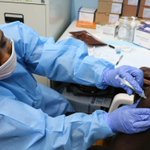
🧪 A major step forward in Lassa fever vaccine research!
The first participants have been vaccinated in Ghana in a @CEPIvaccines -supported Oxford vaccine trial, marking an important milestone for West Africa.
🔗 Read the full article (EN | FR | PT):
wahooas.org/web-ooas/news/fi…
#LassaFever #WAHO #CEPI

WAHO STRENGTHENS REGIONAL HEALTH VIGILANCE FOLLOWING CONFIRMATION OF AN EBOLA VIRUS DISEASE CASE IN NIGERIA
The West African Health Organisation (WAHO), the specialised Institution of the Economic Community of West African States (ECOWAS) responsible for health issues, is closely monitoring the health situation in Nigeria following the confirmation, on 20 October 2026, of an imported case of Ebola virus disease in the federal capital, Abuja.
According to information provided by the Nigerian health authorities, the patient, a woman who had recently arrived from Uganda, first developed symptoms on 7 October 2026 and subsequently received care at a private health facility in Abuja on 11 October 2026. The diagnosis was confirmed through laboratory testing on 20 October 2026.
WAHO is closely monitoring developments in liaison with the Nigeria Centre for Disease Control and Prevention (@NCDCgov ), the national health authorities and regional epidemiological surveillance mechanisms.
In line with its mandate to coordinate regional health emergency prevention, preparedness and response, WAHO remains fully mobilised to support Member States in strengthening epidemiological vigilance and preventing the risk of cross-border transmission. To this end, WAHO maintains regular contact with the NCDC and held a briefing on 21 October 2026 with the Directors of the National Public Health Institutes (NPHIs) of ECOWAS Member States.
WAHO emphasises that early detection, prompt notification of suspected cases, epidemiological surveillance and coordination among health services are essential to preventing and controlling the spread of epidemic-prone diseases.
WAHO therefore encourages the public to remain vigilant and observe the following recommendations:
➤ Wash hands frequently with clean water and soap or use an alcohol-based hand sanitiser.
➤ Avoid direct contact with the blood and bodily fluids (vomit, faeces, urine, saliva and sweat) of anyone who is ill or has died, as well as with their clothing, bedding and personal belongings.
➤ Do not handle the bodies of people who have died from suspected causes; ensure that safe and dignified burials are conducted by trained teams.
➤ Avoid handling or consuming bushmeat; do not handle animals found dead or sick, including bats and primates, and cook all meat thoroughly.
➤ If symptoms consistent with the disease develop, including sudden fever, severe fatigue, aches and pains, vomiting, diarrhoea or bleeding, immediately call or seek assistance from a health facility.
➤ Avoid non-essential travel to affected areas and, where travel is unavoidable, strictly follow official health guidance.
WAHO also urges the public to rely on information issued by official sources and to refrain from spreading rumours or unverified information.
WAHO reaffirms its commitment to working closely with the Ministries of Health of ECOWAS Member States and technical and financial partners to strengthen regional health security and protect the health of West African populations.
Through the ECOWAS Regional Centre for Surveillance and Disease Control (@RCSDC), a specialised agency of WAHO based in Abuja, Nigeria, WAHO will continue to monitor developments closely and, in coordination with the relevant health authorities, communicate any pertinent information requiring particular public attention.
NEW LASSA FEVER EVIDENCE TO SHAPE VACCINE RESEARCH AND OUTBREAK PREPAREDNESS ACROSS WEST AFRICA
New evidence from a major Lassa fever research programme in West Africa is expected to inform the next phase of vaccine research, outbreak preparedness and community engagement in research across the region.
Initial findings from Enable, the largest-ever study of Lassa fever disease burden, were recently published in The Lancet Global Health. The programme is supported by the Coalition for Epidemic Preparedness Innovations (@CEPI) the world’s largest funder of Lassa fever research and partners across West Africa. CEPI is also advancing the development of Lassa fever vaccines.
These findings have deepened understanding of Lassa fever disease burden in the communities studied, while highlighting important gaps in existing evidence, including the burden among children, a population historically underrepresented in Lassa fever research and discourse.
To explore what these findings mean for the future of Lassa fever research and preparedness, the West African Health Organisation (WAHO) and its partners, including CEPI, will host a virtual webinar titled “Turning ENABLE Evidence into Stronger Lassa Vaccine Research and Outbreak Preparedness Across West Africa” on Tuesday, 13 October 2026, from 12:00 p.m. to 1:30 p.m. WAT.
Participants can register at bit.ly/LassaQ3W.
The webinar comes ahead of the Enable Lassa Programme Regional Dissemination and Engagement Summit in Nigeria later this month, where partners will discuss the research findings and how to translate evidence into action.
Lassa fever remains a persistent public health challenge across West Africa. According to Africa CDC, historical estimates suggest that approximately 100,000 to 300,000 Lassa virus infections and 5,000 associated deaths occur annually across the region, although the true burden remains uncertain. Enable was established to help investigate this burden. More than five decades after Lassa fever was first identified, there is still no licensed vaccine, while important evidence gaps continue to affect vaccine development and planning for equitable introduction.
The recently published findings from Enable provide important insights into disease burden in the Lassa fever hotspots studied and the populations most affected.
They also demonstrate the value of building stronger research and laboratory capacity in endemic countries. Through the programme, institutions and investigators across West Africa have strengthened their ability to conduct epidemiological and laboratory research and generate evidence that can support future Lassa fever research and wider regional epidemic preparedness.
“The findings from Enable are a critical contribution to our understanding of Lassa fever in West Africa. But evidence only becomes truly valuable when it informs action,” said Dr Gabrielle Breugelmans, Director of Epidemiology and Data Science at CEPI. “This webinar and our upcoming Summit provide an important opportunity to bring researchers, policymakers, communities, vaccine developers and other stakeholders together to consider what these findings mean for the research and preparedness decisions that come next.”
“For West Africa, the Enable findings reinforce the importance of strong regional leadership and collaboration in advancing Lassa fever research and preparedness,” said Prof. Palokinam T. Pitché, Director-General of WAHO. “WAHO remains committed to bringing countries and partners together to translate scientific evidence into coordinated action, strengthen regional health security and support preparedness for future Lassa fever vaccines.”
Alongside discussion of Enable’s findings, the webinar will connect the study data with ongoing efforts to understand future demand for a Lassa fever vaccine. WAHO and the International AIDS Vaccine Initiative (IAVI), working with regional research partners and with support from CEPI, have advanced a Lassa fever vaccine demand forecasting exercise, which was first presented at the 2nd ECOWAS Lassa Fever International Conference in Abidjan in September 2025.
The webinar will place the experiences of study participants and communities at the centre of the conversation. Their participation, trust and contribution have been fundamental to generating the evidence now informing the next phase of Lassa fever research.
Participants will hear directly from experts across the Lassa fever research and development ecosystem, as well as from people and communities who contributed to the Enable study. Discussions will explore how meaningful community partnership can build trust, support participation and guide future research and vaccine development as the region prepares for the potential future introduction of a Lassa fever vaccine.
Speakers include:
· Dr Gabrielle Breugelmans, Director of Epidemiology and Data Science at CEPI.
· Dr N’Faly Magassouba, Principal Investigator at Gamal Abdel Nasser University of Conakry, Guinea.
· Dr Onyinyechukwu Uzoamaka Oka, Community Engagement Lead for the Enable study at Alex Ekwueme Federal University Teaching Hospital, Abakaliki (AEFUTHA), Nigeria.
· Mrs Elsie Ilori, National Coordinator for the Enable Programme in Nigeria.
· The webinar will also feature Prof. Palokinam T. Pitche, Director General of WAHO, who assumed office on 1 September 2026, providing an opportunity to hear his perspective on regional priorities for Lassa fever preparedness and the role of evidence in strengthening health security across West Africa.
What the webinar will cover:
· Key findings on Lassa fever burden in the communities studied.
· Implications for Lassa fever vaccine research and development.
· The burden among children and other populations less visible in previous research.
· How Enable has strengthened epidemiological, laboratory and research capacity across West Africa.
· Community and participant perspectives on trust, participation and meaningful engagement in health research.
· How epidemiological evidence and vaccine demand forecasting can support vaccine preparedness and equitable access.
· Remaining evidence gaps and priorities for future Lassa fever research and preparedness.
Webinar details
Date: Tuesday, 13 October 2026
Time: 12:00 p.m.–1:30 p.m. WAT / 11:00 a.m.–12:30 p.m. UTC
Format: Virtual
Topic: Turning ENABLE Evidence into Stronger Lassa Vaccine Research and Outbreak Preparedness Across West Africa
Registration: bit.ly/LassaQ3W

WAHO | OOAS retweeted

Research evidence has an important role to play in strengthening how West Africa prepares for Lassa fever.
Join the DG of @OOASWAHO & other experts as they explore how ENABLE findings can inform vaccine research, clinical trials & outbreak preparedness: bit.ly/LassaQ3W

WAHO | OOAS retweeted

Lassa fever vaccine development needs sustained investment and regional collaboration.
On 11 October, @OOASWAHO will support a high-level roundtable at the #WHS2026 in Berlin to explore financing for #vaccine #development, clinical research and regional manufacturing.
#LassaFever

WEST AFRICAN HEALTH ORGANISATION SUPPORTS ROUNDTABLE ON FINANCING LASSA FEVER VACCINE DEVELOPMENT DURING THE WORLD HEALTH SUMMIT IN BERLIN
The West African Health Organisation (@OOASWAHO ) is supporting a high-level roundtable in Berlin on Sunday, 11 October 2026, to explore a collaborative financing framework for Lassa fever vaccine development, research readiness and regional manufacturing.
Convened by IAVI, MedAccess and the Coalition for Epidemic Preparedness Innovations (@CEPIvaccines ), the meeting is organised with support from WAHO and Deutsche Gesellschaft für Internationale Zusammenarbeit (@GIZ), with funding from Germany’s Federal Ministry for Economic Cooperation and Development (@BMZ_Bund ).
The roundtable will bring together regional and global partners to review progress towards a proposed financing framework, explore complementary partner roles and identify concrete next steps, including potential partner commitments.
Lassa fever remains a significant public health threat in West Africa. Advancing vaccine development requires sustained investment in late-stage clinical research, research readiness and manufacturing. Limited commercial incentives for epidemic vaccines underscore the need for collaborative approaches to financing these activities.
The discussions build on the September 2025 Abidjan Ministerial Roundtable, convened by WAHO with the Governments of Côte d’Ivoire and Nigeria, which brought together Ministers of Health or their representatives from 11 West African countries. The resulting Communiqué supported advancing IAVI’s recombinant vesicular stomatitis virus (rVSV) Lassa fever vaccine candidate as a regional pathfinder and committed to mobilising national, regional and global resources through a collaborative co-funding approach.
Building on these commitments, WAHO will bring the priorities of @ecowas_cedeao Member States into the financing discussions, advocating for regional ownership and coordinated investment in Lassa fever vaccine preparedness. Represented by Dr @vlokossou , Director of Healthcare Services, WAHO will emphasise how investments in vaccine development can also strengthen clinical research, laboratory capacity, surveillance, regulatory systems and regional preparedness for future epidemic threats.
Complementing this regional leadership, WAHO has led the regional Demand Forecasting Working Group, drawing on country consultations, expert interviews, key informant inputs and national Lassa Task Forces to generate projections that can inform the Lassa fever vaccine investment case.
The proposed financing framework aims to bring together complementary contributions from public, philanthropic and other financing partners to support the advancement of Lassa fever vaccines. If successful, this approach could also provide a model for financing other priority epidemic vaccines.
IAVI’s investigational rVSV Lassa fever vaccine candidate, supported by CEPI and the European and Developing Countries Clinical Trials Partnership (EDCTP), illustrates the importance of sustained investment in vaccine development alongside stronger regional research and manufacturing capabilities.
Event details:
High-Level Roundtable on Financing Lassa Fever Vaccine Development
Date: Sunday, 11 October 2026
Time: 16:30–18:00 CEST
Venue: Pullman Berlin Schweizerhof, Budapester Str. 25, 10787 Berlin, Germany
Format: Closed-door roundtable

WAHO RECEIVES KEYS TO ITS TEMPORARY HEADQUARTERS IN GRAND-BASSAM
The West African Health Organisation (WAHO), the specialised health institution of the Economic Community of West African States (ECOWAS), officially received the keys to its temporary headquarters at the Village of Information Technology and Biotechnology (VITIB) in Grand-Bassam, Côte d’Ivoire.
The ceremony brought together senior Ivorian government officials, representatives of ECOWAS and its institutions, WAHO leadership, VITIB officials, partner institutions and other distinguished guests. It marked a major milestone in WAHO’s relocation to Côte d’Ivoire, following the decision taken by the ECOWAS Authority of Heads of State and Government on 14 December 2025 in Abuja.
In his address, Minister Delegate Adama DOSSO highlighted the institutional and political significance of the handover, which gives concrete expression to the Ivorian Government’s commitment to providing favourable conditions for WAHO’s establishment. He noted that the decision to host the Organisation reflects the confidence placed in Côte d’Ivoire by ECOWAS Heads of State and Government and the country’s commitment to regional integration.
He commended the efforts of the national administrations and institutions involved, particularly the National State Property Management Company (SONAPIE) and VITIB, which enabled the premises to be prepared within a short timeframe.
Mr Jean Louis MOULOT, Minister Delegate in charge of Technical Education and Mayor of Grand-Bassam, welcomed WAHO’s arrival as a significant step in the city’s development and its growing role as a centre for technology and health. He highlighted investments in health infrastructure, the development of VITIB and the construction of the National Oncology and Radiotherapy Centre.
He stressed that WAHO’s establishment would reinforce this momentum while providing further opportunities for cooperation and innovation. It also reflects the determination of West African countries to pool expertise and develop common responses to regional health challenges.
The Director General of WAHO, Professor Palokinam T. PITCHE, expressed his gratitude to the Government and people of Côte d’Ivoire for their hospitality and the measures taken to facilitate the Organisation’s relocation. He also paid tribute to the Government of Burkina Faso and the people of Bobo-Dioulasso, who hosted and supported WAHO for several decades, and thanked the ECOWAS Commission and all stakeholders involved in the transition.
Emphasising the significance of the handover, he stated: “It marks a decisive step in WAHO’s effective establishment in the Republic of Côte d’Ivoire and opens a new chapter in the institutional life of our Organisation.”
Professor PITCHE highlighted the opportunities offered by WAHO’s location within VITIB to connect health expertise with technological innovation. “Our presence at VITIB should be an invitation to build bridges between health, innovation, digital technologies and biotechnology, for the benefit of West African populations,” he said.
He identified key priorities for cooperation with the Ivorian health authorities, including access to quality healthcare and health services, epidemic prevention and response, preparedness for other health emergencies, access to quality medicines and vaccines, and stronger regional health initiatives.
Reaffirming WAHO’s regional mandate, he expressed the hope that the new headquarters would strengthen cooperation among Member States and become “a space for consultation, coordination, innovation and the development of common solutions to West Africa’s health challenges.”
Mr Mebeti DOSSO, Director General of VITIB, welcomed WAHO to the Grand-Bassam technology park. He noted that its presence strengthens VITIB’s scientific, technological and regional role and creates opportunities for collaboration in digital health, training and innovation.
He reaffirmed VITIB’s readiness to support WAHO’s establishment and provide an environment conducive to the fulfilment of its mandate, with a view to developing concrete joint initiatives in support of health and regional integration.
WAHO’s establishment in Grand-Bassam opens a new chapter in its cooperation with Côte d’Ivoire and offers opportunities to connect national expertise with regional health priorities. From its new host country, the Organisation will continue to pursue its mandate of harmonising health policies and strategies, strengthening regional cooperation and promoting solidarity among Member States for the benefit of West African populations.


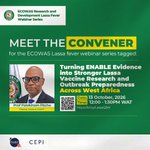
Meet the Convener | @ecowas_cedeao Lassa Fever Webinar Series
Join Prof. Palokinam Pitche, @DG_OOASWAHO of WAHO, at the forthcoming webinar on “Turning ENABLE Evidence into Stronger Lassa Vaccine Research and Outbreak Preparedness Across West Africa.”
📅 13 October 2026
🕛 12:00–1:30 PM WAT
🔗 Register: bit.ly/LassaQ3W
Register and join the conversation.

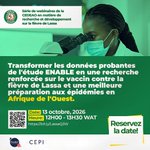
Save the Date | 13 octobre 2026
Participez au prochain webinaire de la @ecowas_cedeao sur la recherche et le développement consacré à la fièvre de Lassa, sur le thème : « Transformer les données probantes d’@ENABLE en une recherche vaccinale plus solide contre la fièvre de Lassa et renforcer la préparation aux épidémies en Afrique de l’Ouest. »
Le webinaire présentera les principaux résultats d’ENABLE 1.0 et examinera ce que ces données impliquent pour la recherche sur les vaccins contre la fièvre de Lassa, la préparation aux épidémies et les priorités futures en Afrique de l’Ouest.
📅 13 octobre 2026
🕛 12 h 00 – 13 h 30 WAT
🔗 Inscription : bit.ly/LassaQ3W

À l’occasion du 68ᵉ anniversaire de l’indépendance de la République de Guinée, l’Organisation Ouest Africaine de la Santé (OOAS) adresse ses chaleureuses félicitations au Gouvernement et au peuple guinéen.
En ce jour de commémoration nationale, l’OOAS salue le parcours de Guinée ainsi que son engagement en faveur de l’intégration, de la solidarité et de la coopération régionale.
L’OOAS réaffirme à cette occasion son engagement aux côtés de Guinée et de l’ensemble des États Membres pour faire progresser la santé, renforcer la résilience des systèmes de santé et promouvoir le bien-être des populations de l’Afrique de l’Ouest.
🇬🇳 Bonne fête de l’Indépendance à la République de Guinée !
#OOAS #WAHO #Guinée #Independência #Saúde #ÁfricaOcidental


On the occasion of the 66th anniversary of the Independence of the Federal Republic of Nigeria, the West African Health Organisation (WAHO) extends its warmest congratulations to the Government and people of Nigeria.
On this important national occasion, WAHO celebrates Nigeria’s journey and its commitment to regional integration, solidarity and cooperation within ECOWAS.
WAHO reaffirms its commitment to working alongside Nigeria and all ECOWAS Member States to advance health, strengthen the resilience of health systems and promote the well-being of people across West Africa.
Happy Independence Day to the Federal Republic of Nigeria! 🇳🇬
#WAHO #OOAS #Nigeria #IndependenceDay #ECOWAS #Health #WestAfrica
🤖 Made with AI


What can new evidence tell us about Lassa fever transmission, surveillance, vaccine development and preparedness across West Africa? The latest edition of the Lassa Lens Initiative Newsletter is now out! Read the latest edition and stay informed on the evidence, innovations and initiatives advancing Lassa fever preparedness.
Click to read: mailchi.mp/390ad522553d/unti…
Subscribe: wahooas.us15.list-manage.com…
#EndLassaFever

Por ocasião do 53.º aniversário da Independência da República da Guiné-Bissau, a Organização Oeste Africana da Saúde (OOAS) apresenta as suas calorosas felicitações ao Governo e ao povo da Guiné-Bissau.
Neste importante dia de celebração nacional, a OOAS saúda o percurso da Guiné-Bissau e o seu compromisso com a integração, a solidariedade e a cooperação regional no seio da CEDEAO.
Nesta ocasião, a OOAS reafirma o seu compromisso de continuar a trabalhar ao lado da Guiné-Bissau e de todos os Estados Membros da CEDEAO para promover a saúde, reforçar a resiliência dos sistemas de saúde e contribuir para o bem-estar das populações da África Ocidental.
Feliz Dia da Independência à República da Guiné-Bissau! 🇬🇼
🤖 Made with AI


PROFESSOR PITCHE PLACES TEAMWORK, EFFICIENCY AND SOLIDARITY AT THE HEART OF HIS MANAGEMENT APPROACH AT WAHO
The Director General of the West African Health Organisation (WAHO), Professor PALOKINAM T. PITCHE, held his first meeting with the entire staff of the Organisation on Friday, 11 September 2026, at the ECOWAS Resident Representation in Abidjan.
The meeting provided an opportunity for him to share with staff his vision for the functioning of the institution and the principles that will guide his management throughout his tenure.
Addressing the staff, Professor PITCHE first commended the work accomplished over the past few years, particularly in a regional context marked by several challenges and despite sometimes difficult working conditions. He thanked staff members for their commitment and contribution to ensuring the continuity of WAHO's activities.
The Director General placed teamwork at the heart of his management approach. Drawing on the metaphor of a sports team, he stressed that collective performance should take precedence over individual interests and that every member of staff, regardless of their role, has a part to play in achieving the Organisation's objectives.
“We are a team. What matters most is that everyone plays their part and contributes to the performance of the whole. We must move forward together and win together,” he emphasised.
For Professor Pitche, collective success will depend on the ability of each staff member to carry out their assigned tasks effectively, as well as on solidarity among staff in addressing the challenges facing the Organisation. In this regard, he identified efficiency as one of the key criteria for performance. The pursuit of efficiency, he stressed, must be underpinned by trust and accountability.
He also highlighted several values that he would like to see further strengthened within WAHO: fraternity, solidarity, cordiality and mutual respect. Respect, he noted, must apply to everyone, regardless of position or responsibility, and should be reflected in day-to-day professional relationships.
Professor Pitche further called on staff to actively contribute to promoting the image of WAHO and ECOWAS. According to him, every staff member should consider themselves an ambassador of the institution and contribute, through their conduct and work, to raising awareness of the achievements of WAHO and ECOWAS and their impact on the lives of the people of the region.
In this regard, he underscored the importance of strengthening communication around the Organisation's activities and results in order to enhance understanding of its mandate, interventions and contribution to improving the health of West African populations.
In conclusion, Professor Palokinam T. Pitche reaffirmed his availability and openness to dialogue with all staff. He called on everyone to contribute, in a spirit of good faith and responsibility, to building a professional environment conducive to collective performance.
This first meeting with staff therefore reflects the new Director General's commitment to pursuing his mandate through an approach founded on teamwork, efficiency, trust, accountability, solidarity and mutual respect, in support of WAHO's mission and health integration in West Africa.


WAHO WELCOMES ITS NEW DIRECTOR GENERAL IN ABIDJAN AND PAYS TRIBUTE TO THE OUTGOING DIRECTOR GENERAL
The West African Health Organisation (WAHO) held a ceremony on Wednesday, 9 September 2026, at the ECOWAS Resident Representation in Côte d’Ivoire, marking the assumption of duty in Abidjan by the new Director General, Professor PALOKINAM T. PITCHE, and a farewell to the outgoing Director General, Dr Melchior Athanase J. C. AÏSSI, at the end of his four-year tenure at the helm of the Organisation.
The ceremony brought together staff of WAHO, the ECOWAS Resident Representation in Côte d’Ivoire and the Inter-Governmental Action Group against Money Laundering in West Africa (GIABA), as well as some members of Dr AÏSSI’s family and the Lead Representative of WAHO’s Technical and Financial Partners.
The event featured the screening of a documentary highlighting the key achievements of the outgoing Director General’s tenure, as well as addresses by the two Directors General and the Lead Representative of WAHO’s Technical and Financial Partners.
In his address, Dr Melchior Athanase J. C. Aïssi reflected on his four years at the helm of WAHO, highlighting progress made in the harmonisation of regional health policies, community health, quality of care, malaria elimination, strengthening of technical platforms and support provided to Member States. He commended the contributions of staff and Technical and Financial Partners and called on them to extend their full support to his successor.
Assuming his duties in Abidjan, Professor Palokinam T. Pitche commended the work accomplished by his predecessor and reaffirmed his commitment to consolidating the gains made. He indicated that his leadership would be aligned with ECOWAS priorities, with particular emphasis on the harmonisation of health policies and processes, strengthening the provision of basic health services, improving access to quality medicines and vaccines, preparedness and response to health emergencies, and supporting Member States in their efforts towards universal health coverage.
The ceremony was also marked by the signing of the official record of assumption of duty in Abidjan, formalising Professor Palokinam T. Pitche’s assumption of office at the Organisation.
As part of the farewell and recognition ceremony, certificates of recognition and farewell gifts were presented to Dr Melchior Athanase Joël C. Aïssi and his wife. His Executive Assistant, Dr Félix Agbla, also received tokens of recognition for his support.
The ceremony thus marked, in a spirit of institutional continuity, the conclusion of Dr Melchior Athanase J. C. AÏSSI’s tenure and Professor Palokinam T. Pitche’s assumption of duty in Abidjan, opening a new chapter in WAHO’s mission to promote the health and well-being of the people of the ECOWAS region.


LE PROFESSEUR PALOKINAM T. PITCHE PREND SES FONCTIONS A LA TETE DE L’ORGANISATION OUEST AFRICAINE DE LA SANTE
L’Organisation Ouest Africaine de la Santé (OOAS), institution spécialisée de la Communauté Économique des États de l’Afrique de l’Ouest (CEDEAO) chargée des questions de santé, accueille à compter de ce 1er septembre 2026 son nouveau Directeur Général, le Professeur Palokinam T. PITCHE.
Médecin hospitalo-universitaire et spécialiste de santé publique, le Professeur PITCHE possède plus de vingt-cinq années d’expérience dans l’administration des services de santé, la gestion de programmes, le renforcement des systèmes de santé, la formation des professionnels de santé ainsi que la coordination d’acteurs gouvernementaux, de partenaires techniques et financiers et d’organisations communautaires. Il dispose également d’une solide expérience en matière de mobilisation des ressources et de gestion de programmes financés par des partenaires bilatéraux et multilatéraux.
Avant sa nomination à la tête de l’OOAS, il a notamment exercé les fonctions de Coordonnateur national du Programme national de lutte contre le Sida du Togo de 2007 à 2012, avant de devenir, à partir de 2012 à ce jour, Coordonnateur national du Secrétariat permanent du Conseil national de lutte contre le Sida et les IST (CNLS-IST), structure multisectorielle rattachée à la Présidence de la République togolaise.
Son parcours présente également une forte dimension régionale et internationale. Depuis 1996, il a réalisé différentes missions de consultation pour des institutions et partenaires tels que l’Organisation mondiale de la santé (OMS), le Programme commun des Nations Unies sur le VIH/sida (ONUSIDA), l’Agence des États-Unis pour le développement international (USAID), l’OOAS, le Programme des Nations Unies pour le développement (PNUD) et le Fonds des Nations Unies pour la population (UNFPA). Ses interventions ont notamment porté sur l’élaboration de politiques et de plans stratégiques, la mobilisation des ressources ainsi que l’harmonisation de protocoles de prise en charge du VIH et de curricula de formations postdoctorales dans les pays de la CEDEAO.
Professeur titulaire de dermato-vénéréologie du CAMES depuis juillet 2007, le Professeur PITCHE est agrégé de médecine depuis 2002 et Docteur d’État en médecine de l’Université de Lomé. Il est également titulaire de plusieurs diplômes et certifications spécialisés, notamment en dermato-vénéréologie, épidémiologie, VIH, parasitologie et médecine tropicale, ainsi qu’en immunologie, vaccinologie et biotechnologies appliquées aux maladies infectieuses. Son parcours de formation l’a notamment conduit à l’Université Félix Houphouët-Boigny, à l’Université Paris-Sud, à l’Université Johns Hopkins/CDC et à l’OMS à Genève.
Enseignant à la Faculté des Sciences de la Santé de l’Université de Lomé depuis 1997, il contribue à la formation des étudiants en médecine et des professionnels de santé, ainsi qu’à l’encadrement de travaux de recherche scientifique. Médecin hospitalier au CHU Sylvanus Olympio de Lomé, il y exerce les fonctions de Chef du service de dermato-vénéréologie depuis 2015.
À cette riche expérience professionnelle s’ajoute une importante production scientifique. Il est auteur et coauteur de plus de 250 articles scientifiques et de quatre ouvrages, principalement consacrés à la dermatologie, aux infections sexuellement transmissibles, au VIH/Sida et à la santé sexuelle.
La prise de fonction du Professeur Palokinam T. PITCHE ouvre ainsi une nouvelle étape à la tête de l’OOAS, avec pour mission de poursuivre les efforts de l’Organisation en faveur du renforcement de la coopération sanitaire régionale et de l’amélioration de la santé des populations de l’espace CEDEAO.

WAHO HANDS OVER LABORATORY EQUIPMENT WORTH MORE THAN €1.5 MILLION TO GUINEA-BISSAU
The West African Health Organisation (@OoasWaho ) officially handed over laboratory equipment to the Government of Guinea-Bissau on 19 August 2026, as part of the _“Strengthening of Epidemiological Services and Health Systems in the ECOWAS Region (PROALAB)_ ” project, funded by the Federal Republic of Germany through @KfW Entwicklungsbank.
The laboratory equipment handed over represents a total investment of €1,511,499.77 and will strengthen the capacity of the National Public Health Laboratory (LNSP), contributing to improved laboratory diagnostics, epidemiological surveillance and Guinea-Bissau’s capacity to respond to public health threats.
The official handover ceremony took place at the National Public Health Laboratory, where the Director General of WAHO, Dr Melchior Athanase Joël C. Aïssi, formally handed over the laboratory equipment to the Minister of Public Health of Guinea-Bissau, Commodore Dr Quinhin Nantote. The handover was witnessed by the ECOWAS Resident Representative in Guinea-Bissau, Ambassador Ngozi Ukaeje. Also present were the WAHO Focal Point in Guinea-Bissau, Dr Plácido Cardoso, and the Director General of the National Public Health Laboratory, Dr Baltazar Cá.
The handover forms part of the implementation of Phase 2 of the @PROALAB project, whose first component focuses on strengthening surveillance systems and laboratories at regional level through a series of procurements for the benefit of reference laboratories in five @ecowas_cedeao countries: Ghana, Guinea, Guinea-Bissau, Senegal and The Gambia.
The equipment will enhance the operational and technical capacity of the National Public Health Laboratory and includes PCR and immunological testing equipment, general laboratory equipment, laboratory products and materials, as well as reagents and consumables.
This support aims to contribute to the sustainable strengthening of national diagnostic and laboratory surveillance capacities, providing the National Public Health Laboratory with improved resources to fulfil its role in the detection and laboratory confirmation of diseases and in responding to public health threats and emergencies.


