

Who’s to say? / Wie mag het zeggen?
Utrecht, the Netherlands
Joined June 2007
- Tweets34.1K
- Following2.1K
- Followers1.8K
- Likes4.9K
Stephan Verveen 💬 retweeted

Jensen traces Taiwan's chip dominance back to an unlikely source: Philips, the Dutch consumer electronics giant he calls "the GE of Europe."
Philips, he says, is "the parent company that spun the fab that became TSMC, and spun off the semiconductor manufacturing equipment that became ASML."
The seed was planted in the 1950s by K.T. Li, who set out to bring science and technology manufacturing to Taiwan and lured Philips over. Then came perfect timing with the PC revolution: IBM opened the specs for IBM compatible chipsets, and Taiwanese engineers took that open spec and designed the chipsets "manufactured at TSMC and UMC." That is what made the PC industry possible.
A young Michael Dell just "bought motherboards from Taiwan, assembled them into a PC," and became a PC maker.
Jensen Huang on Lex Fridman
Stephan Verveen 💬 retweeted

Should Europe leave frontier AI to the Americans and the Chinese?
The idea has gained ground in Europe. It is a fundamental mistake.
Build or surrender: for now, the choice is still ours.
Full article below.
Stephan Verveen 💬 retweeted

Dusting off this tweet from April because this gap in shared understanding of LLM capability is *widening*. It's now less "two groups of people speaking past each other" and more a sharp funnel.
- Napkin math somewhere around 6B people (~75% of the population) have barely come in contact with LLMs at all.
- Around 1-2B (~20%) are casual and infrequent users of free-tier ChatGPT-like products. This group sees derpy chatbots and treats them a bit like a better Google search, a writing aid, or etc. Maybe an agent tries to book you a flight. I have non-tech friends who (reasonably, imo) say they have not much use for it at all. Even many professionals outside of math&code are in this tier. For example, execs and many other functions spend a lot of their time talking to other people, so while they understand what is happening intellectually, it is still second-hand and a bit abstract.
- Now we get to professional use of frontier-grade LLMs in math&code. Somewhere around 20M people (0.2%) see first-hand that large, complex projects that used to take them weeks/months can now be completed by agents with a prompt. Building apps, copying apps, translating apps, decompiling apps from binaries... This has all happened very quickly and recently - less than 1 year ago, I was writing code manually by hand, typing memorized computer code commands into a code editor character by character, occasionally pressing Tab to autocomplete a little chunk of code.
- And finally we get to the ~5,000 people (~0.00006%) with access to frontier-grade systems internally. The external world has seen the preview. It looks like swarms of thousands of agents collaborating over weeks on software mega projects: minting zero days, running cyber attacks and defenses at machine speeds, discovering new science, advancing the frontier of mathematics. Things that would have taken top professionals in the industry years of work. Meanwhile, human review and comprehension are starting to fall behind. For example, people are still involved in the "archeology" of the OpenAI-HF incident from many months ago. Mathematicians may be poring over the 722 manuscripts on frontier mathematics for a while.
The funnel is driven by a combination of factors:
1. The impact scales with ambition, problem size, and horizon. A question with a paragraph answer barely stresses the system. You need a reservoir of big, difficult problems that you really care about. This aspect drives the consumer / professional dimension of the funnel.
2. The jaggedness of the system (which I have written about a lot separately). Capability peaks in domains that are digital, verifiable and economically valuable. This is because LLM capability emerges from reinforcement learning on verifiable rewards on a curated environment mixture driven by revenue potential. This aspect primarily drives the area (e.g. math&code) dimension of the funnel.
3. Access. Free-tier, paid-tier, internal.
So this is the weirdness of the moment. The general public has mostly not interacted with these systems. When they have, it looks like a derpy chatbot. The majority of professionals still see only a modest uplift. And a small sliver of professionals are experiencing the vertigo of the curve going vertical. And it is all happening at the same time.

Judging by my tl there is a growing gap in understanding of AI capability.
The first issue I think is around recency and tier of use. I think a lot of people tried the free tier of ChatGPT somewhere last year and allowed it to inform their views on AI a little too much. This is a group of reactions laughing at various quirks of the models, hallucinations, etc. Yes I also saw the viral videos of OpenAI's Advanced Voice mode fumbling simple queries like "should I drive or walk to the carwash". The thing is that these free and old/deprecated models don't reflect the capability in the latest round of state of the art agentic models of this year, especially OpenAI Codex and Claude Code.
But that brings me to the second issue. Even if people paid $200/month to use the state of the art models, a lot of the capabilities are relatively "peaky" in highly technical areas. Typical queries around search, writing, advice, etc. are *not* the domain that has made the most noticeable and dramatic strides in capability. Partly, this is due to the technical details of reinforcement learning and its use of verifiable rewards. But partly, it's also because these use cases are not sufficiently prioritized by the companies in their hillclimbing because they don't lead to as much $$$ value. The goldmines are elsewhere, and the focus comes along.
So that brings me to the second group of people, who *both* 1) pay for and use the state of the art frontier agentic models (OpenAI Codex / Claude Code) and 2) do so professionally in technical domains like programming, math and research. This group of people is subject to the highest amount of "AI Psychosis" because the recent improvements in these domains as of this year have been nothing short of staggering. When you hand a computer terminal to one of these models, you can now watch them melt programming problems that you'd normally expect to take days/weeks of work. It's this second group of people that assigns a much greater gravity to the capabilities, their slope, and various cyber-related repercussions.
TLDR the people in these two groups are speaking past each other. It really is simultaneously the case that OpenAI's free and I think slightly orphaned (?) "Advanced Voice Mode" will fumble the dumbest questions in your Instagram's reels and *at the same time*, OpenAI's highest-tier and paid Codex model will go off for 1 hour to coherently restructure an entire code base, or find and exploit vulnerabilities in computer systems. This part really works and has made dramatic strides because 2 properties: 1) these domains offer explicit reward functions that are verifiable meaning they are easily amenable to reinforcement learning training (e.g. unit tests passed yes or no, in contrast to writing, which is much harder to explicitly judge), but also 2) they are a lot more valuable in b2b settings, meaning that the biggest fraction of the team is focused on improving them. So here we are.
Stephan Verveen 💬 retweeted

President Trump’s decision to lift sanctions on Russian fuel amidst Putin’s ongoing and brutal attacks on civilian targets in Ukraine makes no sense and is a betrayal of the legacy and leadership of the late Senator Lindsey Graham.
While Ukraine fights for its survival, Putin’s war machine continues to prosecute his terrorist war on civilian populations and innocent Ukrainians are dying every day.
Now, Instead of implementing the tough sanctions Lindsey Graham fought to his last breath to enact, President Trump has announced the United States is lifting sanctions on Russian energy, fueling the Putin’s war machine.
As I saw firsthand in Ukraine last month, Putin is losing this war. Ukraine has fought the Russian military to a standstill and reinvented warfare with drones taking the fight into the heart of Russia.
America should not be throwing a lifeline to Putin’s war machine. Now is the time to stand strong against Russian aggression as we did during the first Trump administration.
Putin doesn’t want peace. Putin wants Ukraine. I have no doubt that if Putin overruns Ukraine, it will only be a matter of time until Russia’s military crosses a border that our troops will have to deal with him.
America is the Leader of the Free World. For our National Security, for the security of our Allies in Europe including Ukraine, President Trump should rescind this deal immediately and return to the strong policies of our four years in the White House; impose harsh sanctions on any nation purchasing Russian energy and work with our allies to ensure Ukraine has the military support it needs to repel and defeat this Russian invasion once and for all. Slava Ukraini🇺🇸🇺🇦
Stephan Verveen 💬 retweeted
People are surprised that AI is finding weird unelegant maths results like this. I think there is a plausible explanation.
Maths (and adjacent disciplines like physics and comp sci) had elegant results so far because humans are biased towards elegant solutions. I think this bias is due to how human minds work. We have a pretty small context window, and we are only able to find solutions that are relatively elegant.
This gave us the impression that maths and the universe are elegant. Maybe they are not, and we are now finding out because we have intelligences that can work with much more complex solutions.


Stephan Verveen 💬 retweeted
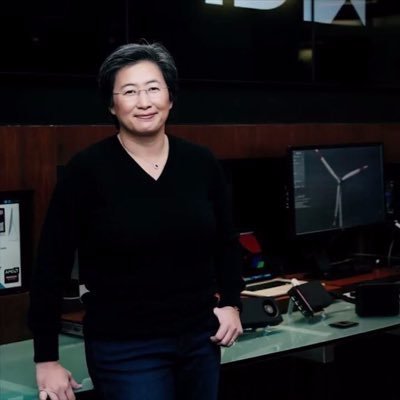
So excited to welcome @theworldlabs and @drfeifei to the @AMD family! I’ve always been a huge fan of Fei-Fei and her pioneering research in AI. Together, we’ll combine World Labs’ deep expertise in AI and world models with AMD’s compute leadership to power the future of AI and strengthen the open AI ecosystem. Can’t wait for all we’ll accomplish!



Stephan Verveen 💬 retweeted

Met onder meer Brainport Eindhoven en een bedrijf als ASML is Nederland een vruchtbare bodem voor innovatie. Voeg daar de indrukwekkende Franse technologische capaciteit aan toe – met een AI-koploper als Mistral – en het is duidelijk wat onze landen technologisch gezien in huis hebben.
President Macron was vandaag in ons land op bezoek. Hij en ik zijn ervan overtuigd dat we als Europa ons enorme potentieel nog beter kunnen benutten, dat we als Europa een AI- en techreus kunnen en moeten worden.
Dit betekent dat we die bedrijven, onderzoek, talent en industrie beter met elkaar gaan verbinden. Dat we investeringen aanjagen, zorgen voor betere regelgeving en een goede energie-infrastructuur. Zodat onze techbedrijven kunnen opschalen en excelleren.
Frankrijk en Nederland doen dit niet alleen. We bundelen de komende tijd samen met andere Europese landen, zoals Duitsland, en de Europese Commissie de krachten met onze grote Europese techbedrijven.
Stephan Verveen 💬 retweeted

The knowledge that makes AI useful is diffused. It lives with scientists, engineers, clinicians, firms. For AI to benefit from distributed knowledge, it must itself be distributed. Agree with Jensen that this is a future worth building.

For my first post, I’m sharing a letter @NVIDIA signed on why open models matter.
AI will transform every industry, power every company, and be built by every country.
Open models strengthen safety and cybersecurity, accelerate innovation and diffusion, and enable sovereignty.
The world needs both frontier closed models and frontier open models.
images.nvidia.com/pdf/Open-W…


Stephan Verveen 💬 retweeted

An important piece from Demis. We need more of this kind of thinking. A good reminder that the goal is a frontier ecosystem that promotes innovation and choice, while avoiding any one model drop that breaks the world!


Stephan Verveen 💬 retweeted

Marc Andreessen says Alex Karp almost never talks about Palantir in interviews. He calls it the single best marketing strategy he has ever seen and then revealed the number that proves it works better than anything else in the history of investor communications.
Every founder makes the same mistake. They think inside out. My company, my product, my story, out into the world. It feels natural. It is also why most founder content is indistinguishable from every other founder's content.
Karp does the opposite.
He talks about the future of the US military. He talks about superintelligence. He talks about whatever is genuinely interesting to him about the world right now. And because he is the CEO of Palantir, the company just sits there attached to all of it.
Then Marc dropped the number.
What percentage of Palantir investors have read the S1? Practically zero. What percentage have seen Karp on YouTube? Close to 100.
A Edelman B2B study found that thought leadership content drives purchasing consideration more than product marketing does — by a factor of nearly three to one among enterprise buyers. Karp did not read that report. He just built the playbook it describes.
Palantir's lawyers spent thousands of hours on the S1. It explains everything the company does with full precision. Nobody read it.
Karp spent those hours talking about things that interested him. Everybody watched.
The most effective investor communication Palantir ever produced was never filed with the SEC.
Watch the full video on @a16z YouTube channel
Stephan Verveen 💬 retweeted

Goed gedaan, @StasDigi: klassieke overheidstaken moet je niet uitbesteden. Technologie uitbesteden aan derde landen betekent bovendien dat je toekomstige (geo)politieke drukpunten creëert. Goed dat er ook vanuit die bril wordt nagedacht. Van 30-11-2025 @Buitenhoftv youtu.be/tyr95KOn2jE?is=zmcq…

De staatssecretaris van Economische Zaken en Klimaat neemt het advies van het Bureau Toetsing Investeringen over en besluit tot een verbod van de overname van Solvinity door Kyndryl.
Kamerbrief ⤵️
open.overheid.nl/details/ec6…
Stephan Verveen 💬 retweeted

True

NEWS: ASML CEO Christophe Fouquet singles out Starlink as one of the most fascinating chip demand drivers he sees in the market today.
"We talk a lot about chips, humanoids and self-driving cars. But all those products have to be connected to data," Fouquet told Reuters.
Starlink's satellite constellation requires chips at scale. As the network grows toward tens of thousands of satellites, it represents a significant and recurring source of semiconductor demand that most analysts overlook.


Stephan Verveen 💬 retweeted
Personal update: I've joined Anthropic. I think the next few years at the frontier of LLMs will be especially formative. I am very excited to join the team here and get back to R&D. I remain deeply passionate about education and plan to resume my work on it in time.
Stephan Verveen 💬 retweeted

So THAT is why the AI from Anthropic is called Claude.

In 1948, a 32-year-old at Bell Labs published a paper nobody fully understood.
Engineers found it too mathematical. Mathematicians found it too engineering-focused. One prominent mathematician reviewed it negatively.
That paper - "A Mathematical Theory of Communication", became the founding document of the digital age.
The man was Claude Shannon. Father of Information Theory.
At 21, he wrote the most important master's thesis of the 20th century.
Working at MIT on an early mechanical computer, Shannon noticed its relay switches had exactly two states - open or closed. He had just taken a philosophy course introducing Boolean algebra, which also operated on two values: true and false.
Nobody had ever connected these two things.
His 1937 thesis proved that Boolean algebra and electrical circuits are mathematically identical, and that any logical operation could be built from simple switches.
Howard Gardner called it "possibly the most important, and also the most famous, master's thesis of the century."
Every digital computer ever built traces back to this insight.
At 29, he proved that perfect encryption exists.
During WWII, Shannon worked on classified cryptography at Bell Labs. His work contributed to SIGSALY, the secure voice system used for confidential communications between Roosevelt and Churchill.
In a classified 1945 memorandum, he mathematically proved the one-time pad provides perfect secrecy, unbreakable not just computationally, but provably, permanently, against an adversary with infinite power.
When declassified in 1949, it transformed cryptography from an art into a science. It laid the foundations for DES, AES, and every modern encryption standard.
At 32, he defined what information is.
His 1948 paper introduced one equation:
H = −Σ p(x) log p(x)
Shannon entropy. The average uncertainty in a probability distribution. The minimum bits required to encode a message.
Three things followed:
> He defined the bit - the fundamental unit of all information. His colleague John Tukey coined the name.
> He proved the channel capacity theorem, every communication channel has a maximum rate of reliable transmission. You can approach it. You can never exceed it.
> He unified telegraph, telephone, and radio into a single mathematical framework for the first time.
Robert Lucky of Bell Labs called it the greatest work "in the annals of technological thought."
Where his equation lives in AI today:
Cross-entropy loss - the function training every classifier and language model, is derived directly from H. Decision tree splits use information gain, which is H applied to data. Perplexity, the standard LLM evaluation metric, is an exponentiation of cross-entropy.
Every time a neural network trains, Shannon's formula runs inside it.
He also built the first AI learning device.
In 1950, Shannon built Theseus, a mechanical mouse that navigated a maze through trial and error, learned the correct path, and repeated it perfectly. Mazin Gilbert of Bell Labs said: "Theseus inspired the whole field of AI."
That same year he published the first paper on programming a computer to play chess. He co-organized the 1956 Dartmouth Workshop, the founding event of AI as a field.
The man:
He rode a unicycle through Bell Labs hallways while juggling. He built a flame-throwing trumpet, a rocket-powered Frisbee, and Styrofoam shoes to walk on the lake behind his house.
He called his home Entropy House.
When asked what motivated him: "I was motivated by curiosity. Never by the desire for financial gain. I just wondered how things were put together."
In 1985, he appeared unexpectedly at a conference in Brighton. The crowd mobbed him for autographs. Persuaded to speak at the banquet, he talked briefly, then pulled three balls from his pockets and juggled instead.
One engineer said: "It was as if Newton had showed up at a physics conference."
He died in 2001 after a decade with Alzheimer's, the cruel irony of information slowly leaving the mind of the man who defined what information was.
Claude, the AI model, is named after Claude Shannon, the mathematician who laid the foundation for the digital world we rely on today.


Stephan Verveen 💬 retweeted

Meanwhile in China, the viral White House prayer scene has turned into a full-blown social media trend. Bosses at small businesses and factories are rounding up their employees to make fun of the stunt—forming a circle, placing hands on shoulders or heads, and praying in a humorous way for “better sales, higher incomes for every worker and the whole company.”
Videos of these “prayer circles” are blowing up on Douyin and Weibo. Not sure how much divine favor the White House actually summoned, but these Chinese bosses? They straight-up turned the Oval Office prayer stunt into free global marketing gold🤣


