

Microscopist, biophysicist, Super-resolution microscopy, insulin secretion, vesicle trafficking, mitochondria, organelles
Beijing
Joined June 2017
- Tweets1.9K
- Following536
- Followers1.5K
- Likes1.5K






Liangyi Chen retweeted

Cognitive computational neuroscience
nature.com/articles/s41593-0…
1/ Move beyond brain mapping.
Mapping which brain regions activate during a task is not enough to explain cognition. We need computational models that reproduce behavior and explain how neural activity generates perception, learning, decision-making, and action. The goal is to understand the mechanism, not just the location.
2/ Build models that perform cognitive tasks.
Allen Newell argued that understanding cognition requires constructing systems that actually perform the functions we want to explain. A theory of decision-making, for example, should predict choices under different conditions—not merely describe them verbally. Simulations help test whether proposed mechanisms work together to produce intelligent behavior.
3/ Integrate three disciplines.
Cognitive science explains the computations underlying thought; computational neuroscience investigates how neural circuits implement those computations; AI develops algorithms that perform complex tasks. Each provides different constraints. Combining them could produce models that are simultaneously behaviorally effective, computationally explicit, and biologically grounded.
4/ Neural networks are a bridge between brains and AI.
Deep neural networks learn hierarchical representations that can resemble those observed in biological sensory systems. Research has shown that networks trained for object recognition can predict aspects of visual cortical representations. However, predictive similarity does not prove that the brain uses the same algorithms. Models must also be tested against neural and behavioral evidence.
5/ Biological neurons offer more than artificial units.
Most conventional artificial neural networks use simplified units that combine inputs and apply nonlinear transformations. Biological neurons exhibit action potentials, dendritic computations, recurrent signaling, oscillations, and complex temporal dynamics. Incorporating these features into task-performing models may reveal computational principles that simpler AI architectures overlook.
6/ Neural decoding is not a complete explanation.
Decoding asks what information can be extracted from neural activity. Encoding models predict neural responses; representational similarity analysis compares patterns of activity; connectivity models examine interactions. These methods constrain theories, but they do not necessarily explain how the brain transforms information to solve a task. Mechanistic models must connect representations to computation and behavior.
7/ Bayesian inference offers a theory of perception and reasoning.
The brain must interpret noisy sensory information using prior knowledge about the world. Bayesian models formalize this process by combining prior beliefs with incoming evidence. Generative models go further by representing how hidden causes produce observations. They offer a framework for studying uncertainty, causal reasoning, concept formation, and the ability to learn from limited experience.
8/ Learning and control require multiple strategies.
Reinforcement learning provides a framework for understanding how actions and feedback shape future behavior. Model-free approaches learn values or policies from experience; model-based approaches use an internal model to evaluate possible outcomes; episodic approaches reuse specific past experiences. Understanding how biological brains combine these strategies could inform more adaptive AI systems.
9/ Combine bottom-up and top-down approaches.
Bottom-up neuroscience begins with neurons, circuits, and measured activity. Top-down approaches begin with a cognitive function and ask what computations are required to perform it. Neither is sufficient alone. Strong theories should explain how biological mechanisms support meaningful behavior—and use behavioral requirements to identify which neural mechanisms matter.
10/ The future is an integrated NeuroAI.
A major challenge is to connect three levels: computational goals, representations and algorithms, and neurobiological implementation. This requires collaboration across neuroscience, cognitive science, mathematics, and AI, along with shared datasets, models, tasks, and evaluation methods. The ultimate ambition is to build systems that perform intelligent tasks while explaining how brains learn, represent knowledge, and adapt.
The big idea:
The next leap in AI and neuroscience may come from treating the brain not simply as a source of data, but as a system whose computational principles can be tested through models that connect neural mechanisms to intelligent behavior.

How will biology, physics, computing and engineering shape the next frontier?
Join Pavel Kabat, HFSPO Secretary-General, at Peking University:
“Life Science Frontiers in the 21st Century”
27 Oct 2026 | 09:00–10:00 Beijing time (UTC+8)
B117, College of Future Technology

Liangyi Chen retweeted

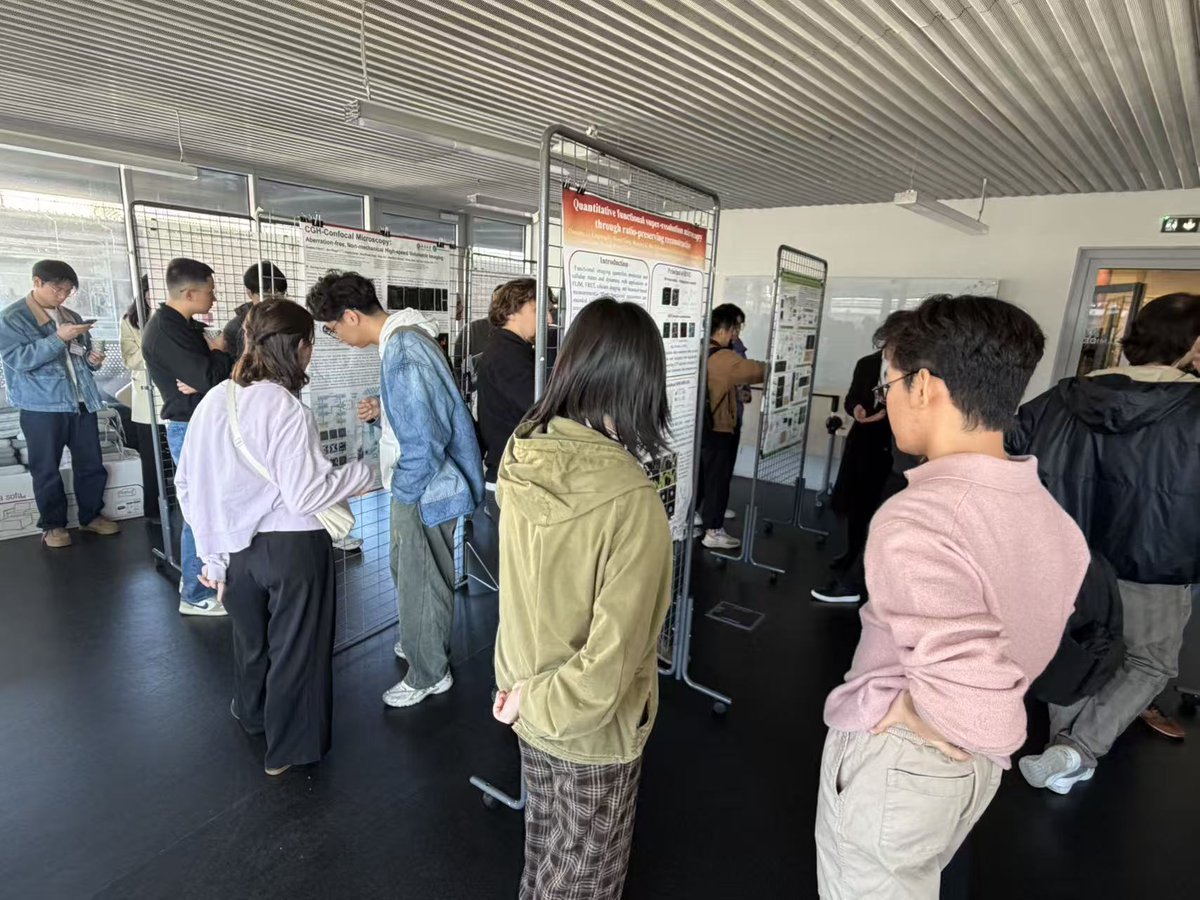
🎉 Day 2 of SFBS-2026 Scientific Symposium!
Another inspiring day in Bordeaux on live-cell nanoscopy, accessible super-resolution, AI for imaging, mitochondrial dynamics, nanoscale cytoskeleton and synapses, expansion microscopy, and multidimensional single-molecule methods.
Lively poster sessions and industrial exchanges further strengthened collaborations between Chinese, French and European researchers. Looking forward to the final day!
📍 Centre Broca Nouvelle-Aquitaine, Bordeaux
📅 Oct 19–21, 2026
Event info → france-bioimaging.org/news-e…
About NBIC → nbic.pku.edu.cn/en/
VITAL Initiative → vital-initiative.org.cn
#SFBS2026 #NBIC #BioImaging #PKU #VITAL


Liangyi Chen retweeted

“Cellular scaling laws in the mammalian brain” by Fei Chen & Evan Macosko is out in Cell! It dovetails with many of the neuro ideas I’m always pushing, but in the context of transcriptomics and psych. Thanks Fei & Evan for lots of great conversations while they were working on this! @insitubiology cell.com/cell/fulltext/S0092…


Liangyi Chen retweeted

📢 New review from the Zhang Lab in @naturemethods led by @AMMGest !
Explore recent advances in fluorescent proteins and biosensors, including improved photostability, high-throughput screening, quantitative imaging, and multiplexing.🔬 Check it out!
doi.org/10.1038/s41592-026-0…

Liangyi Chen retweeted
🎉 Day 1 of SFBS-2026 Scientific Symposium!
We’re kicking off in Bordeaux with leading scientists and industrial partners from China, France and Europe. Over the next three days we’ll explore the latest advances in super-resolution microscopy and advanced imaging, and jointly discuss how these technologies can power digital life and the VITAL Initiative.
Proud to co-host this exciting event. Looking forward to inspiring talks, vibrant exchanges and fruitful collaborations!
📍 Centre Broca Nouvelle-Aquitaine, Bordeaux
📅 Oct 19–21, 2026
Event info → france-bioimaging.org/news-e…
About NBIC → nbic.pku.edu.cn/en/
VITAL Initiative → vital-initiative.org.cn
#SFBS2026 #NBIC #BioImaging #PKU #VITAL


COMET preprint: 3.75-g mesoscope. A 5-min recording captured calcium activity from 15,449 labeled L2/3 neurons across a broad dorsal-cortex field (up to 10 mm) in a freely moving mouse. From spine-level 2P and MIMAS to a measurement interface for VITAL.
biorxiv.org/content/10.64898…
Which microscope is best? Wrong question. Which measurement fits the biology?
At the SFBS-2026 school in Bordeaux, young researchers from France and China compared STED, SMLM, SIM, ExM, light-sheet and analysis—at the bench, not only on slides.
france-bioimaging.org/news-e…
#SFBS2026


Liangyi Chen retweeted

We posted a preprint on all-to-all functional mapping of a cortical microcircuit in vivo. biorxiv.org/content/10.64898…
Yitong Qi developed molecular tools, optics, and protocols for massively parallel optogenetic stimulation and voltage imaging during animal behavior.

Liangyi Chen retweeted

🌐 AI for science just became science diplomacy.
On October 4, the US and 16 other countries, including Japan, South Korea, the UK, Germany and Singapore, endorsed the "Kyoto Vision for a Golden Age of Science" at the STS Forum in Kyoto. I only learned about it today, from a friend. In case you missed it too, here is the short version.
💡 The one-page text covers a lot of what I care about. More diverse funding, from long-term awards to fast grants and prizes. Room for new institutional models. Metascience and reproducibility. AI for science, including autonomous closed-loop discovery. Early investment in young talent.
Much of this I support. Closed-loop, AI-driven experimentation is at the core of what we do in the Theis lab, and funding systems everywhere could use more experimentation themselves.
The declaration builds on the White House report "Science: A New Golden Age" from July, which goes further, for example in rethinking the role of universities. Not trivial. How these ideas translate will differ between national systems. Germany's research ministry, for instance, calls the paper a non-binding basis for discussion and stresses that freedom of research and the independence of science remain non-negotiable.
🌍 For me, the test will be concrete: shared access to compute, data and automated labs, and collaboration across borders. Researchers should help shape what this means in practice.
How do you see it? Will it change how science is funded where you work?
🇩🇪 BMFTR statement: bmftr.bund.de/SharedDocs/Kur…
📄 Kyoto Vision: bmftr.bund.de/SharedDocs/Dow…
📘 Science: A New Golden Age: whitehouse.gov/wp-content/up…
🇺🇸 White House release: whitehouse.gov/releases/2026…
#AIforScience #ScienceDiplomacy #Metascience
Liangyi Chen retweeted

Scientists have developed an open-source microlens-array miniature microscope that can image the brains of freely moving mice with both a large field of view and cellular-level resolution. @NBIC_PKU @Orangeroad2017 scim.ag/4hAWwAI

Liangyi Chen retweeted

这篇我很推荐,尤其是现在做科研的人。
作者 Pierre Marion 提了一个很有意思的判断。LLM 如果真的把算公式、写代码、搜文献、做实验这些环节加速 10 倍甚至 100 倍,科研里最稀缺的东西会慢慢转向选什么问题、怎么建模、以及怎么判断结果有没有价值。
更值得警惕的是,AI 省下来的时间如果只是拿去发更多论文,最后很可能只是把 publish-or-perish 加速到失控。作者甚至直接判断,以论文数量和 h-index 为核心的评价体系正在失效。
作者最后给的方向是让 AI 扩大探索空间,把人的时间留给判断、品味、理解和培养下一代研究者。
以后科研能力可能像「你会不会驾驭一支极快的 AI 研究团队」,而不是一个人能亲手完成多少步骤。
文章:
pierremarion23.github.io/tho…

Liangyi Chen retweeted

The human brain is approaching its ChatGPT moment.
I spent 6 months writing Phase Lock: a manifesto on how brain computer interfaces can help align AI and preserve human agency.
If you only ever read one thing from me, read this.


Liangyi Chen retweeted

Research Associate and Postdoc Opportunities! I am happy to announce that I will establish a new laboratory at Hong Kong University of Science and Technology (HKUST) to start a major research program supported by a multi-year FTRSS grant.
1/5
When can we trust a reconstructed image?
Tomography does not directly “see” an object; it infers hidden structure from incomplete, noisy data. On 15 Oct, Prof. Ozan Öktem (KTH) joins us at PKU to discuss Bayesian inversion through machine learning. 🧵

4/5
The talk will also examine generative adversarial networks for uncertainty quantification.
The underlying questions extend across cryo-EM, fluorescence microscopy, low-dose CT/PET-CT, and X-ray phase-contrast tomography.
5/5
Bayesian Inversion for Tomography through Machine Learning
15 Oct 2026 | 13:00–14:00
B117 Lecture Hall, College of Future Technology, Integrated Science Research Building No. 2, Peking University
All are welcome.
#InverseProblems #BiomedicalImaging