

criosity has no limit
Milky Way
Joined March 2026
- Tweets1.6K
- Following361
- Followers88
- Likes4.6K



ORGINATION CORPORATION retweeted

.@airtelindia I paid ₹1,500 on Oct 14 for a 3-month Airtel Wi-Fi connection. Now I'm being asked to pay an additional ₹263 and threatened with disconnection. Customer care says it's an adjustment for a 6-month extension I never requested. Please investigate and resolve.
ORGINATION CORPORATION retweeted
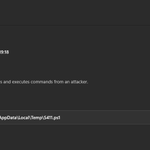
Finally found a possible clue behind my hacked accounts. Windows Defender detected a severe PowerShell Trojan on my PC. Securing everything now. 🔐
"details:"This program is dangerous and executes commands from an attacker."


ORGINATION CORPORATION retweeted

My scanner was wrong and I only caught it by accident.
It reported that an app shipped without obfuscation, so its code was readable. Six package names in the binary, that was the whole basis. Three of those six survive obfuscation anyway, because Flutter keeps them as runtime strings.
A second tool had already pulled 1085 libraries out of the same binary. 1082 are named AGm.dart. The classes are Obj!VWb. The app was obfuscated the whole time.
Low severity. Reads like every other Low. Nobody would ever have questioned it.
And the same check ran on five other apps in that batch, none of which have the second tool's output. Those findings are not wrong. They are unverified, which in a report someone paid for is the same problem in a better suit.
My own rule says a check ships only when it fires on a vulnerable build and stays silent on a clean one. This one never once ran against an obfuscated build. That is the whole bug.
The real failure mode is not the bug you miss. It is the one you invent, in a report someone is supposed to act on.

ORGINATION CORPORATION retweeted
I deleted a High severity check today instead of fixing it.
It flagged three government apps for accepting any TLS certificate. On a government app, over TLS, that is the most serious thing my scanner can say.
The check looked for one token in the compiled Flutter code. To find out whether that token means anything, I built the app twice. Same Flutter SDK, same package versions, same libraries reached on the same path, once doing the dangerous thing and once doing it safely.
The token shows up identically in both. It does not mean the app installed a certificate callback. It means the app opened a TLS socket, which every app that talks to a server does.
Three other tokens in the same run passed the test cleanly, so the method works. That one had nothing behind it.
There was no better name to key on, so I deleted it rather than tune it, and that control now ships marked not tested, with the reason and a pointer to where you can actually observe the behaviour at runtime.
The thing worth stealing: a clean fixture from a different app proves nothing. Your rule has to go quiet on a twin of the vulnerable app, same dependencies, built safely. Anything less and you are just detecting that a library is installed.


ORGINATION CORPORATION retweeted
Bro blocked me before we even met 😭💀😂
Achievement unlocked: Getting blocked by a stranger 🏆🤣


ORGINATION CORPORATION retweeted

Spent a bunch of tokens over the last few weeks building a fully procedural New York simulation.
mrdoob.github.io/slop-newyor…
It's only 784KB gzipped and the code is on github, so you can do whatever you want with it ✌️




ORGINATION CORPORATION retweeted

Hello, @X team. Please help appeal the suspension of my account @dogevanjava. Whenever I liked a post, my like would disappear after a while, so I kept liking it again and again. I suspect this may have triggered the spam detection. 🙏
