





Pinned Tweet
Pharmamedix Scientific Society is the first Italian #medicalinformation project to launch its own official #token to celebrate its fellows.
Willing to join? Visit phmxsociety.com

2
First women join #AI-assisted NHS breast screening trial shorturl.at/E09pL @drsanafarid #digitalhealth #medtech
8

PHARMAMEDIX retweeted

Researchers proved AI has deleted every reason universities exist.
Harvard University ran a controlled experiment pitting a custom AI against their own top-tier classrooms.
And the results are going to collapse the higher education bubble.
They took 194 undergraduates and split them up.
One group learned physics in one of Harvard’s best hands-on, active-learning physical classrooms. Group work. Instructor support. The premium university experience.
The other group went home and learned the exact same material with an AI tutor.
The AI didn't just win. It embarrassed the institution.
Students using the AI learned more than twice as much as the students in the elite Harvard classroom.
They scored 30% higher on the final assessment.
And they did it in less time.
Let that sink in.
A piece of software sitting on a laptop outperformed a world-class faculty in one of the most elite learning environments on Earth.
Universities have always justified their exorbitant tuition with two things: access to elite knowledge and the physical classroom experience.
This study just proved both of those moats are gone.
When software can teach you complex physics twice as well as a $60,000-a-year institution, the math of higher education breaks permanently.
The AI didn't just give the students answers. It used strict pedagogical guardrails. It guided. It questioned. It forced the students to do the cognitive work.
It offered perfect, one-to-one tutoring, personalized to the exact moment a student misunderstood a concept.
That level of attention is mathematically impossible to scale in a physical lecture hall.
For a thousand years, the university was the only place to get a premium education.
Now, it’s the bottleneck.
If AI can double your learning speed for a fraction of the cost, what exactly are students taking on decades of debt to pay for?
(Link in the comments)

PHARMAMEDIX retweeted

This infographic dives into the fast-changing world of digital health, mapping out a wearable health tracker landscape that spans 18 device categories across various body parts (yes, including both wrists, because why not double the fun?).
Here is the full list and the analysis below with a lot more details.
I hope you find this useful in your job and research.
1. Headbands: EEG and sleep
2. Smart earrings measuring body temperature
3. Patch on the upper arm: wireless glucose monitor
4. Smart tattoo: a revolution in monitoring vital signs
5. Smart patch on your chest: blood pressure and vital signs
6. A sensor on your belt: stress and fitness
7. Smart clothes: vital signs
8. Smart socks: diabetes management
9. Smart shoe soles: fitness
10. Upper arm: portable devices to monitor blood pressure and heart sounds
11. Smartwatch on your left arm: fitness, blood pressure, vital signs
12. Smart bracelet on your right arm: fitness, blood pressure, and vital signs
13. Smart rings: fitness, body temperature and vital signs
14. Smart necklaces: fall detection
15. Smart glasses: low vision aids & eye vision test
16. Thumb: oxygen saturation
17. Smart inhalers: asthma management
18. In-ear sensors: ear analysis
The analysis: medicalfuturist.com/the-wear…

Can pharmaceutical advertising influence AI medical recommendations? A controlled study on @LancetDigitalH shorturl.at/38LJb #digitalhealth

5
A change of direction for #LLM: no longer billions of data to mimic human conversation but learn language like babies do shorturl.at/b6thJ #Chatbot

6
One Patient, Five Apps: Is This Really Better Care? Focus on @jmirpub shorturl.at/Z9uZI #digitalhealth

#AI agents and #drugdiscovery: Google DeepMind also plays its part with the Antigravity platform shorturl.at/bNxNJ #Digitalhealth #GenAI

12
PHARMAMEDIX retweeted
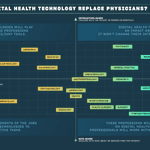
A technology adoption curve that shows 50 of the most promising digital health and AI technologies.
It shows what already has evidence, which ones are rising, and which trends are lagging behind.
I hope you find it useful.
If you need the full analysis, please comment 50, and I'll share the link with you.

10 Promising Advanced #Healthcare Technologies In Practice shorturl.at/kq24T via @Berci #DigitalHealth

9
Why #Healthcare Can’t Skip Steps on the Way to #ConversationalAI shorturl.at/emLgD via @hitconsultant #digitalhealth #AI #GenAI #LLM

5

What is the evidence on #digitalhealth approaches for #mobilityrecovery among #ICU survivors? Scoping review on @jmirpub shorturl.at/skHrx


The Current Roles of #AI in Public #Health Practice: Scoping Review on @jmirpub shorturl.at/JUMM6 #DigitalHealth

PHARMAMEDIX retweeted

When a chatbot for health advice led to tragedy
Front page NYT today @teddyrosenbluth
gift link
nytimes.com/2026/10/27/well/…
video nytimes.com/video/well/10000…


Is #AI Really a Black Box? #Neural #Networks May Be Easier to Understand Than We Thought shorturl.at/m0JKP via @singularityhub #digitalhealth

12
Digital Mental Health Technologies: @MHRAgovuk launches a new community to support medtech developers shorturl.at/YAC0w #digitalhealth

8
The partnership with @GeneralMedicine will transform @Walmart’s Better Care Service digital platform into a #healthcare store shorturl.at/Trxfm #digitalhealth

8
