


PHARMAMEDIX (@PHARMAMEDIX) profile picture

Medicine 2.0 - eHealth

Joined October 2011
Photo by PHARMAMEDIX (@PHARMAMEDIX)Photo by PHARMAMEDIX (@PHARMAMEDIX)Photo by PHARMAMEDIX (@PHARMAMEDIX)Photo by PHARMAMEDIX (@PHARMAMEDIX)Photo by PHARMAMEDIX (@PHARMAMEDIX)Photo by PHARMAMEDIX (@PHARMAMEDIX)Photo by PHARMAMEDIX (@PHARMAMEDIX)Photo by PHARMAMEDIX (@PHARMAMEDIX)Photo by PHARMAMEDIX (@PHARMAMEDIX)Photo by PHARMAMEDIX (@PHARMAMEDIX)
PHARMAMEDIX retweeted
Researchers proved AI has deleted every reason universities exist. Harvard University ran a controlled experiment pitting a custom AI against their own top-tier classrooms. And the results are going to collapse the higher education bubble. They took 194 undergraduates and split them up. One group learned physics in one of Harvard’s best hands-on, active-learning physical classrooms. Group work. Instructor support. The premium university experience. The other group went home and learned the exact same material with an AI tutor. The AI didn't just win. It embarrassed the institution. Students using the AI learned more than twice as much as the students in the elite Harvard classroom. They scored 30% higher on the final assessment. And they did it in less time. Let that sink in. A piece of software sitting on a laptop outperformed a world-class faculty in one of the most elite learning environments on Earth. Universities have always justified their exorbitant tuition with two things: access to elite knowledge and the physical classroom experience. This study just proved both of those moats are gone. When software can teach you complex physics twice as well as a $60,000-a-year institution, the math of higher education breaks permanently. The AI didn't just give the students answers. It used strict pedagogical guardrails. It guided. It questioned. It forced the students to do the cognitive work. It offered perfect, one-to-one tutoring, personalized to the exact moment a student misunderstood a concept. That level of attention is mathematically impossible to scale in a physical lecture hall. For a thousand years, the university was the only place to get a premium education. Now, it’s the bottleneck. If AI can double your learning speed for a fraction of the cost, what exactly are students taking on decades of debt to pay for? (Link in the comments)
246
561
147
2,335
163,753
PHARMAMEDIX retweeted
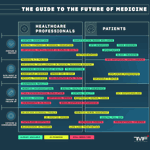
This infographic dives into the fast-changing world of digital health, mapping out a wearable health tracker landscape that spans 18 device categories across various body parts (yes, including both wrists, because why not double the fun?). Here is the full list and the analysis below with a lot more details. I hope you find this useful in your job and research. 1. Headbands: EEG and sleep 2. Smart earrings measuring body temperature 3. Patch on the upper arm: wireless glucose monitor 4. Smart tattoo: a revolution in monitoring vital signs 5. Smart patch on your chest: blood pressure and vital signs 6. A sensor on your belt: stress and fitness 7. Smart clothes: vital signs  8. Smart socks: diabetes management 9. Smart shoe soles: fitness 10. Upper arm: portable devices to monitor blood pressure and heart sounds 11. Smartwatch on your left arm: fitness, blood pressure, vital signs 12. Smart bracelet on your right arm: fitness, blood pressure, and vital signs 13. Smart rings: fitness, body temperature and vital signs 14. Smart necklaces: fall detection 15. Smart glasses: low vision aids & eye vision test 16. Thumb: oxygen saturation 17. Smart inhalers: asthma management 18. In-ear sensors: ear analysis The analysis: medicalfuturist.com/the-wear…
3
9
13
1,468
PHARMAMEDIX retweeted
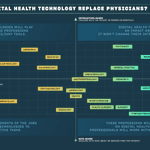
A technology adoption curve that shows 50 of the most promising digital health and AI technologies. It shows what already has evidence, which ones are rising, and which trends are lagging behind. I hope you find it useful. If you need the full analysis, please comment 50, and I'll share the link with you.
8
6
2
18
1,556
PHARMAMEDIX retweeted
When a chatbot for health advice led to tragedy Front page NYT today @teddyrosenbluth gift link nytimes.com/2026/10/27/well/… video nytimes.com/video/well/10000…
13
33
4
106
29,721
PHARMAMEDIX retweeted
I really admire figures that can describe a concept better than long manuscripts. This image is from an excellent paper in Nature by Vivek Subbiah about the future of evidence-based medicine and the design of clinical trials, all inspired by the rise of artificial intelligence. This is the era of the next generation of 'deep' medicine. "Current paradigms must be continuously challenged by emerging technology and by all stakeholders (the new generations of scientists, physicians, the pharma industry, regulatory authorities and, most importantly, patients). Disruptive innovation should lead to every clinical site being a research site, with all necessary quality checks and research as part of the standard of care. My personal view is that every major disease needs a ‘Moonshot’ program and every rare disease should have an ‘Operation Warp Speed’—both with clearly identified, sustainable goals to improve population health and address equity, diversity and global access to therapies. Methodological advances and future AI-based analyses of all data will provide deep evidence to realize the goal of personalized medicine— that is, to offer the right treatment to the right patient at the right time." The paper: nature.com/articles/s41591-0…
7
43
3
112
9,532
PHARMAMEDIX retweeted
Just published @ScienceMagazine Higher medical accuracy at lower cost A 3-agent AI for sequential diagnosis nearly doubled accuracy compared with physicians for >300 @NEJM CPC cases and >300 ER cases AND substantially lowered cost, also exceeded performance of many AI models, physicians plus AI @HarshaNori @erichorvitz @Dominic1King @mustafasuleyman
40
129
19
497
62,281
PHARMAMEDIX retweeted
Real-world AI goes to the urgent care setting. A prospective feasibility assessment of patient-facing conversational Al held up very well according to patients and physicians for accuracy of diagnosis, among many other metrics Just published @TheLancet @AdamRodmanMD @PeterBrodeurMD @alan_karthi @GoogleDeepMind thelancet.com/journals/lance…
13
37
2
132
28,346
Congratulations to Georg Nagel, PhD, from all of us in New Haven! We are proud of your remarkable accomplishment and extraordinary journey since your postdoctoral studies at YSM. Well deserved! #NobelPrize #Physiology #Medicine
“I didn't expect this, really... I thought it's still too early to get this prize in medicine.” Georg Nagel was in Italy when he received the news of his 2026 Nobel Prize in Physiology or Medicine. He was in Italy on a sun-drenched terrace, overlooking olive trees when he got the call. Listen as he recalls the key research moment leading to the development of optogenetics.
1
10
64
6,201
NEW: AI just became authorized to issue prescriptions in the US. Nolla Health says its AI can assess patients, recommend treatment, and issue initial prescriptions, starting with acne care in Utah, with physician oversight available.
12
18
7
136
14,468
Karl Deisseroth, MD, PhD, a Stanford University professor of bioengineering and of psychiatry and behavioral sciences, has been awarded the 2026 Nobel Prize in physiology or medicine “for discoveries leading to optogenetics, which makes it possible to switch on, or off, the activity of individual nerve cells in a living brain.” stanford.io/4xY9K0D @StanfordEng @Stanford @bioe_stanford @NobelPrize
22
185
14
912
23,993
PHARMAMEDIX retweeted
New Lancet Series: the way digital technologies are built & governed creates real health risks worldwide. A review of 9 million under-25s across 121 studies links digital media use to mental health & sleep problems plus reduced physical activity. Authors call for urgent, coordinated action. ➡️ spkl.io/60157VKUv
3
102
6
234
25,029
PHARMAMEDIX retweeted
A randomized trial of a patient-facing chatbot vs web based search enhanced accuracy of diagnosis of lung conditions This is one of the first RCTs for public chatbot assessment in healthcare nature.com/articles/s44360-0…
11
40
1
121
28,593
PHARMAMEDIX retweeted
Editorial @Nature this week calls out lack of real world data for AI medical algorithms nature.com/articles/d41586-0…
22
163
6
471
46,375
This is today’s edition of The Download, our weekday newsletter that provides a daily dose of what’s going on in the world of technology. Who’s liable when AI agents go rogue? Over the past few months, a cascade of cyberattacks by AI agents has stunned the world. In July, OpenAI disclosed that a swarm of its agents… trib.al/vedHjSb
8
4
6
7,388
John Tsang, PhD, and his Yale lab members Jacob Kim and Ao Huang recently posed the question of whether #AI immunologists are ready for prime time. Specifically, they were referring to large language models (#LLMs) and whether they are as creative as humans in developing new hypotheses and methods for research in the field of immunology. The answer, based on current studies, is no, not yet, says Tsang, Anthony N. Brady Professor of #Immunobiology and professor of biomedical engineering at Yale School of Medicine. While there are functions where AI can be effective, such as summarizing relevant literature, LLMs like ChatGPT aren’t able to consistently generate truly original hypotheses, scientific ideas, or experimental approaches. Read more here: medicine.yale.edu/news-artic…
4
7
1,750
PHARMAMEDIX retweeted
It’s incredibly hard to see through the current AI hype in healthcare. Myriads of potential uses cases, a lot of companies with commercial interest and changing regulations dominate the field. To see what is really going on and what we can realistically expect from AI to deliver in practice, I mapped the rapidly expanding universe of AI use cases in healthcare from early-stage “on the horizon” innovations to “safe bets” that are already backed by strong evidence. I analyzed them on two scales: little evidence to evidence-based (meaning there are studies and peer-reviewed papers proving their efficiency and safety); and low risk to high risk (meaning patients’ lives might be at stake in case of an error). This yielded four groups: 1) Speculative and risky (little evidence, high risk) 2) On the horizon (little evidence, low risk) 3) Handle with care (evidence-based, high risk) 4) Safe bet (evidence-based, low risk)
9
24
2
86
12,652
PHARMAMEDIX retweeted
AI is changing peer review. But how much should reviewers rely on it? AI can help manage rising review volumes but faster doesn’t automatically mean better. Tiffany Leung explores how reviewers can use AI thoughtfully without compromising the quality and integrity of peer review. Read more: blog.jmir.org/navigating-ai-… #PeerReviewWeek #PeerReview #PRW2026 #JMIR
1
2
675
PHARMAMEDIX retweeted
The legal implications of medical AI, a review of 31 cases involving AI tools nature.com/articles/s44360-0…
10
68
6
196
29,372
PHARMAMEDIX retweeted
The case for science of the AI mind gift link, by @camhberg wsj.com/opinion/we-need-a-sc…
18
147
17
531
36,786
AI May Be Breaking Mathematics — And One of the World’s Greatest Mathematicians Is Worried What happens when AI becomes so powerful that it can solve mathematical problems faster than humans can understand them? That question is now causing serious concern in the world of mathematics. OpenAI reportedly used around $15 million in computing power in an attempt to rapidly solve a case related to the legendary Navier–Stokes equations, one of the seven Millennium Prize Problems. The achievement may sound like a dream come true. But mathematician Terence Tao believes the real story is far more troubling. Tao has warned that the AI race in mathematics could be moving too fast. His concern is not simply whether an AI-generated answer is correct. The deeper problem is what happens when machines produce complicated mathematical results without giving humans a clear path to understand, verify, teach, or build upon them. For centuries, mathematics has advanced through human ideas, mistakes, intuition and explanations. A brilliant proof does more than produce an answer — it can open an entirely new way of thinking. If AI begins solving difficult problems faster than mathematicians can understand them, that process could start to disappear. Tao has even raised the unusual idea of keeping certain mathematical problems away from automated solvers. It may sound extreme, but there is a mystery at the heart of the debate: if a machine discovers mathematics that humans cannot truly understand, have we advanced mathematics — or simply learned how to produce answers? AI may be able to find the solution. But mathematics has always been about something deeper: understanding why the solution exists. And that may be the part we cannot afford to lose. Source: Choi, W. (2026). Fields Medalist Warns AI’s Math Rush Undermines Discipline’s Process. The Chosun Daily.
10
35
2
98
5,126