

“Strategy is one thing. Executing is another.” Observing African states and influence in the global concert of powers. Views = mine. RTs NOT endorsements.
Addis Ababa
Joined September 2009
- Tweets3.5K
- Following891
- Followers1.1K
- Likes585






Paschal Chem-Langhee retweeted

The Peace and Security Council (#AUPSC) held its 1372nd Meeting on Information Integrity, Peace and Security in Africa, Chaired by H.E. Churchill Ewumbue-Monono, Permanent Representative of the Republic of Cameroon to the AU and AUPSC Chairperson for October 2026.
The PSC took note of the statement by the PSC Chairperson and briefings/statements by Hon. Ms Ourveena Geeresha Topsy-Sonoo, Special Rapporteur on Freedom of Expression and Access to Information, African Commission on Human and People’s Rights (ACHPR); Dr Rita Bissoonauth, Director, UNESCO Liaison Office to the AU and UNECA; Ms Charlotte Scaddan, Senior Adviser on Information Integrity, Office of the Under-Secretary-General for Global Communications, United Nations; Mr Ibrahima Tounkara, Head of the ICRC Delegation to the AU; Dr Solomon A. Dersso, Executive Director of the Amani Africa Media Research in Addis Ababa; H.E. Amb. Javier Niño Pérez, Permanent Representative of the European Union (EU) Delegation to the African Union; and Mr Omar Faruk Osman, President of the Federation of African Journalists (FAJ).
The Council discussed the importance of information integrity in promoting good governance, national stability, territorial integrity, national unity, social cohesion and peace, and security across the continent, and among others; underlined the importance of promoting professional, ethical, responsible and independent journalism; underscored the role of states in ensuring a human rights-based approach, ensuring the protection and safety of journalists; called for the strengthening of mechanisms to address information disorders and digital harms, including disinformation, hate speech, deep fakes, and bias algorithms exacerbated by the misuse of artificial intelligence; emphasised the importance of strengthening national and Continental mechanisms, frameworks and laws for the governance and use of digital spaces; called for the integration of media monitoring and analysis into Continental early warning, conflict prevention, mediation and elections mechanisms; reiterated the call for multisectoral, proactive actions and responses to mitigating the effects of information manipulation including in conflict, politically polarized contexts, elections, peace, health and humanitarian situations; encouraged cooperation between governments, intergovernmental institutions, media, academia, civil society, etc., and development partners to promote information integrity in Africa; and underlined the need for institutionalising information integrity, peace and security within the AU Commission to ensure follow-up, implementation, monitoring and evaluation of progress made in advancing an agenda for media, peace and security in Africa.


Paschal Chem-Langhee retweeted
The Peace and Security Council (#AUPSC) held its 1372nd Meeting on Information Integrity, Peace and Security in Africa, Chaired by H.E. Churchill Ewumbue-Monono, Permanent Representative of the Republic of Cameroon to the AU and AUPSC Chairperson for October 2026.
The PSC took note of the statement by the PSC Chairperson and briefings/statements by Hon. Ms Ourveena Geeresha Topsy-Sonoo, Special Rapporteur on Freedom of Expression and Access to Information, African Commission on Human and People’s Rights (ACHPR); Dr Rita Bissoonauth, Director, UNESCO Liaison Office to the AU and UNECA; Ms Charlotte Scaddan, Senior Adviser on Information Integrity, Office of the Under-Secretary-General for Global Communications, United Nations; Mr Ibrahima Tounkara, Head of the ICRC Delegation to the AU; Dr Solomon A. Dersso, Executive Director of the Amani Africa Media Research in Addis Ababa; H.E. Amb. Javier Niño Pérez, Permanent Representative of the European Union (EU) Delegation to the African Union; and Mr Omar Faruk Osman, President of the Federation of African Journalists (FAJ).
The Council discussed the importance of information integrity in promoting good governance, national stability, territorial integrity, national unity, social cohesion and peace, and security across the continent, and among others; underlined the importance of promoting professional, ethical, responsible and independent journalism; underscored the role of states in ensuring a human rights-based approach, ensuring the protection and safety of journalists; called for the strengthening of mechanisms to address information disorders and digital harms, including disinformation, hate speech, deep fakes, and bias algorithms exacerbated by the misuse of artificial intelligence; emphasised the importance of strengthening national and Continental mechanisms, frameworks and laws for the governance and use of digital spaces; called for the integration of media monitoring and analysis into Continental early warning, conflict prevention, mediation and elections mechpolarisedeiterated the call for multisectoral, proactive actions and responses to mitigating the effects of information manipulation including in conflict, politically polarized contexts, elections, peace, health and humanitarian contexts; encouraged cooperation between governments, intergovernmental institutions, media, academia, civil society, etc., and development partners to promote information integrity in Africa; and underlined the need for institutionalising information integrity, peace and security within the AU Commission to ensure follow-up, implementation, monitoring and evaluation of progress made in advancing an agenda for media, peace and security in Africa.


Paschal Chem-Langhee retweeted
#PressRelease: Third African Union Reflection Forum on Unconstitutional Changes of Government to Promote #Youth Contributions to Inclusive Democratic Governance in Africa:
peaceau.org/en/article/third…

#WATCH: The opening ceremony of the Fourth AU Continental Dialogue on Youth, Peace and Security in Africa, under the auspices of H.E. President @GeneralNeva of #Burundi 🇧🇮 and AU Champion of the Youth, Peace and Security Africa youtube.com/live/VzCjdCSHK2s…

Paschal Chem-Langhee retweeted

Addressed the 1311th meeting of the African Union Peace and Security Council on Media, Peace and Security in Africa, chaired under the presidency of Ambassador Churchill Ewumbue Monono of Cameroon 🇨🇲 @EwumbueMonono, where I delivered a firm message that Africa cannot advance peace and stability while journalists remain exposed to danger and attacks remain unpunished.
I stressed that every assault on a journalist is an assault on the public’s right to know. Ignoring threats, harassment or killings allows fear to replace democratic debates and erodes the space for accountability. Ending impunity is essential for trust in institutions and for any meaningful progress on peace and governance.
I highlighted the crucial role journalists play in preventing conflict. The media serve as a bridge between communities and a guardrail against division by reporting early signs of tension, exposing abuse and keeping people informed. Silencing journalists weakens societies’ defences against violence.
I also drew attention to the fast-growing digital threats facing the profession, where misinformation and disinformation have become more viral and dangerously corrosive for peace, democracy and social cohesion. False information spreads quickly, fuels hatred and destabilises fragile situations. Female journalists face the most aggressive online harassment, deep fakery and intrusive surveillance. These attacks aim to intimidate and push them out of public life. This is why information integrity must be treated as a core part of peace and security. Without trusted information people cannot participate confidently in public life, which weakens democracy.
I called for stronger laws that match African and international standards; credible investigations into attacks; and accountability for perpetrators, regardless of position or influence. I urged AU Member States to move quickly with the establishment of the African Union Group of Friends for the Safety of Journalists and to support efforts toward a binding international convention on journalist safety.
Finally, I emphasised the need to invest in the next generation of African journalists. Our newsrooms and journalism schools need support, so young professionals have the skills to cover conflict, elections, the climate crisis and diplomacy with accuracy.
The message was simple. Protecting journalists strengthens states, builds trust and promotes peace. The safety of those who bring the truth to the public is the safety of society itself.


Paschal Chem-Langhee retweeted
The 1311th AU Peace and Security Council (#AUPSC) Meeting on Media, Peace and Security in Africa, under the Chairship of H.E. Amb. Churchill Ewumbue Monono of Cameroon, emphasised the importance of journalists' safety in promoting media and information freedom, justice, human rights, and accountability, as pillars for democracy and peace in Africa.
Following Presentations from the AUPSC Chairperson, H.E. Amb. Monono, Representatives of Member States, H.E. Adama Dieng, AU Special Envoy on Genocide and other Mass
Atrocities, Mr Omar Faruk Osman, President of the Federation of African Journalists (@FAJafrica), among others, the Council underscored:
1. The role of the media in governance as an institution of power, that is, the fourth estate.
2. The role of the media in the policy process, especially in educating and raising public awareness as well as in the popularisation of peace, security and governance policies, programs and initiatives to enhance their understanding and implementation;
3. The role of African journalists in promoting African Union and PSC policies, programs and initiatives for greater popularisation.
4. I) Media participation in promoting accountability and good governance, democracy, peace and security in Africa in line with Agenda 2063, APSA, AGA, Silencing the Guns and similar AU, UN and RECs normative frameworks and initiatives, II) The safety and protection of media actors including journalists, III) The prevention, management and mitigation of disinformation, misinformation, hate speech, and the negative use of artificial intelligence disseminating dangerous information, in particular fake news, deep fakes etc. that may threaten peace, security, and stability in member states, IV) Capacity building and media empowerment, V) Strategic partnerships promoting media empowerment, freedom of information and press freedoms.
5. Called for the mainstreaming and integration of communication and media dimensions across all the pillars of APSA and AGA in the context of the ongoing AU reforms, from conflict prevention to peace building, peacekeeping and post-conflict development and reconciliation, etc.
6. Underlined the importance of mainstreaming the role of the media within the APSA and AGA Frameworks. Called for the urgent development of strong, regulated frameworks at national, regional, and continental levels to more effectively address threats posed by social media, particularly in the age of artificial intelligence.
7. Endorsed the creation of the African Union Group of Friends for the Safety of Journalists, encouraging member states to integrate the safety and security of the media and journalists into their national peace and security strategies and policies.
8. Welcomed efforts to launch an African media agency that promotes African ownership in advancing good governance, peace and development.
9. Strongly condemned all forms of violence, perpetrated against the media and journalists, particularly, or including gender based violence, and called for objective investigations and prosecution of perpetrators, to end impunity, ensure accountability, and promote justice for the victims.


Paschal Chem-Langhee retweeted
The Pre-Summit Forum to the Second Africa Climate Summit (ACS-2) on
#Media as a Catalyst for Africa’s #ClimateChange, Peace and Security Agenda: Driving Just Transition and Climate Justice, jointly organised by the @AUC_PAPS, @FAJafrica, @Oxfam and the @GIZAfricanUnion, from 6 to 7 September 2025, has opened in Addis Ababa.
It aims to promote a deliberate journalistic approach at the centre of the climate, peace and security discourse, shaping narratives that encourage accountability and inclusive approaches to address the interconnections between climate change impact, livelihood insecurities, and compounding conflicts. It also aims to enhance journalistic reporting, including countering disinformation affecting climate mitigation and conflict prevention, among other things.
It brings together over 60 African policymakers, media professionals, and civil society representatives. The meeting’s outcome will feed into ongoing processes towards finalising the Common African Position on Climate Peace and Security and Africa’s engagements at the COP 30.


Paschal Chem-Langhee retweeted

Pleased to see our piece with @djinnitsaid & @NEPAD_Mayaki —exploring Africa’s challenges & options in today’s changing global order—republished by IOL. Originally published via @ACCORD_online. #Africa #Geopolitics #Multilateralism iol.co.za/pretoria-news/opin…

Paschal Chem-Langhee retweeted

At the AU-UN Capacity Building & Experience Sharing Experts Group Meeting on Artificial Intelligence, Conflict Analysis & Early Warning, I underlined the need to leverage AI (speed, scale, & scope) in political & security analysis, building on the AU-UN-RECs/RMs collaboration 1/2


Paschal Chem-Langhee retweeted
The AU-UN Capacity Building and Experience Sharing Experts Group Meeting on Artificial Intelligence (AI), Conflict Analysis and Early Warning has been opened by Commissioner @Bankole_Adeoye in Addis Ababa. It brings together AU, UN, RECs, RMs, CSO and Youth representatives in 1/2


Paschal Chem-Langhee retweeted
#PressRelease: African Union Honours the Team of African Experts Who Served Under the AU Monitoring, Verification and Compliance Mission (MVCM) in Tigray. #Ethiopia peaceau.org/en/article/press…


Paschal Chem-Langhee retweeted
#HappeningNow: First strategic Reflection on the Implementation of the Cessation of Hostilities Agreement (#COHA) in #Ethiopia, to undertake strategic reflection & support critical aspects of the 🇪🇹 Peace Process, such as humanitarian support, DDR, rehabilitation & reconstruction


Paschal Chem-Langhee retweeted
AU Executive Council elects 10 #AUPSC members with 2-year mandates effective 1 April 2024. They are; Central (#DRCongo 🇨🇩 #EquatorialGuinea 🇬🇶), East (#Tanzania 🇹🇿 #Uganda 🇺🇬), North (#Egypt 🇪🇬), South (#Angola 🇦🇴#Botswana 🇧🇼), West (#CôtedIvoire 🇨🇮 #SierraLeone 🇸🇱 & #Gambia 🇬🇲)
Paschal Chem-Langhee retweeted
Opening Remarks to the #Somalia Security Conference by Dr. Alhadji Sarjoh Bah (@SarjohBah3), Director of Conflict Management Directorate, New York, 12 December 2023 peaceau.org/en/article/openi…
Paschal Chem-Langhee retweeted

Wheels down in Abuja 🇳🇬 for 64th #ECOWAS Summit of the Authority of Heads of State and Government. Leaders will deliberate on the truncated transitions in Guinea, Mali, Burkina Faso, Niger & recent developments in Sierra Leone & Guinea Bissau. The AU-ECOWAS partnership is…1/2
Paschal Chem-Langhee retweeted
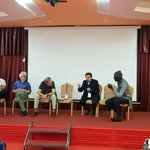
Session on improving the AU Commission and UN Secretariat collaboration (working methods). Delegates agreed to optimise collaboration, work closely with the private sector, civil society and media, and leverage new technologies for optimal outcomes. #AUPeaceRetreat


Paschal Chem-Langhee retweeted
Session on strengthening #UN–#AU cooperation from conflict prevention to post-conflict development (PCRD).Delegates underlined the need to prioritise #prevention; robust data collection/early warning, joint/shared analysis, investment in development & financing of regional forces


Paschal Chem-Langhee retweeted
Session on #AU & #UN perspectives on the prevailing & emerging security & governance challenges in Africa amidst a changing global order. Delegates reflected on structural global issues (competition for African resources, unbalanced international system, etc.) 1/2 #AUPeaceRetreat


Paschal Chem-Langhee retweeted
“The #AU-#UN partnership is the core of #multilateralism today. At the operational level, we should mirror the solid & strategic partnership between our principals, @antonioguterres & @AUC_MoussaFaki, being pragmatic in managing differences to deliver jointly.” - @parfait_onanga


