
Student Researcher @GoogleDeepmind, Phd Student @purdue cs. working on making continuous gradients discrete
Joined October 2024
- Tweets240
- Following328
- Followers281
- Likes631





Pinned Tweet
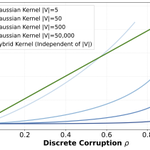
Continuous diffusion dominates images but fails on discrete data—despite learning continuous gradients that should enable coordinated updates.
"CANDI: Hybrid Discrete-Continuous Diffusion Models" explains why and how why hybrid diffusion fixes it! (1/8)

Patrick Pynadath retweeted

Discrete diffusion models sample tokens independently at each step, losing uncertainty from earlier predictions.
Loopholing uses self-conditioning to pass a continuous state between steps but still samples at each step.
Could we go all the way with self-conditioning? 🤔
🧵1/7
Patrick Pynadath retweeted

I really like simple ideas that work well. This is a really good example for that. Great work and execution @jdeschena, @nadjushenka_, Adrien et al!

Patrick Pynadath retweeted

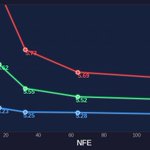
🧮 GSM8K: trained on TinyGSM with the same FLOPs, LAW beats the diffusion and flow baselines from 32 NFE (42.2% vs 34.5% for LDDM-U).
Fine-tuning a pre-trained Duo with LAW takes it from 17.2% to 48.1%. After only 15k steps, it beats the AR model in 32 steps! 🚀
🧵4/8


I think this work is super timely. We’ve seen that self conditioning helps with most forms of diffusion — masked, uniform, gaussian, simplex, etc. This work shows that on its own, self conditioning performs quite well!
Patrick Pynadath retweeted

Can flow language models scale to billions of parameters and handle real generative tasks?
Introducing 🌊 Lafa (Large flow language model), a flow LM scaled up to 8B that matches AR quality, with 🚀 2.5× AR throughput at 7B.
Co-led with @ArnavChavan6 @UdbhavBamba.
Joint work with @wognsfjq96 @hongseu33 @AdtRaghunathan @jw9730
Patrick Pynadath retweeted

Great question! I wrote down some thoughts a few years ago: sander.ai/2020/09/01/typical…
I think likelihood in input space is usually not what you want for perceptual signals. But you can reweight it (as in diffusion models) or measure it in a different representation space.

Patrick Pynadath retweeted

A nice presentation by @paveltyletski on
Diffusion Gemma: 4x faster text generation.
I think that text diffusion will not only be 4x faster and 10x more energy efficient, but eventually it will also be of higher quality, and supersede autoregressive LLMs.
youtu.be/3n5RN7i8h2Y?si=YkYz… via @YouTube

Patrick Pynadath retweeted

Traditional LLMs write one token at a time. Diffusion models don't.
At the London PyTorch Meetup I gave an intro to text diffusion and how DiffusionGemma gets ~4x faster text generation. If you know LLMs but diffusion is a black box, this one's for you!
youtu.be/3n5RN7i8h2Y
Patrick Pynadath retweeted

Join our reading group next Monday!
Topic: Simplex Diffusion Models
Presenter: Justin Deschenaux

This Monday, Oct 19, Justin Deschenaux (@jdeschena) will present his paper:
Simplex Diffusion Models

Patrick Pynadath retweeted

Today, we introduce Priming Models, a new paradigm for training one-step generative models from scratch.
No diffusion teacher. No flow map. No CFG. No JVP.
We believe this work will challenge how we think about building one-step models.
Joint work with @sitanch, @du_yilun, @parkwbin03, Bohyung Han.
🔥 1.19 FID one-step on ImageNet 256×256 while using substantially less compute, e.g., 12X less than Drifting-B, 6X less than Drifting-L
🎨 Scales to text-to-image generation (GenEval 0.82)
🤖 World modeling on RT-1 / Bridge-V2
Priming Model is built on one core message: [Reconstruction pretraining --> Distributional post-training].
Check out this really awesome work from Oscar! really exciting to see all the progress for continuous diffusion language models

Patrick Pynadath retweeted

Continuous Diffusion LMs went from niche to contender this year, but the recipe is shaky: why self-conditioning? How to embed tokens? 🤨
Our new work takes your one-hot flow from 4% to 50% on TinyGSM without self-conditioning, and explores the design space of CDLMs. 🔥🚀 (1/6)
Patrick Pynadath retweeted

🔺Want to learn more about simplex diffusion models? Make sure to join today’s talk! See the quoted tweet for the zoom link

A reminder of the online talk today! Note a change of speaker, @jdeschena will be presenting instead on the same topic. Hope to see lots of you there!
Patrick Pynadath retweeted
Incredible! I'm really proud of this work and what @im_td and @AnjaSurina have achieved. I was actually thinking of tweeting about this paper today, calling it the most underrated paper I've worked on this year!

3/
🏆 Best Paper
The Future of Facts: Tracing the Factual Generation-Verification Gap
@im_td @AnjaSurina @caglarml
openreview.net/forum?id=181w…
Patrick Pynadath retweeted

What can you actually run locally, on which hardware, and how fast?
What an actual banger Qwen3.8-Flash-Next is! It hits the sweet spot for capable local devices - all major manufacturers have devices that can run it at 30+ t/s speed.
Full report: iv2nl0b9v.github.io/local-in…

Patrick Pynadath retweeted

I'm in team matching for @Google's Summer 2027 Research Intern position! I build reliable & safe multi-agent LLM systems and work on automated research agents. Open to related topics as well as new directions!
Potential hosts, let's connect! DMs/emails welcome; reposts very much appreciated 🙏
==========More about me==========
🌐 Homepage: froilanchoi.com
📄 CV: drive.google.com/file/d/19og…
✉️ email: [email protected]
===============================
#Google #GoogleResearch #ResearchInternship #LLMAgents #MultiAgentSystems #AIResearch
Patrick Pynadath retweeted

Wrapping up my internship at @Apple MLR. It was a great experience to work with the team on agent training.
We have explored how MoE architectures behave in agentic post-training, and a general framework to steer the expert selection, to align with agents' operations. Specifically, we find that off-the-shelf MoE models tend to re-use experts for the same operation, while different operations are more likely to be accomplished by diverging experts. Our framework strengthens this operation-expert association, and achieves significant improvement on both task performance and inference efficiency.
arxiv.org/abs/2610.07332
Huge thanks to my mentors @cydhsieh and Ting-Yao Hu, as well as all collaborators in the team: Raviteja Vemulapalli, Sanjoy Chowdhury, @OncelTuzel.
Right now, I am going to defend my PhD by the end of 2026, and am searching for full-time research scientist roles in the industry. Feel free to message me if you find me to be a good fit for your team.

Patrick Pynadath retweeted
Discrete Diffusion Meetup at @COLM_conf
> Thursday, 4PM
> 3rd Floor, right outside of Grand Ballroom
Cohosting this with @ssahoo_

✈️ Discrete Diffusion Meetup @COLM_conf
📅 Oct 8, 4-5 PM
📍Grand Ballroom, 3rd Floor
If you’re into discrete diffusion, come hang out, talk shop, and meet others working in the space.
hosts: @ssahoo_ @zhihanyang_
Patrick Pynadath retweeted

New paper: diffusion LMs often come from pretrained AR models. If we already reuse AR pretraining, can we also reuse what AR models learn during post-training?
We explore this in A2D: AR-to-Diffusion Transfer and Composition. 🧵

Patrick Pynadath retweeted
"Better research starts with better idea management"
Very excited to share my work done at @Google!
🎯 𝐀𝐈𝐌: 𝐀𝐠𝐞𝐧𝐭𝐢𝐜 𝐈𝐝𝐞𝐚 𝐌𝐚𝐧𝐚𝐠𝐞𝐦𝐞𝐧𝐭 𝐟𝐨𝐫 𝐀𝐮𝐭𝐨𝐦𝐚𝐭𝐞𝐝 𝐑𝐞𝐬𝐞𝐚𝐫𝐜𝐡
We humans do research through trial and error—and so do AI research agents! Along the way, numerous ideas and hypotheses emerge as potential research directions. But how should these ideas be organized, evaluated, and developed? And which ones deserve the next experiment?
📄 Paper: arxiv.org/pdf/2609.38445
🌐 Project Page: imhgchoi.github.io/agentic-i…
🤗 Huggingface: huggingface.co/papers/2609.3…
