
IM Resident @UofLmedicine, Incoming Cardiology fellow @bethisraellahey #AIinHealthcare enthusiast.
Louisville, KY
Joined May 2020
- Tweets104
- Following184
- Followers269
- Likes213




Pinned Tweet
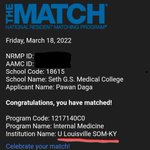
I matched again. That’s it. That’s the tweet. #Cardiologymatch

Pawan Daga retweeted

A "Tweetorial"
Today the @FDA updated aficamten's label based on the results of MAPLE HCM, which randomized patients to metoprolol vs aficamten. If you want to learn more about BB use in #HCM, and the updated label, follow along.
First - why a label update?
#cardiotwitter

Pawan Daga retweeted

Wonderful collaborating with these amazing researchers in our latest publication @SarjuGanatraMD @MkosiborodMD @DLBHATTMD @gcfmd @Sadeer_AlKindi @khurramn1 @Ashish_Kumar_MD @JavedButler1 #Pardeep Jhund #Naveed Sattar #Anju Nohria @SumanthKhadkeMD @bhargavv_122 An Observational Study of Cardiovascular Outcomes of Tirzepatide vs Glucagon-Like Peptide-1 Receptor Agonists

Pawan Daga retweeted

Nearly 150 papers in January 2025!
Great start of a new year @bethisraellahey...
Let’s continue to collaborate and expand the horizons for our patients
#healthcare #research #Innovation

@bethisraellahey researchers work to transform medicine and health care delivery through innovation & discovery. In January, teams led by scientists @BIDMChealth @JoslinDiabetes @LaheyResearch @MountAuburnHosp & NEBH put out nearly 150 papers tinyurl.com/3b7dvhb2

This was an excellent read. Surprised to learn how much primary aldosteronism is underdiagnosed.

Primary aldosteronism is characterized by dysregulated and relatively nonsuppressible aldosterone production that persists independent of its dominant regulators, renin and angiotensin II (termed “renin-independent aldosterone production”).
This pathologic aldosterone production causes hypertension, increases the risk of hypokalemia, and causes cardiovascular and kidney disease.
Learn more in a new Interactive Medical Case: nej.md/3Wsvi5L

ALT An illustration of the pathophysiology of primary aldosteronism
222
Pawan Daga retweeted

NEW: Today, I’m releasing a Surgeon General’s Advisory on the causal link between alcohol consumption and increased cancer risk. Alcohol is the 3rd leading preventable cause of cancer in the U.S., contributing to about 100,000 cancer cases and 20,000 cancer deaths each year.

Grateful and blessed!

Thrilled to have matched a fantastic group @LaheyCardiology for Cardiology Fellowship 2025!
@AmmarWB @BrandonTemelMD @SriramG999 @PawanDagaMD Looking forward to working with you!

5/ We discuss clinical implications pertaining to:
• Patient selection
• Enhanced precision for BP management
• Resistant HTN
• Novel targets and approaches to ameliorate the complex hypertensive milieu
• End-organ protection
• Adherence
• Side effects
1
711
6/ We delve deeper into challenges of development and current/future mitigating strategies addressing:
• Target selection and specificity
• Stability and delivery
• Immunogenicity
• Onset and duration of action
1
429
2/ RNAi and HTN:
RNAi leverages the body’s natural gene-silencing mechanism to target key genes responsible for blood pressure regulation. The advantage? Long-term BP control with infrequent dosing, offering a promising alternative to traditional therapies.
1
342
3/ Key Candidate: Zilebesiran
In early-phase trials, Zilebesiran showed a sustained BP reduction of up to 15 mmHg after a single dose. 🧬 Patients saw over 90% reduction in serum angiotensinogen (AGT) levels for up to 6 months—a significant breakthrough!
1
325
🚨 New publication alert! 🚨
1/ In this review article, we explore the cutting-edge use of RNA interference (RNAi) to tackle hypertension (HTN). Thank you to @DineshKalra for his mentorship. A 🧵on our paper:

1
4
357
Great time presenting at the CCVC conference at UAB. Amazing line up of speakers! Thanks to @DineshKalra for his mentorship. @UABCardiology @NicoleLohrMD

Pawan Daga retweeted

This is a really important paper. STEMI vs Non-STEMI thinking needs to go. It's "occlusion MI"
Here is the thing though: almost all of the occlusion MI NSTEMI's can be seen on the ECG--if people could read ECGs properly
Table 2 examples seem so obvious to me. Not because I am smart, but because ECG reading was a top priority at Indiana U.


We just published this in The Journal of the American College of Cardiology -- Advances (JACC Advances) "State of the Art Review". It is a REALLY interesting read, using quotes from Thomas Kuhn's book "The Structure of Scientific Revolutions" (the book that coined the word "paradigm" and "paradigm shift"). Here is the first quote: “Scientific revolutions are inaugurated by a growing sense, again often restricted to a narrow subdivision of the scientific community, that an existing paradigm has ceased to function adequately in the exploration of an aspect of nature to which that paradigm itself had previously led the way.” —Thomas Kuhn
Full text pdf: pdf.sciencedirectassets.com/…
Pawan Daga retweeted

The GLP-1 drugs are the most important drug class breakthrough in medical history. We're still learning how they have such broad impact, especially about their anti-inflammatory effects, systemically and in the brain
nature.com/articles/d41586-0…
A new feature @Nature, by @marilenharo

"If a lamplighter could see the world today, he would think the prosperity all around him was unimaginable. And if we could fast-forward a hundred years from today, the prosperity all around us would feel just as unimaginable."

The Intelligence Age: ia.samaltman.com/

257
Pawan Daga retweeted
History of Medicine: Centering the Peripheral Brain — The History of Reference Tools in Medicine nej.md/3Zei5iZ
#MedTwitter

ALT History of Medicine "To cite The Principles and Practice of Medicine was to sketch a professional lineage to Osler; to invoke Harrison’s was to assert one’s affinity to 'scientific' medicine." Perspective "Centering the Peripheral Brain — The History of Reference Tools in Medicine" by Andrew S. Lea, M.D., D.Phil., and Scott H. Podolsky, M.D.