

The Planetary Habitability Laboratory at UPR Arecibo is dedicated to mapping the habitable universe.
Arecibo, Puerto Rico
Joined March 2012
- Tweets394
- Following6
- Followers4K
- Likes2






Consider supporting the #AreciboWow initiative, which involves searching for extraterrestrial communications using the archival data from the Arecibo Observatory. Remember, #GivingTuesday is coming up next week. phl.upr.edu/wow phl.upr.edu/support

Our @SWRI @JHUAPL @PlanetaryHabLab team has been investigating the environmental habitat suitability of Mars in recent times. phl.upr.edu/mars #MarsDH


This month, we are working on an exciting new technosignatures project to search for Wow! Signals in the archival data of the Arecibo Observatory's 12-meter and 305-meter telescopes. More details to come soon. 🖖

The PHL will update its Habitable Exoplanets Catalog on January 8, 2024 🤔 phl.upr.edu/projects/habitab… #exoplanets #astrobiology

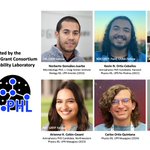
The @PlanetaryHabLab is proud of their students supported by the NASA Puerto Rico Space Grant Consortium. @nasa_pr @CienciaPR #astrobiology

This paper shows that the method proposed by @ProfAbelMendez & @PlanetTreky to calculate the mean equilibrium temperature of planetary bodies in eccentric orbits can also be used to describe the internal thermal state of comets. iopscience.iop.org/article/1… iopscience.iop.org/article/1…

El @PlanetaryHabLab está buscando 2 estudiantes subgraduados para trabajar en proyecto de astrofísica estelar a partir de enero 2023. phl.upr.edu/areciboreds #AreciboREDS @CienciaPR @adamonzon @UPR_Oficial @UPRA_Oficial @seds_uprm @ans_uprm @oauprh @fisicauprh @uprrp @premuprh

The Habitable Exoplanets Catalog was updated with data from NASA's @nexsci_ipac. There are up to 61 potentially habitable worlds out of 5200+ known #exoplanets. Planets LP 890-9 c, Ross 508 b, and GJ 514 b were just added to the catalog. Explore them here! phl.upr.edu/projects/habitab…

Please support the projects of the @PlanetaryHabLab including the Habitable Exoplanets Catalog phl.upr.edu/support #GivingTuesday2022 #GivingTuesday

The Habitable Exoplanets Catalog includes links to exoplanet data from @NExScI_IPAC NASA Exoplanet Archives phl.upr.edu/projects/habitab… @NASAExoplanets

The PHL has two presentations at #AbSciCon. Monday by @CarlosOrtizQui3 on using the paleo-Earth to reconstruct the temperatures of Earth-like planets. Friday by @ProfAbelMendez on habitability models. agu.confex.com/agu/abscicon2… agu.confex.com/agu/abscicon2… #AbSciCon2022


Help mapping the habitable universe. Support the Planetary Habitability Laboratory. phl.upr.edu/support #GivingTuesday #GivingTuesdayPR

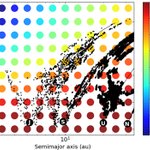
One of the long-standing problems in the astrobiology field is how to define and quantify habitability. Ecologists solved this problem forty years ago, and the Planet-Hab Collaboration is building upon this knowledge.
@PlanetaryHabLab phl.upr.edu/planethab

Exoplanet L 98-59 f (candidate 05), would be added to the Habitable Exoplanets Catalog if confirmed. eso.org/public/news/eso2112/ phl.upr.edu/projects/habitab…

The Habitable Exoplanets Catalog was born on a day like today 9 years ago. Thanks for all the support from the scientific community and the general public. phl.upr.edu/projects/habitab… #astrobiology

Donate now and your contribution will fund current projects and new initiatives, including our catalog of potentially habitable worlds. phl.upr.edu/support #exoplanets #astrobiology

The Habitable Exoplanets Catalog was updated with the latest data from the @NASAExoArchive. phl.upr.edu/projects/habitab… #exoplanets #astrobiology #habitability
