

Senior Fellow @CFR_org . Better health, security, and economic development through better supply chains. Views are entirely mine.
Washington, DC
Joined November 2014
- Tweets4K
- Following1.6K
- Followers3.3K
- Likes31.2K




Pinned Tweet
Pfizer/BioNTech's COVID-19 vaccine results are an encouraging development. Many more steps before ready to ship (e.g. establish manufacturing consistency). Logistics readiness is also much ⬆️ than before. My views @SquawkCNBC this morning. cc @TinglongDai
cnbc.com/video/2020/11/09/he…

Excellent choice @uicc. @cspramesh is equally superb in the science, clinical practice, patient empathy, humility, and policy parts of onc

Dr. C. S. Pramesh (@cspramesh) has been elected President-Elect of the Union for International Cancer Control (@uicc ) for the 2026–2028 term.
As Director of Tata Memorial Hospital and Convener of India’s National Cancer Grid, he brings extensive experience in cancer care, health equity, and global cancer control.
Read more about his election and leadership in global oncology on OncoDaily: oncodaily.com/not-to-miss/c-…

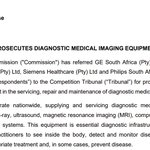
South Africa’s imaging equipment repair case highlights a difficult dilemma: interoperability, independent servicing, and the right to repair sound like an easy fix. But safety, quality, who provides the training, and where accountability lies are not easy. No easy answers.
#RightToRepair #Interoperability #MedTech #SupplyChain
compcom.co.za/wp-content/upl…

Prashant Yadav retweeted

Woop! @CFR_org Why It Matters podcast returns w/ @ProfYadav walking me through GLP-1 access - a global tale of shortages, patents, shady IG salesmen, and price gaps that just might show us what we are in for as new in-demand medications are developed.
podcasts.apple.com/us/podcas…

Prashant Yadav retweeted

Held talks with Susan Thompson Buffett Foundation Vice President of Global Programs Senait Fisseha on the sidelines of the United Nations General Assembly.
We welcomed the Foundation’s decision to elevate our partnership to a strategic level, creating a stronger platform for deeper cooperation in strengthening Kenya’s health system.
Our partnership will support health infrastructure for maternal, adolescent and newborn health, while strengthening SHA, DHA and KEMSA to deliver their mandates more effectively.
Through this cooperation, we will improve health outcomes for our people and accelerate progress towards the Sustainable Development Goals.


Ifosfamide shortage: the challenges it creates for oncologists and the reasons why it's a hard problem to fix. @Medscape David Brzostowicki
Thanks for including my views on this issue. Article link follows
#oncology #shortage #Ifosfamide


Dispensing mix-ups happen, but most identified errors are of minor clinical significance, but this one is particularly bad. LASA (Look-alike/sound-alike) errors are the most common, but a system of tiered checks and verifications should prevent them for drugs where a mix-up could have serious consequences. FDA uses Tall Man Lettering to avoid LASA errors. Technology checks and verifications also help. fda.gov/drugs/medication-err…


Due to a mixup in the Ascension hospital pharmacy, FOUR patients received potassium instead of bupivicaine for epidurals before routine joint surgeries. At least one is now paralyzed.
The worst error I’ve ever heard of. Hard to see how this could happen.
newschannel5.com/news/newsch…


Prashant Yadav retweeted
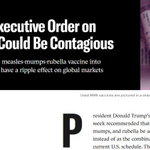
Donald Trump's executive order recommending that vaccines against measles, mumps, and rubella be administered individually, instead of as a combination shot, could influence demand and supply for those vaccines globally, explains @ProfYadav. thinkglobalhealth.org/articl…

Prashant Yadav retweeted

The White House is working to strengthen safeguards against biological attacks after staffing cuts from the Trump administration depleted expertise in a field where officials increasingly fear AI could make it easier to create deadly pathogens. wapo.st/45s793o
The US has the right to conduct rigorous scientific studies to optimize vaccine combinations, schedules, and timing. But any hasty decisions made in Washington can have global contagion effects, giving ammunition to fringe anti-vaccine groups in countries where building the supply-side market and delivery infrastructure (including confidence) for vaccines such as MR has taken years. If the US EO holds and changes affect US purchasing dynamics, they could also impact market incentives, supply, and access beyond the US. My new piece in @ThinkGlobalHlth @CFR_org
thinkglobalhealth.org/articl…

Prashant Yadav retweeted

Economic shocks and supply disruptions can be a revealing stress test for pharmaceutical supply chains, and the Iran War is a sobering reminder of the industry's vulnerabilities, writes CFR expert @ProfYadav and Anya Hirschfeld for @ThinkGlobalHlth.
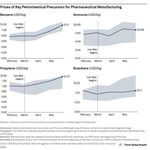
Rising prices of petrochemicals involved in drug manufacturing and transportation during the war in Iran drove up the costs of wholesale drugs by 19% to 87%, TGH estimates.
thinkglobalhealth.org/articl…

Prashant Yadav retweeted
Economic shocks and supply disruptions can be a revealing stress test for pharmaceutical supply chains, and the Iran War is a sobering reminder of the industry's vulnerabilities, writes CFR expert @ProfYadav and Anya Hirschfeld for @ThinkGlobalHlth.
Rising prices of petrochemicals involved in drug manufacturing and transportation during the war in Iran drove up the costs of wholesale drugs by 19% to 87%, TGH estimates.
thinkglobalhealth.org/articl…
In March, we wrote about how the Iran War could disrupt pharmaceutical supply chains. In our new Think Global Health-@CFR_org analysis, we look further upstream at how medicines are connected to oil, petrochemicals, transport, and energy markets. Petrochemical inputs can shape the availability and cost of active ingredients, excipients, packaging, medical devices, and oil prices impact freight. Yet in many cases, we have limited visibility into these upstream dependencies until a shock exposes them. Resilience cannot stop at finished products, APIs, or KSMs. It also requires understanding the hidden upstream systems on which medicines depend.
thinkglobalhealth.org/articl…

At #AfricaCEOForum in Kigali, I was excited to lead a discussion on how tech, entrepreneurship, capital, logistics, digital infrastructure, public-sector momentum, and private-sector interest are reshaping healthcare in Africa.
A big thank you to an exceptional panel:
Françoise LOMBARD — CEO, @Proparco
Mohammed Akoojee — CEO-Africa, @DP_World
Dr. Solomon Zewdu — CEO, The End Fund
Caitlin Burton — CEO- Africa, @zipline
Neel Andhee-Shah — President- Africa Cluster, @AstraZeneca
Kanwulia Okafor — Director-Industry Services, @GSMA
@CFR_org
#ACF2026 #Africa #CEO #Healthcare #pharma #technology #logistics #partnerships #NTD


Prashant Yadav retweeted
U.S. dependence on China for essential medicines is structural—and the United States faces a growing risk that Beijing will deliberately withhold essential pharmaceutical inputs as a tool of economic or political coercion, as China has done with rare-earth critical minerals, warns a new CFR report.
Nearly 700 medicines approved for use in the United States depend on at least one chemical produced solely in China, the nonprofit U.S. Pharmacopeia estimates.
The report outlines three major choke points in the U.S. pharmaceutical supply chain and provides a policy framework for addressing each: the reliance on China for raw materials and upstream supplies, the erosion of biopharmaceutical manufacturing and clinical trial capacity from the United States to China, and the emerging U.S. dependence on China for research and development of sensitive biotechnology.
“For its economic and national security, the United States must respond with a package of coordinated measures built around these three archetypes of supply chain dependence,” the report says.
"The question is not whether to act, but if the United States will manage to do so before a crisis makes the cost of decades of inaction unavoidable."
Read the report by experts @TomBollyky, @RushDoshi, @OliviaWKosloff, @profyadav, and Elena Every below: cfr.org/reports/the-pharma-c…

Prashant Yadav retweeted

🚨Thrilled to share our new @CFR_China report with CFR Global Health's @TomBollyky, @profyadav, @OliviaWKosloff, & Elena Every: "The Pharma Choke Point."
The US is dependent on Chinese production for essential medicines, creating a "rare earths" problem in this sector. Seven hundred medicines approved for use in the United States depend on at least one chemical produced solely in China.
For the last year, our study group of pharma and biotech specialists, China scholars, and industrial policy experts came together to:
1⃣ Use commercial data to map the dependencies
2⃣ Devise a typology of three unique "archetypes" of these dependencies
3⃣ Craft solutions to address these dependencies
A few key points follow below:
➡️China's Leverage is real — Beijing doesn't need a wartime crisis to exploit it. It can slow shipments, delay licenses, or reroute flows through "peacetime weaponization." That's the playbook it has already run on rare earths.
➡️Current dependence is structural — It's the product of decades of Chinese state investment and Western pursuit of the low-cost solution. China controls the raw/starting materials for 94% of US amoxicillin, 74% of heparin, and 70% of acetaminophen. It's dominating preclinical work in biotech. And diversifying downstream offers no real protection from upstream dependence.
➡️Archetype 1: Upstream Dependence — Roughly 700 medicines Americans depend on at least one chemical made only in China, including antibiotics, blood thinners, ER drugs. Solutions include:
- building a strategic reserve of critical medicines
- building "allied scale" to create diversified production
- mix various long-term supply and demand interventions to change economic viability for KSMs, APIs, and other upstream inputs (more in the report)
➡️Archetype 2: Competitive Displacement of U.S. Biomanufacturing and Clinical Trial Capacity — For innovative biologics—medicines made from living cells—such as monoclonal antibodies, the risk is not a single upstream choke point but competitive displacement across every stage of the value chain: discovery, clinical development, contract manufacturing, and market access. The U.S. is losing a critical capability: now, WuXi alone handles nearly half of US clients' development programs. China alone is more than half of all late-stage monoclonal antibody programs. Lock-in deepens at every stage. Solutions include:
- accelerating first-in-human clinical trials in the United States
- funding and incentivizing the adoption of advanced biologics manufacturing technologies (e.g., low-cost capital from the USG)
- building contract research alternatives in allied countries like South Korea
- bolstering the U.S. biomanufacturing workforce
- creating a system to secure artificial intelligence (AI)–ready biodata and digital chemistry, manufacturing, and controls.
➡️Archetype 3: Dependence on PRC Infrastructure — Here, the vulnerability is not disruption in the supply of an existing product, but Chinese control over the research-and-development (R&D) infrastructure underlying future pharmaceutical innovation. Growing reliance on China for DNA synthesis is just one example. Solutions include:
- improving DNA supply chain security
- enhancing transparency and disclosing provenance
- increasing federal investment in next-generation DNA synthesis technologies
- and bolstering allied cooperation on standard-setting and procurement to encourage the adoption of these technologies.
➡️Key Takeaway: China has both the tools and demonstrated willingness to weaponize U.S. pharmaceutical dependence: the structural conditions enabling it run through nearly every tier of the pharmaceutical supply. The question is not whether to act, but if the United States will manage to do so before a crisis makes the cost of decades of inaction unavoidable.
I am so grateful to Tom, Prashant, Elena, Olivia, Chloe, Ben, Aarya, CFR's publications team, and so many others who made this possible. It was tremendously educational to work together on this project.

Prashant Yadav retweeted
Read the new report from @CFR_China and CFR's Global Health program by @TomBollyky, @RushDoshi, @OliviaWKosloff, @profyadav, and Elena Every: cfr.org/reports/the-pharma-c…
The US pharmaceutical supply chain faces a threat similar to the rare-earths challenge already posed by China’s exploitation of its dominance of those critical minerals. Today, @CFR_org released a major policy report, The Pharma Choke Point: How to Reduce U.S. Dependence on Chinese Pharmaceutical and Biotechnology Supply Chains. Co-authored with my colleagues @TomBollyky, @RushDoshi, @OliviaWKosloff, and Elena Every, it is the product of a year-long effort, in collaboration with some of the top scholars and policy experts, to identify the scope and implications of U.S. pharma+biotech dependence on China and policies to reduce it.
cfr.org/reports/the-pharma-c…
#pharma #biotech #supplychain #resilience #China

Prashant Yadav retweeted

SCIENCE, SUPPLY CHAINS, GEOECONOMICS, AND POLICY INCENTIVES
The Pharma Choke Point: How to Reduce U.S. Dependence on Chinese Pharmaceutical and Biotechnology Supply Chains
Important new study from @TomBollyky, @RushDoshi, @profyadav & @OliviaWKosloff
cfr.org/reports/the-pharma-c…
Prashant Yadav retweeted

CFR just released a new report assessing the risks of China weaponizing pharmaceutical supply chains as it has critical minerals: not in "a military conflict, public health emergency, or natural disaster," but rather by withholding "essential pharmaceutical inputs as a tool of economic or political coercion." @TomBollyky @RushDoshi @profyadav Full report can be accessed here: cfr.org/reports/the-pharma-c…