Professor Gregg retweeted
Time flies when you’re exploring another planet! This week marks my one-year landiversary on Mars (Feb. 18) and I have several drives planned and more rocks to see. Meanwhile, my team back on Earth has various ways you can celebrate my first year at Mars: go.nasa.gov/3uQuURw
Professor Gregg retweeted
USGS mourns the passing of Waverly “Mr. Earthquake” Person, 95. A legendary government spokesperson on earthquakes, Person served 51 years in federal service as a geophysicist and seismologist. Visit History Makers for interviews of this iconic figure. ow.ly/WCcu50HVUGs
Professor Gregg retweeted
Fifty years ago today, NASA announced that Mariner 9, the first spacecraft to orbit Mars, had completed all its mission objectives. It continued to send data home until October 1972. solarsystem.nasa.gov/mission…
Professor Gregg retweeted
As tectonic plates pull apart, what drives formation of rifts? shar.es/aW9EEy
Professor Gregg retweeted
New observations reveal Venus marked with continents, flat expanses, and ranging highlands. These features have never been seen before in the visible spectrum of light, a feat achieved only through a series of stealthy flybys of the planet’s nightside. inverse.com/science/venus-su…
Professor Gregg retweeted
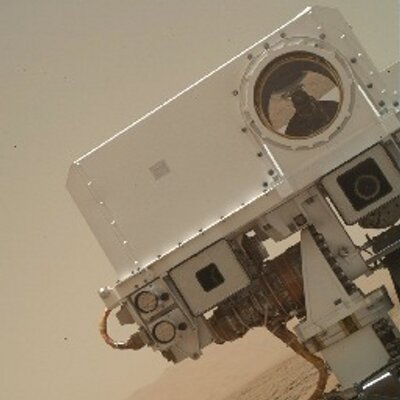
The Martian surface can be rocky, sharp, and unforgiving – so after nearly 10 years, my wheels have taken a beating. The good news is that this is not impacting my mission.
Professor Gregg retweeted
Take a minute to view the Winter 2022 EPOCH arts-sciences.buffalo.edu/ge…
Professor Gregg retweeted
Post-caldera volcanism reveals shallow priming of an intra-ocean arc andesitic caldera: Hunga volcano, Tonga, SW Pacific - ScienceDirect sciencedirect.com/science/ar…
Professor Gregg retweeted
New paper out today! Low-cost instruments used to assess air quality in communities downwind from Masaya volcano, Nicaragua. Click the link below if you're interested, the article is open-access:
doi.org/10.30909/vol.05.01.3…
#volcano #AirQuality #Nicaragua
Professor Gregg retweeted
Astronomers have confirmed that a “mega comet” flying towards the sun is the biggest comet from the outer solar system ever found. newscientist.com/article/230…
Professor Gregg retweeted
Scientists detect rejuvenated uplift near South Sister Volcano - Using satellite imagery and sophisticated GPS instruments, geophysicists have detected a subtle increase in the rate of uplift of the ground surface. ow.ly/OYx950HLA4Q #Oregon 📷 John Scurlock
Professor Gregg retweeted
A Precambrian asteroid rocked South Africa for millennia.
New research from @mineralfellow @UWConline, comments from David Kring @LPItoday, story by @KatherineKornei.
eos.org/articles/a-giant-imp…
Professor Gregg retweeted
Having faults is sometimes a good thing.
New #AGUpubs study, research from @LPItoday, @SETIInstitute, and @NASAAmes.
eos.org/research-spotlights/…
Professor Gregg retweeted
🧐Curiouser & curiouser! I found samples with unusual carbon isotopes, which are key in understanding the evolution of planets. On Earth, this is linked to life but it may still be created by geology. What does it mean on Mars? Ah, that’s the great puzzle! go.nasa.gov/3tDXHZ8
Professor Gregg retweeted
Today our Mars Reconnaissance Orbiter reaches a Martian milestone: 70,000 orbits around the Red Planet! For 15 years, this robotic explorer has sent back valuable data and some of the most detailed, striking images of Mars ever captured. Check it out at: mars.nasa.gov/mro/
Professor Gregg retweeted
With my solar panels gathering dust, why would I pour more dirt on myself? My team asked me to try something that seems crazy, but it actually worked! It cleaned some dust off my solar panels, giving me a small power boost.
How it works: go.nasa.gov/3uJYNzd
Professor Gregg retweeted
Mars Reconnaissance Orbiter — exploring from above
Mars Odyssey — 20 years of mapping Mars
Ride along with all our missions at mars.nasa.gov
#StateOfNASA
Professor Gregg retweeted
It’s a great day to be a Martian!
@MarsCuriosity – capturing images of clouds
@NASAPersevere - preparing for sample collection
#MarsHelicopter – surveying the terrain
@NASAInSight – listening for marsquakes
@MAVEN2Mars – unlocking Mars' climate history
#StateOfNASA
Professor Gregg retweeted
Testing out my tools as I move into more science. Used my robotic arm to get right up close to this rock after zapping it with my laser. Can you tell I’m really into rocks?
mars.nasa.gov/mars2020