

AC, MD, PhD, MMedSci (Clin Epi). Board Director. Physician-Scientist. Medical researcher. Educator. Gastroenterologist. Editor. Views my own. @CREDigestHealth
New South Wales, Australia
Joined April 2021
- Tweets19.5K
- Following967
- Followers6.9K
- Likes1.7K






As a neurogastroenterologist I know chronic constipation is a major management issue in Parkinson’s disease. Effective treatment is important. Diet alone is unlikely to work effectively if there is underlying slow transit constipation or pelvic floor dysfunction, both common.

Constipation is one of the most common and frustrating symptoms of Parkinson’s disease, and it can begin years before the first tremor or any other manifestation. Join me and nutrition expert Emily Truscott as we head into the grocery store to explore foods that may help improve digestion and bowel regularity. We discuss practical choices, including kiwi fruit and other fiber-rich foods, and how simple changes in your shopping cart may make a meaningful difference. Constipation in Parkinson’s is more than an inconvenience. It can affect comfort, quality of life, and even medication absorption. Our goal is to help you make informed, practical food choices that support better gut health and everyday living with Parkinson’s.
youtube.com/shorts/2E7MfOTMJ…
You should be concerned. theguardian.com/environment/…

Regards! The email sign off… theguardian.com/commentisfre…

Prof. Nick Talley retweeted
Thank you I will be cautious. Paris seemed quiet this morning as I walked should city hall and environs. Too quiet. Paris has been the centre of about 10 revolutions until the republic. Let’s hope today is peaceful and there is no revolution.

Prof. Nick Talley retweeted
I know. I’m here. On sabbatical. In Paris. I’ll be visiting the famous Pasteur Institute on Monday. theguardian.com/world/2026/o…

Thank you I will be cautious. Paris seemed quiet this morning as I walked should city hall and environs. Too quiet. Paris has been the centre of about 10 revolutions until the republic. Let’s hope today is peaceful and there is no revolution.
Prof. Nick Talley retweeted

"The longevity industry is a goldrush without gold."
and other strong words about 2 delusions @TheLancet
thelancet.com/journals/lance…


I know. I’m here. On sabbatical. In Paris. I’ll be visiting the famous Pasteur Institute on Monday. theguardian.com/world/2026/o…
Prof. Nick Talley retweeted
Outstanding research meeting in Sweden this week. We have novel exciting new data to analyse! Thank you to all of the team.

Prof. Nick Talley retweeted
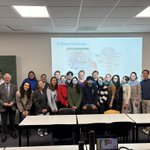
Today I had the great privilege of teaching a group of exceptional medical students from around Europe with my colleague and friend Professor Tim Vanuytsel. It was interactive and fun. The students were knowledgeable and well prepared. Thank you to all!

Prof. Nick Talley retweeted
Science rocks. Forget the bots. Worlds More Habitable Than Earth? They’re Out There. A superhabitable world — about 20-30% wider and twice as massive as Earth, and is placed at the right distance from its star for water to flow on its surface nytimes.com/2026/10/13/scien… via @NYTimes

Prof. Nick Talley retweeted
Good news if you have solar and a battery in terms of selling back to the grid when an unexpected heat wave hits (many more of which are occurring).. “a reminder of an underlying vulnerability in a rapidly warming climate”. abc.net.au/news/2026-10-17/h…

Prof. Nick Talley retweeted
Would make a great movie.

The best general of WW2 might be a man most people have never heard of: William Slim.
No famous pistols. No riding crop. No glamorous desert duels. Just a stocky, square-jawed Englishman his troops called "Uncle Bill." And he pulled off what might be the greatest turnaround of the entire war.
Slim wasn't supposed to be a general at all. He grew up in a family that had fallen on hard times. He worked as a clerk and a schoolteacher. He got into the army through a university officer training corps he wasn't even enrolled at. He was badly wounded at Gallipoli in WW1, then worked his way up the Indian Army with no money and no connections.
In 1942, he was handed a disaster.
The Japanese were steamrolling through Burma. Slim took command of the British forces there and led them on the longest retreat in British military history. Around 900 miles, through jungle and mountains, all the way back to India. They arrived starving, sick, beaten, and with almost nothing left.
Slim later wrote openly about his own mistakes in that campaign. Generals almost never do that.
In 1943, he was given command of the new 14th Army. On paper, it was a mess.
It was the most diverse army Britain fielded in the war. Indians, Gurkhas, Britons, East and West Africans, Burmese. Dozens of languages. It got the worst equipment and the lowest priority, because Europe came first. Its men called it "the Forgotten Army."
And it was being destroyed by disease. At one point, for every man wounded in battle, about 120 were falling sick, mostly from malaria.
Slim's fix was simple and ruthless. Anti-malaria pills became an order, not a suggestion. Officers were held personally responsible. If too many men in a unit got sick, the commander got sacked. Sickness rates collapsed.
Then he fixed the fear. The Japanese had won in 1942 by slipping around British units in the jungle and cutting them off, which caused panic and retreat. Slim's new rule: if you're surrounded, you don't run. You dig in, form a defensive "box," and the air force will supply you from the sky.
In February 1944, it worked. At the "Admin Box" in Arakan, a Japanese attack surrounded a British-Indian force. The force held. Planes dropped supplies. The Japanese ran out of food and broke. It was the first major Japanese defeat on land in Burma.
A month later, the Japanese launched their big gamble: an invasion of India itself, aimed at Imphal and Kohima.
Slim did something that terrified London. He pulled his forces back onto the Imphal plain and let the Japanese come to him. They had brought only a few weeks of supplies, betting they could capture British stockpiles.
They never did. At Kohima, the two sides fought across a tennis court at a few yards' distance. At Imphal, the British held for months while being supplied by air. The Japanese army starved in the hills. Out of roughly 85,000 men, tens of thousands died, many from hunger and disease. It was the worst defeat the Japanese army had ever suffered up to that point.
Then Slim went on the offensive.
In early 1945, he crossed the Irrawaddy River and made the Japanese believe his main attack was aimed at Mandalay. They rushed their forces there to defend it.
Meanwhile, he had quietly sent an entire corps south through jungle trails, under radio silence, using fake signals traffic to hide the move. It burst out and seized Meiktila, the Japanese supply and communications hub, far behind their lines.
The Japanese army in Burma was cut in two and collapsed. By May 1945, Rangoon was back in Allied hands. The army that had fled 900 miles in defeat had marched all the way back.
And even then, Slim almost got fired. That same month, his superior tried to push him out. When word got around, the backlash was so severe that the superior was the one who ended up being replaced.
Slim later became a field marshal, head of the British Army, and Governor-General of Australia.
He called his memoir "Defeat into Victory." No title has ever been more honest.

Prof. Nick Talley retweeted
Centre for Research Excellence in Transforming Gut Health presenting and networking at #UEGWeek 2016 in Barcelona. Thank you to my team and to our wonderful collaborators!


Prof. Nick Talley retweeted
Methane gas plume in Western Australia. abc.net.au/news/2026-10-23/l…

Methane gas plume in Western Australia. abc.net.au/news/2026-10-23/l…
Centre for Research Excellence in Transforming Gut Health presenting and networking at #UEGWeek 2016 in Barcelona. Thank you to my team and to our wonderful collaborators!
Prof. Nick Talley retweeted

🌍 “This is no longer a warning for the future; it is a diagnosis of the present.” Our 2026 State of the Climate report finds 7 of 16 planetary vital signs at record extremes. The planetary emergency is already here.
doi.org/10.1093/biosci/biag1…

Would make a great movie.
The best general of WW2 might be a man most people have never heard of: William Slim.
No famous pistols. No riding crop. No glamorous desert duels. Just a stocky, square-jawed Englishman his troops called "Uncle Bill." And he pulled off what might be the greatest turnaround of the entire war.
Slim wasn't supposed to be a general at all. He grew up in a family that had fallen on hard times. He worked as a clerk and a schoolteacher. He got into the army through a university officer training corps he wasn't even enrolled at. He was badly wounded at Gallipoli in WW1, then worked his way up the Indian Army with no money and no connections.
In 1942, he was handed a disaster.
The Japanese were steamrolling through Burma. Slim took command of the British forces there and led them on the longest retreat in British military history. Around 900 miles, through jungle and mountains, all the way back to India. They arrived starving, sick, beaten, and with almost nothing left.
Slim later wrote openly about his own mistakes in that campaign. Generals almost never do that.
In 1943, he was given command of the new 14th Army. On paper, it was a mess.
It was the most diverse army Britain fielded in the war. Indians, Gurkhas, Britons, East and West Africans, Burmese. Dozens of languages. It got the worst equipment and the lowest priority, because Europe came first. Its men called it "the Forgotten Army."
And it was being destroyed by disease. At one point, for every man wounded in battle, about 120 were falling sick, mostly from malaria.
Slim's fix was simple and ruthless. Anti-malaria pills became an order, not a suggestion. Officers were held personally responsible. If too many men in a unit got sick, the commander got sacked. Sickness rates collapsed.
Then he fixed the fear. The Japanese had won in 1942 by slipping around British units in the jungle and cutting them off, which caused panic and retreat. Slim's new rule: if you're surrounded, you don't run. You dig in, form a defensive "box," and the air force will supply you from the sky.
In February 1944, it worked. At the "Admin Box" in Arakan, a Japanese attack surrounded a British-Indian force. The force held. Planes dropped supplies. The Japanese ran out of food and broke. It was the first major Japanese defeat on land in Burma.
A month later, the Japanese launched their big gamble: an invasion of India itself, aimed at Imphal and Kohima.
Slim did something that terrified London. He pulled his forces back onto the Imphal plain and let the Japanese come to him. They had brought only a few weeks of supplies, betting they could capture British stockpiles.
They never did. At Kohima, the two sides fought across a tennis court at a few yards' distance. At Imphal, the British held for months while being supplied by air. The Japanese army starved in the hills. Out of roughly 85,000 men, tens of thousands died, many from hunger and disease. It was the worst defeat the Japanese army had ever suffered up to that point.
Then Slim went on the offensive.
In early 1945, he crossed the Irrawaddy River and made the Japanese believe his main attack was aimed at Mandalay. They rushed their forces there to defend it.
Meanwhile, he had quietly sent an entire corps south through jungle trails, under radio silence, using fake signals traffic to hide the move. It burst out and seized Meiktila, the Japanese supply and communications hub, far behind their lines.
The Japanese army in Burma was cut in two and collapsed. By May 1945, Rangoon was back in Allied hands. The army that had fled 900 miles in defeat had marched all the way back.
And even then, Slim almost got fired. That same month, his superior tried to push him out. When word got around, the backlash was so severe that the superior was the one who ended up being replaced.
Slim later became a field marshal, head of the British Army, and Governor-General of Australia.
He called his memoir "Defeat into Victory." No title has ever been more honest.