
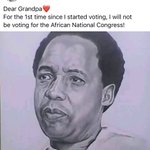


SOUTH AFRICA MUST COME FIRST!
South Africans must reconsider their political choices and hold those governing the country accountable.
South Africa is a key economic and political pillar of the African continent. If it weakens or collapses, the consequences will reach far beyond our borders.
In my view, the ANC has departed significantly from the principles of nation-building, peace, prosperity and service that once defined it. Too many leaders at different levels appear more concerned with accumulating personal wealth than serving the nation.
Corruption threatens our democracy. Allegations and documented cases involving public officials have damaged South Africa’s international reputation and eroded public confidence. I cannot support leadership repeatedly linked to corruption scandals while ordinary citizens struggle to survive.
Government departments and public institutions face serious challenges. Service delivery is deteriorating, accountability is weakening, lawlessness remains a concern, and essential functions are not delivering results. We appear to rely on hope and prayer rather than effective leadership and responsible governance.
Another urgent issue is the alleged large-scale movement of money out of South Africa through informal channels, including some spaza shop operations. Concerns about illicit financial flows, tax compliance and the enforcement of financial regulations cannot be ignored. If intelligence reports have identified such activities, the government must investigate, act and communicate transparently with the public.
Failure to act decisively on serious allegations raises legitimate questions about accountability and the protection of our financial system. South Africans deserve answers, not silence or political excuses.
South Africa belongs to all of us, not to any political party or group of individuals.
We have only one country. Our future, our children’s future and the economic stability of generations to come depend on the decisions we make today.
Political loyalty must never outweigh patriotism. No organisation should enjoy permanent support regardless of its performance, conduct or record in government.
As elections approach, every South African should carefully reflect on the ANC’s record, leadership, accountability and stewardship of our national resources.
We must put South Africa first. We must demand integrity, transparency, accountability and leadership that genuinely serves the people.
No party is bigger than South Africa. No liberation history gives any organisation a permanent entitlement to govern. The country must always come before the party.
Our vote is our voice. Let us use it thoughtfully and hold every political leader accountable.
SOUTH AFRICA FIRST. ALWAYS.
@MYANC @MbalulaFikile @Lesufi @GwedeMantashe1 @CyrilRamaphosa @Our_DA @HermanMashaba @nomvulamoko_ @NomvulaMokonyan
Do the right thing, vote with your mind and not your heart. You can’t wear one t-shirt for thirty years (30). It is time you take it off! We want change! @MbalulaFikile @Lesufi @MYANC
We are fighting for South Africa. @daddyhope ran away from the political crisis in Zimbabwe only to criticise those unhappy about political instability in their backyard. I will not call him an idiot as he calls those who hold a different view.

Do we really have government in South Africa if scores of illegal immigrants can come to South Africa and fight amongst themselves? @CyrilRamaphosa @GwedeMantashe1 @MbalulaFikile this Schoemanskloof in Mpumalanga, Zama Zama shoot out.

@DlaminiZuma When Politics Becomes the Business: A Reflection on Leadership in Africa
The politics of West Africa can, in some ways, be humorously summed up by the late Nigerian musician Fela Kuti in his famous refrain, “Soldier come, soldier go.” His message was simple but powerful: in some African countries, political power has historically changed hands not through elections alone, but through the barrel of a gun. Governments come and go, leaders change, yet the fundamental problems of ordinary people often remain remarkably persistent.
Countries such as Malawi should take this lesson seriously. Malawi is blessed with fertile land and abundant water resources, including the vast Lake Malawi. With such natural advantages, one would expect agriculture and food production to be major drivers of economic growth. Yet the country continues to face serious economic challenges. It sometimes feels as though Malawi is a company whose CEO and board of directors have forgotten to read the business plan.
This raises a broader question about African leadership. Too many political leaders appear to believe that the ultimate measure of success is acquiring and retaining political power. But politics should be a means to an end, not the end itself. A leader should ultimately be remembered for improving the lives of the people—not merely for winning elections, surviving political battles, or building a loyal political network.
South Africa provides an interesting example. There are people who look back favourably on the Jacob Zuma administration because they benefited from government tenders and contracts during that period. The rise of so-called “tenderpreneurs” created a class of politically connected individuals who accumulated wealth through state opportunities. However, the bigger question is whether this translated into broad economic upliftment for ordinary black South Africans. In many respects, it did not. Instead, it contributed to a pattern in which a small group benefited while the wider objective of creating a more equal society remained unfinished.
Returning to Malawi, the country has enormous potential. If its political leadership were to look beyond the immediate demands of political survival and focus more seriously on agriculture, industrialisation, education, infrastructure and youth employment, Malawi could make far better use of the resources at its disposal. The problem is not necessarily a lack of resources; it is the quality and direction of leadership.
The situation becomes even more concerning when Malawi's young people are sent abroad to perform low-skilled work while the country's own agricultural potential remains underdeveloped. There is nothing inherently wrong with Malawians seeking employment in other countries. Migration can provide valuable opportunities and remittances. But if a country becomes dependent on exporting its young people for domestic work while struggling to develop its own productive sectors, it is worth asking whether its economic and political priorities are properly aligned.
This also exposes a weakness in geopolitical thinking. Foreign policy should not simply be about finding whoever is willing to provide jobs or financial assistance. African countries need to ask what partnerships will build their long-term productive capacity and bargaining power. A country rich in young people, fertile land and water should be thinking about how to turn those assets into economic strength.
Ultimately, African leadership should be judged less by the amount of political power a leader accumulates and more by what happens to the lives of ordinary citizens during that leader's time in office. People need jobs, productive farms, functioning industries, good schools, reliable healthcare and opportunities for their children. Political power without economic transformation is little more than an elaborate chairmanship.
2/2
Perhaps that is the lesson hidden in Fela Kuti's “Soldier come, soldier go.” Leaders may come and go, governments may change, and political slogans may evolve. But unless leadership produces tangible improvements in people's lives, the political show continues while the audience—the ordinary African citizen—remains seated, waiting for the real performance to begin.
Pule Modise retweeted

🔸Today is a dark, dark day for our nation. A black cloud hangs over us. Our democracy has been in a coma for years but today, it breathes its last. Mourn we must. Tragedy, thy name is Zimbabwe.
We need new leaders.🇿🇼

Pule Modise retweeted

My fellow Zimbabweans 🇿🇼in South Africa🇿🇦, please note that South Africans owe us absolutely nothing; what owes us everything is the ZANU PF government that has destroyed livelihoods back home and forced you to become illegal immigrants.
The fact that you are hungry and sleeping on pavements in the cold is not South Africans’ problem but it is our own ZANU PF government’s failure to provide you with transport on time and process you to come back home before the 30 June ultimatum that you were given to pack and leave.
ZANU PF is sending bribed Zimbabwean celebrities with fake sympathy to provide humanitarian aid and transport so they appear as saints while they are the real devil’s advocates who want to make our South African neighbors appear as evil for demanding their country back.
Please come back home, let’s suffer together so that we get the courage to confront the source of our problems, which is ZANU PF.
Let’s stop the blame game, instead let’s thank South Africans for being very kind to us during our time of need. We have clearly overstayed our welcome! Let us not be ungrateful visitors!
Pule Modise retweeted

Good day Tinashe,
I trust this message finds you and your loved ones well.
While over 50,000 Zimbabwean returnees have departed South Africa, it is important to note that the Department of Home Affairs publishes a Critical Skills List to guide employers when recruiting foreign nationals. Kindly refer to the following link: gov.za/sites/default/….
I doubt that most of those returnees were employed in the scarce skills categories outlined in this list. Their departure therefore does not undermine South Africa’s ability to address genuine shortages. Furthermore, I am not aware of any legitimate investor who would advocate for employing undocumented migrants, as the law is very clear on this matter. Employers face penalties of approximately R100,000 for each undocumented immigrant employed.
The real task for South Africa now is to strengthen enforcement of immigration laws and is for the commentators, analysts, scholars et al to ensure that migration debates remain objectively grounded in law, dignity, and fairness rather than being reduced to political crossfire.
Thank you for engaging with my post. 🇿🇦🙏🏽


@@tyengeni1954 it is a done deal. You were played by the constitutional court @Julius_S_Malema @ZungulaVuyo Hr is going nowhere
This what we are expecting from @matinyarare @daddyhope @simbachitando and influential Zimbabweans to rally people in exile to challenge the oppressive regime in Zimbabwe

Pule Modise retweeted

ARARE — Apparently Zimbabwe’s Minister of Justice, Legal and Parliamentary Affairs, Ziyambi Ziyambi, says the government will not interfere in South Africa’s handling of xenophobic attacks, insisting that South African authorities should arrest any Zimbabweans found breaking the law.
Speaking in the National Assembly, Ziyambi said Zimbabwe respects South Africa’s sovereignty and will not dictate how Pretoria handles its internal affairs.
“If you are a neighbor, you remain a neighbor. You can not go to their home and teach them what to do. You remain a good neighbor,” he said.
He added that it is the responsibility of South African police to arrest anyone violating the law, regardless of nationality.
“So, if there are people who have done something that is outside the law in South Africa, it is the duty of the police officers in South Africa to apprehend them and make sure that each and every individual is following the law.”
Ziyambi also claimed the government has not received official reports through diplomatic channels confirming widespread killings, describing the incidents mainly as demonstrations.
However, his remarks appear to contradict recent warnings issued by Zimbabwe’s embassy in South Africa, alerting citizens about rising xenophobic tensions.
The statement has sparked concern among Zimbabweans living in South Africa, especially as other African countries are reportedly engaging authorities and evacuating some of their citizens.


BREAKING NEWS: JMPD officers arrested five illegal foreigners ( 3 Zimbabweans and 2 Malawians) who were allegedly found in possession of traffic robots. They are expected to face charges related to damaging Gauteng infrastructure, as well as contravening the Immigration Act for allegedly being in the country illegally. #Abahambe
Pule Modise retweeted

I think it’s unfair for immigrants from nations that gained independence earlier to compete with a nation that gained independence later over its informal sector. What did we use our freedom for?

Pule Modise retweeted
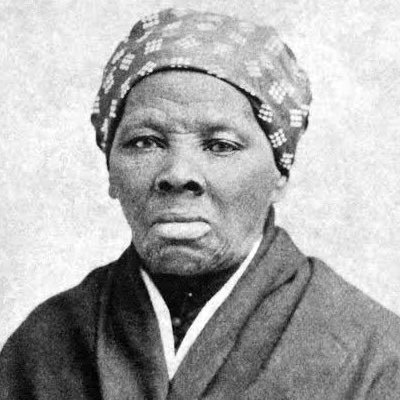
Julius Nyerere, the first President of Tanzania, interviewed in 1976.
Tanzania was colonized by Germany and later by Britain before independence in 1961. During this period, Nyerere emerged as a leading advocate for African decolonization and majority rule in neighbouring countries such as Zimbabwe (then called "Rhodesia").