

Founder & President of GLOBSEC, a Bratislava-based think tank committed to enhancing security, prosperity and sustainability in Europe and throughout the world.
Bratislava, Slovakia
Joined June 2020
- Tweets349
- Following59
- Followers702
- Likes129








In the last couple of days, I’ve had dozens of discussions in Brussels, Warsaw, and Abu Dhabi about how we can weather the global systemic transformation. One answer is becoming increasingly clear: we need to build our own power rather than react to every shift in U.S. politics. That means developing our own technological solutions, scaling up our defence industrial base, and strengthening ties with the Middle East and the Global South.
Glad to reconnect with Subrahmanyam Jaishankar, Omran Sharaf, Steve Ciobo, Marise Payne, and many others!
Today, I think of the victims of the horrendous terrorist attack of 7 October 2023.
I think of those who were murdered, injured and taken hostage — people of all ages, including children and the elderly.
I think of the survivors whose lives were violently scarred, of the grieving families and friends, and of all those who continue to carry the trauma of that barbaric act.
Three years later, my thoughts remain with them. We must never forget.
Let me share a few thoughts about the ongoing arms race that I have been mulling over for the past couple of weeks.
We used to think that our military technological advantage was won during the Cold War and sustained ever since. Not anymore.
Ukraine has pioneered a whole new category of warfare, while Russia has caught up with — and sometimes overtaken — Ukraine in the new arms race for drone supremacy. All the while, the West has been watching, as if legacy technology would be sufficient in a future war.
What is actually happening?
❗Russia has managed to upgrade Shahed/Geran drones, which are now equipped with jet engines and can fly at altitudes above 5 km and at speeds of up to 600 km/h. They are more difficult to shoot down, especially when deployed at scale.
❗They have also tested Shaheds as carriers for smaller FPV drones, delivering them over long distances. A combination of long-range delivery and micro-precision strike capability could be deadly against high-value targets. Russia would essentially be able to bring the front line all the way to the streets of Kyiv.
❗With access to Chinese electronic-warfare satellites, Russia could potentially disrupt Starlink connectivity, thereby disrupting Ukraine’s own drone operations.
Ukraine is expecting a very difficult winter, with swarms of Russian ballistic missiles targeting its civilian infrastructure, including water and sewage systems, to make life for ordinary citizens as painful as possible. Yet the war is not lost, as Ukraine has time and time again demonstrated its ability to innovate.
The ability to innovate, mass-produce, and incorporate battlefield feedback into military-industrial development has been a defining feature of Ukraine’s approach to its defence. It has become the world’s largest laboratory for defence technology.
If Europe is to sustain its technological edge and keep its population protected against an aggressive and technologically advanced Russia, integrating Ukraine into Europe’s defence-industrial base is the right thing to do.
It was great to be back in Paris and meet with old friends and colleagues. It was at the Quai d’Orsay where Robert Schuman and Jean Monnet presented their vision of the European Coal and Steel Community — a plan designed to prevent the return of war and nationalism in Europe.
More than 75 years later, the same hall reminded me how important this vision was, how much we achieved but also how much is at stake. I am convinced that for France — preoccupied with the forthcoming election and for Europe - facing an increasingly imminent threat from Russia, the answer to today’s challenges remains in greater European cooperation. We had great discussions about our European initiatives and planned events.
Thanks to @AureauTristan , @benjaminhaddad , @NathalieLoiseau , @ThierryDeau , Frantisek Ruzicka and many others for great conversations!


If recent carefully calibrated warnings by Allied military and political leaders are dismissed as fearmongering or even warmongering, how else should they communicate the gravity of the moment and prepare for unwanted-yet-possible scenarios?
What would be a more appropriate way to say that several key boxes in their national risk assessments have been checked, and that inaction would amount to dangerous negligence?
Let’s draw the strategic picture together:
✅ An adversarial great power has been waging a years-long war against your mutual neighbour, says your expansion was one of the reasons it started the war, and has repeatedly sought a free hand to divide and conquer you.
✅ The domestic legitimacy and political future of its ruler depend on the outcome of the war he initiated. He has just further consolidated his control over the legislature through sham elections, and he needs to order a mobilisation to replenish a bleeding army and respond to humiliating failures on the front and in the rear.
✅ The adversary has launched a war economy, built massive arms-production capacity, stockpiles more drones and missiles than it uses, is innovating its weapons at an unprecedented pace, and is carrying out sabotage attacks against you and your Allies.
European leaders are not predicting the future. However, they are responsible for making sure their militaries and societies are prepared for unfavourable scenarios.
Today, some scenarios that were previously unimaginable are possible. Preparing for them is not fearmongering. It is our responsibility.

I was supposed to return from Ukraine on the same train as former British Prime Minister Boris Johnson, a train that was hit by Russia. Eventually, I decided to travel by car, but the feeling of uncertainty marked my entire trip to Kyiv.
There is a growing understanding in Ukraine that Russia will soon escalate the war. It might expand the scope of its targets beyond energy infrastructure to freshwater and sewage infrastructure, with the aim of making entire cities uninhabitable.
Russia has managed to innovate and may have gained the upper hand in the technological battle. It is mass-producing ballistic missiles, as well as a new jet-engine version of its infamous Shahed/Geran drones, which are now faster and more difficult to shoot down. Russia has even managed to deploy and operate FPV drones — for years a frontline weapon — inside Ukraine's capital, further elevating security concerns.
I took part in the Annual Meeting of @yes_ukraine in Kyiv, where I met with its founder, Viktor Pinchuk; Deputy Secretary of the National Security and Defense Council of Ukraine Davyd Aloian; Deputy Head of the Office of the President of Ukraine @IgorZhovkva; former Prime Minister of Finland @MarinSanna; former Prime Minister of Sweden @CarlBildt; EU Ambassador to Ukraine @KMathernova; and other key figures.
The main message from the conference debates and private conversations could not have been clearer: If we consider Russia the most important threat to peace and security in Europe, then Ukraine is our most important security provider right now. Not only are Ukrainians holding the line against an aggressive, expansionist power, but the war has also made Ukraine a leader in military doctrine, military technology and defence industrial production.
Having Ukraine among us is in our strategic interest. We need each other, and we can support each other in building a stronger European defence. Ukraine now needs Western support more than ever, and we should provide it.
Thanks and congratulations to YES for bringing this important gathering together.
From disinformation to kinetic sabotage. What next?
This week’s announcement by Germany did not come as a surprise to those of us who have been warning about this threat for years. Russia’s latest sabotage attempt is not an isolated incident. It fits into a systematic campaign to probe and test vulnerabilities in our resilience and defence.
These activities take various forms: from an attempted cyberattack against an international organisation in the Netherlands to kinetic actions, such as a series of drone incursions and impacts in Poland and Romania, explosions at a Czech ammunition depot, the disruption of undersea cables in the Baltic Sea, and the latest foiled arson attack against a drone factory in Slovakia.
We described in detail how Russia recruits individuals in target countries in our Russia’s Crime-Terror Nexus report, published by GLOBSEC last year, months before the current wave of physical attacks on European soil.
The story today should not be what could have happened had a civilian aircraft actually been hit. The story should be what measures we take to dismantle Russia’s intelligence networks across Europe. Not just one consulate in Germany, nor merely wherever the next attack happens. Across the continent.
A carefully calibrated response by individual countries will not work. It will only embolden the bully and ultimately lead to greater escalation. We need a comprehensive European approach to disrupt Russia’s aggressive activities before sabotage becomes the new normal, and before Moscow decides to raise the stakes even further.
The best way to deter Russia from aggression against @NATO territory, and to repel it, if necessary, is through credible military strenght.

NATO’s sudden, massive aerial activity near Kaliningrad shows that the Allies deem the threat posed by Russia to be real, are able to mobilize pre-designated assets, activate well-thought-out procedures, and respond rapidly and in coordination.
- leverage EU clean energy and industrial instruments more strategically.
globsec.org/what-we-do/publi…
- streamline permitting procedures for mining, recycling, and clean-tech projects;
- modernize the grid and invest in refining, recycling, and logistics hubs;
- develop regional critical raw materials processing clusters;
- adopt predictable incentives, including tax credits;
High energy costs threatening competitiveness in Central Europe? @GLOBSEC has identified how governments across the region could address the challenge:
- align national industrial policies around electrification and grid development;
High energy costs threatening competitiveness in Central Europe? @GLOBSEC has identified how governments across the region could address the challenge:
- align national industrial policies around electrification and grid development;
The determination to act provide real security. Solidarity with Romania and Poland. And with Ukraine, which has learned this lesson in the most tragic way.
The only meaningful response to Russia’s drones and missiles crossing into NATO and EU territory is stronger, multi-layered air defence. Words alone cannot protect us from the threats Russia poses. Well-equipped armed forces, adequate stockpiles, a resilient defence industry.

It now needs to translate increased defence budgets into expanded industrial capacity and integrate Ukraine’s rapidly developing defence-industrial base into a common ecosystem.
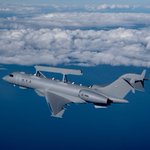
This week's developments illustrate the trend: Saab won a new GlobalEye order from a Middle Eastern country, while the UK announced it would let Ukraine produce the new Stone Cloak jammers domestically. These developments show that Europe has strong foundations to build on.
Although the launch of the Europe Posture Review by the U.S. Department of War is significant news, Europe's adaptation to the new transatlantic reality - including the rebuilding of its defence industrial base - has already been underway.
These are among the findings of the latest GLOBSEC Trends survey. I believe they reflect both the growing Russian threat and the shift in the U.S. administration's approach.
Public support for European strategic autonomy in defence (78%), increased defence spending (61%), continued NATO membership (77%), and defending an Ally under attack (74%) remains remarkably strong.