

Policy advocacy | Natural Resources | WASH | Consultant | Climate justice& social accountability | community driven impact | FATHER | 📌Own Views
Globe
Joined November 2018
- Tweets18.3K
- Following3.2K
- Followers2.9K
- Likes38.2K




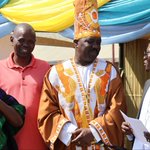


I was honoured to engage with members of the Rotary Club of Ntinda as a guest speaker on the thought-provoking subject: “People Are Staying Together but Have Stopped Being Together.”
We reflected on a paradox of modern life, why are our lives are increasingly intertwined, yet genuine human connection is becoming harder to sustain. We share spaces, responsibilities and routines, but are not always present in each other’s lives.
My central argument was simple: being around people is not the same as being there for them. Relationships require more than proximity. They demand attention, curiosity, honest conversations and deliberate effort.
I was especially energised by the early morning engagement, the depth of contributions and the enthusiasm of the participants. It was a reminder that meaningful conversations can challenge perspectives and inspire change.
My sincere appreciation to the @rotary_ntinda for the invitation and for bringing together such an engaged community.
Perhaps we should all ask ourselves: Are we truly building relationships, or have we simply become comfortable sharing spaces?
#Rotary #HumanConnection #Relationships #Leadership


4
80
I am beginning to comprehend the argument behind @KagutaMuseven’s caution to the @IGGUganda about going slow on corruption.
Think about it: Uganda loses an estimated UGX 9.1 trillion annually to corruption, about 23% of the national budget. Behind this money are powerful networks and interests that are deeply embedded in the economy.
As the saying goes, an old man’s eyes see far. Fighting corruption is not simply about arrests and recovering stolen money. It is about confronting the networks, interests and structures that sustain it.
Until we appreciate the magnitude of the problem, we will keep offering populist solutions to a much deeper problem.
@BalaamBarugahar


1
1
190
Meaningful public participation is essential in shaping responsive legislation. Having engaged in various policy and legislative processes, including the recent Protection of Sovereignty Bill, I have seen the value of informed stakeholder contributions in influencing legislation.
Parliament is inviting views on the Food and Agriculture Regulatory Authority Bill, 2026.
I encourage CSOs, farmers, development partners and stakeholders in food security, nutrition and agriculture to:
Obtain the Bill at parliament.go.ug or request a copy via [email protected].
Review its provisions and prepare written submissions.
Submit their views to [email protected] by 26th November 2026.
Our experience, evidence and technical expertise deserve a place in shaping the laws that govern our sectors.
#PublicParticipation #FoodSecurity #AgricultureUganda
@FAOUganda @WFP @MAAIF_Uganda @CSBAGUGANDA @uwasnet @rama_or @Parliament_Ug @Makerere @actionaiduganda

One of Nelson Mandela’s most profound lessons on poverty is that it is not simply a question of giving to those who have less. It is a question of justice, equality, human rights and human dignity.
The lesson I take from his 2005 speech is that poverty should never be normalised, romanticised or treated as an inevitable condition of human existence.
Charity may provide temporary relief, but lasting change requires confronting the systems, policies and inequalities that reproduce poverty.
Development must go beyond counting beneficiaries and distributing assistance. It must empower people, expand opportunities, guarantee access to essential services and enable communities to shape decisions that affect their lives.
Fighting poverty is not about making people dependent on generosity. It is about creating a society where everyone can live with dignity, opportunity and freedom.
As Mandela reminded the world, poverty is a question of justice.

“Like slavery and apartheid, poverty is not natural. It is man-made and it can be overcome and eradicated by the actions of human beings. And overcoming poverty is not a gesture of charity. It is an act of justice. It is the protection of a fundamental human right, the right to dignity and a decent life. While poverty persists, there is no true freedom.”
Nelson Mandela, 2005
1
80
“Like slavery and apartheid, poverty is not natural. It is man-made and it can be overcome and eradicated by the actions of human beings. And overcoming poverty is not a gesture of charity. It is an act of justice. It is the protection of a fundamental human right, the right to dignity and a decent life. While poverty persists, there is no true freedom.”
Nelson Mandela, 2005
Robert Asiimwe retweeted

When #culturalinstitutions and #youngpeople speak with one voice, protection becomes a shared community responsibility.
On the eve of the 16th Coronation Anniversary of Ubimu @KerAlurKingdom, we joined #KaoiPaAradu (The Youth Fire Place)-an Alur Kingdom platform that connects generations through dialogue on culture, values, traditions, and life lessons.
His Majesty joined the youth in an engaging conversation, sharing wisdom and insights on Alur culture, traditions, and values.
It was a meeting of generations. A passing of wisdom.
This year’s celebration reaffirmed the importance of strengthening our partnership with the Kingdom to advance the Ordinance on Addressing #Violence Against Women and Girls, and to collectively question and transform harmful norms, work we have undertaken together with the Kingdom over the years.
We acknowledge that #sustainablechange is grounded in effective engagement with different institutions, including cultural and community leadership, and #intergenerationaldialogue.
We call upon cultural leaders, partners, stakeholders, and young people to join us in ensuring the Ordinance is enacted and implemented. Only together can we ensure culture remains a source of protection, dignity, and equality for women and girls.
@MemprowGirls @GirlsFirstFund
@vowforgirls @ObamaFoundation
@girlsalliance @medicamondiale
#KaoipaAradu #EndSGBV


Robert Asiimwe retweeted

It just shows lapse in tax policy planning. Their scenario planners should predict some of these developments. They should focus less in bonuses and more on tax policy planning
This should be viewed as a shift in consumer behaviour rather than a tax problem. -@URAuganda @URA_CG Internet is still taxed in Uganda at 12% Excise duty this replaced the the old OTT tax in July 2021.
My question is, why should citizens be made to feel that choosing a more affordable communication option is a threat to government revenue?
Tax policy should be clear to adapt to technological progress, not penalise citizens for finding cheaper ways to live. Perhaps the bigger conversation should be about efficient revenue utilisation, widening the tax base and improving public service delivery.
@CanaryMugume we still pay taxes for WhatsApp calls.
@rama_or your wise opinion on this will help, thanks.

Cheaper WhatsApp and other internet calls are reducing tax collected from ordinary voice calls, @URAuganda Commissioner General John Musinguzi said.
He explained that tax collections from data were increasing, but not enough to match the decline from voice calls. He also raised concerns about unlicensed operators redistributing Wi-Fi.
Watch here:
Robert Asiimwe retweeted

Cheaper WhatsApp and other internet calls are reducing tax collected from ordinary voice calls, @URAuganda Commissioner General John Musinguzi said.
He explained that tax collections from data were increasing, but not enough to match the decline from voice calls. He also raised concerns about unlicensed operators redistributing Wi-Fi.
Watch here:
Until citizens see a clear and meaningful return on their taxes through the public services they receive, even the most aggressive tax education campaigns will achieve very little. People need to see why paying taxes matters and how their contributions improve their lives. Without that connection, many will continue looking for ways to avoid paying, while others may be willing to take the risk of tax evasion.
Tax compliance is built not just on enforcement, but also on public trust, accountability and visible results.
@URAuganda @URA_CG @rama_or
.@rama_or, is the current position being presented by traders genuine and reflective of the challenges they face in doing business, or is it also a strategy to avoid paying their fair share of taxes?
3
175
You Are Taxed When You Earn, When You Move Your Money and When You Spend It: The Real Cost of Living in Uganda.
Have you ever sat down and calculated how much of your salary you actually get to enjoy after all the deductions, charges and expenses?
Let’s use a simple example. Imagine you earn UGX 1 million a month.
Before this money reaches your pocket, government has already taken its share through PAYE. You also contribute 5% to NSSF. These are statutory deductions.
On a UGX 1 million gross salary, our illustration puts PAYE at UGX 188,250 and your NSSF contribution at UGX 50,000.
Your UGX 1 million has already reduced to UGX 761,750.
But the story does not end there.
Now you need to live.
You have rent to pay. You need food for the family. You have water and electricity bills. You need transport to work. You send something small to your parents, help a friend, buy airtime, or occasionally go out for a drink.
Let’s look at an ordinary monthly household budget:
Rent: UGX 250,000
Water and electricity: UGX 50,000
Food and groceries: UGX 200,000
Support to family and friends: UGX 100,000
Entertainment: UGX 80,000
Transport: UGX 200,000
Other expenses: UGX 100,000
Total: UGX 980,000.
These are not extravagant expenses. They are ordinary things many working Ugandans have to deal with every month.
But here is where it gets even more interesting.
You have to move your money to use it.
You transfer money from your bank to mobile money. You send money to your landlord, pay bills, send money to your parents or withdraw cash to buy things.
Every time you move money, you may encounter transaction charges. Some of these charges also attract excise duty.
For our illustration, withdrawing UGX 500,000 and sending UGX 100,000 through mobile money costs approximately UGX 11,700 in operator fees and excise duty combined.
That may look small. But repeat these transactions throughout the year and the costs accumulate.
And when you finally go shopping, buy certain goods, pay for entertainment or fuel your vehicle, you encounter another layer of taxation through VAT and excise duty embedded in the prices of taxable goods and services.
In other words, you have already paid tax on your income, you may pay tax when accessing or transferring your money, and you encounter further taxes when consuming certain goods and services.
So, how much do you actually enjoy?
In this example, after PAYE, employee NSSF and the illustrated mobile money charges, you have approximately UGX 750,050 available.
Yet your ordinary monthly expenditure is UGX 980,000.
There is a gap of UGX 229,950.
This means the income in this example is not enough to sustain the stated monthly expenditure without another source of money, savings or borrowing.
And remember, this is before we calculate all the indirect taxes embedded in the goods and services you consume.
I am not arguing that government should not collect taxes. Government needs revenue to provide roads, hospitals, schools, water and other public services. NSSF is also an important form of social protection and retirement savings.
But I think we need to have an honest conversation about the cumulative burden on ordinary working people.
At what point does taxation, combined with the cost of accessing and using money, begin to undermine the very income people work so hard to earn?
When we discuss the cost of living in Uganda, we should look beyond the prices of sugar, cooking oil, fuel and rent. We should also look at how much it costs to earn, access, transfer and spend the money we use to pay for those things.
Because earning money is one thing. Keeping enough of it to live a decent life is another.
The question is simple: After earning, paying taxes, moving your money and meeting your basic needs, how much of your income do you actually get to enjoy?
@kyamageroandrew


I think we need to distinguish between a village residents’ register and a national identification system.
Under the Registration of Persons Act, 2015, NIRA is responsible for the national identification register and issuance of national IDs. Section 78 also prohibits producing documents purporting to be national or aliens’ identification cards.
In fact, reliable village-level information is important for local planning, accountability, service delivery and community development. The Census 2024 household framework itself recognises the village as an important administrative unit for population data.
The concerns around legal authority, data protection under the Data Protection and Privacy Act, 2019, affordability and inclusion are legitimate and should be addressed.

We are digitizing identity at village level - Bamutakudde Model Village launches Resident IDs
I am proud to announce that Bamutakudde Model Village has partnered with @Egmsuganda to roll out official Village IDs for all residents.
During my campaigns, I promised to restore village IDs, a system we had in the past that gave every resident identity, location and belonging. Today, that promise is live.
What the ID carries:
• Resident Name & Location (Road, Plot Number)
• Emergency contacts for LC1 Chairperson, Vice Chairperson & Secretary
• Secure QR Code for verification
• Integrated village chat room,a digital notice board for news & alerts
Beyond identification, it acts as a business card and strengthens security, service delivery and community organization especially during the village voter registration exercise.
The first card has been issued for the LC1 Chairperson. Mass issuance for residents has now started after successful registration.
Thank you to EGMS for powering this innovation.
Attending the coronation anniversary of His Majesty Ubimu of @KerAlurKingdom Phillip Olarker Rauni III, was a special honour, made even more meaningful by the opportunity to represent @actionaiduganda as the organisation received an award from His Majesty in recognition of its contribution to the Kingdom.
My connection with the Alur Kingdom goes beyond institutional engagements. During a royal visit to Atyak under ActionAid, the Queen Mother gave me the Alur name Mungudit, a personal gesture I have carried with pride.
Having engaged with the Kingdom in different capacities, I have witnessed its commitment to mobilising state and non-state actors to address social challenges, promote peaceful coexistence, advance ADR and challenge harmful practices. I value cultural institutions not only for preserving heritage but also for their role in shaping social change.
The coronation was a reminder that our cultural heritage is not just about where we come from, but also about the future we collectively build.
Congratulations to His Majesty and the Alur Kingdom.
Long live the Alur Kingdom!


INCLUSION MUST BE MORE THAN A TALKING POINT.
Sometimes, it takes a personal experience to understand how deeply our systems can exclude people, even when we believe we are doing our best.
I once encountered a survivor of sexual and gender-based violence (SGBV) who could not speak. She was from the Democratic Republic of Congo and did not speak English. Supporting her was a real challenge because of the communication barriers we faced. Beyond the immediate need to provide protection and support, we had to navigate the question of how best to understand her needs, listen to her story and ensure she could access the services she deserved.
That experience changed how I look at inclusion. It made me more conscious of the invisible barriers that people with disabilities, survivors of violence, refugees and others facing multiple vulnerabilities encounter every day.
Watching this Member of Parliament communicate through sign language in Parliament is a reminder that inclusion is not about making room for people after everything else has been planned. It is about ensuring they are part of the process from the beginning.
And this is where we need to confront some uncomfortable realities.
We sometimes treat inclusion as a by-the-way consideration. We organise meetings, design programmes, allocate budgets and deliver services, then remember to arrange a sign language interpreter when someone who is deaf shows up. Yet inclusion goes far beyond interpretation.
It requires investment in accessible infrastructure, communication systems, trained personnel, appropriate technology, inclusive information, referral pathways and service delivery mechanisms that respond to different needs. It also means involving people with disabilities and other marginalised groups in decisions that affect their lives.
The problem is not always a lack of goodwill. Sometimes, it is a lack of deliberate planning, adequate investment and institutional commitment.
If we are serious about leaving no one behind, inclusion must be reflected in our budgets, policies, programme designs, monitoring frameworks and accountability systems. We must ask ourselves: Who might be excluded by the way we plan and deliver this service? What barriers will they face? And what resources have we committed to removing those barriers?
A person should not have to be physically present before we start thinking about how to accommodate them. Their needs should already be considered in the design.
Because inclusion is not charity. It is dignity, equality, participation and the recognition that every person deserves a fair opportunity to be heard, understood and served.
The real test of an inclusive society is not how well its systems serve those who fit in, but how deliberately they respond to those who have historically been left out.
#InclusionMatters #DisabilityInclusion #LeaveNoOneBehind #SocialJustice #Accessibility
1
104
The world is full of beautiful things, endless opportunities and things worth pursuing. There will always be someone doing better, owning more, travelling further or living what appears to be a better life. But if you don't learn to be contented, you will spend your entire life chasing things and comparing yourself to others.
Ambition is good. Working hard for a better life is important. But never allow the desire for more to rob you of the peace and joy of what you already have.
In John 9:6, Jesus used mud to restore a blind man’s sight. Yet we know that putting dirt in someone’s eyes can cause harm.
A beautiful tree can grow in contaminated soil.
Fire can destroy a home, yet the same fire can cook a meal, forge iron and provide warmth.
Even medicine can contain substances that are harmful in the wrong quantities.
So, yes, someone can cheat and eventually find a partner they genuinely love. People can even build lasting marriages from relationships that began with infidelity. That happens.


Everyday customer feedback, complaints and no communication, @UEDCLTD are you competing for a deadbeat award of the century?
Nga te mumooga?

Robert Asiimwe retweeted

I have known Isaiah Jobs Rwanyekiro since primary school, through our seminary days and into a life in which we have spent so much time and resources trying to promote Brand Uganda. There have been wins, misses, mistakes and triumphs. There is a great deal of life in those years.
Today, I am asking you to help him with the next part of his.
Isaiah is battling cancer and needs our help.
Please donate what you can. Share this appeal with your friends, your networks and anyone who may be able to help us raise funds. I am calling on my friends and their friends to come to this cause.
To give, please use the donation details in the attached appeal.
#30DaysForIsaiahRwanyekiro

ALT Fundraising appeal for Isaiah Rwanyekiro, with his portrait and contribution details.