

Bringing you the most interesting & important science news that you need, summarised & sourced directly to your feed. Also will call out stuff others don't.
Joined December 2010
- Tweets14.9K
- Following3.4K
- Followers11.7K
- Likes26.1K





The Sharing Scientist retweeted

An extraordinary @Nature paper has just landed from the lab of @Sergiu_P_Pasca at @Stanford - led by Konstantin Kaganovsky. They have found a way to create "xenocortical mice" which have ~92% of their cortex occupied by a cortical organoid derived from human stem cells. This human-derived cortical graft integrates deeply with the host nervous system, supporting organised neural activity and behaviour.
This study is a milestone in synthetic biology and chimera research. It has the potential to generate multiple medical breakthroughs by providing an enhanced biological model of human brain tissue that allows behavioural as well as neural and genetic assays.
The Stanford team have been exceptionally thorough and proactive in addressing ethical concerns that comes from this frontier work. But their pioneering work nonetheless raises many open questions: are the xenocortical mice conscious? Do they have any human-like properties of consciousness or cognition?
@NitaFarahany and I will be addressing some of these questions in a forthcoming commentary - where we'll also offer an ethically-informed roadmap to guide this important research as it progresses. In this context, "pacing the frontier" really does make sense 😉
Read the Stanford @nature paper here, and buckle up. It's wild. nature.com/articles/s41586-0…

The Sharing Scientist retweeted

Why is glutathione, rather than cysteine, the major cellular thiol? Our new work by @ToshiNakamura51 suggests unlike other amino acids, excess cysteine is intrinsically toxic to mammalian cells via mitochondrial iron accumulation. @RockefellerUniv
nature.com/articles/s42255-0…

The Sharing Scientist retweeted

It is clear that people are using AI to review papers and grants. Often as a tool, not as an off the bottle answer for review (though some do). One of the signs of this is the detail of the negative comments and the errors, often minor and irrelevant to the conclusions.🧵
The Sharing Scientist retweeted

AlphaFold: predicting the protein structure from amino acid sequence for >200 million proteins (awarded @NobelPrize)
Today
Alpha Genome Atlas: predicting the molecular impact of all 9 billion variants of the human genome
nature.com/articles/d41586-0…

The Sharing Scientist retweeted

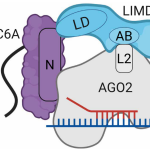
Change the textbooks. Trans-splicing as a means to diversify the proteome. Many congrats to Ruaidhri Jackson and Olivia Venezia on this remarkable discovery.
nature.com/articles/s41586-0…

The Sharing Scientist retweeted

Crazy idea. Love this kind of work.


The Sharing Scientist retweeted

Science is moving at such a crazy speed
Nature paper showing global transcriptional profiling of living cells
How did i miss this ?
nature.com/articles/s41586-0…
The Sharing Scientist retweeted

As someone coming from a computational background to biology, a big culture shock is realizing just how much *improvisation* happens in the lab.
Small observations like the viscosity of the liquid, firmness of the pellet, resistance while pipetting can all drive on-the-fly adjustments: spin a little longer, mix a few more times, or aspirate with a bit more force…
These details are critical to troubleshooting and data interpretation - and can make the difference between signal and noise. But they’re rarely recorded.
Without knowing the messy physical reality of experiment execution, the AI scientist, no matter how brilliant, flies blind. This observability gap decouples AI progress from scientific progress.
Excited to see this great team take on one of the most important problems in science!

Many thanks to @carlzimmer at the @nytimes for spending so much time with us and capturing the "magic" of science so beautifully.
"Success can be just as mysterious as failure. Some researchers consistently get experiments to work, earning befuddled admiration from colleagues. Scientists even have a special term for this gift: magic hands.
The idea may come as a surprise to people who don’t spend their lives in labs. Science is not supposed to be magic.
When scientists carry out experiments, they keep careful records, both in lab notebooks and later in published scientific papers. Other researchers use that information to repeat the experiment.
But every scientist discovers sooner or later that essential knowledge is not necessarily written down."
The Sharing Scientist retweeted

Very cool, finally someone gives us an alternative to UMAPs
Sad that the best figure in the paper went from Figure 5 in the preprint to supplementary figure 32 in the final paper😣


The Sharing Scientist retweeted

1/16 Our work is now published in @Nature.
The psychedelic brain is often described as desynchronised or entropically disordered. That is true, but incomplete.
Beneath the apparent disorder, we found structured brain activity aligned with context.
nature.com/articles/s41586-0…

The Sharing Scientist retweeted
The mRNA vaccine success vs melanoma in a Phase definitive 3 randomized trial today is on top of signs of success for personalized mRNA neoantigen vaccines vs pancreatic cancer, triple negative breast cancer, and non-small cell lung cancer wsj.com/health/pharma/modern…

The Sharing Scientist retweeted
Did you know attention help regulates your immune response?
"Our findings therefore establish a causal
link between attention and immune regulation in vivo, suggesting that processes often considered autonomously regulated, such as inflammatory responses, are influenced by the voluntary allocation
of attentional resources."
nature.com/articles/s41562-0…

Psychedelics align brain activity with context
“Our findings extend prevailing accounts that characterize the psychedelic state as desynchronized or entropically disordered by revealing structured, context-aligned organization in BOLD signal dynamics—a latent order harboured within temporal dynamics that time-averaging obscures—which emerges in proportion to the depth of self-dissolving and boundary-dissolving experience. This organization is distributed across networks but depends on the joint alteration of DMN and visual systems: the gradient end points that ordinarily segregate internal from external processing. When both are altered, that functional boundary dissolves, setting the conditions for brain activity to align with context, an integration that provides a neurobiological rationale for how structured settings can shape outcomes under psychedelics. That the felt boundary between self and world reorganizes when these dynamics shift implies that the boundary is not a fixed datum of conscious experience but a construction actively maintained by neural activity. Embeddedness—the continuity that emerges when this construction relaxes—may thus reveal less about what psychedelics add to consciousness than about what ordinary neural dynamics keep apart.”
nature.com/articles/s41586-0…

The Sharing Scientist retweeted

Lab meetings can be the worst,
or the best! :)
Here are 22 tips for improving them (including mine)
nature.com/articles/d41586-0… @Nature

The Sharing Scientist retweeted

Memory was once imagined as crystal-like: information fixed in "stable" synapses, wearing away only as those connections eroded.
This study suggests that an engram, the physical trace of a memory, may exist at the level of its architecture: a pattern of fluid relationships across a network. Individual synapses can disappear while the memory itself remains.
A compelling paper for anyone interested in how the brain stores information.

Memories can survive even after the brain temporarily loses more than half of its synaptic connections, according to a new mouse study in Science, which challenges the long-held view that long-term memories depend on stable individual synapses.
Learn more: scim.ag/4x3dVZG

The Sharing Scientist retweeted

Chromatin has long been proposed to "store" memory related information; but what kind of information, contents or rules does it hold?
Check out our new preprint: biorxiv.org/content/10.64898… 1/13
The Sharing Scientist retweeted

The Human Cancer Models Initiative (HCMI) paper is basically like a TCGA for diverse cancers, including rare cancers, but using organoids.
nature.com/articles/s41586-0…
The profiling data can be queried through this interactive site (HCMI Explorer Suite):
appshare.cancer.gov/HCMI_Exp…


3 papers in @Nature today reflecting large scale efforts at mapping dependencies and multimodal molecular profiling data from a large panel of patient-derived 3D cancer models. This is DepMap on steroids!
nature.com/articles/s41586-0…
nature.com/articles/s41586-0…
nature.com/articles/s41586-0…


The Sharing Scientist retweeted

ヒト転写因子のDNA結合特異性を複数の解析法で体系的に調べ、100種類以上の新たなDNA結合モチーフを同定して、未解明の転写因子機能を推定するための拡張コードブックを構築した論文がNature誌に発表されました。
nature.com/articles/s41586-0…

The Sharing Scientist retweeted
26 years after the first draft human genome sequence we have the first diploid complete human genome sequence @CellCellPress
cell.com/cell/fulltext/S0092…

The Sharing Scientist retweeted

Thrilled to share our latest work is out today in @Nature
ZFP36L2 orchestrates stress-adaptive plasticity in regeneration and cancer.
nature.com/articles/s41586-0…
