

Leader, Policy Analyst, Father & Servant of God
Kampala, Uganda
Joined November 2012
- Tweets6.4K
- Following2.1K
- Followers1.1K
- Likes732


MUSASIZI: MAKE FORMALISATION AN ECONOMIC OPPORTUNITY FOR BUSINESSES
The Minister of Finance, Planning and Economic Development, Hon. @henrymusasizi1, has challenged the Uganda Registration Services Bureau (URSB) to make business formalisation an attractive economic proposition by linking registration to tangible benefits such as access to finance, public procurement, technology, commercial partnerships and wider markets.
Speaking as Chief Guest at the inaugural URSB Conference 2026 at the Uganda Business Facilitation Centre in Kampala, Musasizi said businesses would formalise more readily when the benefits outweigh the costs, urging @GovUganda to nurture enterprises into growth rather than burden them with excessive compliance requirements.
He identified the high cost of capital, electricity and transport, informality and inadequate irrigation as key constraints to business growth.
He outlined five priorities for improving business facilitation:
1. Integrating government institutions to provide seamless services;
2. Reducing the cost of doing business by cutting unnecessary regulatory and operational burdens;
3. Incentivizing formalisation by linking registration to clear economic benefits;
4. Leveraging business registration data to improve planning, service delivery and access to opportunities; and
5. Measuring economic outcomes by tracking whether formalised businesses survive, grow, create jobs and contribute to the economy.
Musasizi called for interoperable systems among URSB, Uganda Revenue Authority, Uganda Investment Authority, local governments and other agencies to eliminate duplication and create a seamless one-stop business registration experience.
He commended @URSBHQ digital transformation, including 187 mobile registration clinics that facilitated the formalisation of 17,990 entities between FY2023/24 and FY2025/26.
Acting Registrar General Mustapher Ntale said digitalisation had transformed URSB from a manual registry into a more efficient institution with online services and improved turnaround times.
Justice and Constitutional Affairs Minister Hon. @norbertmao described URSB as a strategic pillar of Uganda’s economic infrastructure, supporting enterprise development, intellectual property protection and business records management.
@mofpedU reaffirmed its commitment to reforms that simplify formalisation, lower business costs and strengthen private-sector competitiveness in support of Uganda’s Tenfold Growth Strategy.
This makes the five priorities explicit while showing the practical meaning of each, rather than leaving them as broad labels.


GOVERNMENT MOVES TO EASE HOTEL BUSINESS COST - MUSASIZI
@GovUganda is moving to ease tax and regulatory pressures on the hotel industry, address delayed payments and prioritise critical tourism infrastructure as part of a broader effort to lower the cost of doing business and strengthen Uganda’s competitiveness as a tourism and MICE destination.
Finance Minister @henrymusasizi1 made the commitment during a dialogue with the Uganda Hotel Owners Association, led by Chairperson @SusanMuhwezi.
Musasizi said Government is responding to the sector’s concerns through tax, licensing and regulatory reforms aimed at creating a simpler, fairer and more predictable business environment while strengthening compliance and investment.
Hotel owners reaffirmed their commitment to paying taxes but raised concerns over multiple taxes and licences, inconsistent application of VAT exemptions and high compliance costs.
Government will continue with licensing reforms to streamline requirements, reduce the cost of compliance and support formalisation, while engaging the relevant institutions on copyright charges and occupational health and safety requirements.
The consultations are intended to improve regulatory coordination and minimise overlapping obligations on hotels.
Hotel owners cited poor roads to tourism destinations, unreliable electricity, inadequate water supply and limited digital connectivity as major drivers of operating costs.
Musasizi said the Ministry will work with Ministry of Tourism, Wildlife and Antiquities, other agencies to identify and prioritise critical tourism infrastructure investments, particularly in roads, power, water and digital connectivity.
The Ministry will also engage responsible Government entities to address payment bottlenecks, following reports that some hotel operators wait three to six months or longer for payment while continuing to meet salaries, utility costs.
Recognising the importance of existing accommodation facilities to Uganda’s tourism capacity, Government will further examine measures to support the renovation, expansion and modernisation of established hotels, alongside efforts to improve affordable, reliable digital infrastructure for the growing MICE market.
The hotel industry welcomed the engagement and reaffirmed its commitment to taxation, while emphasising that a supportive and predictable business environment is essential for a resilient and competitive hospitality sector.

On Sunday at Kololo, the Minister of State for Microfinance @mofpedU , Hon. @SMusherure , joined senior Ministers and other Government officials to flag off the 7th #SDGRun, which brought together thousands of Ugandans to mobilize resources for access to clean water and sanitation for all.
The funds raised will support the provision of water tanks to schools facing water shortages, addressing a critical need that directly affects the health, dignity and learning environment of our children.
Hon. Kutesa commended the participants, organisers and partners for translating commitment to the Sustainable Development Goals into concrete action and measurable impact. She said the initiative demonstrates the importance of SDG 17—Partnerships for the Goals, which calls for stronger collaboration in delivering sustainable development outcomes.
@GovUganda will continue to strengthen partnerships with the private sector, development partners, civil society and citizens to mobilise resources, expand access to essential services and accelerate national development.
“We remain committed to ensuring that our development priorities translate into tangible improvements in the lives of Ugandans,” she said.
The minister thanked everyone who contributed to the success of the 7th #SDGRun, emphasising that Uganda must turn its development commitments into concrete results that improve the lives of its people.
@UNDPUganda @SDGaction @OPMUganda @IOM_Uganda


MACROECONOMIC AND FISCAL PERFORMANCE REPORT FY2025/26
Uganda’s economy has demonstrated strong resilience and sustained growth despite global geopolitical tensions, high international fuel prices and domestic public health challenges. Real GDP growth rose to 6.4% in FY2025/26, up from 6.3% the previous year, with agriculture, industry and services all contributing to the expansion.
The economy grew to UGX250.4 trillion (US$69.3 billion).
Key Economic Gains
>GDP growth: 6.4%, up from 6.3% in FY2024/25.
>Economy size: UGX250.4 trillion (US$69.3 billion).
>Inflation: Maintained at a low average of 3.3%.
>Private sector credit: Accelerated by 16.1%, supporting business expansion and investment.
>Tax revenue: Increased by 14.0%.
>Fiscal deficit: Contained at 6.0% of GDP, below the budget target.
@GovUganda also continued implementing programmes aimed at transforming livelihoods and expanding economic opportunities. The Parish Development Model supported the transition from subsistence to commercial production, while Emyooga and GROW strengthened entrepreneurship and expanded opportunities, particularly for women and youth.
Building a Stronger and More Resilient Economy
Government will sustain efforts to shield the economy from external shocks while accelerating structural transformation through revenue-led fiscal consolidation and the Tenfold Growth Strategy.
Priority will be given to:
>Strengthening domestic revenue mobilization and broadening the tax base;
>Maintaining debt sustainability and macroeconomic stability;
>Increasing agricultural productivity and industrialisation;
>Expanding infrastructure and productive-sector investment;
>Promoting export competitiveness and value addition; and
Creating an enabling environment for private sector-led growth and job creation.
Outlook
Uganda’s economic prospects remain strong and increasingly promising, supported by continued investment in productive sectors, infrastructure development, private sector expansion and the anticipated commencement of commercial oil production.
These opportunities will be leveraged to accelerate economic transformation, expand the revenue base, create jobs, raise household incomes and improve the welfare of Ugandans, while advancing the country towards the objectives of the Tenfold Growth Strategy and the long-term goal of a US$500 billion economy by 2040.

Visit UGANDA 🇺🇬, The Pearl of Africa to experience such incredible sights and sounds that you will live to tell for the rest of your life.
#Christmas is knocking
@TourismBoardUg @UTAUganda @TouringUganda @PoAUgTourism @MTWAUganda @ugwildlife @min_waterUg
117
AMINA: STRONG ENTERPRISES ARE KEY TO UGANDA’S TENFOLD GROWTH
The Minister of State for Privatisation and Investment, Hon. @AminahMukalazi, has commended the organisers, sponsors and partners of the 12th PAKASA Forum 2026, held under the theme “Empowering Entrepreneurs for Sustainable Business Growth,” for creating a platform that equips businesses with practical knowledge, networks and opportunities to grow.
Held at Enterprise Uganda Business Development Services (BDS) Centre of Excellence in Butabika, the forum brought together entrepreneurs, business leaders and Government representatives to share insights on innovation, financial discipline, formalisation, access to finance and markets—key ingredients for building resilient and competitive enterprises.
Mukalazi said Uganda’s Tenfold Growth Strategy depends on a vibrant private sector capable of expanding businesses, creating jobs, attracting investment and driving value addition. She reaffirmed @GovUganda commitment to strengthening an enabling business environment that allows enterprises to scale and contribute meaningfully to economic transformation.
She applauded @newvisionwire and its partners for sustaining the PAKASA Forum as a platform for empowering entrepreneurs and strengthening business linkages. She congratulated the speakers, and participants on a successful 12th edition and called on entrepreneurs to turn knowledge into action, businesses into investment opportunities, and growth into jobs and national prosperity.

Shaka retweeted
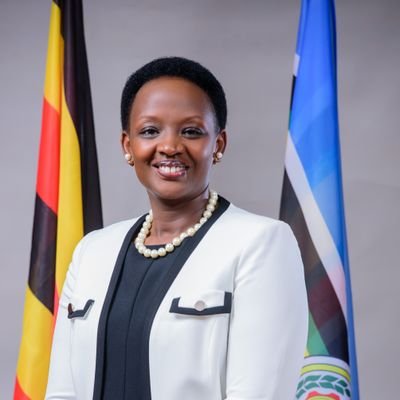
Over the last two days, I had the opportunity to officiate and host Hon. Henry Musasizi, the Minister of Finance, Planning and Economic Development, at the 4th Annual National Microfinance and Savings Groups Conference 2026.
Our collective commitment to wealth creation remains unwavering, as evidenced by its investment over the last seven years. Government has invested Shs 4.4 trillion in the Parish Development Model, supporting 1,589 SACCOs and about 3.57 million Ugandans. Emyooga has provided Shs 760 billion to enterprise groups, and the Agricultural Credit Facility has disbursed Shs 1.35 trillion to finance about 1,400 projects. The Uganda Development Bank has extended over Shs 2 trillion to businesses and received a further Shs 442.2 billion in capitalisation for FY2026/27. The Small Business Recovery Fund holds Shs 200 billion, with loans of up to Shs 500 million available, while GROW supports women enterprises of all sizes, including large-scale businesses.
I further reaffirmed Government's commitment to expanding financial inclusion, particularly among households at the bottom of the economic pyramid. SACCOs and savings groups can amplify this effort by taking full advantage of Government programs to extend affordable financing to their members and strengthen household income generation.
In this particular regard, we are finalizing a Savings Groups Coordination Strategy to improve coordination, harmonisation and oversight of savings groups across the country. We believe that financial inclusion will make significant strides when information, capital and institutions reach people in an efficient and sustainable manner.
On the issue of a single regulator for SACCOs, I assured stakeholders that Government will engage and consult widely on the matter, taking into account industry concerns, financial stability, and our regional and international obligations.
I commend all SACCO leaders, savings group members and microfinance practitioners for their continued partnership, and I look forward to working with them to ensure that every Ugandan is supported to engage in an activity that brings income.


MUSASIZI: TURN BANKING SECTOR STRENGTH INTO MORE CREDIT
Finance Minister @henrymusasizi1 has commended Uganda’s banking sector for improved asset quality, profitability and resilience, urging banks to translate this strength into increased, affordable lending to businesses and productive sectors.
With sector assets at Shs61.7 trillion, profits at Shs2.17 trillion and non-performing loans down to 2.67%, Musasizi said Uganda cannot achieve a US$500 billion economy by 2040 if private-sector credit remains at 14% of GDP. He called for increased access to credit and lower lending rates, targeting 25% private-sector credit to GDP by 2030.
At the awards, @stanbicug emerged Bank of the Year in the Tier 1 category, while Pride Bank won the Tier 2 category.
Julius Kakeeto @pearlbank_ug was named Banker of the Year. @NCBAUganda was also among the top performers, winning three awards:
1. The Best Customer Service (Tier 1),
2. The Best Bank in Corporate Banking, &
3. The Financial Crime Prevention Award.
Bosco Bainamazima, representing @BOU_Official of Uganda Governor, urged banks to focus on financing productive investment, jobs and household resilience.
@UIBFSTraining Board Chair Godfrey Sebaana reaffirmed the sector’s commitment to the Tenfold Growth Strategy, with banks submitting proposals to support the US$500 billion economy ambition.


Shaka retweeted

The Minister of Finance @henrymusasizi1 is before National Economy Committee alongside the State Minister for transport with a proposal to borrow upto Euros 142 million from @Citibank to upgrade the Harumwa - kerere - Kanungu (47km) and kanyantorogo - Butogota - Buhoma roads (31.4km).
@wasswah74
#NBSLiveAt1 #NBSUpdates
Shaka retweeted

Today, I was pleased to receive H.E. Sigrid Ingelore Luise Sommer, the Ambassador of Germany to Uganda.
I appreciate her for the courtesy visit and the fruitful engagement on strengthening investment relations and exploring new opportunities for cooperation to attract more investment into Uganda.
Shaka retweeted

WHAT DO WE LEARN FROM COUNTRIES WHO HAVE EXPERIENCED RAPID ECONOMIC TRANSFORMATION?
How did countries like South Korea, Singapore and Vietnam move from poverty to relatively prosperous economies within a few decades?
Investment in people and cultivating a strong sense of national responsibility.
It is not sensible for anyone to simply wait for development. An indidual person household or a national economy must be organised to make transformation happen.
There are important lessons here for Uganda and Africa;
Education and training must respond to the needs of the economy.
Universities must produce graduates whose only ambition is not to get office jobs but to create employment for others. This rewuores investment in Science and Technology (scientists, technicians, artisans and other skilled professionals) needed by industry.
This is why the skilling programme of Uganda Government comes handy. Uganda needs a proper skills- mix and a DUO-QUALIFICATION FRAMEWORK: academic knowledge must go hand in hand with practical and professional skills.
With a duo-qualification framework, a young person should leave an institution not only able to think, but also equiped to do something productive with their hands. This is what transformative economics is about.
Uganda for example is endowed with a huge young population. This is a demograhic dividend which should be hernessed through skills-mix training in IT, accounting, customer care, health workers/ nursing, technicians/mechanics, site managers and civil engineers. Many countries earn $ Billions from this labour externalisation.
The real wealth is created when we ADD VALUE, PRODUCE and COMPETE in international markets.
We must promote both DOMESTIC DIRECT INVESTMENT (DDI) and FOREIGN DIRECT INVESTMENT (FDI).
There is something else we often overlook: the values of a society matter enormously in economic transformation.
Singapore placed great emphasis on discipline, integrity, public accountability and national responsibility.
We must therefore develop a culture, built on a national ethos-a value system that clearly define a Ugandan positively.
As Ugandans, we are already known globally for being hospitable, hardworking particularly in Small and Medium Enterprise Entreprenuership.
We are also known for production of world class quality coffee while Gold mining is also picking up. Our fruit production potential and tourism sites and artefacts are unparalleled.
However, what is also important is the love for one's country. As Ugandans, we must love our country. No one is going to love Uganda on your behalf.
What does this mean: it means refusing to steal public funds, paying taxes, doing your work properly, protecting public property, producing quality goods and respecting the resources entrusted to you, including conserving environmental resource flows..
It also implies affinity to demestically produced producrs which will go a long way in reducing our current account deficit.
A country cannot develop when everybody wants the country to change, but nobody wants to change their own behaviour.
The lessons from countries that have transformed are not complicated:
1.Educate and train people for enhancing their productive capacity and not merely for obtaining certificates. This is where the competence- based curriculum that is being implenented becomes critical.
2.Enhance export sector performance as a means of improving forex inflows.
3.Encourage Ugandans to invest and diversify financial markets particularly focusing on patient capital.
4.Cultivate discipline, integrity, patriotism and a sense of national duty.
These are the foundations of a national value system as an impact pathway to transformation
and there is no short-cut to this.
We must shift from talking about our potential to actually exploiting this potential for the benefit of the people.

Shaka retweeted

The Minister for Finance Henry Musasizi has backed calls by Members of Parliament to address the high cost of land compensation for government projects.
According to Minister Musasizi, citizens who genuinely desire development should be willing to provide free land to the government to ease the implementation of public projects. He added that the ruling National Resistance Movement (NRM) Parliamentary Caucus will soon convene to discuss the matter and chart a way forward.
#MonitorUpdates
📹Ibrahim Kavuma
MUSASIZI SEEKS LOAN APPROVAL TO BOOST TOURISM IN KIGEZI SUB-REGION
The Minister of Finance, Planning and Economic Development, @henrymusasizi1, has asked Parliament to approve Government’s proposal to borrow up to €142.69 million (Shs582.79 billion) from Citi Bank to upgrade 78.4km of roads in Western Uganda.
Appearing before @Parliament_Ug Committee on National Economy alongside the Minister of State @MoWT_Uganda, Hon. Siraji Musa Ali, Musasizi said the project will upgrade the 47km Hamurwa–Kerere–Kanungu and 31.4km Kanyantorogo–Butogota–Buhoma roads to paved standard.
The upgrades will improve access to Bwindi Impenetrable and Queen Elizabeth National Parks, enhance connectivity, reduce travel time and transport costs, and unlock greater opportunities for tourism, trade and private investment across the Kigezi sub-region.
The project is aligned with NDP IV and supports Government’s Tenfold Growth Strategy, which identifies infrastructure as a critical enabler of productivity, competitiveness and economic transformation.
Musasizi said Parliament’s approval will enable Government to proceed with the road upgrades and strengthen infrastructure-led development in the region.


66
UGANDA CANNOT SHOULDER REFUGEE BURDEN ALONE – MUSASIZI
Finance Minister, @henrymusasizi1 has called on Development Partners to increase funding for Uganda’s refugee response, warning that inadequate support is placing growing pressure on @GovUganda resources.
Meeting this morning with UNHCR Regional Director for Eastern and Southern Africa, Dr. Mamadou Dian Balde, Musasizi said Uganda’s hosting of nearly two million refugees requires stronger international burden-sharing to ensure sustainable service delivery.
“Let us think about the sustainability risk,” Musasizi said, urging partners to balance support for refugees with the needs of host communities.
He commended Uganda’s progressive refugee policy but stressed that the country cannot shoulder the responsibility alone.
Dr. Balde commended Uganda’s generosity and reaffirmed UNHCR’s commitment to mobilising resources. He urged Government to fast-track approvals for US$200 million in World Bank IDA-21 financing for refugee response.

1
104
Shaka retweeted

78.4KM ROAD UPGRADES TO ENHANCE ACCESS TO BWINDI, QUEEN ELIZABETH NATIONAL PARKS
The Finance Minister @henrymusasizi1 together with the Minister of State for Works and Transport (Works), Hon. Siraji Musa Ali, appeared before Parliament’s Committee on National Economy, chaired by Hon. Jane Avur Pacuto (DWR Pakwach), to present a proposal to borrow up to €142.69 million (Shs 582.79 billion) from Citi Bank to upgrade two key roads in Western Uganda to paved standard.
The proposed financing will facilitate upgrading of the 47km Hamurwa-Kerere-Kanungu road & the 31.4km Kanyantorogo-Butogota-
Buhoma road, covering a combined 78.4km across Rubanda and Kanungu districts.
The project forms part of the Integrated Transport Infrastructure and Services Programme under the Fourth National Development Plan (NDP IV), reflecting Government’s commitment to strengthening transport infrastructure as a foundation for economic growth, regional connectivity and private sector development.
Presenting the proposal, Hon. Musasizi said the improved roads would strengthen access to two of Uganda’s leading tourism destinations, opening up opportunities for tourism development and economic activity in the region.
“The project will improve access to Bwindi Impenetrable National Park and strengthen its connection to Queen Elizabeth National Park via Kihihi. It will also improve access to services and markets, facilitate trade and reduce travel times and vehicle operating costs,” the Minister said.
The investment builds on Uganda’s growing tourism performance. In 2025, tourism receipts reached Shs 5.83 trillion (US$1.62 billion), representing a 21.3% increase from 2024. Improved road infrastructure will further enhance visitor access, support tourism businesses and strengthen the sector’s contribution to economic growth.
The civil works contract was signed with China Henan International Cooperation Group Co. Ltd at Shs 530.66 billion, inclusive of VAT. The proposed financing also provides for land acquisition, construction supervision, design review and the applicable insurance premium.
The project aligns with Government’s Tenfold Growth Strategy, which identifies infrastructure development as a key driver of productivity, competitiveness, tourism, trade and private sector investment.
The Minister is seeking Parliament’s approval of the proposed borrowing to advance the road upgrades and support infrastructure-led socio-economic transformation.


Shaka retweeted
FINANCE MINISTER CALLS FOR MORE FUNDING FOR REFUGEES
Finance Minister @henrymusasizi1 has urged Development Partners to prioritise more funding to match the growing number of refugees hosted by Uganda. He said the current support is inadequate which puts more pressure on the government resources to cover the funding gap.
“There is a sustainability risk and you need to think about it,” said Musasizi while meeting Dr. Mamadou Dian Balde the @Refugees Regional Director for Eastern and Southern Africa at @mofpedU
The Minister said although Uganda has a progressive Refugee Policy and now hosting about 2 million refugees, other countries must come up to share the burden Uganda is facing by hosting more of these refugees, adding that there is need to balance the needs of the refugees and the refugee hosting communities in terms of service delivery.
Dr Mamadou who was accompanied by @Refugees representative in Uganda, Margaret Atieno and other officials applauded Uganda for the generosity towards refugees and the longstanding partnership between Uganda and UNCHR.
He said UNHCR is aware that the increasing influx of refugees requires more resource mobilisation, adding that @Refugees remains committed to mobilising humanitarian support and government development support.
He urged Uganda to fast-track the approvals to access the USD 200 financing from the World Bank under International Development Association (IDA-21) to support refugee response in Uganda.


Shaka retweeted

Hon. @SMusherure, Minister of @mofpedU
First, allow me to congratulate Enterprise Uganda on establishing the Business Development Services (BDS) Centre of Excellence, where we are gathered today. This was one of the deliverables under the Third National Development Plan (NDP III).
@mofpedU has supported Enterprise Uganda since its establishment in 2001. I also congratulate the institution on reaching its 25th anniversary.
@EntUganda @pearlbank_ug @CentenaryBank @mofpedU @mtic_uganda @URAuganda
#PakasaForum2026 #GEWUG2026 #EnterpriseUganda

Shaka retweeted
📽️ CEO of Nice House of Plastics Barbara Mulwana unveils the Mulwana Hall in honour of the first chairperson of Enterprise Uganda, Prof. James Mulwana
@EntUganda | @mofpedU | @URAuganda | @CentenaryBank | @pearlbank_ug
#NewsInBytes | #PakasaForum2026 #GEWUG2026 #GEW2026
MUSASIZI: TAKE GOVERNMENT FINANCING OPPORTUNITIES TO THE PEOPLE
Hon. @henrymusasizi1, challenged SACCOs and microfinance institutions to take @GovUganda financing opportunities closer to the people, saying significant public resources are available to support businesses, create jobs and raise household incomes.
Speaking at the 4th Annual National Microfinance & Savings Groups Conference 2026 in Kampala, Musasizi highlighted the scale of Government financing, including Sh4.4 trillion through the Parish Development Model, Sh760 billion under Emyooga, Sh1.35 trillion through the Agricultural Credit Facility and more than Sh2 trillion in financing extended by Uganda Development Bank.
Government has also committed Sh200 billion to the Small Business Recovery Fund, while GROW programme continues to support enterprises.
However, Musasizi said a major challenge remains: many potential beneficiaries are unaware of these financing opportunities or how to access them.
“These programmes are there, but people don’t know about them. So be our ambassadors.”
He urged SACCOs and microfinance institutions to bridge this information gap by taking information into communities, connecting potential beneficiaries to affordable financing and helping more Ugandans engage in productive, income-generating activities.
The Minister stressed that the objective is not simply to disburse money, but to turn affordable credit into viable businesses, jobs, higher household incomes and sustainable economic activity.
Minister of State for Microfinance, Hon.@SMusherure, reaffirmed Government’s commitment to expanding financial inclusion, particularly among low-income households.
She said @mofpedU is finalising a Savings Groups Coordination Strategy to strengthen coordination and oversight, while Government will engage stakeholders on the proposed single SACCO regulator.


83