

“The definitive Shakespeare historical fiction”-critic John Demetry • Amazon/Audible • David Scheidig Schajer • Free Books: https://xitter.cf/t.co/Xf84QNSxr2
England 1587
Joined December 2023
- Tweets6.6K
- Following794
- Followers1.4K
- Likes18.8K







Pinned Tweet
Wow! 🤯 I am truly thunderstruck!
Film Critic John Demetry put me on his Top 10 list!
I am so grateful for his praise—and I am so thrilled that a critic as discerning as he is agrees that this is the “definitive historical fiction” for Shakespeare
Bless you John!


“The key to the audiobooks’ immediacy and enjoyment is the narrator of the volume, author Schajer, and he narrates the story and performs every character with empathy and without condescension. You feel and hear the characters as Schajer feels and hears them, making THEIR thoughts and feelings become OUR thoughts and feelings.”
I wish every author had readers as thoughtful and supportive as Paul Dessonet @PNPD98
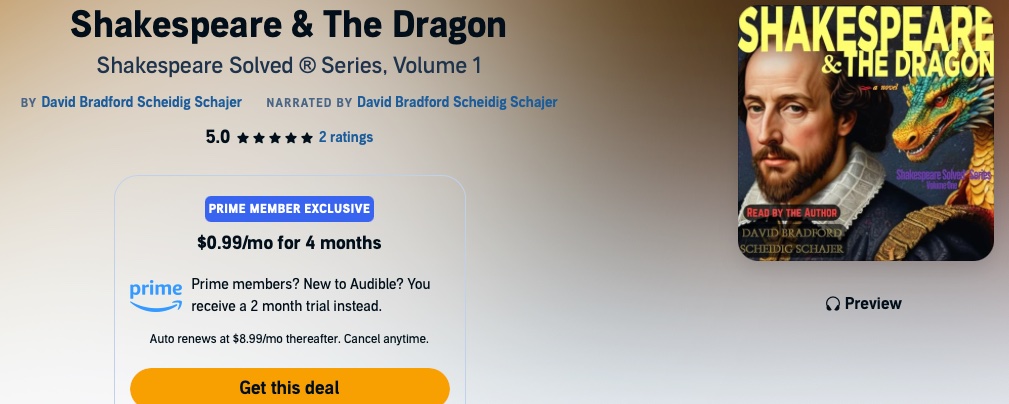
You can read his review of my audiobooks here:

Yes. Shakespeare possessed “a spirit supernaturally keen.”
Yes. Shakespeare “certainly read the Bible.”
Yes. Shakespeare “observed rural life as it has rarely been observed by anyone else.”
Shakespeare observed the world—the natural and supernatural—better than anyone else precisely because he read the Bible so closely.

'[Shakespeare] certainly read the Bible, in the Genevan version of 1560, from an early age. He certainly read, all his life, everything he could get his hands on. He played games, fished, hunted, observed rural life as it has rarely been observed by anyone else.'
From John Berryman's Shakespeare lectures

A lot of great wisdom in what Professor Phillips says here 👇
Reading Shakespeare is not reading something old or outdated
Reading Shakespeare is learning the Truth that you need right now in your life
Reading Shakespeare will make the Bible clearer
Reading Shakespeare will make reading any other writer clearer

Shakespeare wrote the blueprint for every messy human emotion you’re currently feeling, and he did it in iambic pentameter with better one-liners than any modern TV show.
He understood toxic relationships better than your group chat. Romeo and Juliet is just “they weren’t even that compatible, but the dopamine hit was insane.” Othello is the original “he’s a little too jealous” story. Macbeth is ambition + bad advice + consequences. Hamlet is overthinking until you ruin everything.
These aren’t dusty old plays. They’re case studies on how people actually behave when pride, love, fear, or power is involved. His language is still doing work in your vocabulary whether you know it or not. “Wild goose chase,” “break the ice,” “heart of gold,” “wear your heart on your sleeve,” “the world is your oyster.” He either coined or popularized hundreds of phrases we still use. Reading him isn’t about decoding old English for its own sake. It’s about watching someone invent the tools we still reach for when we need to describe something complicated.
The real reason to read him: the characters feel more psychologically modern than a lot of people writing right now. They contradict themselves. They know what they should do and do the opposite. They rationalize. They perform. They get in their own way. Four hundred years later, the technology and the slang changed. The internal conflicts didn’t.
You don’t have to start with the densest ones. Try a good production (or even a modern adaptation) of something like Much Ado About Nothing, Macbeth, or Twelfth Night first. The language is elevated, not impenetrable once your ear adjusts. A solid annotated edition or a performance helps. The payoff is language that still hits harder than most of what gets written today, plus a sharper sense of why people do the things they do. The plays are short. The insights are long.

John Demetry is the world's greatest critic—and he is getting amazing reviews for his new book, The 50 Greatest Gay Films of All Time:
Filmmarker Mark Thiedeman: John Demetry's book is "Brilliant, a Return to Real Criticism"
Peter Herbert: Demetry's book is "punchy and provocative"
Please read more about John here:
xitter.cf/ShakespeareSolv/status…
Watch this great passionate performance! 👇
There are many reasons why I believe —as Shakespeare himself once believed—that God is an Englishman.
Watching this video is a reminder of how great and blessed Britain once was and still is.
One day, soon, we will learn about Britain’s true history—and we will not be surprised, because of Shakespeare, and because of young men like this who perform with such utter conviction and courage.

Here is a fascinating article about a scholar who desperately wanted us to believe that Shakespeare toiled in relative obscurity for many years before he became famous
Actually, Shakespeare was an overnight sensation in 1587/88
His very first play was Titus Andronicus in 1588—and it was the most popular play of his entire career
"Shakespeare had a long career…and for the first many of these years he little resembled the major canonical figure of English writing he becomes."
lithub.com/what-john-berryma…

More Shakespeare being Solved this year!
I agree that the King Edward III play should be included in Shakespeare’s canon
But there is simply too much evidence that Marlowe despised Shakespeare to conclude that they were “partners”

The Shakespeare canon may not be quite as settled as we thought. New research identifies Shakespeare as the principal author of Edward III and Marlowe as his collaborator. The old rivals may have been partners after all. @loughnrv @MarloweProject 🎭
theguardian.com/culture/2026…

Other historical fiction books about Shakespeare always REDUCE him and his story
Anthony Burgess reduces Shakespeare in “Nothing Like the Sun: A Story of Shakespeare’s Love-Life”
My novels enlarge and expand our understanding of the Bard
And in my books—there is only one person whom Shakespeare loved; the love of his life, his wife Anne Hathaway


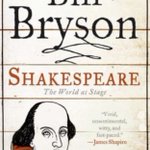
Bill Bryson’s book is the most intellectually dishonest book about Shakespeare I’ve ever read
It’s glass half empty deceit
My books tell the truth—they are a cup that runneth over


A lot of people are focusing on the Netflix Narnia trailer without commenting on the Led Zeppelin song Stairway to Heaven
It’s the first time the song has ever been allowed to be played in a movie
It makes me wonder
Fwiw, I’ve always thought that the “lady” is the Bride of Christ

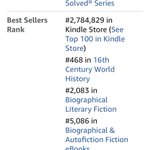
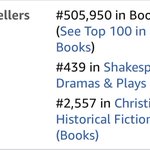
Wow! I love it when my books climb higher in the Amazon rankings!
This is the second time a book has broken into the top 500 of a category!
Thank you to everyone who has been buying and reading these books!
Sincerely,
David

I strongly encourage you to read the entire Bible — aloud
Rather than reading it silently and rather than listening to someone else read it—read it with the sound of your own voice
It hits different—hearing the Word of God coming out of your own mouth
Also, try reading it with real feeling
You can even recite the Psalms in such a way to stir up your emotions—so you can feel David’s emotion
Reading the words of Jesus aloud is incredibly powerful

Chris Pratt just described the exact wall almost everyone hits trying to read the Bible.
Genesis is fine. The Gospels are fine.
Then you reach Leviticus and Numbers, and your brain wanders off 4 seconds in.
His fix wasn’t more discipline. It was a different format.
He’s an auditory learner, so he stopped reading and started listening: Hallow’s Bible in a Year, one episode a day, Genesis to Revelation in 365 days.
He finished the whole thing and says it totally strengthened his walk with Jesus.
Read it, listen to it, hear it in church. The Word doesn’t care how it reaches you. It only matters that it does.
Have you ever made it all the way through?
Professor Phillips @JoshPhillipsPhD has the right idea!
I love Shakespeare and Homer together—front and center!

Woo-hoo!
A wonderful person bought BOTH of my books! 🎊🎉
The books are both FREE, or you can pay what you want! (link above)
If you are on the fence about buying them —the first 10 chapters are FREE here on X in my Articles section
For an Indie Author like me, every single sale matters —and I am thrilled that even more people are learning the true story of Shakespeare


David Weck @TheDavidWeck is a world-shaking genius
BUY his new long-awaited book
Apply his principles to your life
BUY his products—especially the Flow Rope
You will not be sorry
I was not paid for this endorsement
Sincerely,
David Schajer

Wow—@MTClassical is re-reading Hamlet and asking some great questions!
Join the conversation and cheer them on — to go through the looking glass to discover the truth of the play
And if Hamlet is not really mad, is the play even a tragedy? Is it actually a revenge play?

Can I ask a dumb question?
Why do so many people say that Hamlet actually goes mad at times, when he tells us early he that he is going to put on an "antic disposition"?
I'm reading the play right now with the assumption that everything that looks mad is feigned.
You could even take this hard case. Act two ends with a somewhat hopeful soliloquy on Hamlet's part. After he castigates himself for cowardice, he settles on the Mousetrap idea wherein he hopes to catch the conscience of the king by observing the king observe an imitation of his alleged murder. So, Hamlet has a path forward, something to actually do.
The next time we see him on stage in Act Three, we get "To be or not to be..." This seems to be a paradoxical return to the mood of the two soliloquies that preceded the more hopeful one. Why? Well, couldn't he suspect that he is being watched? He saw through Guild and Rose with startling alacrity, and given that Polonius and Claudius think that the solution to many problems is to spy on people, it seems likely that Hamlet is well aware that Denmark is a kind of surveillance state. Could he have suspected that Polonius or Claudius are listening or at least that agents of theirs are listening?
To make an inquiry into suicide with such eloquence seems like precisely the kind of thing which might baffle and perplex those who are surveilling him.