

Life, Wisdom and Beyond 🇦🇫 🇺🇸
Joined October 2014
- Tweets3.4K
- Following1
- Followers88.1K
- Likes15.7K




Pinned Tweet
د پاکستان پخوانی سفیر آصف درانی، د افغانستان د تاریخ د بدلولو خبره وکړه او ما یې هم ځواب ورکړ.
تیر ماښام
#تودې_خبرې

I was in Afghanistan for three months and participated in an anti-Taliban protest on the fourth day after the Taliban took over, and I also gave an interview from my home to George Galloway and criticized the terrorist Taliban.
I came to US because I couldn’t live like a slave under the Taliban.


I have more respect for circus clowns than for these so-called Islamic clowns who deny Afghan girls are being deprived of an education.
And those are kids not girls you idiot.


Idrees retweeted

Millions of girls and people are suffering, and you dismiss it all as propaganda, you pig-faced idiot. You expect people to trust YouTubers like you, who are only there to livestream, exploit people’s suffering, and make money off the views?

I challenge you, @sneako: Go anywhere in Afghanistan and find just ONE school offering in-person classes to girls above sixth grade, or ONE university where women are officially allowed to enroll and attend classes.
Name it, show proof, and verify it’s operating.
Just ONE.

Idrees retweeted
This is what a responsive government looks like. We need more of that at the federal, state and local levels.
Thank you, Mayor Mamdani.

NYC Mayor Zohran Mamdani responded to an 8-year-old's call to fix a park in his neighborhood, and has now launched "renew crews" to fix playgrounds, parks, and sports courts in the city's five boroughs. #Mamdani #NYC #RenewCrews #ZohranMamdani


Parsing the Difference Between a Leftist and a Jihadist
By Idrees Stanikzai
What happens when the people we have been taught to fear become the people we choose to lead us?
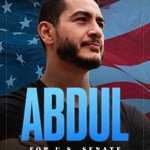
Consider Zohran Mamdani and Abdul El-Sayed, two Muslim politicians associated with progressive causes. Their public agendas center on questions such as affordability, health care and economic opportunity.
Representative Ilhan Omar has also faced attacks on her religious identity, including calls for her deportation despite being an American citizen. Yet attacks on Muslim politicians can leap past their positions to the language of “jihadists” and “extremists.” The accusation is explosive. Where is the evidence? A leftist is not a jihadist. A Muslim is not necessarily a leftist. And none of these labels is interchangeable.
Left-wing politics encompasses many approaches to economic equality and social reform. Islam is a faith practiced by people with a vast range of political beliefs. Violent jihadism, by contrast, is an extremist ideology that justifies violence for political or religious ends.
Treating these categories as synonyms is not analysis. It is a shortcut around it.
There is also an irony worth examining. If we compare social beliefs rather than religious identities, certain positions held by jihadist movements resemble those of segments of America’s religious right more closely than those of the progressive left.
Opposition to abortion, rejection of same-sex marriage, traditional gender roles and a desire for greater religious influence over public life are examples. This does not make American conservatives jihadists; their political methods and relationship to violence are fundamentally different. But it raises a question: Why are progressive Muslims accused of an ideology whose social positions they often oppose?
Some observers point to the music, dancing and mixed-gender social lives of progressive Muslim politicians as evidence that they do not resemble religious hard-liners. Those contrasts may expose the absurdity of a caricature, but personal habits are not the strongest test. The real questions are simpler: What does a candidate advocate? Does the candidate reject political violence? What policies would the candidate pursue? Judge those answers, not a name or a prayer.
Why, then, can the caricature remain politically useful? Because fear is a powerful campaign language. It offers a villain, a threat and, conveniently, a politician promising protection. There are genuine security threats in the world, and governments have a duty to confront them. But that duty is not a license to turn an entire religious community into a permanent suspect class.

2
8
1,428
American history shows the cost of accepting frightening claims without sufficient scrutiny. The 2003 invasion of Iraq was defended in significant part through claims about weapons of mass destruction; the stockpiles described before the war were not found. More recently, American military action against Iran has revived questions about the use of threats to justify war. Iran’s government has a troubling human rights record, but that does not automatically justify military attacks. Claims that Iran posed an imminent danger, the decision to initiate hostilities and the costs imposed on Americans all deserve rigorous scrutiny. These conflicts are different, and neither proves a single coordinated campaign against Muslims. They do, however, remind us to demand evidence when fear is used to justify extraordinary policies.
The most revealing challenge to a stereotype may come not from a speech but from ordinary democratic life. A voter who has been told that Muslims threaten American values meets a Muslim candidate talking about rent, buses, schools and hospital bills. The supposedly alien figure turns out to be debating the same problems as everyone else. Contact does not magically dissolve prejudice. But it can make a sweeping accusation harder to sustain.
Younger Americans may be especially open to questioning inherited narratives. They have grown up connected to people and perspectives across borders, often encountering voices their parents rarely heard. That does not make them immune to propaganda; the same platforms that broaden understanding also spread falsehoods. Nor can one election prove that a generation has rejected anti-Muslim prejudice. But a more connected public has more opportunities to challenge the stories it is handed.
In 1960, John F. Kennedy had to answer a question that should never have defined his fitness for office: Could a Catholic president be loyal to the Constitution rather than the Vatican? More than six decades later, Muslim candidates face a familiar suspicion. The religion has changed. The test of belonging has not.
Kennedy’s election did not end anti-Catholic bias. The success of Muslim candidates will not, by itself, end anti-Muslim prejudice. Democracy makes no such promises. It does offer a better standard: scrutinize every candidate’s record, associations, policies and conduct with equal rigor. Criticize religious ideas freely. Confront violent extremism wherever it appears. But do not confuse religious identity with proof of extremism.
The question is no longer merely whether a Muslim can win office in America. It is whether Americans will insist on evidence before accepting fear as a political argument.
1
276


Cry, you miserable and ugly clown.

My family escaped a brutal Islamic dictatorship.
Never in my life did I imagine that Americans would one day elect those who not only refuse to call out Islamic terrorism, but also openly praise Allah, in Arabic, in a political speech.
This is what an invasion looks like.
20
3,134