

Test pilot/commercial astronaut who’s Forest Gumped his way through an amazing aerospace piloting career. Didn’t write “Test Gods”, just takes the blame ;)
Costa Mesa, CA
Joined February 2015
- Tweets6.6K
- Following100
- Followers6.5K
- Likes5.9K




Pinned Tweet
I’m on X for two main reasons - 1) to give unique insight into aerospace topics garnered from my unusually broad test pilot career. 2) To inject humor (usually sarcastic and sophomoric at best) in the hopes of getting at least one person to smile.
Follow me if you want to live… – at Cape Canaveral, FL
I decided to cancel @UPS My Choice and one of the main drivers was that anything so hard to cancel likely *deserves* to be cancelled. Even when they provide links to cancel, it turns into a never ending do-loop where the easiest method is to simply delete the payment method. The bottom line is a service that is worthwhile doesn’t make their service impossible to cancel. Case in point, compare the ease of canceling @Starlink with the impossibility of cancelling @GetSpectrum or @ADT
Sitting in the DFW terminal across from a couple who look they are in their late ‘80s and the man says to her, “when that train goes by it freaks the shit out of me.”

Back in the ‘86 timeframe, my wife presented me with a swimsuit catalog, querying me which suits I liked. Without thinking I pointed to a few different suits — some one piece, and some two piece styles.
I didn’t see a pattern but she sure did. “There’re all the same model,” she hissed. And once again I had unwittingly entered the proverbial dog house.
Shortly thereafter that same lady was on the cover of Sports illustrated and all the red blooded American men learned Elle Macpherson’s name.


It’s cool to be able to acknowledge the @anduriltech YFQ-44A is now officially demonstrating CCA duties. twz.com/air/f-22-pilot-contr…. What’s next? 😉

I’ve had the honor of flying two jets to Davis-Monthan for retirement. Anyone know what models they were?

D-M is just sad. A very sad place. Scooter Altman and I had to drop off a jet there once, and it felt like a funeral. Oh, it was the "camera jet" from Top Gun. The wiring the Paramount folks did to power all the cameras onboard permanently FUBARed her electrical systems. She was struck about 6 months after we finished filming. Since Scooter and I were the only guys of the eight who filmed the movie still in the squadron, so we got the call to deliver her to the boneyard 🥴🥴🥴😢😢😢😎

I visited Roy Haggard, an old friend today. I first met Roy at the ‘74 hang gliding nationals in SoCal where he took 3rd place on a wing he designed and built himself at the ripe old age of 16. He continued on to have a very successful career, specializing in unique solutions to aerodynamic problems. Amazingly, for his work on ejection seat stability, I got to take him on a flight in a @NASA F-18 in the late ‘90s. Sadly, he’s now suffering from Alzheimer’s. Thankfully, we were able to laugh and enjoy each others company as we caught up on old times. I also took him for a spin in the CyberTruck which he thoroughly enjoyed.

In a strange twist of irony, a lot of Purple Hearts awarded after the 1996 Khobar Towers bombing were to those who suffered feet lacerations after evacuating without first putting on their shoes.

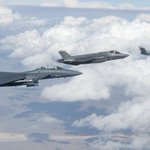
It’s one level when a crewed fighter is flying formation on a CCA and quite another when the CCA is flying formation on the fighter. The design level — with real tactical significance — comes with integrated maneuvering multi-ship battlefield tactics but that won’t be documented with a staged photo opp.

I parked next to a couple jets today at KMHV. I didn’t think about it at the time but the Voyager restaurant patrons probably didn’t appreciate my old & unsexy gray jet blocking their view of the @NASAAdmin’s beautiful F-5s.

There are a lot of amazing true stories regarding flying the Blackbird. Unfortunately, the most publicized are the furthest from reality. The Blackbird was amazing, it’s a shame that Shul felt compelled to spin his implausible yarns for fame and fortune.

The SR-71 Speed Check Story from Major Brian Shul's book Sled Driver will forever be one of the hardest tales in aviation.
Here it is.
There were a lot of things we couldn't do in an SR-71, but we were the fastest guys on the block and loved reminding our fellow aviators of this fact. People often asked us if, because of this fact, it was fun to fly the jet. Fun would not be the first word I would use to describe flying this plane. Intense, maybe. Even cerebral. But there was one day in our Sled experience when we would have to say that it was pure fun to be the fastest guys out there, at least for a moment.
It occurred when Walt and I were flying our final training sortie. We needed 100 hours in the jet to complete our training and attain Mission Ready status. Somewhere over Colorado we had passed the century mark. We had made the turn in Arizona and the jet was performing flawlessly.
My gauges were wired in the front seat and we were starting to feel pretty good about ourselves, not only because we would soon be flying real missions but because we had gained a great deal of confidence in the plane in the past ten months. Ripping across the barren deserts 80,000 feet below us, I could already see the coast of California from the Arizona border. I was, finally, after many humbling months of simulators and study, ahead of the jet.
I was beginning to feel a bit sorry for Walter in the back seat. There he was, with no really good view of the incredible sights before us, tasked with monitoring four different radios. This was good practice for him for when we began flying real missions, when a priority transmission from headquarters could be vital. It had been difficult, too, for me to relinquish control of the radios, as during my entire flying career I had controlled my own transmissions. But it was part of the division of duties in this plane and I had adjusted to it.
I still insisted on talking on the radio while we were on the ground, however. Walt was so good at many things, but he couldn't match my expertise at sounding smooth on the radios, a skill that had been honed sharply with years in fighter squadrons where the slightest radio miscue was grounds for beheading. He understood that and allowed me that luxury.
Just to get a sense of what Walt had to contend with, I pulled the radio toggle switches and monitored the frequencies along with him. The predominant radio chatter was from Los Angeles Center, far below us, controlling daily traffic in their sector. While they had us on their scope (albeit briefly), we were in uncontrolled airspace and normally would not talk to them unless we needed to descend into their airspace. We listened as the shaky voice of a lone Cessna pilot asked Center for a readout of his ground speed. Center replied: "November Charlie 175, I'm showing you at ninety knots on the ground."
Now the thing to understand about Center controllers, was that whether they were talking to a rookie pilot in a Cessna, or to Air Force One, they always spoke in the exact same, calm, deep, professional, tone that made one feel important. I referred to it as the " Houston Center voice." I have always felt that after years of seeing documentaries on this country's space program and listening to the calm and distinct voice of the Houston controllers, that all other controllers since then wanted to sound like that, and that they basically did. And it didn't matter what sector of the country we would be flying in, it always seemed like the same guy was talking. Over the years that tone of voice had become somewhat of a comforting sound to pilots everywhere. Conversely, over the years, pilots always wanted to ensure that, when transmitting, they sounded like Chuck Yeager, or at least like John Wayne. Better to die than sound bad on the radios.
Just moments after the Cessna's inquiry, a Twin Beech piped up on frequency, in a rather superior tone, asking for his ground speed. "I have you at one hundred and twenty-five knots of ground speed." Boy, I thought, the Beechcraft really must think he is dazzling his Cessna brethren. Then out of the blue, a navy F-18 pilot out of NAS Lemoore came up on frequency. You knew right away it was a Navy jock because he sounded very cool on the radios. "Center, Dusty 52 ground speed check". Before Center could reply, I'm thinking to myself, hey, Dusty 52 has a ground speed indicator in that million-dollar cockpit, so why is he asking Center for a readout? Then I got it, ol' Dusty here is making sure that every bug smasher from Mount Whitney to the Mojave knows what true speed is. He's the fastest dude in the valley today, and he just wants everyone to know how much fun he is having in his new Hornet. And the reply, always with that same, calm, voice, with more distinct alliteration than emotion: "Dusty 52, Center, we have you at 620 on the ground."
And I thought to myself, is this a ripe situation, or what? As my hand instinctively reached for the mic button, I had to remind myself that Walt was in control of the radios. Still, I thought, it must be done - in mere seconds we'll be out of the sector and the opportunity will be lost. That Hornet must die, and die now. I thought about all of our Sim training and how important it was that we developed well as a crew and knew that to jump in on the radios now would destroy the integrity of all that we had worked toward becoming. I was torn.
Somewhere, 13 miles above Arizona, there was a pilot screaming inside his space helmet. Then, I heard it. The click of the mic button from the back seat. That was the very moment that I knew Walter and I had become a crew. Very professionally, and with no emotion, Walter spoke: "Los Angeles Center, Aspen 20, can you give us a ground speed check?" There was no hesitation, and the replay came as if was an everyday request. "Aspen 20, I show you at one thousand eight hundred and forty-two knots, across the ground."
I think it was the forty-two knots that I liked the best, so accurate and proud was Center to deliver that information without hesitation, and you just knew he was smiling. But the precise point at which I knew that Walt and I were going to be really good friends for a long time was when he keyed the mic once again to say, in his most fighter-pilot-like voice: "Ah, Center, much thanks, we're showing closer to nineteen hundred on the money."
For a moment Walter was a god. And we finally heard a little crack in the armor of the Houston Center voice, when L.A.came back with, "Roger that Aspen, Your equipment is probably more accurate than ours. You boys have a good one." It all had lasted for just moments, but in that short, memorable sprint across the southwest, the Navy had been flamed, all mortal airplanes on freq were forced to bow before the King of Speed, and more importantly, Walter and I had crossed the threshold of being a crew. A fine day's work. We never heard another transmission on that frequency all the way to the coast. For just one day, it truly was fun being the fastest guys out there.

I’m skeptical of the truth to this story but I will admit to the opposite — occasionally locking up high speed highway traffic just to watch their ground speed nose dive as they slammed on their brakes looking for the highway patrol that wasn’t there.

All the SR-71s were demilitarized before being sent to museums and that included cutting their main wing spars, rendering them unflyable. NASA kept #844 at Dryden (now Armstrong) and it was basically towed across the street, never undergoing the demil process.

WELL, WELL, WELL. The missing Blackbird apparently has a job waiting for her. Remember NASA 844? The SR-71 that mysteriously disappeared from its display at Armstrong after 26 years? Aviation Week is now reporting that NASA has been contacting former SR-71 personnel and asking them to help put her back in the air.
Not preserve her. Not move her to another museum. Return her to flight.
NASA 844 is the last SR-71 ever built and the last Blackbird ever flown. Her final flight was October 9, 1999: Mach 3.21 at 80,100 feet. Bringing her back after nearly 27 years would be an extraordinary engineering undertaking. The aircraft is only one piece of the problem. NASA would effectively have to reconstruct portions of an entire support ecosystem that disappeared with the Blackbird program.
Yes, I am doing the happy dance.
Somewhere Kelly Johnson just looked over at Ben Rich and said, “See? I told you they’d need her again.”
aviationweek.com/defense/air…

I was fortunate to have flown its sister ship #831 which now resides at Kalamazoo Air Zoo.
I understand your/you’re, it’s/its, there/their/they’re and am disappointed how many times I see my posts on X with such mistakes. I think there is a sadistic auto-uncorrect gremlin that goes to work the moment I hit POST.
Surprisingly to many, the loaded pair was not as heavy as a commercial B-747 loaded fully with passengers, cargo, and fuel. The drag penalty of the orbiter was high and the reduction of directional stability due to the blocking of the 747’s tail caused the low Mach limit. But there wasn’t any incentive to improve it because cold soak with moisture orbiter tile concerns limited them to an air temp of 15d F, a relatively low altitude absolute air pressure, and avoiding moisture at nearly all costs.

Trivia- While most 747s could easily fly NY-London, the 747 that transported the Shuttle had much " smaller wings" due to the extra weight and aerodynamics for the piggybacker.
While carrying the orbiter, the Jumbo had its range cut to 1,000 miles, with speed and ceiling limited to just Mach .6 and 15,000 feet. The limited range meant returning a shuttle to Florida took as long as three days.

