

PhD student @VT_CS; Intern @AmazonScience
Corvallis, Oregon
Joined March 2022
- Tweets57
- Following2.5K
- Followers221
- Likes42





Rishab Bala retweeted

I'm not at @COLM_conf, but my awesome PhD student @noahpro99 is giving a talk on our EvoSkill work today at the COLM Social: Self-Improving Agents (Oct 6 1-2:30 PM PT, Franciscan D). Come chat with him about his first-hand experience with different skill evolution frameworks!


hosting the Self-Improving Agents social at @COLM_conf tomorrow
- 4 talks: @sethkarten @yoonholeee @qinyuan_ye and Noah Provenzano
- panel: @HuaxiuYaoML @ZhiruoW @jasonwu0731
my 4th one after ICLR, ICML and NeurIPS, and I still love hosting these.
1-2:30pm, Franciscan D. come by if you're at COLM
luma.com/m8v4fq76

Rishab Bala retweeted
Glad to share that our paper on The Master Key Hypothesis / cross-model capability transfer got accepted @NeurIPSConf 2026 as spotlight 🎉 !! Top 1.3% (292 spotlight + 112 oral) out of 30709 submissions. Congrats to my students @Sub_RBala @linusdd44804 @helix9550 and co-authors @mohitban47!!

🌟New paper alert: The Master Key Hypothesis🌟
Post-training is expensive AND you have to repeat it for every new model. What if you could just transfer the capability instead?
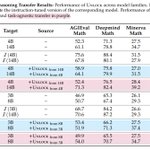
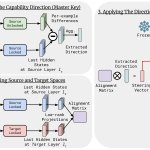
We introduce UNLOCK — a training-free and label-free framework that transfers capabilities across models using low-rank linear projections.
Takeaways:
1⃣ Skills like CoT & math reasoning live as directions in the model's latent space. We capture these as a steering vector — we call this the Master Key.
2⃣ Simple low-rank linear transformations are sufficient to transfer the Master Key across models' latent spaces
3⃣ UNLOCK elicits behaviors that even prompting can't reliably trigger
4⃣ Gains scale with base model strength. Stronger models show larger gains post-transfer.
5⃣ UNLOCK works by sharpening the output distribution — steering the model toward the right answer.

Rishab Bala retweeted
Nice work by @verma_apurv5 showing that post-training can be distilled into a portable logit delta that transfers across model sizes and families, which corroborates the findings in our recent work on the Master Key Hypothesis (arxiv.org/abs/2604.06377) and fine-tuning/alignment transfer (arxiv.org/abs/2503.20110).


5/8 🔁
Second, the delta is portable. A delta drawn from a 1.5B Qwen lifts Llama-3-8B, a different family with a different tokenizer, by 15% on GSM8K.
Other recent works do weight-space transfer such as task arithmetic (arxiv.org/abs/2212.04089) and the recent Master Key Hypothesis (arxiv.org/abs/2604.06377 by @tuvllms, @Sub_RBala), and typically require same model family. A simple vocabulary bridge is sufficient for logit grafting.

Rishab Bala retweeted
📢 New Preprint Alert
@SharmaRituraj19 found out a hidden supervision flaw in Looped Language Models: hidden-state norms can grow across iterations, but the LM head hides this from the loss. Exposing or controlling the scale yields more stable training and stronger performance.👇
Paper: arxiv.org/abs/2606.24898
Code: github.com/Rituraj003/readou…


Rishab Bala retweeted

🚨New paper alert:
Can dense supervision control a looped language model, if the loss never sees how large its hidden state grows?
Add loss at every loop, yet the norms blow up into thousands.
The decode layer hides the hidden state’s size from the loss. The readout blind spot 🧵

Rishab Bala retweeted
I am in Rio de Janeiro, Brazil for #ICLR2026 @iclr_conf. Would love to connect and chat about any LLM research topics, explore collaboration, or discuss potential funding opportunities for my lab at @ Virginia Tech.
Rishab Bala retweeted
🌟New paper alert: The Master Key Hypothesis🌟
Post-training is expensive AND you have to repeat it for every new model. What if you could just transfer the capability instead?
We introduce UNLOCK — a training-free and label-free framework that transfers capabilities across models using low-rank linear projections.
Takeaways:
1⃣ Skills like CoT & math reasoning live as directions in the model's latent space. We capture these as a steering vector — we call this the Master Key.
2⃣ Simple low-rank linear transformations are sufficient to transfer the Master Key across models' latent spaces
3⃣ UNLOCK elicits behaviors that even prompting can't reliably trigger
4⃣ Gains scale with base model strength. Stronger models show larger gains post-transfer.
5⃣ UNLOCK works by sharpening the output distribution — steering the model toward the right answer.
Rishab Bala retweeted

One more @SanghaniCtrVT paper at #EMNLP2025:
Efficient Model Development through Fine-tuning Transfer
Main proceedings
@linusdd44804 @Sub_RBala @tuvllms (all VT) w/@fyliufengyuan, @kandpal_nikhil
tinyurl.com/2kv9nr25

Rishab Bala retweeted
Excited to share that our paper on efficient model development has been accepted to #EMNLP2025 Main conference @emnlpmeeting. Congratulations to my students @linusdd44804 and @Sub_RBala on their first PhD paper! 🎉

🚨 New paper 🚨
Excited to share my first paper w/ my PhD students!!
We find that advanced LLM capabilities conferred by instruction or alignment tuning (e.g., SFT, RLHF, DPO, GRPO) can be encoded into model diff vectors (à la task vectors) and transferred across model versions.
💡You don’t necessarily need to fine-tune from scratch again for every new base model version. Instead, fine-tune once and add the diff vector to updated versions! ♻️♻️♻️. This can also offer a stronger and more computationally efficient starting point when further training is feasible.
📰: tinyurl.com/finetuning-trans…
More 👇


Rishab Bala retweeted
✨ New paper ✨
🚨 Scaling test-time compute can lead to inverse or flattened scaling!!
We introduce SealQA, a new challenge benchmark w/ questions that trigger conflicting, ambiguous, or unhelpful web search results. Key takeaways:
➡️ Frontier LLMs struggle on Seal-0 (SealQA’s core set): most chat models (incl. GPT-4.1 w/ browsing) achieve near-zero accuracy
➡️ Advanced reasoning models (e.g., DeepSeek-R1) can be highly vulnerable to noisy search results
➡️ More test-time compute does not yield reliable gains: o-series models often plateau or decline early
➡️ "Lost-in-the-middle" is less of an issue, but models still fail to reliably identify relevant docs amid distractors
📜: arxiv.org/abs/2506.01062
🤗: huggingface.co/datasets/vtll…
🧵:👇


Rishab Bala retweeted
Our paper is now available on arXiv: arxiv.org/abs/2503.20110
🚨 New paper 🚨
Excited to share my first paper w/ my PhD students!!
We find that advanced LLM capabilities conferred by instruction or alignment tuning (e.g., SFT, RLHF, DPO, GRPO) can be encoded into model diff vectors (à la task vectors) and transferred across model versions.
💡You don’t necessarily need to fine-tune from scratch again for every new base model version. Instead, fine-tune once and add the diff vector to updated versions! ♻️♻️♻️. This can also offer a stronger and more computationally efficient starting point when further training is feasible.
📰: tinyurl.com/finetuning-trans…
More 👇
Rishab Bala retweeted

Adversarial Attacks on Online Learning to Rank with Stochastic Click Models
Zichen Wang, Rishab Balasubramanian, Hui Yuan, chenyu song, Mengdi Wang, Huazheng Wang.
Action editor: Simon Lacoste-Julien.
openreview.net/forum?id=BKwG…
#adversarial #ranker #rank
Rishab Bala retweeted

Are combinatorial bandits vulnerable to reward poisoning attacks? In our #ICML2024 paper, we characterize the attackability condition and show some CMAB instances are intrinsically robust. Surprisingly, the attackability is different between white-box and black-box attacks.(1/2)
Rishab Bala retweeted
At #NeurIPS2023 till Saturday. Happy to share our work "Unified Off-Policy Learning to Rank: a Reinforcement Learning Perspective". Check the poster at Session 5 Thu 10:45 - 12:45 CST. Looking forward to discussing RL, recommendation, ranking with friends and colleagues! (1/3)
