

Heir to the promise | Husband | Candidate for Holy Orders in the CofSw 🇸🇪 | Pensive Protestant | Rejoice in the Lord alway!
The Surplice Wardrobe
Joined December 2021
- Tweets8.7K
- Following447
- Followers2K
- Likes56.8K








‘We shall not be shaken when we see the unrighteous who have become wealthy while the servants of God are in distress. Brothers and sisters, we shall trust that the Living God tries us when we fight, that we are trained in this life in order to be wreathed with victory…

1
109
Lukas Söderbäck retweeted

Lutheranism, Anglicanism, Presbyterianism (Scots and Westminster Confessions), Continental Reformed (1st and 2nd Helvetic Confessions, Belgic Confession, and Heidelberg Catechism) and Methodism all affirm that Baptism saves and is generally necessary or obligatory as the ordinary, instrumental means of God's regenerating grace.

Archbishop Martin speaks of an “architecture of hope” with four pillars: community, word, prayer and work. We don’t need to face the tumbles of the earth alone. The church lifts up the world to God and through the Scriptures we find words to express need and receive grace.


Lukas Söderbäck retweeted

"For our own people, let this be said: this Epistle written to the Hebrews is accepted as of the Apostle Paul, not only by the churches of the East, but by all church writers of the past in the Greek language, though many think it to be of Barnabas or of Clement. And it makes no difference whose it is, since it is by a churchman and is honored in the daily reading of the churches. But if Latin usage does not receive it among the canonical Scriptures, neither do the churches of the Greeks accept the Apocalypse of John with equal readiness; yet we accept both, following in this not at all the present usage, but the authority of the ancient writers, who for the most part make use of citations from both, not as they are wont to do occasionally for the apocrypha—in fact they use illustrations even from pagan literature, though rarely—but as canonical and ecclesiastical."
— Bl. Jerome, Epistle 129 (§ 3)

Lukas Söderbäck retweeted

I don't really respond to ragebait, but Star Wars is maybe the most Christian story in pop-culture outside of The Lord of the Rings, and it is among the most conscious in using both traditional mythologies and Biblical themes.
Lucas has said that Palpatine is Satan.
Anakin's fall represents Satanic temptation toward evil within each of us, as well as the possibility of redemption.
Anakin's fall is shown on a lava planet, obviously representing hell.
Falling further into darkness makes one less human ("he's more machine now than man").
There is actual good and evil ("dark" and "light"). Lucas did this intentionally, harkening back to stories like Flash Gordon at a time when other media had moved away from clear lines between good and evil.
Good will ultimately triumph over evil. Lucas's concept of "balance" is misunderstood, as it is not the persistence of both good and evil, but the defeat of evil. He has said this in several interviews.
The light is embodied in the virtue of self-sacrifice and love, even toward those who don't deserve it.
The end of the story is literally a good man sacrificing himself for an undeserving sinner to redeem him from evil.
The defeat of evil is prophesied, and it is accomplished by a virgin birth.


Lukas Söderbäck retweeted

“The Reformation, in spite of its substantial contribution to the history of doctrine and the shock it delivered to theology and the church in the sixteenth century, was not an attack upon the whole of medieval theology or upon Christian tradition.
The Reformation assaulted a limited spectrum of doctrinal and practical abuses with the intention of reaffirming the values of the historical church catholic.
Thus, the mainstream Reformers reconstructed the doctrines of justification and the sacraments and then modified their ideas of the *ordo salutis* and of the church accordingly;
but they did not alter the doctrines of God, creation, providence, and Christ, and they maintained the Augustinian tradition concerning predestination, human nature and sin.
The reform of individual doctrines, like justification and the sacraments, occurred within the bounds of a traditional, orthodox, and catholic system which, on the grand scale, remained substantively unaltered.”
- Richard Muller

“The true treasure of the Church is the most Holy Gospel of the glory and grace of God.”
- Thesis 62

Lukas Söderbäck retweeted

May I recommend this new website called ‘google’? It provides access to vast swathes of human knowledge. If you were to type in “St Paul’s Cathedral, London” or “Frauenkirche, Dresden” or “National Cathedral, Washington” you might have a delightful surprise.


Lukas Söderbäck retweeted

The reason I like liturgy isn’t because I love aesthetics and it’s not primarily because I love Church History. It’s because, in my heart, I’m a catechist. The liturgy is one of the greatest discipleship tools that exists.

Lukas Söderbäck retweeted

On the anniversary of the death of Laurentius Petri, here are some excerpts from his 1571 Church Order.
“Nor shall anyone who has been called, interrogated, and examined for the office of preacher take that office before he has been publicly, before the congregation, confirmed in and appointed to the office through the laying on of hands and prayer. Since the Holy Spirit, without whom this office in no way can be performed, is accustomed to be given through such means, it would be extremely deadly if anyone would despise it, especially since it has been so used by everyone from the time of the Apostles and so has become customary in Christendom.
For a public minister of the Church does not have a legitimate right to public ministry because he has received the laying on of hands from such and such a person, but because he has been chosen to that office either directly by God or indirectly through the Church, and administers it correctly. For since the power of choosing belongs to the Church after God, whatever she does to choose a minister is always legitimate and valid from whichever priest or bishop the candidate elect ones may later receive the laying on of hands, but only if he is faithful and Christian. For the Church is not bound to admit against his will whom the Bishop ordains, but the Bishop is bound to ordain whom the Church chooses. The Church may entrust the power of electing ministers to the bishop or his officials, as is now generally the case. Nevertheless, if that same Bishop, having received the power from the Church, abuses it, he becomes a wolf, that is, a false teacher, a usurer, a simoniac, a whoremonger, etc. (such as the papist bishops for the most part now ordain) instead of a suitable and salutary minister, then the Church, having received her legitimate power, can, nay, must, cast such a scoundrel, just as one would say a blot and a plague, from office, and then substitute another chosen in the place of the castaway whom she herself has found suitable.”
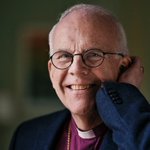
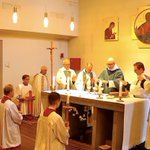
On this 21st Sunday after Trinity we were happy to have the sometime-bishop of Visby, the Right Rev. Biörn Fjärstedt, a regular in the congregation, preside over our High Mass and deliver the sermon, on the occasion of his 90th birthday.


“Finally, brothers, whatever is true, whatever is honorable, whatever is just, whatever is pure, whatever is lovely, whatever is commendable, if there is any excellence, if there is anything worthy of praise, think about these things.”
- St. Paul, Epistle to the Philippians 4:8

Lukas Söderbäck retweeted

"It is vastly more important, then, to know what the Reformation retained than what it overthrew."
Charles Porterfield Krauth
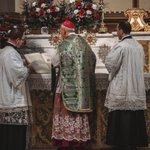
Left is from the ICKSP:s Instagram. Right is from Latin Mass UK:s twitter:
Is there like, a theological or liturgical point to the lace and the flimsy chasubles or can the ICKSP wear vestments more like other trads and just chose not to because of a difference of style?


