To encourage and promote research and scholarly understanding of Syria. Affiliated with @MESA_1966. Read the SSA Bulletin: https://xitter.cf/t.co/5KPdAH07tw

Joined November 2018
The new issue of the Syrian Studies Association Bulletin is out! This special issue on the future of Syrian Studies features contributions from Keith Watenpaugh, Elyse Semerdjian, Matthieu Rey, Faedah Totah, Rebecca Joubin, Andrea Stanton, Loubna Kheir, and more. Link in replies ->
1
3
10
15,092
"With regard to Syria, we have yet to fully recover counterhistories of cooperation and coexistence between Muslim and non-Muslim communities. These stories, I believe, could inspire ways of imagining a Syria that belongs to all of its citizens. Time is critical." Read Elyse Semerdjian on the status of Syria's archives, and the radical new potentials for history writing in Syria, in the latest issue of the Syrian Studies Association Bulletin. ⤵️
1
1
4
142
"The regime perceived documents as a source of secrecy and danger, and yet it did not follow archival preservation practices. This reflected Assad's approach to the past and to politics: they were considered sites to control or dismantle. "In response, Syrian society and many Syrian families developed several forms of resistance. For a long time, the main approach was to keep the documents secret or to bring them into exile. These files, organized as family papers, often contained governmental papers or official notes." Read Matthieu Rey on the problem of Syria's archives and the potential for a new public history of Syria, in the latest issue of the Syrian Studies Association Bulletin ⤵️
1
2
2
199
"More than ever, it is essential to redefine what being Syrian means, a Syrian identity that all sections of society can identify with, given the political and identity-based fragmentation. History can help define a shared, cross-communal narrative to combat sectarianism. "This must also involve a re-examination of Syrian history, which clearly reflects not only the difficulties of nation-building and integration but also its possibilities - Loubna Kheir, "National history as a social contract." Read all of Loubna Kheir's brilliant, moving essay in the new issue of the Syrian Studies Association Bulletin. ⤵️
1
2
6
407
"Since the inception of Syrian television in the 1960s, drama creators have hammered away at the dictator through love, marriage, and gender metaphors. In the years preceding the fall of the Assad regime, however, political critique grew increasingly direct." - Rebecca Joubin, Ethical Responsibilities and Emerging Possibilities for Research on Syrian Television Drama in “the New Syria” Read the whole article in the new issue of the Syrian Studies Association Bulletin! Link ⤵️
1
1
8
863
"Across the two days, the event demonstrated both the vitality of current scholarship and the importance of newly accessible archives and perspectives. One hundred years after 1925, the revolt remains a central reference point for understanding resistance, memory, and revolutionary cultures in Syria and beyond." - Luca Nelson-Gabin (@lucanelsongabin), on the colloque held in France last year for the centennial of the Great Syrian Revolt (1925-2025) Read this article, and other reflections on the future of Syrian Studies, in the new issue of the Syrian Studies Association Bulletin! syrianstudiesassociation.org…
3
4
298
ICYMI: Former SSA president Keith Watenpaugh's letter from Alepo open.substack.com/pub/keithd…
Former SSA President and Prof. of Human Rights Studies at UC Davis Keith David Watenpaugh has recently returned from a research visit to Aleppo and Northern Syria.  He has written about the visit, including practical details, and has imagined what the opening of Syria could mean for our field. Below is link to his essay.  A Letter from Aleppo: Mourning, Rebuilding, and a New Syrian Studies His substack also includes several essays on an early January trip to the country. open.substack.com/pub/keithd…
2
104
Former SSA President and Prof. of Human Rights Studies at UC Davis Keith David Watenpaugh has recently returned from a research visit to Aleppo and Northern Syria.  He has written about the visit, including practical details, and has imagined what the opening of Syria could mean for our field. Below is link to his essay.  A Letter from Aleppo: Mourning, Rebuilding, and a New Syrian Studies His substack also includes several essays on an early January trip to the country. open.substack.com/pub/keithd…
1
1
1
3
284
We are happy to share work from SSA members on our social media channels. Feel free to reach out to us, or tag us.
39
Syrian Studies Association retweeted
We are making available free of charge our latest map of Syria's oil and gas fields. Don't hesitate to download it and use it as a reference. This map came with an extensive interview we did with SPC officials who gave us a detailed breakdown of the status of all the fields that the government took control of in the past week. @TheSyriaReport . The Syria Report has more than 900 articles on Syria's energy sector, including 48 articles in the past year alone (one evry week!).
14
141
10
459
55,433
Keith Watenpaugh on his recent visit to Syria. "In this second essay on the formation of historical narrative and memory in post-civil war Syria, I consider a banner draped across a hospital destroyed by Russian planes in Syria’s Palestinian Yarmouk Refugee Camp and the way it tells a complex and complicated story of resistance, complicity and the high-stakes problem with historical endings." open.substack.com/pub/keithd…
2
1
175
Honorable Mention for our 2025 prize for Best Article goes to Muhammed Aslaner (@Aslanermuhammed), for his article, “Responding to the Arab Revolt: The Circassian Volunteer Cavalry and the Defence of Ottoman Transjordan in the First World War.”
1
1
1
6
540
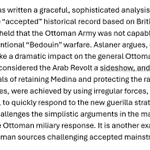
About Aslaner's article, our prize committee (Michael Provence, Dawn Chatty, and James Reilly) says: "Muhammad Aslaner has written a graceful, sophisticated analysis based on Ottoman sources countering the “accepted” historical record based on British military memoirs and personal notes, which held that the Ottoman Army was not capable of dealing with or responding to unconventional “Bedouin” warfare. It is another example of historical analysis based on Ottoman sources challenging accepted mainstream historiography."
1
1
3
200