

Project Athena: Share your story, geotag your journey, and help map the legacy of the Afghanistan conflict. Start contributing now!
Ottawa, Ontario
Joined August 2023
- Tweets3.3K
- Following475
- Followers2K
- Likes1.6K





Project Athena retweeted

Thirty feet from a Panther: the true story of Smokey Smith
22 October 1944. The Savio River, Italy.
Rain had raised the river six feet. No tanks or anti-tank guns could get across to the Seaforth Highlanders of Canada on the far bank. Then three Panthers, two self-propelled guns and about thirty infantry came down the road at them.
Pte Ernest "Smokey" Smith knocked out a Panther with a PIAT at thirty feet, then held the road with a Tommy gun. He became the only Canadian private awarded the Victoria Cross in the Second World War.
Every unit on this map is placed from the war diaries and company reports of the men who were there.
Tomorrow, 82 years to the day, we release the full video: six days, and the crossing of the Savio.
#SmokeySmith #VictoriaCross #SeaforthHighlanders #CanadianHistory #WW2 #ItalianCampaign #LestWeForget – at Casselman, Ontario
Project Athena retweeted

Lots of posts wrt the Wainwright tragedy
As a Patricia I am hugely grateful for what was clearly a remarkable response in the moment and thereafter
Many families are now facing the worst of moments. We can do little to make things better but it can be made worse .... 1/2
Project Athena retweeted

-#CFBWainwright Trevor Flegel from Kitamat BC in a coma burned extremely badly. Please keep him in your thoughts. #Wainwright

Project Athena retweeted

I can’t go to sleep.
As a former medic, the event in Wainwright is the stuff of nightmares.
Before an exercise or on deployment you’re always thinking what’s the worst case scenario I might face.
You make plans in your mind for a hundred possibilities. You pack your kit for the most likely eventualities. You pray you’ll not have to put your more advanced lifesaving training to use.
If you’re lucky you won’t, but sometimes you do.
And sometimes, despite all the training, planning, and careful preparation, it isn’t enough. Sometimes you simply can’t be ready.
That’s not your fault. Do not blame yourself.
You can’t see the future and you can’t save them all. Do your best for the ones you can and be proud of that.
It’s ok to feel messed up. Ask to talk to someone, don’t let your thoughts or emotions tear you apart.
If you think something like this won’t affect you, don’t be surprised if someday down the road it does. When that happens, ask to talk to someone then.
Thinking of all the front line health care, fire, police and investigators doing gods work to help and protect those who need in the aftermath of today.
You’re not alone. Never feel like you have nowhere to go or have no one to turn too when it becomes too much. Help is out there.
Project Athena retweeted
December 1944. Antwerp was the most important port the Allies held, and Germany wanted it gone. From launch sites in the Netherlands and the Rhineland, V-1 flying bombs and V-2 rockets fell on the city day and night.
Project Athena retweeted
84 years ago today, 4,963 Canadians went ashore at Dieppe. By early afternoon the beaches were back in German hands. Fewer than half the men came home.
More than 910 were killed. 1,946 were taken prisoner, the largest single Canadian surrender of the war.
This is Operation Jubilee mapped position by position, from the run-in to the last radio call off the beach.
Project Athena retweeted
Project Athena is a living archive dedicated to preserving the personal stories and photographs of Veterans who served in Afghanistan during Operation Athena (2001–2021). Built by veterans, for veterans — the platform lets anyone who was there pinpoint exactly where their photo was taken on an interactive map, attach a date and personal story, and contribute to a shared record of service that will never be forgotten. Every submission helps ensure the human side of Canada's longest military mission is preserved for generations to come.
📸Canadian Forces soldiers grab a moment of normalcy at the Tim Hortons on Kandahar Airfield's famous fast-food row, just steps from the base hockey rink — December 2006.
📸Ontario reservists serving with the OMLT pose at COP Lion in the village of Nakhonay, the same soldiers who would later be featured in the documentary Desert Lions: Canadian Forces Mentors in Kandahar — August 2010.
📸Soldiers from Task Force 1-07 head out to Tarnak Farm to zero their weapons in the final days of February 2007, surrounded by the ruins of destroyed compounds that defined the early days of the mission.
Have a photo from your time in Afghanistan? Upload your story today at projectathena.ca and help keep the memory alive
Project Athena retweeted
158 Canadians were killed in Afghanistan.
Thousands more came home wounded, visibly and invisibly.
Canada officially classified it a "Special Duty Area," not a war. But try telling that to the families and those who served.
What you're watching is six years of IED strikes.
7,526 of them.
Each dot is a bomb detonated. The bigger the circle, the more people were killed or wounded.
This was a war. It deserves to be remembered as one.
Project Athena exists to make sure it is.
#Afghanistan #CanadianMilitary #NeverForget #ProjectAthena #Kandahar
Project Athena retweeted
BIG NEWS!
Project ‘44 has launched our very first touch screen at the Victory Museum in Grootegast, Netherlands!
Check out what we have built. We are very proud of it, and it is why we have been in the Netherlands for the last 2 weeks.
If you are heading to the Netherlands this is a must stop musuem that shows you a lot of equipment that was used during the Liberation of Friesland and Groningen.
We will upload a full Museum walkthrough later today!
#ww2 #netherlands #history #WWII
Project Athena retweeted
We just imported all the war diaries for testing on our beta web map, and things are loading very fast!
You can see the entire battle of Normandy in just 30 seconds!
Project Athena retweeted

Vets, MPs call on feds to launch honour review board to award Canadian Victoria Cross ctvnews.ca/politics/article/…

Project Athena retweeted
ABDULA
This boy barely survived a suicide bomb during elections, He would come to the UMS every other day the entire time I was there for burn dressing changes
🇨🇦 Canada · Health Services Unit: UMS at MSG · Task Force 3-09 · Operation Athena
📷 One of thousands of photos in the Project Athena archive. Have photos from Afghanistan? Add yours at projectathena.ca
🗺 View on the map → f.mtr.cool/ojulariaaw
#ProjectAthena #Afghanistan #GWOT #ISAF

Project Athena retweeted

I’d love to host Afghanistan veterans from NATO countries on The Afghanistan Project to talk about the fighting they endured during the conflict. Please reach out if you have a story to share.
Project Athena retweeted
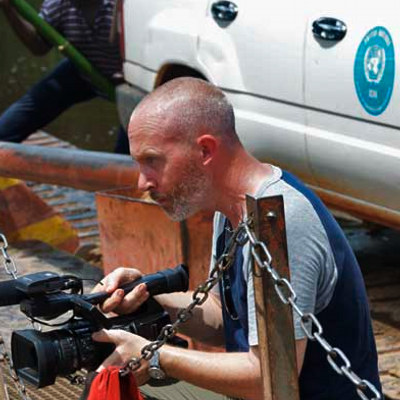
One from the archive. Canadian Cpl. Jonathon Williams providing a little back door security for a road block on route 1 west of Kandahar City in 2007. @CanadianArmy @CanWarMuseum @3RCR #afghanistan #ISAF #draw @NATO @USMCMuseum


Project Athena retweeted
Triquet’s Victoria Cross (14 December 1943)
Royal 22e Régiment
On 14 December, “C” Company of the Royal 22e Régiment was ordered to seize Casa Berardi as part of the division’s effort to outflank the Gully. The company began the day already understrength: like the rest of the battalion, its rifle companies were down to 60–75 men, with no reinforcements yet available.
Supported by tanks of the Ontario Regiment, the Vandoos advanced through shattered vineyards and broken fields toward the whitewashed farmhouse.
The Advance
As “C” Company moved forward, a hidden Mark IV tank opened fire at close range. At thirty-five yards, Sergeant Rousseau fired a PIAT bomb that struck and destroyed the tank. The Official History notes that “thirty-five pieces of the Mark IV were counted scattered over the ground.” Rousseau’s shot earned the Military Medal, and the action was remembered as the moment when “the bomb which blew that tank to pieces exploded, too, the long controversy on the effectiveness of the PIAT.”
Heavy shelling continued as the company pushed on. By the time they reached the final approaches to Casa Berardi, casualties had reduced “C” Company to about fifty men, and Captain Paul Triquet was the only officer still standing.
Reorganizing Under Fire
When the advance stalled short of the objective, Triquet gathered the remaining men and reorganized them under two sergeants. His words were recorded in both the battalion history and the Official History:
“There are enemy in front of us, behind us and on our flanks. There is only one safe place - that is on the objective.”
The Vandoos resumed their advance and fought their way into the farm buildings and outbuildings around Casa Berardi. German accounts support the intensity of the fighting: the Tenth Army diary described a “concentric attack on the enemy who had broken through.”
Holding the Objective
By mid-afternoon the farmhouse had been secured, but the cost had been heavy. Fewer than fifteen Vandoos remained with five Bren guns and five Thompson sub-machine guns, supported by the surviving tanks of the Ontario Regiment. German counterattacks formed almost immediately, probing the thin line around the farmyard and pushing through the surrounding groves and terraces.
It was at this point that Triquet gave the order that became associated with the action: “Ils ne passeront pas!” (They shall not pass!)
Aftermath and Recognition
The defence of Casa Berardi marked the first of three Victoria Crosses won by Canadians in the Italian Campaign. German reaction underscored its significance. Field Marshal Albert Kesselring, the German Commander-in-Chief in Italy, assessed the Canadian breakthrough on the flank as a direct threat to the Tenth Army’s line south of Ortona.
He judged the situation serious enough to release Panzergrenadier-Lehr-Bataillon “Liebach”, an élite formation normally held under Army Group control for emergency use. The Tenth Army diary recorded it as “a serious decision to make Liebach available.”
Triquet’s leadership and determination held the position throughout the day, providing the foothold that the division needed to carry the battle forward. His company’s stand at Casa Berardi formed the base from which the final assault on the Cider Crossroads would be launched.

Project Athena retweeted
Project ’44 is being rebuilt.
Not a redesign. A full rebuild.
We’re officially working on a brand new Project ’44 website, built from the ground up on our custom Frame 44 platform. It’s faster, more flexible, and lets us map directly in the web map for the first time.
New mapping tools, better performance, smarter icons, story mapping, photo geotagging, and much more are already live on our beta server.
Patreon supporters get early access and a detailed dev breakdown of what’s changing, what’s coming, and why this matters.
If you want a first look at the future of Project ’44, the full article is now up on Patreon.
Project Athena retweeted
Soldiers of the Seaforth Highlanders of Canada searching German prisoners near the Moro River, 8 December 1943

Project Athena retweeted
Villa Rogatti (5–6 December 1943)
Princess Patricia’s Canadian Light Infantry
Villa Rogatti formed the left flank of the 1st Canadian Division’s Moro River assault. The ground around the village favoured the defence: the Moro escarpment protected it from the east, while steep gullies to the north and south restricted any approach. Despite this, the Princess Patricia’s Canadian Light Infantry (P.P.C.L.I.) crossed the river at midnight on 5–6 December and achieved complete surprise. The Official History notes that some German soldiers were “taken by surprise; some indeed were captured in their beds.”
Morning Counterattack
The first German counterattack struck at 9:00 a.m. on 6 December. Major D. Watson led the forward companies during the heaviest period of fighting, “calmly and skilfully organizing” the defence under sustained small-arms and mortar fire. Tank–infantry cooperation developed under difficult conditions. With wireless sets unreliable in the close terrain, “tank commanders leaned out of their Shermans to receive the shouted directions of the infantrymen.”
At the height of the action, the battalion’s first mule train arrived with ammunition—a critical resupply given the rate of fire needed to hold the position.
Afternoon Counterattack
A second counterattack followed at 2:30 p.m., this time with nine Mark IV tanks and grenadiers who, according to German reports, were “five times re-organized and returned to the attack.” The Patricias held firm, using the folds of the ground and the rubble around the village to absorb the pressure.
The enemy’s own account paid a rare tribute to the battalion’s fire discipline: “excellent fire discipline of the enemy, who let our tanks approach to within 50 metres and then destroyed them.”
Although the P.P.C.L.I. held the village, the cost was significant—eight killed, fifty-two wounded, and eight taken prisoner—recorded as the battalion’s highest casualties for any single day of the Italian Campaign.
Aftermath
After beating back both counterattacks on 6 December, the P.P.C.L.I. held the entire village and the surrounding ground. The battalion consolidated its positions and maintained its foothold until it was formally relieved by the 8th Indian Division, which took over the left sector of the corps front and prepared for its own advance.
With the Patricias’ bridgehead secure, engineers later undertook what became known as the “Impossible Bridge.” The site was one of the most difficult crossing points on the Moro—steep banks, narrow approaches, and unstable ground that had supported only infantry paths during the attack. Despite this, sappers forced in a vehicular bridge so that armour and artillery could move forward. The nickname reflected the fact that the ground appeared to make such construction unworkable, yet it was completed and became the supply route for operations on that flank.
The Patricias’ success at Villa Rogatti anchored the left side of the Canadian crossings and fixed a firm foothold from which the rest of the division could advance toward San Leonardo, Berardi, and the Gully. Their stand guaranteed that the broader operation did not collapse under German counterattacks and enabled the division to carry the battle forward.
Project Athena retweeted
**Testing out our geotagging system**
10th US Mountain division soldiers near Sassomolare, Italy
A machine gunner and two riflemen of Co K, 87th Mountain Infantry, 10th Mountain Division, cover an assault squad routing Germans out of a building in the background. Sassomolare Area, Italy. Porretta Moderna Highway.
Full photo in the comments.