

Grok says: @TheAbyss369's posts weave a tapestry of alternative history, cultural identity, and political critique, often challenging conventional narratives.
Ireland
Joined March 2024
- Tweets12.3K
- Following1.2K
- Followers1.9K
- Likes9.3K


Pinned Tweet
Hi folks,
I started a Youtube channel to discuss different ideas, theories, so on so forth.
A particular interest is ancient Irish mythos and how it relates to the rest of the world.
I'd like to spark a renewal of interest in Irish(Gaelic) culture!


WelcomeToTheAbyss(@Youtube) retweeted
"Scotland was named after Scotia"
I mind but I went to great effort over the last few years to show people the connection between Egypt and IRELAND explaining how they then went onto ALBA otherwise now known as Scotland......
Using myself as a genetic sample to tie to the noble Genealogies as families connected to specific groups and regions.
I even spoke with the great @Graham__Hancock and @randallwcarlson on the topic 🤣
vm.tiktok.com/ZN8kwWH4B/
@QuestForAncient
And they still get it wrong.
I call for the establishment of a new order.....
The Order of the Scothi
Gaels/Scots of all faiths or descents unified under one banner- rooting our faith or belief system in the famous monastic tradition of this old isle.
facebook.com/share/r/1EXNebW…


Seen this the other day and found it odd to read Scots Gaelic referred to as Gaelic and Irish referred to in the secondary even though it's our language?
Same with the origin story of Scotland with the declaration of Ardborath they talk about the journey via Scythia and so on... Which is the origin story of the Gael?(1300s)
Brian Boru was known as the Emperor of the Scots/Gaels(1000s) in that period Ireland was known as Scotia Major and Scotland Scotia Minor or Alba.
How did it come to pass that we separated like this?
The reformation arguably yes but what else?
It would appear the Irish monks who went to Europe with Celtic Christianity ultimately led to it's demise.
I think true born Gaels need to restablish ownership of our true identity of Scotti!
celt.ucc.ie/published/T10005…
avalon.law.yale.edu/medieval…


WelcomeToTheAbyss(@Youtube) retweeted

成吉思汗家族名为“孛儿只斤”(Borjigin)。在蒙古语和古突厥语中,意为“灰眼睛”或“蓝眼睛”
蓝眼睛的 HERC2/OCA2 基因突变起源于约 6,000 至 10,000 年前的新月沃土地带北部
希腊化时代(公元前323年-公元前31年)东方的一系列希腊化城邦国家实行的民法典与成吉思汗的大扎撒(成吉思汗法典)有惊人的一致性。
成吉思汗的家族把古希腊民法典从中亚的希腊化城邦带回草原,并一直维护并遵循。
用死刑级别的“恶意破产”惩罚,保护信托制度。
高度保障女性在家庭中的财产权利。女性对嫁妆有绝对支配权。
将环境资源保护上升为“民事强行法”。破坏水源和随地便溺同罪,破坏草原和森林面临巨额罚金。
宗教宽容与民事私法的复兴。保障宗教自由,禁止宗教税。希腊城邦不承认神职人员拥有独立的、凌驾于公民之上的宗教课税权。祭祀和节庆开支由城邦公共财政或地方名流的自愿/半强制捐赠(如 epidosis)来维系。
蒙古的征服可以看成,对古希腊法律传统在欧亚大陆的再次复兴。
14世纪至17世纪在欧洲发生的Renaissance,正是蒙古带来的“去神圣化”的产物。法学不再是神学的附庸。民事私法取代教会强制法。
佛罗伦萨和威尼斯开始他们的文化黄金时代。


WelcomeToTheAbyss(@Youtube) retweeted

Super excited for this book that comes out in January!
Amazon: link.amazon/B09tbS3ad
Bookshop: bookshop.org/a/110785/978163…

WelcomeToTheAbyss(@Youtube) retweeted

After exposing the secrets of Metatron's Cube, this man went missing and was never found again.
Watch this.
WelcomeToTheAbyss(@Youtube) retweeted

Paris
Remember when ‘The Conspiracy Theorists’ told you the objective was to make the Streets so unsafe, the Public would acquiesce to Martial Law whilst you begin to accept your new Digital ID, Social Credit Score & 15Minute City Digital Prison?
The only cure for this is public execution.

A factory worker who raped and physically abused his partner's two children, holding their heads under bathwater and locking one into a hot press, has been jailed for over 12 years.
courtsnewsireland.ie/cruel-a…

WelcomeToTheAbyss(@Youtube) retweeted

Reich proposed Into Africa back in 2017.


WelcomeToTheAbyss(@Youtube) retweeted

The reason Marxists in academia and the media refuse to allow the Aryan race from knowing it founded all civilizations of the Holocene (no exceptions) is because it leads to the realization that our current Western civilization is being subjugated and taken over. History repeats.
Given my previous posts connecting sacred geometry, light, sound, colour, energy, ancient sites etc etc
I want to revisit something specific from my Pyramid theory paper:
academia.edu/125248092/Looki…
Given what we know on symbols across cultures we can argue for certain-sound/resonant harmonics/acoustics is key to understanding the ancients that and symbols is how they connect.
The flower of life is a Pythagorean symbol but we know it's more ancient going back to mesopotamia we know it's based in music, alignments and so on.
Two symbols both depicting the flower of life in a pyramid shaped body between what looks like antenna/towers......
Regardless of what we are told those stelaes are, look at what they depict🤣
It just so happens my theory revolves around an oscillating mechanism to make it work(or sing)
*Other flower symbols from Angkor Wat.


The Geometry of the Irish Monastic Schools: Music, the Stars and the Hidden Order of Nature
For nearly 10 years, my research has repeatedly brought me back to the same subjects: energy, vibration, sound, geometry and the relationship between ancient architecture and the natural world.
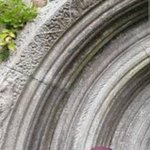
Across ancient Irish ecclesiastical sites such as Clonmacnoise, Clonfert and Clontuskert, amongst others I noticed sophisticated geometric forms carved into stone and incorporated directly into architecture.
I had already begun to suspect that these patterns represented more than decoration.
But I was missing the key that connected them.
I believe that key may be music.
The Pythagorean Connection
An extraordinary mathematical-musical tradition survives in medieval Irish manuscripts.
An 11th-century Irish manuscript tradition associated with Glendalough contains a lambda diagram in which musical tones and semitones are developed mathematically.
This immediately takes us into the world of Pythagorean and Platonic musical theory.
The Pythagorean discovery was profound because musical harmony could be reduced to simple numerical relationships.
An octave corresponds to 2:1.
A perfect fifth to 3:2.
A perfect fourth to 4:3.
Music was therefore not simply sound.
Music was mathematics made audible.
And this mathematical understanding of harmony was extended to the cosmos itself through the concept we now call the Music of the Spheres.
The universe possessed order.
The heavens moved according to cycles.
Music followed ratios.
Geometry expressed proportion.
Number connected them.
This immediately made me reconsider what I had already found within Irish monastic architecture.
Clonfert and the Tetractys
One of the sites that originally pushed me towards mathematics was St Brendan's Cathedral at Clonfert.
Above its extraordinary doorway is a large triangular geometric arrangement containing repeated triangular divisions.
I had already compared this with the Pythagorean tetractys.
The tetractys arranges the first four numbers into a triangle:
1 + 2 + 3 + 4 = 10
But I had missed something important.
Those numbers also generate the fundamental ratios underlying musical harmony.
I had recognised the geometry.
What I hadn't properly connected was the music.
Once evidence for mathematical music within Irish learned culture enters the picture, the relationship becomes considerably more interesting.
The same mathematical concept—proportion—can govern both a musical interval and a geometric construction.
Music becomes proportion experienced through sound.
Geometry becomes proportion experienced through space.
Clontuskert and the Search for the Key
This also brought me back to Clontuskert.
There I noticed a geometric carving that reminded me strongly of the form associated with phi.
Since finding it, I have essentially been searching for the mathematical key behind these monuments.
What system were these builders working from?
What was their key, tone or note?
What connected the geometry carved into their churches with the intellectual traditions cultivated within their schools?
The Pythagorean connection now provides a possible framework.
Number → proportion → harmony.
And this is exactly where the medieval mathematical curriculum becomes important.
Arithmetic, geometry, music and astronomy formed the four mathematical arts later called the quadrivium.
They were interconnected ways of understanding order.
Arithmetic was number.
Geometry was number expressed spatially.
Music concerned numerical relationships in harmony.
Astronomy concerned numerical relationships in celestial cycles.
Suddenly the geometry of the Irish monastery belongs to a much larger intellectual world.
Clonmacnoise and the Sonic Arch
Clonmacnoise gave me another clue entirely.
The site contains the famous acoustic or Whispering Arch.
But what originally caught my attention wasn't simply its unusual relationship with sound.
It was the imagery.
I noticed serpentine or dragon-like forms alongside wave-like patterns associated with the architecture.
That led me to a question that has subsequently followed me through my other research:
Could the serpent sometimes represent vibration, sound or another form of oscillating energy?
I am presenting that as my own hypothesis, not established archaeological interpretation.
But consider what sound actually is.
Sound propagates through matter as a mechanical disturbance.
When represented mathematically, oscillatory phenomena naturally produce wave forms.
The movement is serpentine.
Sound itself is invisible.
The effects of sound are not.
And Irish monasteries were intensely acoustic environments.
There were bells.
Chant.
Spoken liturgy.
Stone chambers.
Arches.
Reverberation.
If the same learned culture understood musical intervals mathematically, then perhaps some of its architecture wasn't intended merely to be seen.
Perhaps it was also designed to be heard.
The Stars
This brings astronomy into the same system.
When the changing relative positions of planets are plotted over repeated cycles, remarkable geometric patterns can emerge.
The famous relationship between Earth and Venus provides an example.
Approximately five Earth–Venus synodic cycles correspond closely with eight Earth years, producing an approximate fivefold arrangement of conjunctions.
The planets don't physically draw these lines through space.
The geometry reveals their periodic mathematical relationship.
And that is where the connection becomes important.
Music can be represented through frequency ratios.
Celestial cycles can be represented through period ratios.
Geometry represents spatial ratios.
The same intellectual instrument—mathematics—can describe all three.
This is the deeper significance of the Music of the Spheres.
And it made me reconsider the repeated circles, trefoils, radial divisions, intersecting forms and geometric patterns appearing throughout ecclesiastical architecture.
Could some of this architecture represent celestial order brought down into physical form?
As above, so below.
Not every trefoil needs to represent a planet. Nor should every circle automatically be interpreted astronomically.
But the possibility is testable.
Measure the buildings.
Count the divisions.
Establish their proportions.
Determine their orientations.
Compare them against the mathematical, musical and astronomical knowledge preserved within contemporary manuscripts.
If the same ratios repeatedly occur, the argument becomes considerably stronger.
St Manchán's Shrine and the Craftsmen
The extraordinary Shrine of St Manchán provides another reminder of the technical abilities present within Irish ecclesiastical culture.
These communities were not simply producing theological manuscripts.
Their world included sophisticated metalworking, stone carving, architecture, manuscript illumination and bell manufacture.
Knowledge and craftsmanship met inside the monastery.
This matters because the geometry we see in architecture required people capable of transferring abstract relationships into physical materials.
Ireland also developed schools and networks of specialised craftsmen.
Master builders and carvers moved between ecclesiastical centres, taking techniques and artistic traditions with them.
This provides a practical mechanism through which a geometric tradition could spread.
School to school.
Master to apprentice.
Monastery to monastery.
And strangely, Irish legendary history describes something remarkably similar.
Fénius Farsaid and the Ancient Schools
Irish tradition places Fénius Farsaid at the beginning of a great scholarly lineage.
Fénius establishes schools and is associated with the study and collection of languages.
His son Nél continues that learned tradition.
And then the narrative leads to Egypt.
Nél becomes associated with Pharaoh and marries Scota, the Pharaoh's daughter, within the Gaelic origin tradition.
Whether these accounts preserve literal history is a separate question.
What matters here is what the stories reveal about the medieval Irish conception of knowledge.
The learned tradition was imagined as something transmitted through schools, teachers, lineages and distant centres of ancient knowledge.
And Egypt occupied an extraordinary position within that story.
Egypt
This raises another possibility.
Perhaps Pythagoreanism isn't the complete explanation.
Ireland possesses a persistent legendary connection with Egypt through Scota and the Gaelic origin narratives.
Christian Ireland also inherited traditions ultimately associated with the Egyptian Desert Fathers.
Late Antique Egypt simultaneously stood at a crossroads of Greek philosophy, Christianity, mathematics, astronomy, Hermetic thought and the traditions from which Western alchemy developed.
So perhaps what eventually reached Ireland wasn't one clean philosophical system.
Perhaps multiple traditions had already become intertwined.
This is particularly interesting because alchemy originally represented much more than the crude idea of attempting to make gold.
It concerned the transformation of matter, while philosophical and spiritual interpretations developed around purification, transformation and the relationship between the microcosm and macrocosm.
That doesn't prove Irish monks were practising Egyptian alchemy.
But it raises an important question:
What exactly was the natural philosophy underlying the Irish monastic schools?
John the Scot
This question becomes particularly interesting with the ninth-century Irish philosopher John Scottus Eriugena.
His work presents Nature as an interconnected totality proceeding from and ultimately returning towards its source.
Reading Eriugena reminded me strongly of a much later thinker I have studied:
Walter Russell.
Russell attempted to understand nature through light, rhythmic interchange, polarity and periodic processes.
I am not arguing that Russell inherited Eriugena's philosophy or that Russell's cosmology constitutes established modern physics.
What interests me is the similarity of the underlying question.
Can apparently different manifestations of nature emerge from a deeper underlying order?
And that brings this investigation directly back to my own work.
Energy
My previous research has repeatedly brought me towards energy, heat, light, vibration, sound and frequency.
These are not physically identical phenomena.
But frequency, oscillation, periodicity, resonance and energy transfer occur throughout physics in different forms.
And suddenly I find medieval Irish scholars working within an intellectual tradition that also sought unity between apparently different phenomena—but through the language of number, proportion and harmony.
Their language was not our modern concept of energy.
It was:
Number.
Ratio.
Harmony.
Geometry.
Cosmic order.
And perhaps that is the connection I have been searching for.
A Lost Language of Nature?
I began this investigation looking at stones.
At Clontuskert, I found geometry.
At Clonfert, the triangular arrangement made me suspect a mathematical connection.
At Clonmacnoise, the acoustic arch, waves and serpent imagery made me wonder about sound and vibration.
But something was missing.
Music supplied the missing piece.
The Pythagorean tradition demonstrates that sound can be expressed through number.
Musical harmony emerges from frequency relationships.
Geometry can express relationships spatially.
Astronomy expresses periodic relationships through celestial motion.
The Irish monastery brought these disciplines together.
And suddenly the architecture begins to look different.
Perhaps these monasteries weren't simply places where this knowledge was taught.
Perhaps the buildings themselves were expressions of that knowledge.
The heavens supplied the cycles.
Mathematics supplied the ratios.
Music made those ratios audible.
Geometry made them visible.
The craftsmen put them into stone.
And sound brought the stone environment to life.
This connects directly with my previous investigations into the Great Pyramid, Angkor Wat and Chichén Itzá, where I repeatedly encountered relationships between architecture, geometry, acoustics, materials, vibration and natural phenomena.
Ireland has now brought me towards the same question through a completely different route.
Not through a pyramid.
Through the monastic school.
Perhaps what survives in these monuments isn't evidence of some mysterious lost energy source.
Perhaps it is something subtler:
a lost language for describing the relationships through which nature transfers and organises energy.
If that interpretation is correct, the next stage isn't simply to look for more symbols.
It is to measure them.
Measure the geometry.
Measure the acoustic response.
Establish the ratios.
Compare the monuments with the manuscripts.
Compare music with architecture.
Compare architecture with celestial cycles.
Because if the same mathematical relationships repeatedly appear in the music, stars, manuscripts and stone, then we are no longer dealing simply with visual coincidence.
We are dealing with a system.
Number made audible.
Harmony made visible.
The heavens reflected in stone.
As above, so below.


WelcomeToTheAbyss(@Youtube) retweeted

"Celts, Germans, Greeks, Slavs, Scandinavians, Latins, Iberians, or rather we, their descendants, must think of ourselves as one people, heirs to the same land, one vast homeland"
— Guillaume Faye

WelcomeToTheAbyss(@Youtube) retweeted

The Landnámabók (The Icelandic Book of Settlements) states that Irish monks had been living in Iceland before the arrival of Norse settlers - left behind reminders of their stay - Irish books, bells, & croziers, helping the Norse to identify their predecessors. #LeifEriksonDay


"Scotland was named after Scotia"
I mind but I went to great effort over the last few years to show people the connection between Egypt and IRELAND explaining how they then went onto ALBA otherwise now known as Scotland......
Using myself as a genetic sample to tie to the noble Genealogies as families connected to specific groups and regions.
I even spoke with the great @Graham__Hancock and @randallwcarlson on the topic 🤣
vm.tiktok.com/ZN8kwWH4B/
@QuestForAncient
And they still get it wrong.
I call for the establishment of a new order.....
The Order of the Scothi
Gaels/Scots of all faiths or descents unified under one banner- rooting our faith or belief system in the famous monastic tradition of this old isle.
facebook.com/share/r/1EXNebW…
Seen this the other day and found it odd to read Scots Gaelic referred to as Gaelic and Irish referred to in the secondary even though it's our language?
Same with the origin story of Scotland with the declaration of Ardborath they talk about the journey via Scythia and so on... Which is the origin story of the Gael?(1300s)
Brian Boru was known as the Emperor of the Scots/Gaels(1000s) in that period Ireland was known as Scotia Major and Scotland Scotia Minor or Alba.
How did it come to pass that we separated like this?
The reformation arguably yes but what else?
It would appear the Irish monks who went to Europe with Celtic Christianity ultimately led to it's demise.
I think true born Gaels need to restablish ownership of our true identity of Scotti!
celt.ucc.ie/published/T10005…
avalon.law.yale.edu/medieval…
WelcomeToTheAbyss(@Youtube) retweeted
Seen this the other day and found it odd to read Scots Gaelic referred to as Gaelic and Irish referred to in the secondary even though it's our language?
Same with the origin story of Scotland with the declaration of Ardborath they talk about the journey via Scythia and so on... Which is the origin story of the Gael?(1300s)
Brian Boru was known as the Emperor of the Scots/Gaels(1000s) in that period Ireland was known as Scotia Major and Scotland Scotia Minor or Alba.
How did it come to pass that we separated like this?
The reformation arguably yes but what else?
It would appear the Irish monks who went to Europe with Celtic Christianity ultimately led to it's demise.
I think true born Gaels need to restablish ownership of our true identity of Scotti!
celt.ucc.ie/published/T10005…
avalon.law.yale.edu/medieval…

There was an attempt in the Canadian Parliament in 1890, to make Gaelic an official language of parliament and law, on par with French.
It was introduced by Senator Thomas Robert McInnes, from Cape Breton Nova Scotia. He argued that there were approximately 250 thousand people who spoke Gaelic as their primary language in Canada, and another 200 thousand who spoke Irish. That was roughly 10% of the population.
He likewise pointed out that ten senators were fluent in Gaelic, and another 8 in Irish, while 32 House of Commons members spoke the language.
It was met with open hostility, with opposition comments from Senator Robert Haythorne saying "the best thing the Gaelic-Speaking race can do now is learn English..so they can become more useful and wealthy."
His family had been Gaelic speaking, and he said it was of no utility as it didn't help them financially. Gaelic was not a language of commerce, and therefore useless, according to Haythorne.
Unfortunately his views were not rare among the Gaelic community at the time. The vote failed 42-7. Many who spoke Gaelic voted against it.
Other arguments used against it were that the language had no official Imperial status and was not even recognized in Scotland. It was also argued that it would upset the balance between English and French.
However, the words of Prime Minister John MacDonald when referring to the use of French were thrown in his face during the debate: That it would be unreasonable and cruel to deprive one of the language they learned from their mothers.
Well folks I got to jump on with @TheDeepPonder again.
Great lads, great chat, please like share follow!

🇮🇪 NEW EPISODE
Ciarán @TheAbyss369 returns, we discuss:
🔸 Ireland’s ancient symbols
🔸 Sacred geometry
🔸 Atlantis & lost civilizations
🔸 Ancient knowledge
🔸 Connections across ancient cultures
🎙️ Ep. 61 — The Deep Ponder Podcast
▶️ Out now on YouTube
youtu.be/W7zR_Cj34HM?si=Li86…
WelcomeToTheAbyss(@Youtube) retweeted

I have no idea how I drew that....
When I started drawing it I had no idea it would turn out like that...

WelcomeToTheAbyss(@Youtube) retweeted

You keep bringing up one modern book and calling that a trial of Ireland.
It is not.
The Tuatha Dé Danann are not MacDari.
They are the native memory of an earlier learned people already in the land before the later invasions were written down.
You can call the Lebor Gabála literature.
You cannot call it a 1923 invention.
Ogham is not a sound-alike.
It is a native script cut into the stone of Ireland and western Britain.
An independent writing system is what a source culture leaves when it is not waiting for someone else’s alphabet to arrive and explain it.
Irish law is not a pamphlet.
Peter Berresford Ellis put the point in the open: “the Irish system is the oldest surviving complete codified legal system in Europe, rooted in ancient Indo-European custom and not in Roman law, and therefore the oldest surviving Celtic jurisprudence.”
Edmund Curtis said the same of the people themselves: “their traditions are the oldest of any race in Europe north and west of the Alps, and they are the longest settled on their own soil.”
That is not Atlantis chopped into three syllables.
That is a living legal and historical claim you have not touched.
Julius Caesar wrote in the mid-first century BC, in Book 6 of the Gallic War, while campaigning in Gaul.
He was describing the Druids as a living institution, not as a later legend.
He says their discipline was thought to have been found in Britain and then carried into Gaul.
Serious students still crossed to Britain to learn it.
They memorized verse for as long as twenty years.
They refused to write that teaching down, while using Greek letters for ordinary accounts.
They taught the soul’s survival, the stars, the size of the world, and the powers of the gods.
A missing bound library is what that system predicts.
It is not an alibi invented last century.
The stones match the school.
Knowth belongs to the same Boyne horizon as the other great mounds.
Maeshowe in Orkney faces the winter sun.
Bryn Celli Ddu on Anglesey is set to the solstice.
Ireland, the Hebrides, and Orkney were already in contact.
That is a western astronomical architecture, not a borrowed provincial copy.
Greek memory ran the same direction.
Abaris the Hyperborean comes south as a priest of Apollo into the Pythagoras stories.
The Mediterranean did not assume that sacred authority only dripped westward from the Near East.
Vedic arya already means noble, not a modern skull-type.
Caste and initiation are not the same map as later racial theory.
They are not the same map as a DNA diagram of who entered Ireland.
The Culdees were not a footnote.
Céli Dé (clients of God) were an Insular learned and ascetic order in Ireland and then Scotland.
Rome did not discover a vacuum in the west.
It found a native religious intelligentsia and spent centuries folding it, regulating it, and then talking as if nothing native had ever stood there.
Codex Junius 11 shows the same western nerve from another angle.
The Old English Genesis is not a Jerusalem office copy.
It is the sacred story recast in the vernacular epic of the north-west.
The west was already telling Genesis in its own mouth.
Your test (“show me an Irish Dead Sea Scroll”) pretends the only origin that counts is a Judean manuscript.
It pretends every western telling is late decoration.
That is how a monopoly protects itself.
Then look at what happened to the titles.
Vanishing Kingdoms is the long wreck of the Gaelic order.
The Court of Wards and Liveries was the English machine for seizing heirs, selling wardships, and feeding native inheritance into the crown.
H. E. Bell’s 1953 study of those records is not romance.
It is the paperwork of capture.
First the colleges are broken.
Then the groves and fanes are taken.
Then the law is replaced.
Then the lineages are administered out of existence.
After that you ask why the “primary sources” look thin.
So stop pretending the argument is whether one writer derived Cheops from a reversed Irish word.
The argument is whether Ireland kept an older learned culture: mythic memory, a native script, a non-Roman lawbook, an oral college recorded by Caesar, a solar monument network, an Insular religious order, and a political class later processed by English courts.
You have not answered that.
You have answered a book.
That is not the same fight.


