

Trad I Dravidian I Mercantile Philosopher Archetype I Murasoli Maran School of Thought
Chennai
Joined November 2022
- Tweets14.6K
- Following4.9K
- Followers235
- Likes40.8K


Traditional Dravidian retweeted

Political will is indispensable to constitutional democracy.
In 1951, when judicial interpretations of the Constitution impeded crucial socio-economic reforms, Jawaharlal Nehru did not resign himself to judicial setbacks.
He brought in the First Constitutional Amendment, introducing Articles 31A and 31B to safeguard agrarian reforms and Article 15(4) to enable affirmative action following the Champakam Dorairajan judgment and the historic agitations led by Periyar and Anna.
In 1967, when Self-Respect marriages lacked legal recognition owing to prevailing laws and judicial interpretations, பேரறிஞர் அண்ணா amended the Hindu Marriage Act, granting them retrospective legal validity.
In 1970, Kalaignar exercised legislative power to abolish hereditary succession to temple priesthood. Despite subsequent judicial constraints, he pursued the reform again in 2006, carrying forward the constitutional commitment to social equality.
These leaders understood that the judiciary interprets the law, but the legislature has an equally indispensable constitutional responsibility to advance social justice, secularism and fraternity.
The Thirupparankundram issue must be viewed through this constitutional lens. Protecting religious harmony, established traditions and the peaceful coexistence of communities requires ideological conviction, legal ingenuity and decisive political leadership.
Political will does not mean defying judicial orders. It means exhausting every legitimate constitutional, legislative and legal avenue to safeguard the principles upon which our democracy rests.
An adverse judicial order cannot become an alibi for political helplessness. History will judge those in power not merely by the verdicts they received, but by what they did to safeguard the values they were elected to uphold.


Traditional Dravidian retweeted
Ideally, yes. But political decisions cannot be divorced from political realities.
Congress has a dubious record of respecting India's federal structure. Under Rahul Gandhi, its electoral opportunism has repeatedly undermined regional parties, often to the BJP's advantage. Its newfound enthusiasm for federalism must be viewed against its own history of centralisation of power, during which Tamil Nadu itself lost parliamentary representation.
The existing freeze on delimitation, extended through the 84th Constitutional Amendment, expires upon the publication of the first Census conducted after 2026. Thereafter, Parliament can enact a delimitation law with a simple majority within the existing constitutional framework.
Given these realities, Tamil Nadu's demand to retain its existing proportion of parliamentary representation and extend the freeze by another 25 years is both politically prudent and constitutionally pragmatic.
Just because Congress, with its questionable ideological commitment to federalism, wants to score political brownie points, Tamil Nadu cannot afford to leave its constitutional interests at the mercy of national parties and their electoral arithmetic.
Tamil Nadu's political representation is not a bargaining chip for Congress's political relevance.


Traditional Dravidian retweeted

These books were basically my friends during my PhD.

The Developmental State
These six books explore the conditions under which the state plays a role in fostering economic development. The overarching idea is that of a developmental state.
For an chapter-length overview of this literature, see Haggard: static1.squarespace.com/stat…


Traditional Dravidian retweeted

An intellectually rewarding essay in @NewYorker on the origins, evolution, and contradictions of political realism.
Reviewing David Sacks's biography of Morgenthau, Thomas Meaney traces how a once-marginal intellectual tradition came to shape American foreign-policy thinking.


Traditional Dravidian retweeted
For all the dubious "firsts in Tamil Nadu’s history" that TVK keeps flaunting, here’s one they may actually lay claim to ' the first sitting MLA to face arrest for sexually harassing a serving IAS officer.'
Worse, ministers, spokespersons, officials and alliance leaders rushed to defend him even before the investigation could establish the facts.
What a disgraceful milestone. What a fall for Tamil Nadu to have elected such representatives! Sickos!

Traditional Dravidian retweeted
Who is safeguarding Tamil Nadu’s interests in the Supreme Court?
During the crucial NEET-SS hearing, neither of the two senior advocates appointed by the TVK government turned up to defend the State’s case.
Now, in the Thirupparankundram issue, the State's legal and administrative handling has culminated in the suspension of the temple's board of trustees, the deployment of CRPF and contempt notices against the highest-ranking officials of Tamil Nadu.
One concerns social justice, State rights and public healthcare. The other concerns religious harmony, centuries old traditions and federalism.
The TVK government owes Tamil Nadu an explanation.
1.What legal strategy was adopted?
2.Why wasn't there a proper communication and coordination between the various department of the government in ensuring a strong case? 3.Who will be held accountable for these outcomes?
Defending State rights requires constitutional understanding, legal preparedness and political will and not merely rhetoric and punch dialogues.
Tamil Nadu deserves a government that can defend its rights in Delhi.
But right now we have a government in Chennai that takes it orders from Delhi!!!
Traditional Dravidian retweeted
@thirumaofficial finds the DMK’s decision to support the Delimitation Bill, which incorporates its demands to safeguard Tamil Nadu’s interests, surprising.
Wasn’t he himself part of the DMK-led Fair Delimitation movement, protesting even on Parliament premises for these very demands?
Now that those demands have been accommodated, political convenience seems to have overridden his earlier convictions.
But Thiruma’s response is hardly surprising, given the series of political U-turns we have witnessed since his party secured a ministerial berth in the TVK government.
The demands haven’t changed. Tamil Nadu’s interests haven’t changed. Only Thiruma’s political loyalties have.

Traditional Dravidian retweeted

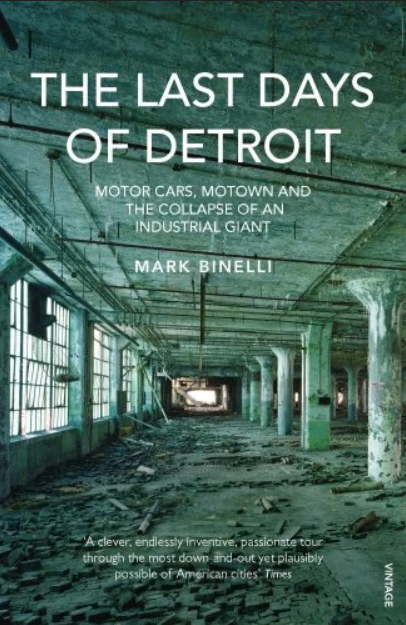
I found Reybrouck's Congo, Beard's SPQR and Applebaum's Gulag to be so poor I couldn't finish them. Judt's Postwar was good, haven't read the others. Generally this looks a mixed bag of a list even if limiting to popular 21stC histories. If I were listing for the average reader:




Traditional Dravidian retweeted

In 1983, officials in a poor northern Chinese county cautioned their new party boss that the mansion he wanted to build would take more than a century to pay for itself. That party boss was Xi Jinping, who was 30 years old at the time.
The county was Zhengding, south of Beijing. The only attraction drawing visitors to Zhengding was an ancient Buddhist temple, which charged an admission fee of 10 fen, or about 5 US cents.
That year, China Central Television, or CCTV, the national broadcaster, was planning to film a version of Dream of the Red Chamber, China's most famous novel, about a rich family and their mansion. Zhengding offered free land to the network to build a set for the show.
But Xi didn't want just a set. "A fake set gets torn down when filming is done and leaves Zhengding nothing. We have to build a real one," he told other officials, according to the provincial party newspaper.
Building a real mansion, instead of a set, would cost more than 3 million yuan more, about $1.5 million at the time. His colleagues reminded him that with the temple's ticket price of 10 fen, it would take over 100 years to pay for itself.
Xi thus sought external funding. China Central Television provided some, a machinery plant in a neighboring city bought a share in the project, and a pharmaceutical factory agreed to put in money and be paid back from ticket sales.
The mansion was finished in 1986, after Xi had moved on to another job.
Tickets were priced at 50 fen, five times the temple's entry fee. One guide said that enthusiastic lines of visitors ripped out the wooden ticket window several times, and the wooden door sills had to be wrapped in sheet iron.
The county said that 1.3 million people visited during the first year. At 50 fen a head, the investment would be paid back in just a few years, not a century.
The difference between the two proposals was never about the building itself. The difference was about what would remain after the TV crew left. If it were a film set, Zhengding would get just one summer of filming. If it were a real building, Zhengding would have something it could charge people to see every year after.
This is the kind of bet that China's system rewards. County-level officials are judged on what their counties gain, and the resulting credit helps them move up the ladder, even if the payoff, such as the unveiling of the mansion, comes after they have already moved on. Zhengding says the mansion was Xi's brainchild, and counts more than 200 productions filmed there since.
Traditional Dravidian retweeted

This has some of that old SNL humor in it. I miss Will Ferrell on SNL.

Traditional Dravidian retweeted

This is brilliant! A very simple, hiding-in-plain-sight idea used perfectly in service of the brand! Terrific creativity by the agency Audacious.
#advertising #marketing #creativity
Traditional Dravidian retweeted

“My own sense is that India has only truly entered something akin to its own Meiji Restoration, a period of sustained economic and social modernization, in the last two decades. It has only been recently that the forces of modernity and the Indian state have welded together India’s disparate peoples and regions into something approaching a coherent whole — not just administratively, but in how people, the masses and elites both, see themselves and their country. This is a pan-Indian identity, forged by decades of intra-India travel and pilgrimage, the spread of food habits from different parts of the country to other parts, the spread of festivals like Diwali to all corners of India, the emergence of common speech patterns and popular culture. It has only been in the past five years that India has achieved near-universal youth literacy and nearly eliminated extreme poverty (measured at less than $3.00 a day). These are the prerequisites for a population that has moved up high enough on Maslow’s hierarchy of needs to think about, to dream about becoming a modern society, about economic development and social change, about geopolitical prowess.”
akhipill.substack.com/p/indi…

Traditional Dravidian retweeted

One simple thing Jason Alexander does here is replace filler sounds (uh, um, er, y'know) with pauses. I've started doing this myself, and it's easier than you'd think. It mostly takes listening to yourself as you talk, which is worth doing anyway.

Traditional Dravidian retweeted

Geoffrey Hinton needed a few million dollars so his son, who has learning difficulties, would never end up on the street. In December 2012 he put himself and his two students up for auction from a hotel room in a Lake Tahoe casino. Google, Microsoft, Baidu and DeepMind bid, and at $44 million he stopped it himself
In the video below, Steven Bartlett asks him what brought him to Google. "I needed to get several million dollars and I wasn't going to get that as an academic." He tried teaching a Coursera course first, "but there was no money in that." Then the line: "The only way to get millions of dollars is to sell myself to a big company"
The company was DNNresearch. Hinton, Ilya Sutskever and Alex Krizhevsky, three people and no product. A few months earlier their network, AlexNet, had crushed the ImageNet contest at recognizing objects in photos. During the NIPS conference at Harrah's, the bids came in by email, an hour per round, each raise at least $1 million, according to Cade Metz's book Genius Makers
Near midnight, at $44 million, Hinton suspended the auction and chose Google. The deal closed in March 2013. He joined at 65 and stayed 10 years, and as he says at the end of the clip, "they said pretty much you can do what you like"
Ilya left Google in 2015 to co-found OpenAI. Hinton left in 2023, at 75, to warn people about the technology he had sold. A year later he won the Nobel Prize in Physics
I think $44 million was the best deal Google ever made. It bought the three people who knew how to make neural nets work while most of the field still doubted them, and one of them went on to build its biggest rival. When you sell your work, the price is only half the deal. The other half is who gets you, and what you are free to do after
AI fans, did Hinton leave money on the table by stopping at $44 million, or was choosing Google the smartest move of the whole auction?
One story like this every day: the people who built AI, the money they made, and who ended up with it
