
Hello, I do alot of Genetics related posts. Homo antecessor is my favourite hominid
London, England
Joined July 2020
- Tweets646
- Following98
- Followers121
- Likes1K




TheGeneticsmanwhoisafan retweeted

We are planning on sponsoring samples!
If you are under Y-DNA Haplogroup R2, please feel free to fill out the form below:
forms.gle/WycWeaH3mp5A2U3n8


TheGeneticsmanwhoisafan retweeted

None of these traits males S17 a closer candidate than say 3883. In Baab's study S17 is no closer than 3733 or Turkana Boy to Bodo. By contrast Buia, Konso, Daka, 3883, and Kabwe comparisons show continuity with Ergaster.


TheGeneticsmanwhoisafan retweeted
Not supported by the Gombere study.

TheGeneticsmanwhoisafan retweeted
Peking Man is indeed advanced but it's not a Hiedelbergenesis by Holotype definition. A sister Morphology maybe. As for Daka, Peking Man wasn't even close in the original study. You can even see that here.


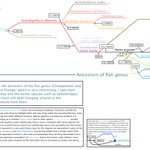
Overhaul partially of my tree to demonstrate the structure between the ancestors of Pan and Homo more deeply, ms paint goated tool
@Zeke_Darwin @ABu9283792 @atman187 @devilscave24153 @trevorcousins_ @DanTabin @RegevSchweiger

12
1,311
TheGeneticsmanwhoisafan retweeted

Cool! As I understand it the re-merger is inferred to be ~3mya, so a bit later than seen in your diagram. Also you should read Patterson et al 2006, which is dedicated to the complex speciation
Small update to the Homini phylogeny, based on a paper by @trevorcousins_ suggests the ancestors of Homini and the Pan genus engaged in inter breeding with one another which is pretty cool.
@Zeke_Darwin @DanTabin @atman187 @ABu9283792 @devilscave24153

TheGeneticsmanwhoisafan retweeted

Have You Seen Claims Humans Didn’t Come From Africa? Here’s Why They’re Wrong iflscience.com/have-you-seen…

Hello people, made a ydna chart of the major Human clades with TMRCAs for them all, data is sourced from FTDNA.
@DanTabin @Zeke_Darwin @thmque @devilscave24153 @ABu9283792

Hello gang, i took the time (alongside with a friends assistance) to create this chart of all the Homini stuff, as i mention in the post alot is speculation but still leave ur thoughts and what not, thanks.
@atman187 @ABu9283792 @DanTabin @Zeke_Darwin @thmque

as per @kvali_app request, PCA and F2+FST for some bears, btw PCA is a bit funny cause black bears are an outgroup to both brown and polar but they seem to be artificially closer/intermediate, not enough SNPS for qpadm, and qpgraph failed so you get what you get.


Ran Qpgraph on the Ant DNA, got worse Z of 1.91 which is pretty good, and the admixture events proposed seem to align with the previous analysis i did aswell.


The best 2 way model gives ~76% Swiss polyctena + ~24% Finnish aquilonia ancestry, close to the published sNMF estimate. However, the model isn't statistically significant here, most likely due to limited power from single genome (rather than population-level) outgroups. 6/8
2
1
72