

Prof Botany/Ecophysiology of Plants at HTW Dresden, co-affiliated with University of Vienna,; ‚VI’ indicates privat tweet; https://teapawt.org/t.co/w3loRpDOk7
Wien, Österreich
Joined March 2014
- Tweets4.4K
- Following364
- Followers698
- Likes4.9K







It's time to leave X..#politicsmatters! Please find us from now on at @celbics.bsky.social and on #instagram Verena.ibl. Thanks for all the interaction here so far. Hope to meet most of you again at/in the other social media rooms!👋
185
Verena Ibl 🔬🌈🏳️🌈 retweeted

For anyone learning or teaching bioinformatics, or if you’re interested in getting started, you may like to check out some of many (>404!) detailed tutorials for the Galaxy bioinformatics platform, from microbiome analysis to chloroplast assembly, at training.galaxyproject.org/t… 👇
The Galaxy platform is a free, easy-to-join, easy-to-use bioinformatics workflow management system that enables scientists to share, analyse and visualise their own data, without needing powerful computers and programming expertise.
Galaxy was first started in 2005, and it has grown year-on-year into an amazingly useful resource for scientists worldwide, with a global community of developers and end-users. You can read about it here:
The Galaxy Community. (2022). The Galaxy platform for accessible, reproducible and collaborative biomedical analyses: 2022 update. Nucleic acids research, 50(W1).
academic.oup.com/nar/article…
To get started, you could first go through a few tutorials to find out how the platform works at the following link:
training.galaxyproject.org/t…
And you could take a look at some very cool tutorials, for example using Oxford @nanopore MinION data for:
⭐Analysing data to detect microbial pathogens such as Salmonella in food
training.galaxyproject.org/t…
⭐Characterising the microbiome of beer
training.galaxyproject.org/t…
⭐Diving into the bacterial biodiversity of soil
training.galaxyproject.org/t…
⭐Or assembling the chloroplast genomes of sweet potato and snow gum (Eucalyptus pauciflora) by combining Nanopore long read and Illumina short read data
training.galaxyproject.org/t…
It also has tutorials for learning core skills in data science, such as using Python, bash, R, and SQL:
training.galaxyproject.org/t…
Galaxy has a well-developed community, which you can find out more about here:
galaxyproject.org/community/
And, if you have a particular application in mind, you might find a Galaxy pipeline that’s already been created as part of a published study. For example, if you’d like to find antimicrobial resistance genes in Salmonella, this article and workflow may be for you:
Lamas et al. (2023). Whole genome sequencing in the palm of your hand: how to implement a MinION Galaxy-based workflow in a food safety laboratory for rapid Salmonella spp. serotyping, virulence, and antimicrobial resistance gene identification. Frontiers in Microbiology, 14.
ncbi.nlm.nih.gov/pmc/article…
Or if you’d like to find out how to produce a reference genome for a vertebrate as part of the Earth Genome project, this article explains how it can be:
Larivière et al. (2024). Scalable, accessible and reproducible reference genome assembly and evaluation in Galaxy. Nature Biotechnology, 1-4.
nature.com/articles/s41587-0…
All amazing resources for people already in the bioinformatics field, but possibly even more useful for teaching the bioinformaticians of the future!
This of course only covers a few aspects of the Galaxy “ecosystem”, so if it seems like it could be useful, be sure to have a look around and see what else there is out there for you.
And, if you are using Galaxy for teaching, we’d love to hear about how you’re using it, especially if you have any tips or online/published resources to share!
Disclaimer: Bento Lab has no affiliation with Galaxy - we just love cool tools and platforms that enable science!
Verena Ibl 🔬🌈🏳️🌈 retweeted

Farmers worldwide struggle with significant crop losses due to fall armyworm, a lepidopteran pest that attacks the leaves and stems of more than 350 plant species.
The invaders are capable of crop destruction that can lower yields by more than 50%, dramatically impacting farmer’s livelihoods.
In the case of maize, a female moth lays her eggs on the foliage of the plant and upon hatching just a few days later, the fall army worm (FAW) larvae begin to feed.
Thankfully there are some methods available to control FAW:-
1. Crop Protection: Using pesticides to kill FAW while minimizing harm to beneficial insects and the environment.
2. Pheromone Traps: Setting traps that attract and capture male FAW moths to reduce mating and monitor their presence.
3. Resistant Crops: Planting genetically modified crops that produce toxins harmful to FAW larvae, reducing the need for chemical pesticides.
4. Biopesticides: Applying natural substances like bacteria, fungi, or viruses that specifically target and kill FAW.
5. Parasites: Using parasites, such as certain wasps, that lay their eggs in FAW larvae, killing them.
Scientists work tirelessly to develop new plant protection products to assist farmers in safeguarding their crops from pests, diseases, or weeds.
Verena Ibl 🔬🌈🏳️🌈 retweeted

BREAKING - A new @Nature study shows that GM crop adoption has a small but positive effect on overall abundance of birds! Insectivorous birds benefit, & is largest in cotton. Herbivorous birds weakly decrease with GM crop adoption. Hello Europe! nature.com/articles/s41893-0…
Verena Ibl 🔬🌈🏳️🌈 retweeted
In a world where the line between fact and fear can blur, it's crucial to arm ourselves with knowledge. Whether you're Team GMO or Team Non-GMO, understanding the science empowers you to make choices that align with your values and beliefs inc.com/inc-masters/how-to-u…
Verena Ibl 🔬🌈🏳️🌈 retweeted

Jubiläum der besonderen Art: Einmal blau gefärbt, immer blau gefärbt. Forscher*innen der BOKU haben entdeckt, dass das GUS-Gen seit 30 Jahren stabil in Kirschunterlagen aktiv ist. Transgene Kirschlinien zeigen seit 1994 die typische Blaufärbung. ℹ️short.boku.ac.at/2yxzzz00000…

Verena Ibl 🔬🌈🏳️🌈 retweeted

SnRK1a1, a new player in the sucrose-Opaque2 network during endosperm filling #spotlight #MolecularPlant cell.com/molecular-plant/abs…

Verena Ibl 🔬🌈🏳️🌈 retweeted
Mechanisms of #biodiversity loss under #nitrogen enrichment: unveiling a shift from light competition to cation toxicity
📖 ow.ly/9obL50SwIW8
by Numahun et al.
@WileyPlantSci #PlantScience

ALT Conceptual framework illustrates the primary mechanisms responsible for biodiversity losses following nitrogen addition.
Verena Ibl 🔬🌈🏳️🌈 retweeted
Cool! A start-up in Albania is farming plants to harvest carbon-neutral nickel from the soil while simultaneously removing carbon dioxide from the atmosphere @elonmusk newscientist.com/article/243…

Verena Ibl 🔬🌈🏳️🌈 retweeted

.@ShoSuzuki20 et al. propose that Vps13 may play a critical role in supplying #lipids to #endosomes, ensuring continuous ESCRT-mediated sorting during MVB biogenesis. hubs.la/Q02D4gKl0
From our Inter-Organelle Contacts collection: hubs.la/Q02D4hdX0
Verena Ibl 🔬🌈🏳️🌈 retweeted

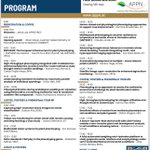
Please RT‼️ The Registration Deadline for the International Plant Proteostasis Conference is fast approaching (‼️10th of July‼️)
Where: @viennabiocenter
When: 17-20 September, 2024
Check out the program & register!!!
oeaw.ac.at/gmi/news-events/e…

Verena Ibl 🔬🌈🏳️🌈 retweeted

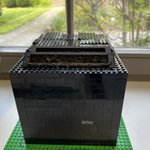
#3D printed autoclavable biocompatible #biodegradable bioreactor vessels... sciencedirect.com/science/ar…
Verena Ibl 🔬🌈🏳️🌈 retweeted

Probieren wir mal ein klimafreundliches Wochenende? Vieles davon sehr einfach. Aus @DiePressecom heute:

Verena Ibl 🔬🌈🏳️🌈 retweeted

Verena Ibl 🔬🌈🏳️🌈 retweeted

Unpopular opinion🚨
Half of the PlantBio folks flew to Hawaii for #PlantBio2024 @ASPB and the other half flew to Australia for @ipmb2024. Some fly from Hawaii to AUS to make both meetings.
International in-person meetings are important but can we coordinate them geographically?

Verena Ibl 🔬🌈🏳️🌈 retweeted

Exploring lipid-protein interactions in plant membranes academic.oup.com/jxb/article… @JXBot


Verena Ibl 🔬🌈🏳️🌈 retweeted

We are #hiring! Join the Dagdas Lab and Proteomics Technology Hub as a predoctoral student. Apply here: bit.ly/jointhegmi
#autophagy #lifesciences #research #europe

Verena Ibl 🔬🌈🏳️🌈 retweeted
🚨 Exciting Opportunity! 🚨 Our lab, in collaboration with @Karl_Mechtler, is seeking a passionate #predoc to join our research on #SingleCellProteomics and #Autophagy in #plants 🌱. Please RT to spread the word‼️ oeaw.ac.at/fileadmin/Institu…
Verena Ibl 🔬🌈🏳️🌈 retweeted

Lernen mit Künstlicher Intelligenz?🤔
KI macht auch vor dem Klassenzimmer nicht Halt. Grund zur Panik? Nein, sagen die Bildungsexpert*innen Barbara Schober und @faresK von der #univie. Sie plädieren dafür, die Chancen von KI zu nutzen. 💡
Mehr dazu: ⤵
rudolphina.univie.ac.at/kuen…
