

Disrupting criminal networks, saving species from extinction.
The Hague, Netherlands
Joined June 2015
- Tweets3.2K
- Following543
- Followers5.4K
- Likes4.9K




This week, governments voted to begin negotiations on a new protocol to the UN Convention against Transnational Organized Crime (UNTOC), paving the way for a stronger international response to environmental crime, including wildlife trafficking, illegal mining and waste trafficking.
The fourth protocol to the Convention would stand alongside those addressing human trafficking, migrant smuggling, and firearms trafficking, recognising the seriousness of organised environmental crime and the need for coordinated international action.
The Wildlife Justice Commission contributed evidence and expertise throughout negotiations in Vienna, highlighting the links between environmental crime, organised crime and corruption.
What happens next? A dedicated committee will negotiate the protocol over four sessions, creating an opportunity to strengthen legislation, improve cross-border cooperation and close the gaps that criminal networks exploit.
This is an important milestone. Now, the focus must be on turning this decision into meaningful action to disrupt criminal networks and protect wildlife.
#WildlifeWinOfTheWeek #WildlifeCrime #EnvironmentalCrime #UNTOC

Thai authorities seize 3.1 tonnes of ivory following intelligence provided by the Wildlife Justice Commission wildlifejustice.org/thai-aut… #Media releases #News

Wildlife Justice Commission retweeted

Wildlife trafficking, corruption and drug trafficking may have more in common than we think.
At #UNTOC13, we discussed how these crimes intersect in the Caribbean, with perspectives from governments, prosecutors and law enforcement experts.
Understanding these links can help uncover the wider criminal networks that threaten biodiversity, deplete natural resources and deprive coastal communities of livelihoods and income.

Wildlife Justice Commission retweeted

🐆 Is the illegal jaguar trade shrinking, or just is it a vanishing act?
The new Wildlife Justice Commission report released this month conducted an analysis of the jaguar trade across seven Latin American countries between 2023 and 2025. The results were compared with their investigation in 2019.
There are encouraging developments!
✅ In Bolivia, open trade has shrunk. Jaguar bone paste was easy to buy in 2019. This time investigators couldn’t source any.
✅ The data about trafficking in Bolivia, Colombia, Peru and Suriname is less encouraging though it may be that some traders have left the business.
✅ Evidence of international trafficking turned up in only two of the seven countries.
WHY THIS MATTERS: In the early 2010s, jaguar teeth and bones began moving to China. Jaguar bone paste is boiled down the same way as tiger bone paste and sold to the same buyers. As wild tigers grow scarcer, the fear is that the jaguar has become the stand-in.
🔍 A word of caution from those on the ground: finding fewer cases doesn’t necessarily mean less trafficking. To show a real decline, you’d need the same areas checked with the same methods and effort over time, and the 2019 investigation focused mainly on Bolivia. A quieter market may simply mean the trade is harder to detect, has moved elsewhere, or has shifted into private networks. Crediting law enforcement would also need evidence linking it to an actual drop in trafficking. In much of the region, enforcement remains weak.
⚠️ What the report contains that is cause for great concern:
* In Suriname, traders still cook jaguar bone paste for buyers in Asia. In Peru, an active network was found to be trafficking jaguar parts between Lima and Iquitos.
* Brazil has the most jaguars and also the greatest number of poaching incidents recorded. This issue was only minimally investigated. Mexico and Ecuador weren’t investigated at all.
* Live jaguars are now the most-poached “product,” primarily in Mexico.
* Recorded poaching and seizures from 2019 to 2025 account for at least 188 jaguars. This number is likely underreported, accurate records are likely incomplete.
Though the report offers valuable insight, the results are nevertheless cause for great alarm. The lives of jaguars are still endangered.
Much work is left to be done. 🌿
📄 Full report: wildlifejustice.org/publicat…
#GMFER #MarchAgainstExtinction #Jaguars #WildlifeTrafficking #LatinAmerica

Wildlife Justice Commission retweeted

Jaguars Under Threat: Inside Latin America’s Illegal Wildlife Trade
Jaguars are being killed for their teeth, bones and skins, while some are captured alive and sold into the illegal pet trade.
A new investigation across seven Latin American countries has exposed different markets for jaguar products, from local sales of skins and claws to international demand for bone paste and fang jewellery. Live jaguars accounted for 38% of the seizure records examined between 2019 and 2025.
Investigators found no evidence that captive breeding supplied the illegal trade, pointing to continued pressure on wild populations.
Watch the full video.
@CITES @WWF @TRAFFIC_WLTrade @PantheraCats @UNODC @WJCommission
#Jaguars #WildlifeTrafficking #IllegalWildlifeTrade #WildlifeConservation #EndangeredSpecies #LatinAmerica #Biodiversity #NWS
Thank you to @OCCRP for covering our latest report on the illegal jaguar trade in Latin America.

An investigation by the Wildlife Justice Commission (WJC) found that an opportunistic, small-scale trade persists across seven countries, while documenting specific international connections involving Peru and Suriname.
buff.ly/krjXAQl

So, what does the illegal jaguar trade look like today?
The Wildlife Justice Commission has published a new report providing an updated intelligence picture of the illegal jaguar trade in Latin America.🔍
Based on an investigation conducted between 2023 and 2025, the report compares current findings with our 2019 investigation in Bolivia to assess changes in the level and dynamics of the trade.
🌎The investigation covered Bolivia, Brazil, Chile, Colombia, Panama, Peru, and Suriname.
Read the report: wildlifejustice.org/publicat…

This week’s Wildlife Win of the Week comes from South Africa.
The Constitutional Court has dismissed an application by the South African Hunters and Game Conservation Association to have the animal well-being provisions in the National Environmental Management: Biodiversity Act (NEMBA) declared unconstitutional and invalid. The provisions stay in place.
Had the challenge succeeded, animal well-being would have lost its place in South Africa’s biodiversity law, the framework that governs how wildlife is managed, permitted and protected. Instead, the court has upheld provisions that took years of public participation, stakeholder engagement and scientific input to shape.
At the heart of the ruling is the recognition that wild animals are sentient beings, capable of physical, physiological and mental states that affect their quality of life. That means how animals experience their lives is a legitimate consideration in wildlife management and decision-making, not just their numbers or their commercial value.
The focus now shifts to implementation. Authorities will need to build animal well-being into permitting, oversight and enforcement, including finalising outstanding measures like the revised Threatened or Protected Species (TOPS) Regulations.
Link to article: southafricatoday.net/environ…

Wildlife Justice Commission retweeted

Thai authorities have seized a large quantity of ivory hidden in a timber shipment from Zambia, using intelligence shared by ECF grantee @WJCommission. This is Southeast Asia’s third major ivory seizure since August.
Learn more: bit.ly/4B237gM
📸 Thai Customs

🐢 This week’s Wildlife Win of the Week comes from Madagascar.
In March 2026, the Wildlife Justice Commission provided operational and intelligence support to Madagascar’s Ministry of the Environment and Sustainable Development who arrested three men and seized 167 radiated tortoises.
Madagascar’s Anti-Corruption Court sentenced one of the men, a high-level trafficker, to 10 years in prison and a second to five years. Both were also fined approximately USD 22,700. The third suspect was found not guilty.
The Wildlife Justice Commission would like to thank and acknowledge the great work done by the MEDD team who acted decisively and professionally to achieve this result.
Radiated tortoises are classified as Critically Endangered by the International Union for Conservation of Nature (IUCN). Yet illegal collection for the pet trade continues to threaten the species.
167 tortoises kept out of the illegal trade, an organized criminal network disrupted and two traffickers behind bars. Cases like this show what’s possible when civil society and law enforcement collaborate.
Sustained cooperation like this is key to disrupting trafficking networks, making wildlife crime a high-risk activity and helps to save species from extinction.
Link to article: lexpress.mg/2026/10/justice-…

Tortoise traffickers sentenced in Madagascar following Wildlife Justice-supported operation
Two wildlife traffickers have been convicted and sentenced in Madagascar following the seizure of 167 radiated tortoises in Toliara, in an operation supported by the Wildlife Justice Commission.
On 3 March 2026, officials from Madagascar’s Ministry of the Environment and Sustainable Development (MEDD) arrested three men suspected of involvement in an illegal tortoise-trafficking operation. The arrests followed a Wildlife Justice investigation into criminal networks trafficking protected tortoises from Madagascar to Asia. 🌍
Radiated tortoises are among the most iconic species native to southern Madagascar and are classified as Critically Endangered on the IUCN Red List. Illegal collection for the exotic pet trade remains one of the primary drivers of population decline. The species has also been listed under Appendix I of the Convention on International Trade in Endangered Species of Wild Fauna and Flora (CITES) since July 1975, providing the highest level of international protection from commercial trade.
The convictions remove two traffickers from the trade and deliver a significant financial and operational blow to the network, making wildlife trafficking riskier and less profitable.
Wildlife Justice will continue working with partners in Madagascar and across the region to disrupt the criminal networks threatening the country’s unique wildlife and help save species from extinction. 🤝
wildlifejustice.org/from-inc…

Another Wildlife Win of the Week coming from South Africa.
The Hawks — South Africa's elite police unit for serious organised crime — have arrested a fifth suspect in one of South Africa's most brazen wildlife trafficking cover-ups. Nguyen Huu Dong, manager of the Voi game lodge, is accused of staging a fake armed robbery in December 2025 to mask the illicit sale of 98 rhino horns; some of which had already turned up in shipments intercepted at Singapore's Changi Airport a month earlier.
Dong is also the cousin of Chu Dang Khoa, alleged head of a wider trafficking syndicate spanning South Africa, Mozambique, and parts of Central and West Africa, with routes into Southeast Asia. He now joins four other suspects already facing charges in the case.
This arrest is a real step forward. It starts to expose the network behind a single heist, not just the horns themselves. Cases like this show why sustained, cross-border investigation is so essential to holding these networks accountable.
Link to the article: dailymaverick.co.za/article/…

The illegal pet trade cannot exist without demand. That means everyone has a role to play in stopping it.
By refusing to buy wildlife, reporting content that promotes exotic pets, and raising awareness about the issue, you can help cut off the demand that fuels these criminal networks.
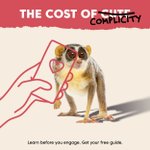
To help people better understand the issue and take meaningful action, we have developed a practical guide on how you can help fight the illegal pet trade. It provides clear, practical actions that everyone can take to help protect wildlife.
While we work to disrupt criminal networks at the top, you can help at the source by reducing the demand that keeps the trade alive.
Download our free guide. Take action.
#TheCostOfCute #EndWildlifeTrafficking #BePartOfTheSolution

🎙️ Podcasts are a powerful way to take complex issues beyond reports, conference rooms, and field investigations, and into conversations with new audiences.
Through our own podcast, Wildlife Kingpin, we explore the people, networks and investigations behind wildlife trafficking, bringing the realities of wildlife crime to life.
We’re also grateful to have been invited onto podcasts around the world to share insights from our investigations and discuss what it takes to disrupt the criminal networks driving wildlife crime.
🎧 Listen here:
🦈 BOAT Briefing: How sharks have become the money spinners of the sea: Olivia Swaak-Goldman’s fight against wildlife crime, 282 - lnkd.in/eSWuzwaX
🐒 Rewilding the World with Ben Goldsmith: Fighting organised wildlife crime with Olivia Swaak-Goldman, Fighting organised wildlife crime with Olivia Swaak-Goldman - lnkd.in/eecAi99F
🐢🦏 Wildlife Kingpin: Operation Dragon & The Rise and Fall of Ah Nam,Wildlife Kingpin - lnkd.in/ex7DQe9g
hashtag#InternationalPodcastDay hashtag#WildlifeKingpin hashtag#WildlifeCrime hashtag#WildlifeTrafficking hashtag#OrganisedCrime

Pangolins are the world’s most trafficked mammal, relentlessly hunted for their scales. A new feature from @NatGeo explores the threats they face, and the growing efforts to protect them.
Congratulations to Henry Wismayer and Marcus Westberg on a powerful piece, beautifully capturing these remarkable creatures, the threats they face, and the people working to protect them.
The Wildlife Justice Commission is proud to be part of this fight. Our intelligence has helped Nigerian authorities target the criminal networks driving the illegal pangolin scale trade, contributing to major seizures and arrests of high-level traffickers.
As Olivia Swaak-Goldman, Executive Director of the Wildlife Justice Commission, says in the piece: “What we’ve demonstrated is that this trade is not inevitable—it can be disrupted.”
Fighting to Save the World’s Most Wanted Animal nationalgeographic.com/anima… via @NatGeo

The illegal pet trade isn’t simply about individual buyers or sellers.
It is driven by organised criminal networks that move endangered species across international borders for profit.
At the Wildlife Justice Commission, we investigate these networks, identify the individuals responsible, and support law enforcement to bring them to justice.
Because behind the animals being kept as pets is often a much bigger criminal trade.
By targeting the criminals behind the trade, we help disrupt the networks profiting from the illegal pet trade, and work towards putting an end to the multi-billion-dollar industry driving it.
This is another side of The Cost of Cute: the criminal networks behind the wild animals people see as pets.

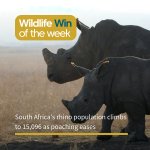
This week's Wildlife Win of the Week is from South Africa.
This World Rhino Day, South Africa's Department of Forestry, Fisheries and the Environment shared encouraging news: the minimum national rhino population was estimated at 15,096 animals at the end of 2025, comprising at least 2,565 black rhinos and 12,531 white rhinos, a 4.9% increase since 2024.
Poaching is also trending down. From January to August 2026, 230 rhinos were poached nationally, compared with 248 over the same period last year.
Despite this, the department was clear that the fight is not over. Every rhino lost disrupts breeding and population recovery, and a new National Rhino Conservation Coordination Committee is being set up to help lead future efforts.
A growing population alongside falling poaching numbers is a genuine sign of progress. It's a reminder that lasting progress depends on tackling the trafficking networks behind the trade, not just the numbers on the ground. Poaching doesn't happen in isolation; it's driven by organised networks that move horn from source to market across borders, and disrupting those networks is what will ultimately determine whether this progress holds.

The illegal pet trade starts with something simple: demand.
Across social media, wild animals are often portrayed as cute, exotic, rare, and desirable. But behind every photo is a brutal supply chain driven by profit—one that removes animals from the wild, so they can be sold as pets.
Animals are smuggled across borders, hidden in luggage, crates, and even in clothing. Many suffer injury, stress, or death during capture and transport. Those that survive are sold online or in markets, by criminal networks profiting from wildlife exploitation.
Lemurs. Turtles and tortoises. Tiger and leopard cubs. Orangutans. And countless other species are trafficked. If you can think of a species, someone is selling it and profiting from it.
They are not pets. They are wildlife, taken from ecosystems where they belong.
This is the Cost of Cute.
#TheCostOfCute #IllegalPetTrade #WildlifeCrime

In December 2025, 192 States Parties United Nations Convention against Corruption (UNCAC) adopted a landmark resolution, Resolution 11/9 on preventing and combating corruption as it relates to crimes that affect the environment.
Now, a new civil society guide developed by the Global Civil Society Coalition for the UNCAC (@uncaccoalition) Environmental Crime and Corruption Working Group, and its Chair, the Wildlife Justice Commission, breaks down these commitments and provides practical guidance on how civil society can support implementation, monitor progress, and contribute evidence and expertise.
Read the article and access the guide: lnkd.in/eFyJ9GiZ
#EnvironmentalCrime #Corruption #UNCAC
🦏 Today, we celebrate rhinos and the progress being made to protect them.
Rhinos have faced decades of pressure from poaching and the illegal wildlife trade, but there are reasons to look ahead with hope. In South Africa, rhino poaching has continued to decline, reaching its lowest level in 15 years in 2025.
Behind these numbers are the dedicated efforts of conservationists, communities, rangers, investigators and law enforcement agencies working to protect rhinos and tackle the threats they face.
There is still much to do, but every rhino protected is a step towards a future where these remarkable animals can thrive in the wild.
On this World Rhino Day, we celebrate the progress, the people behind it, and the work still ahead. 🌿
#WorldRhinoDay #Rhino #SaveTheRhino #WildlifeConservation #WildlifeJustice #WildlifeCrime

