

Once York Natural Environment Trust CIO - protecting green spaces in York, UK since 1988 died 2006
York, UK
Joined August 2012
- Tweets18.6K
- Following606
- Followers1.1K
- Likes5K







YNET retweeted

Damning report on ELMS from @WildlifeTrusts there, woefully inadequate funding and poor delivery results in poor outcomes that fall short of both need & targets to make nature recovery and food security work.

New work @WildlifeTrusts shows England’s nature-friendly farming schemes are chronically underfunded
If doesn't change, food, farm & ecosystem crises accelerate
£ is short but it's vital
@DefraGovUK @downingstreet @HMRCpressoffice
@LinesMartin
@ProagriLtd
wildlifetrusts.org/news/new-…

YNET retweeted

River Ouse in York at 1.34 metres, rising again later today. Last night's rainfall no longer looks enough to see 2 metres again this week.
A moderate spell of rain on Wed morning to keep an eye on but levels look most likely to stay on the high side of normal winter range 🐁
YNET retweeted
River Ouse in York at 1.03 metres and rising steadily. Levels near 2 metres are expected overnight.
After this, I'm predicting the final peak to be on Wednesday and slightly higher once the next batch of rain has fallen.
We will work towards a more concise flood prediction as the flood progresses. 🐭
YNET retweeted

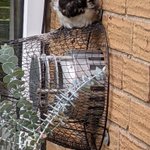
Go for a walk on almost any farm in Britain and ask yourself where a hedgehog might find food, water or shelter there. The rough edges, pockets of scrub, areas of unkempt long grass, piles of dead wood, marshy wet areas and ponds, all tidied away. There’s nowhere left for them.


YNET retweeted

Nonsense.
To suggest that badgers have 'mainly caused' a 97% decline in hedgehogs is a ridiculous assertion. Clearly and obviously the primary reason for their decline is human-driven destruction of habitat.

The decline of the hedgehog is mainly caused by the huge recent expansion of the badger population. In both time and place there is a strong negative correlation between badger numbers and hedgehog numbers.
The scientific evidence that an increase in Mr Brock may well be the chief cause of Mrs Tiggywinkle’s demise is overwhelming.
There’s the direct evidence – the hollowed-out prickle-bearing skins left behind after a badger eats a hedgehog. Only badgers can open a hedgehog after it rolls up in defence with prickles on the outside. Foxes and dogs cannot. Badger predation is often found to be the main cause of hedgehog death in studies in this country.
There’s the timing evidence. The decline in hedgehogs coincided with the rise in badgers since the latter’s protection began in the 1970s and was strengthened in the 1990s. Anecdotally, there are clear-cut cases to show this is likely to be cause and effect, not coincidence. Kew Gardens had a thriving hedgehog population until the mid 1980s when badgers first arrived there. Today, says the Royal Botanic Gardens’ website, “Kew is teeming with badgers”. There are now more than 20 badger setts and hedgehogs are hardly ever seen, and if they are don’t last long. Habitat change and development cannot be the cause in Kew, because there has not been any.
There’s the spatial evidence. Throughout England hedgehogs (great worm eaters) have vanished from worm-rich pastureland, where badgers thrive, and cling on only in suburban gardens and amenity grassland, where badgers so far have not penetrated much. Even here, as one study put it: “the probability of hedgehog occurrence in suburban habitats declined towards zero in areas of high badger density.” As a general rule, wherever badgers are present at a density higher than about one main sett every four square kilometres, hedgehogs are absent. In most of rural England, sett density is two or three times higher.
There’s the behavioural evidence. Back in the 1990s, ecologists discovered that the smell of badgers alone is enough to deter hedgehogs from entering an area. And hedgehogs released into areas of excellent habitat high-tailed it out of there if they smelt badger. They do not wait to be eaten.
There’s the international evidence. Sweden has also blamed its decline in hedgehogs on rising badger numbers. In the Netherlands, scientists reported this yearthat hedgehogs are now confined mostly to urban areas, despite roads and development, because of the spread of badgers in rural areas.
There’s the experimental evidence, which is the clincher. The randomized badger control trials, carried out between 1998 and 2006 in 30 different parts of the country, provided an opportunity to see what happened to hedgehog numbers if badger numbers were reduced.
In pasture land, where hedgehogs are mostly extinct, there was of course little effect. But in “amenity grassland” – parks, lawns, gardens, playing fields etc – there was a dramatic explosion in hedgehog numbers in those areas where badgers were culled: hedgehog density almost trebledfrom an average of 0.9 per hectare to 2.4 per hectare in just five years. By contrast in the control areas where no badgers were culled, the hedgehog density remained unchanged at 0.3 per hectare over the same period.
So we know one way to increase hedgehog numbers: reduce badger numbers. No other approach has been demonstrated to have such an effect. Given that badgers are highly effective predators of bumble bees (those who try to study bumble bees complain that most of the nests they find get dug out and eaten by badgers) as well as of ground nesting birds, and that they carry bovine tuberculosis, there is little doubt that lower badger densities would be good for the ecology of the British countryside as well as for farming.
There is nothing natural about the density at which badgers and foxes live in Britain today.
YNET retweeted
River Ouse in York at 0.54 metres and rising slowly overnight, picking up speed during Sunday.
We are working towards a peak (most likely on Wednesday, after Monday's rain) with levels expected to reach 2 metres+ 🐭
YNET retweeted

AGM-Wed 4th Nov 2026
7:30pm Heworth Methodist Church YO31 1AE
All welcome, an opportunity to find out about the activities of FoGG & how you can get involved, if you are interested in volunteering in Glen Gardens just come along we'd love to see you
#Heworth #York #LoveHeworth

YNET retweeted

Pah @lukejcr on @BBCLookNorth
blaming @YorkshireWater for all the pollution in the #RiverOuse
What about all the extra homes @UKLabour are allowing,forcing on thousands of #Greenfields they all add to the sewage problems.
Where will all the sh1t from #Heronby
#Langwith go ???
YNET retweeted
River Ouse in York at 0.31 metres and rising slowly, it's been a nice long hibernation.
Stormy weather has arrived with more wet spells over the next four days, I'm predicting the first flood of the season next week with levels reaching 2 metres+
Updates to follow 🐭
YNET retweeted

No Yorkshire Green Belt “Battlegrounds” identified in new housing study westfieldnewsfocus.wordpress…

YNET retweeted

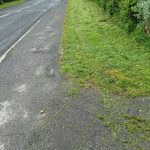
The 'great grid upgrade' before and after - saving the world by murdering tree after tree.


YNET retweeted
Good news!

BBC News - Coul Links golf course plan rejected again by Scottish ministers
Thankfully the world renowned Ramsar wetland site near Dornoch won't be disturbed by another U.S. funded golf course.
As for the cllrs involved in the council decision, well, at least they made their £££...
bbc.co.uk/news/articles/cqkg…

YNET retweeted
NOTHING is sacred (and East Anglia continues to get hammered)
- UNESCO Flyway bid
- RAMSAR, SPA, SAC
- The Chapel of St Peter-on-the-Wall (660AD)
Solar. The ENTIRE Dengie Peninsula.

YNET retweeted

Homes approved despite residents' wildlife concerns bbc.in/4ic3Rag

YNET retweeted
Man who used dogs to hunt and kill badgers jailed bbc.in/4k8wibG

YNET retweeted
They'll have to build a foot bridge for the students.
The doctors surgery #UnityHealth had to be moved on to #CampusEast as the students were not capable of crossing the 1079.
#HullRoad
It will be chaos if the UniOfYork Population does cross the very busy road
@CityofYork

People urged to have their say on new supermarket and York B&Q transformation ift.tt/Gxgty5N

YNET retweeted

💔Albania Bulldozers destroy
last untouched Delta in Mediterranean IN VJOSA-NARTA
Home to hundreds of bird species, endangered wildlife, migratory birds, sea turtles, and critically endangered Mediterranean monk sea
so Ivanka Trump can build 12,000 villas
instagram.com/p/DYM44LqDFuo/…
YNET retweeted
Major Hull Road supermarket plan submitted for former B&Q site westfieldnewsfocus.wordpress…

YNET retweeted

On 22nd September 1934 at Gresford Colliery, Wales, an explosion killed 266 men & boys underground. 6 survived and only 11 bodies were ever recovered.
The wages of all were docked by half a days pay by the owners because the men had 'failed to complete their shift.'

YNET retweeted
Mad to loose such a large area of good #AgriculturalLand
#RooftopsNotCountryside
Now #Heronby too.
@HaltHeronby
When will it all end, the greed of landowners.

Changes made to solar farm plans after opposition bbc.in/4hRMwon
