

Independent researcher | Tech, finance & policy | Hoya | Marathon runner
Joined April 2022
- Tweets201
- Following199
- Followers211
- Likes32




Bill's criticism of Nvidia's board reinforces my suspicion: Jensen Huang's departure may have much less to do with the scandal than we think. I suspect a deeper internal conflict had been building for years, and the scandal created an opportunity to resolve it.
Here's my reasoning.
1/ First, consider the board's behavior. Accepting Jensen's resignation amid a misconduct controversy is understandable. But quickly ruling out his return, even after he expressed willingness to come back, is harder to explain.
Why close that door so firmly?
2/ Second, consider how Nvidia's business has evolved.
$NVDA is no longer just selling GPUs. It is helping finance the AI infrastructure boom through investments, customer financing, and massive supply commitments.
This creates extraordinary growth opportunities, but also financial risks, which put huge pressure on Kress.
3/ Jensen's logic is understandable. But imagine being Nvidia's CFO over the past two years.
AI represents a historic opportunity. Secure supply, help customers build capacity, accelerate adoption, and capture market share before competitors catch up. In a technological revolution, excessive financial caution can be just as costly as excessive risk-taking.
But Kress is managing enormous procurement commitments, customer financing exposure, and increasingly circular capital flows. What looks like ecosystem expansion to Jensen may look like concentrated financial risk to the CFO.
4/ These tensions weren't purely theoretical.
Reuters reported that CFO Colette Kress and her team clashed with Jensen and Nvidia's sales organization over multibillion-dollar financing deals, including investments involving OpenAI and Lambda.
Here's my hypothesis:
For years, Jensen's exceptional track record gave him the authority to push through ambitious decisions, even when finance executives had reservations. But as the financial commitments grew, so may have the internal resistance to his approach.
If some directors had already begun questioning Jensen's risk appetite, the scandal would have presented an opportunity to change the leadership structure.
Not necessarily a conspiracy, but a power shift. This might explain why the board appears so determined to prevent Jensen's return. And Kress becoming interim CEO is interesting in this context.
Of course, there's an alternative explanation. The board may have information about Jensen's conduct that the public doesn't know.
But if my hypothesis is correct, we should eventually see changes in Nvidia's capital allocation, customer financing, and willingness to support aggressive AI infrastructure expansion. That's what investors should watch.

I believe the @nvidia board is not acting in the best interest of shareholders nor in a manner consistent with their fiduciary duties.
What we know is that the board fired Jensen or forced his resignation for violating company policy and/or in response to the accusation of an affair with a spy.
They did so without careful consideration of the impact on the company, its customers, its shareholders or other stakeholders.
They rushed to judgment without the benefit of careful due diligence or even with a basic understanding of the facts.
How do we know this?
We know this by how quickly Jensen was fired and how little was known at the time of his firing.
It takes time to convene a board meeting. There was time, maybe, for one Zoom.
And this is a decision that should have been made by a board sitting in person and carefully deliberating the facts once they are known.
And they should have slept on the decision and met again the day after to discuss the facts, the risks and the other implications of their decision.
The timing and lack of information did not allow for careful board deliberation.
While boards can fire a CEO for an inappropriate relationship with a subordinate, it should not be an automatic decision. That is why we have boards comprised of humans and not agents.
A board should consider whether or not such a relationship was consensual or whether it was an abuse of power dynamics. And a board has to consider what the impact of the firing is on all stakeholders.
If I were in this board, I would not have rushed to judgment based on articles in the media. I would have made sure the board had all of the facts so it could make a careful and informed decision.
Boards of Delaware companies have a duty of care which means they must make informed, prudent and good faith decisions. This clearly did not happen here.
What law firm is advising this board?
Or is the board even taken good legal advice?
It doesn’t look like it.
And now the board is compounding its failures by insisting that there is no possibility for Jensen’s return as CEO.
Why is it in the best interest of the company to foreclose the possibility of Jensen’s return and to do so before all of the facts are known? This is yet another breach of their duty of care.
Furthermore, the board has launched an investigation whose scope is unknown. Investigations can be extremely damaging to a company and should be carefully targeted to address whatever facts need to be known rather than be overly broad in scope.
In short, this looks like a series of major governance failures by directors that panicked due to headlines in the media. They likely felt compelled to do something because they were afraid of looking bad in the media, not because it was the right thing for them company.
They couldn’t stand the heat.
The board’s conduct here is shocking for a company of this scale and importance to our country and the world at large, particularly at this moment in history.
1
239
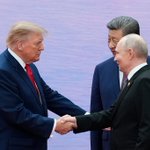
APEC Day 1: Trump, Xi and Putin shared a rare stage, projecting a sense of cooperation.But behind the diplomatic optics, a different story is unfolding.
Regional leaders are pushing for broader AI adoption and digital trade, while the US is tightening controls on access to advanced computing power through overseas data centers.
Malaysia offers an early clue. As billions flow into its AI data center industry, the country is considering rules to track GPU imports and electricity consumption.
It’s also seeking clarity on US restrictions covering third-party compute services. The question is no longer just where AI chips go, but who ultimately gets to use them.
I think a new policy landscape may be emerging: more openness in AI applications and digital trade while more licensing, scrutiny and restrictions around frontier compute. Not full decoupling, but a more conditional form of tech globalization.

1
184
Dario’s narrow geopolitical view could cost Anthropic $ANT far more than just the Chinese market. I believe this is one of Anthropic’s biggest self-inflicted strategic risks, one that could ultimately undermine its valuation, as I argued in my previous article.
Chinese companies with global operations, like ByteDance, may also choose to avoid Claude in their overseas businesses. And that effect could ripple through their global customers, partners, and ecosystems. The real cost isn’t just the market Anthropic excludes. It’s the much larger network of potential users it may never reach.

Your AI hates Whites & Asians, especially Chinese, heterosexuals and men.
This is misanthropic and evil. Fix it.
Frankly, I don’t think there is anything you can do to escape the inevitable irony of Anthropic ending up being Misanthropic. You were doomed to this fate when you chose your name.
The Name of the Wind.
128
Josivan Yan retweeted

I believe the @nvidia board is not acting in the best interest of shareholders nor in a manner consistent with their fiduciary duties.
What we know is that the board fired Jensen or forced his resignation for violating company policy and/or in response to the accusation of an affair with a spy.
They did so without careful consideration of the impact on the company, its customers, its shareholders or other stakeholders.
They rushed to judgment without the benefit of careful due diligence or even with a basic understanding of the facts.
How do we know this?
We know this by how quickly Jensen was fired and how little was known at the time of his firing.
It takes time to convene a board meeting. There was time, maybe, for one Zoom.
And this is a decision that should have been made by a board sitting in person and carefully deliberating the facts once they are known.
And they should have slept on the decision and met again the day after to discuss the facts, the risks and the other implications of their decision.
The timing and lack of information did not allow for careful board deliberation.
While boards can fire a CEO for an inappropriate relationship with a subordinate, it should not be an automatic decision. That is why we have boards comprised of humans and not agents.
A board should consider whether or not such a relationship was consensual or whether it was an abuse of power dynamics. And a board has to consider what the impact of the firing is on all stakeholders.
If I were in this board, I would not have rushed to judgment based on articles in the media. I would have made sure the board had all of the facts so it could make a careful and informed decision.
Boards of Delaware companies have a duty of care which means they must make informed, prudent and good faith decisions. This clearly did not happen here.
What law firm is advising this board?
Or is the board even taken good legal advice?
It doesn’t look like it.
And now the board is compounding its failures by insisting that there is no possibility for Jensen’s return as CEO.
Why is it in the best interest of the company to foreclose the possibility of Jensen’s return and to do so before all of the facts are known? This is yet another breach of their duty of care.
Furthermore, the board has launched an investigation whose scope is unknown. Investigations can be extremely damaging to a company and should be carefully targeted to address whatever facts need to be known rather than be overly broad in scope.
In short, this looks like a series of major governance failures by directors that panicked due to headlines in the media. They likely felt compelled to do something because they were afraid of looking bad in the media, not because it was the right thing for them company.
They couldn’t stand the heat.
The board’s conduct here is shocking for a company of this scale and importance to our country and the world at large, particularly at this moment in history.

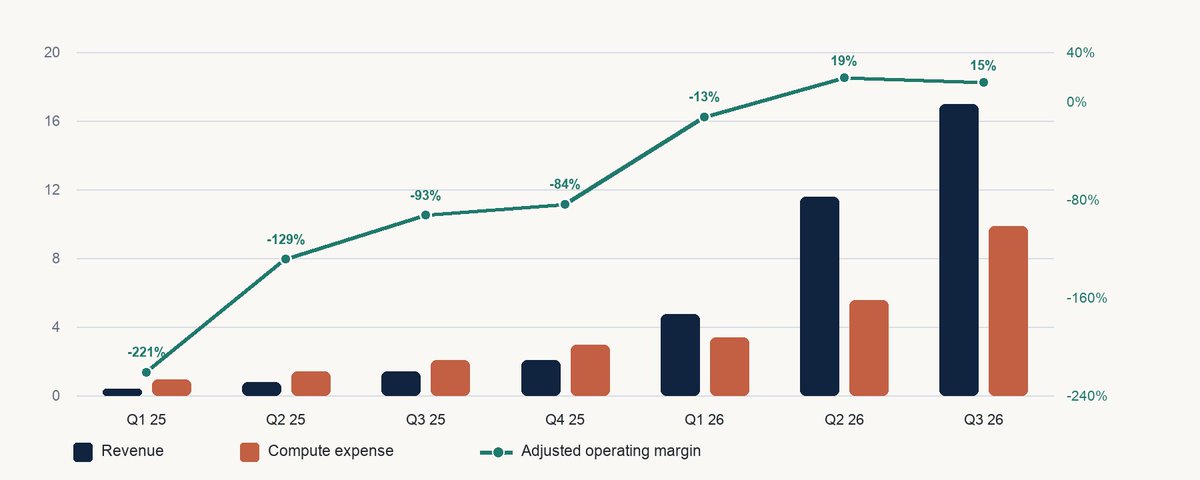
Back in October, Anthropic($ANT ) was being discussed at more than $2T. The IPO now points to about $1.4T.
After reading the prospectus, I changed part of my view. I was too cautious about the business. Claude’s growth, enterprise adoption, and improving economics make $1.4T more defensible than I expected.
But I have not changed my mind about the two long-term risks.
Anthropic’s China restrictions now follow corporate ownership across borders. At the same time, it is asking governments to preserve a US technological lead before negotiating global limits. Public shareholders will have very little power to alter either strategy.
I combined my two earlier pieces, updated the numbers, and tested the argument again

Before Anthropic’s $ANT IPO, I returned to two arguments I made in October: that “Pace the Frontier” could spark a new AI Cold War, and that Anthropic’s China policy could eventually weigh on its valuation. I combined the two and tested here.
109
Before Anthropic’s $ANT IPO, I returned to two arguments I made in October: that “Pace the Frontier” could spark a new AI Cold War, and that Anthropic’s China policy could eventually weigh on its valuation. I combined the two and tested here.

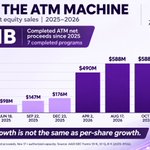
$AAOI’s ATM offerings are turning the stock market into its own ATM. To me, investing in $AAOI is a total losing game.
Another $550M ATM offering, after completing roughly $1.7B in ATM raises in 2026 alone and seven completed ATM programs totaling approximately $2.11B in net proceeds across 2025–2026.

1
206
Jensen Huang offered to return. $NVDA’s board shut the door on the earnings call. Now rumors range from joining Terafab to launching his own chip startup.
I’m skeptical for following reasons:
1/ Nvidia is far more than chips. Its ecosystem cannot simply be rebuilt, even by Jensen.
2/ His financial interests remain deeply tied to $NVDA. Why compete with what he built?
3/ A new company wouldn't erase the scrutiny surrounding his exit. If those issues are resolved, a return to Nvidia would arguably make more sense.

1
3
204
$AAPL has been the stronger party in supply chain negotiations. Such long-term agreements are rare, and I think this at least means they don't expect memory prices to drop in the short term. Long $MU $SKHY for sure.

Apple $AAPL is reportedly nearing a 4-5 year DRAM supply agreement with Samsung, with deliveries beginning in H1 2027.
The proposed deal would guarantee minimum purchase volumes, while prices would adjust with market conditions rather than being fixed.
Apple has reportedly already signed a long-term agreement with SK Hynix and is believed to have similar arrangements with Kioxia and other suppliers.

169
One thing stood out in $NVDA’s latest earnings report: almost no guidance on its China business.
1/ All parties are still figuring out how the latest BIS restrictions will work. While some exceptions remain, using them could be complicated, with much stricter compliance requirements.
2/ Many assume Chinese companies and the central government have the same interests. That’s not always true. Replacing foreign technology with domestic alternatives remains a key policy priority.
3/ Chinese companies still have strong demand for $NVDA chips, and Huawei and Cambricon may struggle to meet that demand in the short term. Even Unitree faced public criticism for using NVIDIA technology.
Chinese tech companies may suffer in the short term, while domestic chipmakers could benefit in the long run.
The U.S. has now moved to restrict China’s remote access to advanced $NVDA chips. This is a significant development for the argument I made in my article earlier today.
I argued that Jensen Huang’s departure could hurt China’s AI companies while helping Beijing achieve something it had struggled to do itself: push those companies away from Nvidia and toward domestic chips.
The problem for Beijing was that Chinese firms could still rent Nvidia computing power from overseas data centers, particularly in Southeast Asia. Washington is now moving to close that route.
Three updates to my earlier analysis:
1. The policy risk is now real. I wrote that Washington was more likely to restrict overseas GPU rentals. The rule has now been announced. Covered data centers seeking to continue existing services will need licenses within 90 days of the rule taking effect.
2. The split between Chinese AI developers and Beijing matters even more. Companies such as Alibaba and ByteDance have relied on overseas computing capacity. Restricting that access could slow their model development while increasing demand for Huawei and other domestic suppliers.
3. One qualification is important. This is not a complete ban on Chinese access to overseas Nvidia chips. The rules have specific thresholds, licensing procedures and exceptions. We still don’t know how much existing computing capacity will actually become unavailable.
My broader conclusion hasn’t changed: what’s bad for China’s leading AI companies can still advance Beijing’s industrial policy. But there is a limit. More domestic chip orders do not automatically mean more competitive AI computing power. Huawei still faces capacity constraints, and replacing Nvidia’s hardware and software ecosystem takes time.
1
1
126

I went through $NVDA's Q3 to see what people question most about its quality. Three worries keep coming up.
1/ Margins. Gross margin was 74.8% in Q3 and is guided to 71-72% for Q4, a dip Nvidia flagged back in August. Kress said supply costs rose sharply during the quarter while Nvidia honored orders already booked. She called Q4 "our bottom" and guided 72-73% for next year. Gross profit still rises about 7% at the midpoint, but 75% isn't coming back soon. My guess is memory makers are taking a bigger cut of each rack.
2/ China. Licensed Hopper sales to China were $2.4bn in Q3, and Nvidia has stopped shipping them. That's 2.1% of revenue and already out of the $130bn guide. The bigger unknown is the new Commerce rule on data centers abroad renting to Chinese firms. That exposure sits outside Nvidia's China line, and Nvidia says it is still studying the rule.
3/ Concentration. Hyperscalers are about 56% of data center revenue, bought 23% more than last quarter, and are raising 2027 budgets. Sovereign AI revenue more than tripled. The fair worries are in-house chips, which Kress didn't address, and that much of the other demand leans on Nvidia's own balance sheet: $32bn of neocloud commitments and $118bn of guarantees.
230
$NVDA just posted $115.8bn in revenue for the quarter, up 103%, guided to $130bn for the next, and raised its outlook for next year.
Vera Rubin brought in nearly $20bn in its first quarter. Demand is there. What this selloff repriced is money: who can still raise it, and at what price.
1) At the top, money is plentiful. The five hyperscalers have sold more than $370bn of US investment-grade bonds this year, about a fifth of a record $1.88tn.
• $META sold $35bn of stock and convertible preferred and plans to raise about $60bn more.
• $GOOG sold $12.4bn of new shares,
• $ORCL raised $20bn (half in stock)
• $ANT is raising up to about $90bn around its listing. Spreads are 50bp wider this year, so the money costs more, but these companies can still get it.
2) At the edge, money is scarce and dear.
• $CRWV 's 2031 notes fell to about 82 cents, a yield of roughly 15% to 16%.
• $NBIS dropped a planned junk bond. IREN still has $6bn of capex to finance "subject to market conditions,"
• Nscale is weighing a delay to its listing after $MSFT passed on a 700MW expansion in Texas.
3) $NVDA is choosing too. On Tuesday's call, interim CEO Colette Kress said it will be "disciplined and selective" in backing neoclouds, that buyers below investment grade must show "solid offtake," and that its $32bn of neocloud commitments start only once a neocloud has its own financing in place.
• Its biggest backstop, $105bn of credit support, sits behind a 20-year lease to OpenAI.
• For neoclouds, the call was still good news. The worry going in was that $NVDA, under a new CEO, would slow its support. Kress said it will keep backing them, and that its chips remain "fully utilized across every hyperscaler and neocloud we serve."
Vera Rubin racks are already running at CoreWeave and Nebius, alongside Google, Microsoft and Oracle, and neocloud stocks led the after-hours bounce.


127
Josivan Yan retweeted

Over the past week, I’ve been overwhelmed by the love and support of friends, industry colleagues, and people I've never met. Thank you to everyone who has shown kindness to my family and me. It means the world to me.
I came to the United States 53 years ago, and becoming an American citizen is one of the greatest gifts and proudest moments of my life. NVIDIA has been my life’s work. Building it into the company it is today alongside my colleagues has been a privilege and an honor. Nowhere but in America could a company like NVIDIA be possible. I love our country, and I love NVIDIA.
I did not live up to the standards expected of everyone at NVIDIA, and I have made serious mistakes in my personal life. I created problems for the Board that I deeply regret. I own my mistakes completely, and I am committed to cooperating with the Board’s independent investigation.
Since my departure, I’ve seen an outpouring of calls from NVIDIA’s employees, investors, business partners, and customers for me to return as CEO. Many continue to reach out to me directly as the company navigates complex technology, market, competitive, and geopolitical dynamics. NVIDIA is a once-in-a-generation company. If the Board of Directors decides that my return is in the best interest of our shareholders, our employees, the company, and America, I would be honored to answer these calls and return as CEO.
Thank you again to everyone who has shared their good wishes. I am profoundly humbled by your support. To my family: I love you, and I will spend the rest of my life being worthy of yours.
Jensen