

Motivating, inspiring, and encouraging others to live their best life!
Forest Alliance Coaching
Joined March 2014
- Tweets496
- Following230
- Followers98
- Likes1.1K





Dr. Jill Lam retweeted

A 14 year old opens fire in school, killing 4 and injuring at least 9 others. He will be tried as an adult, but that doesn’t help the families who lost a child this morning. It doesn’t help those fighting for their lives. It doesn’t help us as a nation. Good lord, a 14 year old with a gun who opens fire!
My fellow Americans, can we not come together on this issue? Can we not put aside our politics and save ourselves,our children, and one another?
A child with a gun, killing other children.
May this stop everyone in their tracks. May this kind of violence stun and horrify us all. May we all recommit ourselves to solving this crisis. Yes, it’s a crisis for all of us, not some of us. All of us! #endgunviolence

Took this picture recently on my dad’s 85th birthday. Although his hearing is a little impaired (hearing aid help), he still is quick witted and funny. I am in awe of all the things he has accomplished and experienced in his 85 years of life. I hope to be as blessed as him!

1
28
Fantastic night with @MoRocca! I can’t wait to read his book, ’Roctogenatians’ and get inspired to achieve my dreams! Now I need to decide which dream first!

1
37


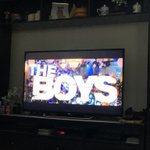
So happy- The Boys are back!!! This is such a great escape from the stress of helping my clients work through their trauma, depression, and anxiety all day. #theboys @therealKripke @TheBoysTV

1
112


My favorite… My friends…

J.R.R. Tolkien's quotes are cultural touchstones that reflect Tolkien's deep understanding of human nature, the importance of courage, hope, and the enduring power of good.
Here are 15 of his most memorable quotes! 🧵⤵️

ALT Gandalf proves that Frodo's Ring is the One Ring by throwing it into Frodo's fireplace, revealing the hidden text of the Rhyme of the Rings. By Peter J. Yost - Own work, CC BY-SA 4.0
1
1
130
My sister Julie and I are blessed because we got to meet a couple of our favorite authors over the last few days—@LisaScottoline and @HarlanCoben. Now we have 2 new books to read in our Fellowship of the Fiction Book Club.


1
9
Dr. Jill Lam retweeted
We all have the right to voice our opinions, but let us strive to do so with dignity and respect. #abovethenoise


Dr. Jill Lam retweeted

Marcus Aurelius was born on April 26, 121 AD, in Rome.
Here are some of his most famous quotes
a 🧵
1. "When you arise in the morning, think of what a precious privilege it is to be alive - to breathe, to think, to enjoy, to love."

Dr. Jill Lam retweeted
Can you figure out this week’s brain teaser? Don’t overthink it! You’ve got this! Remember, your brain is your greatest asset, so it deserves this time and attention. To feed your brain while supporting Alzheimer’s research, make sure to check out @mosh_life and eat some of our plant based bars! And, to learn more about your brain and all that we can do for our brain health, make sure to follow @womensalz. 🧠 #brainteaserfriday

Dr. Jill Lam retweeted

Known for its potent anti-inflammatory effects and powered by Curcumin, Turmeric is a safe, natural remedy that soothes inflammation and promotes overall wellness. I recommend incorporating turmeric into your diet for a healthier you. 👏
Dr. Jill Lam retweeted
Thread on the beauty of wildlife 🧵
1. When it’s cold enough to see the melody

ALT 📸 Mikhail Kalinin
All I can add is YEP

Using ‘evidence based’ approaches to reading aren’t having the effect expected - reading levels are not improving.
I wonder if this is because education has (many) fundamental differences to medicine. In medicine, the aim is to restore health, to cure a disease state. It is possible for a drug to work for everyone and for there to be a massive leap forward. It is even possible for an illness to be more or less eradicated through vaccines and other measures.
Education is very different. There’s no disease and we aren’t restoring children to a healthy baseline. Child development is highly variable and is a factor which enormously affects educational outcomes. No matter how good your teaching, many four year olds aren’t yet able to learn to read and many six year olds aren’t yet able to sit and listen for extended periods. Young children have different strengths which often aren’t measured by research studies.
And of course the other factor is that educational success is assessed competitively. Being a ‘good reader’ means reading better than others of your age. It’s simply impossible for all to succeed by this metric. Not everyone can be at the top. No matter how evidence based the education they are receiving.
theconversation.com/schools-…
6


Been on a quest for 20 years to help make school emotionally and physically safe for all children.
Whenever I talk about the downward spiral which some young people get caught in at school, someone says ‘Well I’m more concerned about those who are choosing to behave and whose learning is being disrupted’.
It’s a neat semantic trick, which positions the children for whom things are going wrong as those who are ‘choosing to misbehave’. Essentially, it defines them as ‘bad’, and so we don’t have to worry about them. It’s a particular way of seeing young people – those who are doing well at school are choosing to do so, whilst those who are doing badly are choosing that too. Interventions are focused on converting the second group into the first group – let’s just make them choose differently with the use of sanctions.
If this is the case, then this begs the question – why would anyone choose to be the one who does badly? Do we really think that some kids set out to be failures at school, by choice? Would we apply the same logic to academics, are those who are slow to read choosing to be so? Or those who really struggle with maths, is that a choice? We know from the research that by age 7, children are already aware whether they are considered to be ‘clever’ or not, and it bothers them. I’ve met young children who tell me that they are stupid and they’ll never catch up – so there’s no point in trying. Did they choose that?
Behaviour is something which young people are learning, just as much as English or Maths, and it’s also something for which capacity develops at different rates, just as much as English or Maths. We know that teenage brains are developing until age 25, and that they are particularly developing the ability to self manage and work towards a future goal. This happens at different rates, just like any other aspect of child development.
If a young person’s behaviour is challenging, then how adults respond makes all the difference. If we write them off as ‘choosing to misbehave’ then we’ve stopped being curious as to what is going on. We’ve stopped looking for reasons, and for some of those young people that means they go into a downwards spiral. We can say that that doesn’t matter – or we can try to do things differently.
Someone who has written extensively about this and carried out research is Dr Ross Greene, livesinthebalance.org. He works with the most challenging young people. His ethos is that kids do well if they can. If they can’t, then it’s up to us to work with them to work out the reasons why.
22