

professor @ualbany, @rockefellercoll. phd @umichecon, @fordschool. (linear) models and bottles.
Albany, NY
Joined January 2014
- Tweets14.9K
- Following2.1K
- Followers7.8K
- Likes132K






Pinned Tweet
1/6
I've somehow made it 1 year through my pre-doc position without getting fired. To celebrate, I'll share a little write-up I made for those just starting. Recent grads and #EconTwitter might find it helpful. This is based on my specific experience.
drive.google.com/open?id=16e…


Alvin Christian retweeted

🚨 We launched the Stanford Childcare Model, estimating supply and demand in the early care and education market, with a dashboard comparing effects of several different childcare policies. We hope it's useful to those working on childcare affordability, access, and quality! 🚨

🚼 For too many American families, finding #affordablechildcare is a serious problem. With policymakers across the country looking for solutions, @SIEPR's new Stanford Childcare Model helps them evaluate the effects of key reforms. Check it out: siepr.stanford.edu/policymod…


Alvin Christian retweeted

Howdy, y'all. I'll be reading (and writing about) new NBER WPs in health, labor, and public economics every week in an effort to keep myself up to date. Follow along if you like. For my first post, I re-re-visit "Are Recessions Good for Your Health?" 1/6
equimarginalprinciples.subst…
Alvin Christian retweeted

Because part of the reference letter is costly signaling - that a busy person is taking time out to think deeply about why they recommend a particular student. That signal is now gone - dare I say even negative.
Second - I’m just tired of Claude speak. Can spot it a mile away and so the letter is less distinguished from all others that sound the same.
This is important enough that I’m paying attention to substance - but the tradeoffs are not worth it IMO!
Letter writer is senior faculty and native English speaker so many traditional reasons why this would be ok also don’t apply.
Alvin Christian retweeted

I keep seeing people run all sorts of documents through Pangram and get outraged when they come back as AI-positive. I feel like I’m starting to lose sight of what we’re trying to achieve here. Is the outrage always warranted? 1/
Alvin Christian retweeted

Officially Conditional Accept (Data) at the American Economic Review!🎉
I'm very grateful to the editor and referees for making the paper better and to everyone who supported me throughout.
Domestic violence research is back in the AER, 16 years after Aizer (2010)!
Paper in a nutshell: When the husband profits from his wife’s labor, physically hurting her costs him. After a coffee mill opening, women in the mill catchment areas are less likely to self-report domestic violence relative to the year before. Within the year, hospitals in the mill catchment areas are less likely to have a domestic violence patient in the peak harvest months, when the mills operate and that cost is likely to be highest. The results align with Becker’s (1968) economic model of crime: There is a cost. There is a benefit. If the cost outweighs the benefit, violence falls.

Alvin Christian retweeted

With tuition rising and jobs disappearing, college just isn’t paying off like it used to.
“The number of rejections you face in a world where AI screens workers, and many applicants are mass applying via AI, would spin the heads of someone who graduated five years ago.” — @mikemadowitz
cnbc.com/2026/10/15/student-…

Alvin Christian retweeted

Excited to see this VoxEU article about my new working paper in print! Check this out for a more accessible summary of the NBER working paper along with a write-up of how this fits into today's policy landscape.

Here, there, and everywhere: Remote work and the employment of disabled and older workers in the UK
Ian Burn @LivUni, Melissa Gentry @USouthFlorida, Joanna Lahey @TAMU
ow.ly/K4rg50ZZc8C

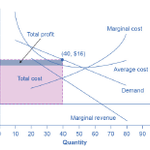
the marginal cost for applying to jobs is too low

Jack Weis has applied to more than 2,300 jobs since he graduated from Princeton in 2024 with his Ph.D. in chemical engineering. He still doesn’t have a job. on.wsj.com/4sfxSLc

Alvin Christian retweeted

“The Long Division: How the Politics of Education Became Partisan” is in press!
Tentative publication date: March 22, 2027
Pre-order here: global.oup.com/academic/prod…
Here’s a preview of the argument (followed by a long list of people to thank!):

Alvin Christian retweeted

On AI in economics, from r/academiceconomics (mostly grad students and early career)


Alvin Christian retweeted

📢 #EdWorkingPapers: Studying NYC’s Discovery Program, which reserves exam-school seats for disadvantaged students, Michael Darisse finds offers raise math scores despite a short-lived GPA dip, with little to no achievement cost for displaced students.
📄 bit.ly/3TJtyHa

Alvin Christian retweeted

New research: Does AI accelerate the “rat race” at work?
This paper considers that question in light of empirical evidence that suggests AI is intensifying work, and tries to unpack some of the relevant economic forces within a simple theoretical model.
1/

Alvin Christian retweeted

🚨 Public good alert: I put together a list of 100+ free datasets for social science research, spanning a large number of topics.
I hope it's useful for students, researchers, and anyone looking for interesting data to explore.
Contributions are welcome! github.com/toddrjones/datase…

Alvin Christian retweeted

New, from me, a slightly experimental project I've been working on: School Staff Shortages and the Wider Labor Market shortages.paul-bruno.com/
A sort of dashboard trying to put common conversations about school staff shortages into more context.


Alvin Christian retweeted

If you haven’t been following along, OBBBA eliminated Grad PLUS — the biggest shift in graduate financing in two decades.
Grad PLUS had real costs: uncapped borrowing, escalating prices, taxpayer losses. But it also extended credit to students with limited credit histories unlikely to receive loans from private lenders.
New primer with @bethakers outlines the challenges of financing graduate education in the post–Grad PLUS era. There are opportunities for market innovation, but also real risks that students with thin credit — even in high-ROI programs — may struggle to find financing.
aei.org/wp-content/uploads/2…