
Director of Global Strategy @ODI_Global Fiscal economist working on international and public finance. Views my own
Joined July 2015
- Tweets1.2K
- Following903
- Followers1.1K
- Likes1K
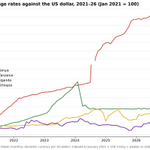
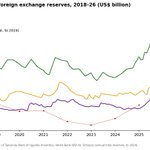
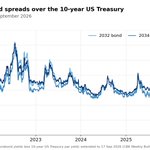
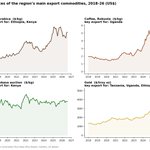
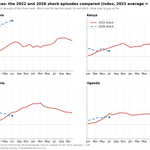
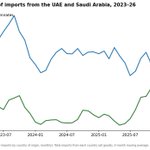
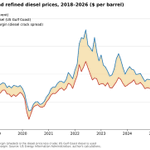
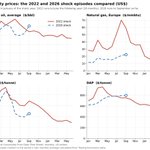

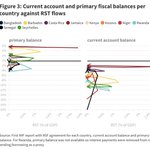
A thread looking at East African economies and how impacts of Middle East conflict compare to fallout from Russia Ukraine war in 2022....
On the face of international benchmark prices, the commodity shock seems more mild this year.

Central banks have not come under the same pressure to depreciate currencies, which can further amplify the rise in prices of imported commodities.

2022 saw a commodity shock and a shock in financial markets compounding those pressures.
So far 2026, the main risks have been around continued supply of diesel.
More analysis - also on the debt burden and fertiliser in the full version theexternalaccount.com/p/the…

Mark Miller retweeted

"For many lower-income countries the energy constraint is not capital but the capacity of the economy to absorb it: to earn the forex that the imported hardware & the obligations attached to it, will eventually have to be paid in." @_miller_mark
theexternalaccount.com/p/pus…

Mark Miller retweeted

And the links are up!
Featuring James C. Scott, @ashley_pople and @gamblingondev on anticipatory cash transfers (and me!), @_miller_mark and @AsthanaRoli on global securenomics, @m_clem and @PennyG_Yale on migration and much more!
cgdev.org/blog/economics-mar…

Mark Miller retweeted
🧵,📜:
What if there was a way to deliver foreign aid that solves three big problems: that humanitarian aid arrives too late; that climate adaptation aid is spent on activities of iffy effectiveness; and that far too little aid runs through local actors.
Well there is. Read on.
Mark Miller retweeted

1/ @_miller_mark & I draw lessons from @RachelReevesMP’s #securonomics to reconnect with developing countries. “International securonomics” can foster growth in other countries while boosting jobs and #economicsecurity at home
@ODI_Global odi.org/en/insights/learning…

Mark Miller retweeted

The tampon tax is an ineffective distraction from policies to close persistent gender gaps.
Instead we need policies that address underlying causes of inequality.
Read more from @hazelgranger_1 & @LauraAbramovsky in part 5 of our gender finance series.
buff.ly/3Y0gGMG
Mark Miller retweeted

This is one of the thought-provoking pieces I've read lately on how China manages its economy, and why it ultimately creates more value for society overall.
asiatimes.com/2024/07/chinas…
Essentially the author - the mysterious Han Feizi (a pseudonym) - argues that the West looks at value creation primarily through the length of profitability and market capitalization, whilst China looks at it from a consumer and externalities standpoint.
He explains this through a couple of examples. For instance solar panels, pointing out the fact that "America’s First Solar recently became the most valuable photovoltaic company" whilst "cutthroat competition in China destroyed margins".
So which country created more value with regards to solar panels? Well, the author argues, "the fact that China’s photovoltaic companies are slaughtering each other by flooding the world with cheap solar panels is prima facie evidence of stunning policy success and value creation".
Why? Because ultimately the value for society is to have lots of solar panels at very affordable prices, not trillion-dollar market-cap stocks... Much like "what we want from the butcher, the brewer and the baker are beef, beer and bread, not for them to be fabulously wealthy shop owners."
In fact, the author argues, mega-cap valuations indicate that something has gone seriously awry. Do we really want tech billionaires or do we really want tech?"
Same thing with EVs: the US ends up with Tesla which has a US$788 billion market cap, whilst China ends up with a huge ecosystem of over 250 EV models to choose from (the largest player, BYD, has a $93 billion market cap) in an insanely competitive environment. Ultimately Chinese companies sell way more cars than Tesla, they're much more innovative and, more importantly, we end up in a situation where close to 60% of cars sold in China are EVs, whilst in the US that's only 7%... So which system created more "value"? 🤔
As "Han Feizi" cheekily writes: "This writer thinks stupefied fanboys would be better off worshipping Elon Musk a little less and demanding affordable cars a little more, but that’s just my opinion." 🎯
And then there are externalities, which the author rightly says is the "more significant outcomes of industrial policy" in terms of value creation.
When it comes to EV, externalities include "weening China from oil imports and lowering particulates and CO2 emissions". And when it comes to cheap solar panel prices they include "significantly lowering the cost of energy for the Global South with massive geopolitical implications". Isn't that value-creation? Of course it is, but that's not captured in a company's EBITDA or market cap...
In the end this piece makes us go back to first principles: what is economic success, what is value creation? Maybe, just maybe, it's the approach that delivers the most tangible improvements in people's lives, instead of trillion-dollar companies and billionaire CEOs 🤷

Mark Miller retweeted

The new UK govt must seize the chance to redefine the UK's global role.
From sharing the benefits of #green growth to reframing the #migration question, @_miller_mark & I pick out 4⃣ ways @UKLabour can rebuild trust & reconnect Britain at home & abroad.
odi.org/en/insights/how-a-ne…

Peter's full post is well worth a read on this

Are financing embargoes by the IMF/World Bank the right response to Ghana’s Anti Gay legislation?
My answer: “Absolutely not” …
… is nicely excerpted here on BBC World Service Radio..
bbc.co.uk/programmes/w3ct5z6…
.. and is fully elaborated here.
retepelyod2.wordpress.com/wp…

Mark Miller retweeted

Are financing embargoes by the IMF/World Bank the right response to Ghana’s Anti Gay legislation?
My answer: “Absolutely not” …
… is nicely excerpted here on BBC World Service Radio..
bbc.co.uk/programmes/w3ct5z6…
.. and is fully elaborated here.
retepelyod2.wordpress.com/wp…


