

Making governance work for citizens...
Abuja, Nigeria
Joined July 2017
- Tweets6.4K
- Following479
- Followers4.1K
- Likes6.6K


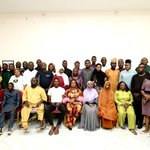

Women in Nigeria’s informal economy contribute significantly to household incomes and local economies. Yet, unpaid care work and gaps in essential services such as water, childcare, transport and healthcare limit their trading hours, earnings and economic opportunities. These challenges are compounded when public budgets fail to reflect their needs.


To address these gaps, we convened the GovHERnance Co-Design Workshop on Gender-Responsive Budgeting, bringing together women informal workers, journalists, government representatives and civil society organisations to examine budget priorities and whether public spending addresses women’s realities.


The workshop highlighted the need for gender-responsive budget allocations, transparent spending and stronger community-level monitoring to ensure public funds translate into services that support women’s livelihoods.
#GovHERnance #publicfinancemanagement #WomenInTheInformalEconomy


Vote-buying will almost certainly recur in Nigeria’s #2027elections but who is tracking the money behind it?🤔
What are the #NigerianFinancialIntelligenceUnit, @officialEFCC and @icpcnigeria doing this campaign season to detect, disrupt and prosecute #IllicitFinancialFlows, #moneylaundering and the diversion of stolen public funds into #campaignfinancing? Those funds may be moving now through inflated #publicprocurement, real estate, front companies and other channels built to disguise illicit wealth.
Democracy cannot be defended at the polling unit alone. It must also be defended where dirty money is generated, laundered and deployed to buy power. Nigerians deserve more than election-day arrests and post-election promises.
Where is the financial intelligence and enforcement before the votes are bought?
With over 400 cases of privacy breaches involving loan apps under investigation by @ndpcngr, the scale of the problem cannot be ignored.
For many Nigerians, this is a familiar story. These violations put people’s privacy, dignity and peace of mind at risk.
Protecting people online requires more than awareness. It requires institutions that take complaints seriously, uphold data protection rights and hold violators accountable.
#dataprotection #humanrights


@RipotiAfrica offers Nigerians a platform to report digital rights violations and make their voices heard. Because everyone deserves to be heard, and every complaint deserves a fair chance at being addressed.
#digitalrights #civicspace


The streets of Abuja are telling a story we can no longer afford to ignore.😢
How long must residents live with the consequences of a problem that should be preventable?
#environmentaldegradation #climateaction #environmentaljustice #pollution
In @benuestategovt, @PLSGov and @KadunaStateGovt, insecurity, displacement, barriers to public services and limited access to information continue to affect people’s ability to exercise their rights and hold public institutions accountable.
Our baseline survey of 2,511 respondents across six local government areas revealed a significant gap between awareness and action. While 43.1% knew of formal accountability mechanisms, only 10.6% had used one. Just 12.6% rated local government responsiveness as good or excellent, while 61.8% rated it poor or very poor.


These findings informed our Civic Action Teams (CivActs) engagements, which brought together civil society groups, community leaders, journalists, women’s networks, persons with disabilities and other civic actors to explore practical, safe and evidence-based ways to address community concerns.
Discussions highlighted the electoral participation of internally displaced persons and uncollected PVCs, the effects of insecurity and displacement on access to public services, and the role of early warning systems in preventing conflict. Participants also explored how to document concerns safely, engage the right authorities and follow up on commitments.


As our Community Frontline Associates (CFAs) continuing working on the ground, the focus remains on turning these conversations into action, strengthening #citizenengagement and ensuring that community concerns receive meaningful responses from the institutions responsible.
#civicparticipation #responsibleleadership #activecitizens


A fake video can reach a million people before a correction reaches ten thousand.
We're supporting creators to close that gap. Skits, edits, explainers with any language.
Note: 18+, label any AI use, non-partisan. We will judge on clarity, creativity & habit.
#PauseBeforeYouPost

In Nigeria, headline budget figures rarely match what's delivered. Of ₦35.7bn, how much went to drainage construction and desilting vs salaries, overheads and office renovations?
Without a line-by-line breakdown and proof of completed projects, the number tells us nothing about flood control 🤷🏽♂️
#OpenContracting #ProcurementIntegrity

Accountability Lab Nigeria retweeted

What happens when you report a digital rights violation?
Reporting is not just about adding another number to a database. When incidents are submitted to Ripoti, they can be reviewed and verified. Verified reports contribute to evidence that can help researchers understand emerging patterns, civil society organisations identify areas of concern, and advocates push for stronger protections.
A single incident tells us what happened but many documented incidents can start telling us why it keeps happening. Don't assume someone else has reported it.
If you experience a digital rights violation, report it on Ripoti: zurl.co/oFR4Q
#Ripoti

Accountability Lab Nigeria retweeted

With #CFLI support, @BrainBuilders01 is helping young women and girls in Kaduna develop practical AI and digital skills.
Hear how they’re turning interest into opportunity.
#CanadaInNigeria
A home should not feel like a privilege reserved for those who can afford it.
When housing becomes unaffordable, it changes how families live and what they can afford to give up.
Who is making sure everyone can afford one?

When I placed the Renewed Hope Agenda before Nigerians, I did not speak of housing in vague terms. I gave my word that this administration would work to make decent homes affordable again, and that a hardworking family, after years of paying rent, would finally have a path to a house of its own.
Let me account for that promise plainly, by juxtaposing what we pledged beside what we have actually achieved.
We promised a programme built on a national scale, 100,000 homes in all, with 50,000 in the first phase through cities of 1,000 units in every geopolitical zone and the Federal Capital Territory, and estates of up to 500 units in the remaining 30 states.
What stands today is no longer a drawing. We broke ground on more than 3,000 homes at Karsana in Abuja, the 2,000-unit city at Ibeju-Lekki in Lagos has reached advanced completion with sales already underway, and across the country, more than 15,000 units are rising as I write this.
A house does not begin at its walls, and we refused to govern as though it did. We promised to confront the foundation, the tools and the cost of building itself.
So we have moved to title land that sat for generations as dead capital, working with the World Bank to lift this nation from fewer than one plot in ten formally registered toward one in two.
We have strengthened the framework that governs equipment leasing, so that a builder or contractor can secure the machines a project needs with legal certainty and the confidence of those who finance them, and no site stands idle for want of a crane.
And,we have published uniform prices on our homes, so that no Nigerian pays a bribe to learn the cost of a roof, while raising materials hubs in all six zones so that we build with our own hands and our own resources.
But a home that is built and cannot be bought is only a monument, and on this point, Nigeria has stumbled for decades. So, we turned to the question of money.
Through the MOFI Real Estate Investment Fund, 1,859 families across 25 states have now drawn ₦128 billion in mortgages, fixed at 9.75 per cent and repayable over 20 years, terms our people were told for a generation they would never see.
Through Family Homes Funds, we have kept faith with the poorest, housing widows and low-income earners, under a mandate to reach 500,000 homes and the 1.5 million jobs that rise with them.
I will not stand before you and declare the work finished, because it is not. The housing deficit this nation carries is counted in the millions, and it will take years of steady labour to close, and I would rather say that to you plainly than flatter you with a lie.
But the difference now is real. For the first time in a generation, the whole housing value-chain is moving together: the land and its title, the building, the materials, the equipment, the finance, and the family at the end of it, and no part waits idle on another.
Housing has moved from a welfare conversation to a national growth strategy. Real estate and construction now sit among Nigeria’s major GDP contributors, proving that every affordable home financed is also a factory order, a labour contract, a mortgage asset, a household balance sheet and a contribution to national output.
That is what I promised for our housing sector, and that is what is now being delivered. Renewed Hope was never charity. It is the right of every Nigerian to a place called home.
Bola Ahmed Tinubu
President of the Federal Republic of Nigeria
@officialABAT


Our Country Director, @Odeh_JuniorOdeh , joined @NewsCentralTV earlier today to speak about the proposed Foreign Aid (Regulation, Transparency and Disclosure) Bill, 2026 and why civil society organisations are calling for its withdrawal.
The proposed bill raises concerns about provisions that could tie foreign-funded projects to government priorities and give regulatory authorities broad powers to impose sanctions.
Civil society organisations already operate within existing regulatory and reporting requirements. So, what does another layer of regulation add, and what could it mean for organisations working to strengthen accountability and civic participation?
Watch the full conversation!
#SB1034 #ForeignAidRegulationBill
Is the Abuja Master Plan was the reason for this demolition, why is it been sand filled?
#responsibleleadership #ethicalleadership
How civic freedoms are protected and how public resources are managed have real consequences for everyday life.
In this edition, we look at the growing pressure on civic space, the debate around the Foreign Aid Regulation Bill, and efforts to strengthen procurement systems across Nigeria. We also examine why stronger monitoring of public spending matters when budgeted resources are meant to deliver essential services like healthcare, water and other community infrastructure.
Click the link to see #WhatsNew.
mailchi.mp/accountabilitylab…

In @Kadunastategov1, #insecurity and gaps in public services are making it harder for communities to feel safe, supported and heard.
Our baseline survey of 2,511 respondents, including respondents from Zaria and Kaduna South, shows why stronger links between citizens and institutions matter. More than seven in ten respondents experienced violence or conflict at least occasionally in the past year. Yet only 10.6% had used a formal accountability mechanism, while 37.8% of those who reported a service delivery failure said no action was taken. Only 12.6% rated local government responsiveness as good or excellent.
Our Community Frontline Advocates (CFAs) are working to close that gap. They met with the Commander of the @Kadunavigilanc1 to present these concerns and seek practical action, including more visible patrols in identified flashpoints, dedicated liaison officers for Zaria and Kaduna South, regular council-community security meetings, and a confidential channel for reporting security incidents with acknowledgement.
The Commander committed to working with our CFAs on these priorities, strengthening community-level security efforts and supporting the police as the primary law enforcement agency.
With the #2027elections approaching, this matters because communities need more than a place to raise concerns; they need safe pathways to report, institutions that respond, and a way to know what happens next.


Police trust cannot be rebuilt through public relations alone.
Creatives can help open conversations with young Nigerians, but trust in @NigeriaGov institution is built when citizens can report misconduct and receive a credible response; when officers who violate citizens’ rights face consequences; when arrests and detention comply with the law; when operations are transparent and accountable; when officers are held to clear standards; and when citizens can see evidence that reforms are being implemented, not simply announced.
Laundering the public image of a @NigeriaGov institution is not the same as improving the institution itself.
Can @burnaboy’s involvement truly give Nigerians a reason to TRUST the @LagosPoliceNG @EdoPoliceNG @KanoPoliceNG @DeltaPoliceNG @FCT_PoliceNG @policeAnambraNG @OyoPoliceNG @Enugu_PoliceNg @RiversPoliceNG @ImoPoliceNG @NPF_NCCC @PoliceNG_CRU @PoliceNG?
@burnaboy can amplify a message but cannot substitute for ACCOUNTABILITY.
Trust is earned through institutional behaviour, not through institutional visibility.
Here are some #IntegrityIcon that have built TRUST with their communities.
1. Kamoshi Tada - youtu.be/UwokmPaxGDs
2. Francis Erhabor @ngosag - youtu.be/VNrbd1xF3O4


IGP DISU, BURNA BOY EXPLORE CREATIVE POWER TO REBUILD POLICE TRUST
The Inspector-General of Police, IGP Olatunji Rilwan Disu, and Nigerian music star, Burna Boy, are exploring how Nigeria’s creative industry can help rebuild public trust in the Police, particularly among young Nigerians.
At a meeting, the IGP and the music star discussed stronger collaboration between the Nigeria Police Force and the entertainment industry, recognising the influence of music, culture and popular voices in shaping public perception and strengthening police-community relations.
IGP Disu emphasised the importance of partnerships in his administration’s efforts to reposition the Nigeria Police Force and build an institution Nigerians can trust and be proud of. He also highlighted the potential of the Orange Economy to create opportunities while using the creative sector to bridge gaps between the Police and the public.
Burna Boy expressed support for the direction and willingness to contribute to efforts aimed at strengthening the relationship between the Police and Nigerians, especially the younger generation. The engagement reinforces the message that rebuilding public confidence requires collaboration between the Police, creatives, youths, media, civil society and other stakeholders. @Bur