

Jurisprudentiae laureatus. Theologiae ac philosophiae cultor.
España
Joined November 2024
- Tweets1.8K
- Following115
- Followers352
- Likes2K





Adm retweeted

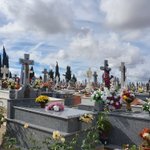
He visitado tres cementerios estos días y apenas he coincidido con nadie de mi edad allí.
Me entristece pensar que ni siquiera somos la última generación que hace esto. La última ya se acaba.
Somos la generación egocéntrica. Egoísta.
Se extingue una forma de afecto.

Adm retweeted

🔸 November 2 - Saint Gabriel the Fool for Christ 🔥🔸
Today, we commemorate Saint Gabriel the Fool for Christ. He was a wonderworking Georgian monk during the era of Soviet persecution. St Gabriel was born in Tbilisi in 1929 with the name Goderdzi. When his father Vasili was murdered, the 2 year old Goderdzi was renamed Vasiko in his honour. Vasiko first heard the name of God at age 7 when he overheard his neighbours arguing, and one shouted, “You have crucified me like Christ”. The curious boy asked the men Whom Christ was, and they told him to read the story of His life.
The boy rushed to the book market and purchased a copy of the New Testament which soon illuminated his soul. His heart aflame with a love of Christ, Vasiko would build small churches from pebbles in the yard. While many Georgians were discarding their icons for fear of persecution from the Communists, Vasiko went door to door collecting these icons which he cherished. Concerned over her child’s obsessions with God, Vasiko’s mother threw away his New Testament.
At this point, the boy left home and took shelter in many monasteries including the Samtavro monastery. While completing his mandatory service in the Soviet army, Vasiko would often secretly attend liturgies. His comrades alerted the authorities, and they sent him to a medical commission where they declared him mentally insane. Discharged from the military, Vasiko committed himself to monasticism. He attended services at the Sioni Cathedral in Tbilisi, and formed a close spiritual bond with Patriarch Melchizedek III who tonsured him a monk in 1954 with the name Gabriel.
In 1965, thousands gathered in Tbilisi for the annual Soviet celebration of international workers day. St Gabriel was so disturbed by this communist cult that he set fire to the giant portrait of Lenin for which he was beaten and arrested. Banned from the priesthood by the Soviets, St Gabriel later constructed a hermitage behind his family home where he spent many years living in asceticism. He was later restored to the priesthood in his beloved monastery of Samtavro where he reposed in 1995, a smile still etched on his face.


Adm retweeted

Hay tradiciones que merecen conservarse y transmitirse.
El toque de campanas en la noche de difuntos no es simple folclore ni nostalgia. Es una llamada a la oración por quienes nos han precedido.
Gracias a los Campaneros de Madrid y al padre Pedro Luis, párroco de San Ildefonso, por mantener viva una tradición que une fe, memoria y caridad cristiana.
#FielesDifuntos #Campanas #TradiciónCatólica
Adm retweeted

Oggi, 2 novembre 2026, a cinquantuno anni esatti dal brutale assassinio avvenuto all'Idroscalo di Ostia nella notte tra l'1 e il 2 novembre 1975, la Procura di Roma ha ufficialmente riaperto le indagini sull'omicidio di Pier Paolo Pasolini.
rainews.it/articoli/2026/11/…

Adm retweeted

“They say we will not live to see Christmas” — Nigerian Christian leader in Plateau State raises alarm over plans by terrorists to launch mass attacks this Christmas season.
"Every day we wake up to killings. We hear 'you will run with your rice & meat in your pots.' It happened in Dec 2023. Same threat this year."
4 youths killed 2 days ago in Barkin Ladi. Where’s next?
#PlateauUnderAttack
Adm retweeted

This is a common custom among Coptic Christians because Christianity is the most persecuted religion. In Egypt, Muslims are kidnapping children in order to convert them to Islam. Therefore, Copts, who are a minority, are marking their children with a cross tattoo on their hands. Thousands of Copts have fled Egypt and come to Greece to avoid death and beheading by Muslims.
Never forget the 21 Egyptian Coptic Christians who were beheaded by ISIS jihadists in Libya on 15 February in 2015.
Remember that Egypt was destroyed after the Islamic invasion when the Arabs literally slaughtered thousands of Egyptians and even changed their language. Coptics had to hide their faith in order to survive. Reminds me of the Greeks who suffered and tried to hide their faith too.
During Ottoman period, many Greek Christians, in Constantinople and Crete, pretended to be Muslims in order to avoid torture, rape and death but in reality remained Christians. They dressed like the Turks, accepted circumcision, prayed in the mosque, and observed all the other religious customs of the Turks. Inside their homes, however, they kept icons of Christian saints and performed the services of their true faith, with the help of Crypto-Christian priests who simultaneously wore the attire of dervishes. These crypto-Christians formed distinct communities among the Turks and married among themselves, thus preserving their national homogeneity as well.
In 1570–71, Cyprus was subjugated by the Muslim Turks, and many Greeks were forcibly converted to Islam. However, many of them became "crypto-Christians" and even acquired the nickname "linovamvakoi," meaning made of linen and cotton, since they had a dual conscience and dual faith.
The envy of the Muslim Turks for the physical and spiritual beauty and superiority of the Greek women, their lustful disposition, and especially that of the Janissaries, who came from our race through the terrible devshirme (child levy) and thus carried a heavy hatred, was manifested barbarically against the Greek Christian ladies and young women, becoming the occasion or cause of bloody martyrdom.
The Greek Christian Woman, in order to avoid -as much as she could- the abhorrent dishonor from the barbaric Muslims, would destroy the youthful beauty of her face, or create a family from the age of fourteen, believing that she would not give birth to slaves, that she would raise Greeks and bring up Greeks.
In the same way Egyptians tried to find ways to remain Crypto-Christians and avoid tortures and death. But very few survived.
I love Egypt. I would really like to see them thrive again.
- Homer Pavlos
Adm retweeted

«Celébrase la fiesta de Todos los Santos con tanta solemnidad porque abraza todas las otras fiestas que en el año se celebran en honor a los Santos y es figura de la fiesta eterna de la gloria»
Catecismo de San Pío X, cap. 10 §4


Adm retweeted

Nacemos para morir y morimos para nacer.

"Mira que te has de morir,
mira que no sabes cuando.
Mira que te mira Dios,
mira que te está mirando"
«El Árbol de la Vida» Ignacio de Ríes, 1653. Capilla de la Inmaculada Concepción youtube.com/watch?v=r1n8Lrlr…
#TodosLosSantos

Adm retweeted

Michel Houellebecq à propos du nouveau livre de David Engels, "Que faire?": «En lisant Engels, il m’est venu cette idée bizarre, et même incongrue, que Nietzsche, s’il vivait aujourd’hui, serait peut-être le premier à souhaiter un renouveau du catholicisme. Alors qu’il a combattu avec acharnement le christianisme comme «religion des faibles», il se rendrait compte, aujourd’hui, que toute la force de l’Europe résidait dans cette «religion des faibles»; et que, sans elle, l’Europe est condamnée … »
David Engels, "Que faire? Vivre avec le déclin de l'Europe", Groningen, Blue Tiger Media, juillet 2019, 122p., ISBN 9789492161833, 19,50


Adm retweeted

L'hegemonia de les tesis victimitzants de Rovira i Virgili per damunt la revisió crítica —per a l'elevació de formes presents— de Vicens i Vives es troba al nucli de l'explicació del fracàs del catalanisme.
Un bon començament:


Adm retweeted

Ni se habían visto así en trescientos años ni volverán a verse en otros trescientos.
Los cuadros más bellos del barroco español y los dos más escalofriantes.
Murillo y Valdés Leal.
Andrés Trapiello: El Hospital de la Caridad abc.es/cultura/cultural/hosp… vía @ABC_Cultural

Adm retweeted

Leí en El espíritu de la liturgia, de R. Guardini, que no hay que condenar —siempre que no sean el único medio— las expresiones de piedad popular. Tiene razón: hay algo entrañable en estos vastos Cristos, estas Vírgenes de estampita, estas frases repetitivas como letanías.
Adm retweeted

Un historiador judío del siglo I pudo dejar por escrito que Jesús apareció vivo después de su crucifixión.
Y ahora una investigación ha vuelto a poner ese testimonio en el centro del debate histórico.
La noticia, publicada por el Daily Mail, habla de uno de los textos más fascinantes de la Antigüedad: el Testimonium Flavianum, un pasaje atribuido a Flavio Josefo, historiador judío que escribió hacia el año 93-94 d. C.
¿Y qué dice?
Josefo describe a Jesús como un hombre sabio, maestro de quienes recibían su enseñanza, conocido por sus obras extraordinarias y condenado a la crucifixión por orden de Poncio Pilato.
También habla de sus seguidores y de su afirmación de que Jesús se les apareció vivo al tercer día.
Lo más interesante de la nueva investigación es que compara las distintas versiones antiguas del pasaje griega, latina, árabe y siríaca y plantea que el texto original pudo recoger, con una formulación más prudente, el testimonio de los seguidores de Jesús sobre su resurrección.
La investigación no demuestra por sí sola la resurrección. Pero nos recuerda algo importante:
La proclamación de que Jesús había vencido a la muerte no es una creencia surgida siglos después, sino una afirmación que estaba en el corazón del cristianismo desde sus primeros tiempos.
La pregunta es inevitable: ¿qué ocurrió para que los discípulos de un hombre crucificado llegaran a proclamar que lo habían visto vivo, hasta el punto de que esa noticia quedara reflejada en la tradición histórica?
🙏🏻✝️


Written account of Jesus rising from the dead identified in 2,000-year-old manuscript, study suggests trib.al/XFIwGJj

Readers added context they thought people might want to know
This research compares later Greek, Latin, Arabic and Syriac copies to reconstruct what Josephus may have written around AD 93–94; it did not identify an account in a 2,000-year-old physical manuscript. joe.co.uk/news/ancient-j… wsjfreeexpression.substack.com/p/unlocking-th…


Adm retweeted

Henry Kamen, doctor en Historia: «No podemos aceptar la imagen fantasiosa de Felipe II que cultivaron sus enemigos» abc.es/historia/henry-kamen-…

Adm retweeted
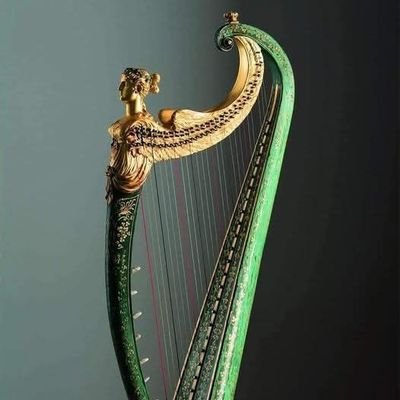
During the wedding scene of The Godfather (1972), an elderly man takes the microphone and begins to sing a traditional Neapolitan song. This is Gennaro Amato, a renowned Neapolitan comic performer who was one of the great figures of Italian-American stage and recording culture in early 20th-century New York.
The piece he performs is “C’è la luna mezzo mare” or “There’s a Moon in the Middle of the Sea”, a classic Sicilian wedding song. The song is full of meanings and humor. It’s an old folk tune about a mother and daughter discussing possible suitors.
𝘛𝘩𝘦𝘳𝘦’𝘴 𝘢 𝘮𝘰𝘰𝘯 𝘪𝘯 𝘵𝘩𝘦 𝘮𝘪𝘥𝘥𝘭𝘦 𝘰𝘧 𝘵𝘩𝘦 𝘴𝘦𝘢, 𝘮𝘢𝘮𝘢, 𝘐 𝘸𝘢𝘯𝘵 𝘵𝘰 𝘨𝘦𝘵 𝘮𝘢𝘳𝘳𝘪𝘦𝘥,
𝘔𝘺 𝘥𝘢𝘶𝘨𝘩𝘵𝘦𝘳, 𝘸𝘩𝘰 𝘴𝘩𝘰𝘶𝘭𝘥 𝘐 𝘨𝘪𝘷𝘦 𝘺𝘰𝘶 𝘵𝘰? 𝘔𝘢𝘮𝘢, 𝘺𝘰𝘶 𝘥𝘦𝘤𝘪𝘥𝘦.
𝘐𝘧 𝘐 𝘨𝘪𝘷𝘦 𝘺𝘰𝘶 𝘵𝘰 𝘢 𝘴𝘢𝘪𝘭𝘰𝘳, 𝘩𝘦’𝘭𝘭 𝘤𝘰𝘮𝘦 𝘢𝘯𝘥 𝘵𝘩𝘦𝘯 𝘩𝘦’𝘭𝘭 𝘨𝘰.
𝘐𝘧 𝘐 𝘨𝘪𝘷𝘦 𝘺𝘰𝘶 𝘵𝘰 𝘢 𝘱𝘰𝘭𝘪𝘤𝘦𝘮𝘢𝘯, 𝘩𝘦’𝘭𝘭 𝘤𝘰𝘮𝘦 𝘢𝘯𝘥 𝘵𝘩𝘦𝘯 𝘩𝘦’𝘭𝘭 𝘨𝘰.
𝘖𝘩 𝘮𝘢𝘮𝘢, 𝘨𝘪𝘷𝘦 𝘮𝘦 𝘢 𝘩𝘶𝘯𝘥𝘳𝘦𝘥 𝘭𝘪𝘳𝘦,
𝘐 𝘸𝘢𝘯𝘵 𝘵𝘰 𝘨𝘰 𝘵𝘰 𝘈𝘮𝘦𝘳𝘪𝘤𝘢!
𝘖𝘩 𝘮𝘢𝘮𝘢, 𝘨𝘪𝘷𝘦 𝘮𝘦 𝘢 𝘩𝘶𝘯𝘥𝘳𝘦𝘥 𝘭𝘪𝘳𝘦,
𝘐 𝘸𝘢𝘯𝘵 𝘵𝘰 𝘨𝘰 𝘵𝘰 𝘈𝘮𝘦𝘳𝘪𝘤𝘢!
Adm retweeted
"Written in an ancient language". It's called Greek. Imagine being a Turkish archaeologist and nationalist, and in every excavation you do across Turkey, you find Greek inscriptions and antiquities. There is no greater curse. They are forced to live with it.

Sakarya'da altyapı çalışmaları sırasında antik dilde yazılmış çok satırlı yazıtlar ve mimari süslemeler bulundu.


Readers added context they thought people might want to know
Yazıtlar antik Yunanca olup, Apphos oğlu Diliporis'e ait daha önce INikaia'da ve bilimsel çalışmalarda belgelenmiş Roma dönemi bir mezar anıtıdır.
anatolianarchaeology.net/1800-year-old-…
libridergi.org/wp-content/upl…
ortadogugazetesi.com/gundem/pamukov…