


Ajay Sridhar retweeted

What should a robot remember? Can it learn to remember better than we tell it to?
Excited to share MEMI: Reverse-Engineering What Robots Should Remember
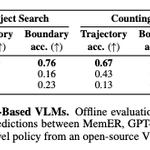
📈 97.0% end-to-end, 99.4% w/ low-level controller on RoboMME, nearly solving it for the first time
🧵👇
Ajay Sridhar retweeted

This is the most impressive result I’ve seen in my PhD.
One policy, trained from scratch, solves all 20 NIST assembly tasks. It can even complete 10 tasks in a row, with a single binary reward only after all 10 are done.
@octi_zhang combined diverse resets from OmniReset, task sampling from SGS, and multi-task training to unlock finer dexterity and longer horizons. No extra GPUs needed: one run on the same hardware replaces 20 specialist runs.
Videos and details: alpha-nist.github.io
Proud to be part of this incredible work! More in his thread 👇

(1/6) From @GoogleDeepmind’s AlphaGo to AlphaZero, we saw machines find moves that reached beyond what we’d imagined for them. No one taught them those strategies. They emerged from reinforcement learning: playing, failing, and trying again under a single binary task reward for success or failure. Inspired by them, we couldn’t help but wonder: what might a robot discover if we gave it that same freedom to learn?
That question led us to AlphaNIST. Starting tabula rasa, with that same binary reward plus only a simple control cost, a single policy solves all 20 @NIST assembly tasks at a 98.2% success rate in simulation. More surprising still, AlphaNIST can complete 10 different tasks in a row, receiving that reward only once, after all 10 are done.
Just as AlphaGo’s strategies surprised its creators, AlphaNIST discovered dexterous strategies we couldn’t have come up with ourselves.
Paper: arxiv.org/abs/2610.13354
Website: alpha-nist.github.io
Ajay Sridhar retweeted

Want to know how well agents can really control robots directly?
In RoboARCade, we systematically evaluate and diagnose frontier agents controlling robots directly using tens of thousands of dollars’ worth of agent trajectories. RoboARCade contains diverse, precise, and long-horizon tasks. Paper, code, assets and every trace are out today. roboarcade.org
Ajay Sridhar retweeted
This robot has never seen a real-life gear, but assembles one with a 94% success rate! It can also thread an M16 nut and insert a 16mm peg. All trained with RL and transferred zero-shot sim2real from RGB. 🔈
Our method, Success-Guided Sampling (SGS), makes a small change to how we sample environment resets. More on SGS in @octi_zhang's thread, and more on sim2real transfer down below! 🧵
Website: sgs-rl.github.io/
(1/5) Everyone says dexterous manipulation needs real-world data. These policies were trained with none. Our robots mesh gears, thread nuts, and insert pegs zero-shot from RGB, and the same recipe works for locomotion across terrains much harder than before.
The missing piece wasn't a better RL algorithm, but a small tweak to what the robot practices.
Today we're releasing Success-Guided Sampling (SGS), a simple change to the task sampler that unlocks new levels of dexterity and agility with large-scale, end-to-end sim2real RL.
No demonstrations, no per-task reward tuning. Just PPO at scale.
Check out the policies yourself at sgs-rl.github.io! All videos at 1x speed! 🧵 🔈
great name, even better science

I've been thinking a lot about making robot learning scalable. To me, that means learning on the job, and using the human help still needed efficiently.
In Mulligan ⛳️, we focus each data-collection round on the initial states where the robot fails. This happens in deployment, with the robot doing the task and a person stepping in when needed.
On 3 real tasks and 2,550 blind evals, it improves on uniform collection at the same budget.
Ajay Sridhar retweeted

AI can increasingly make progress on open problems like Navier-Stokes. Yet defining a new problem still relies on human research taste.
Introducing ScholarCatalyst, a benchmark built from AI researchers’ firsthand accounts of what inspired their work.

Ajay Sridhar retweeted

There’s lots of buzz around agentic harnesses for robots, particularly for long horizon tasks that require complex reasoning and memory. But what will it really take to turn a reasoning agent into a reactive, reliable and low-latency robot policy?
In our new paper, workspace models, we design a new memory architecture that acts as a latent harness for stronger reasoning models. Here’s why we think this might be the way forward:
(1/9)

Ajay Sridhar retweeted

What will be the “RLHF” moment for robotics? What will it take to get robotics to where LLMs are today and beyond?
New blog post with @chelseabfinn sharing some thoughts on the state of RL for frontier robotics models and what's missing 👇
Blog: pd-perry.github.io/posts/pos…

Ajay Sridhar retweeted
Introducing Real-Time EXPO-FT – Fast and Reliable RL for Real-Time VLA Policies!
Real-Time EXPO-FT unlocks π0.5 on challenging dynamic tasks, such as balancing a ball on a plate and striking a ball into the goal
(1/6)
Ajay Sridhar retweeted

When a robot learns a new behavior, what keeps it from forgetting the ones it already knows?
Prior work, especially on VLAs, shows that rehearsing past experiences can enable strong continual learning. But why does rehearsal work so well, and when does it fail?
We find that a small but ✨special subset✨ of rehearsed data largely determines whether old behaviors are retained or forgotten. We call these examples Memory Anchors. ⚓
Withholding just the top 10% of Memory Anchors from rehearsal increases forgetting by up to 4.5x. Increasing their presence, meanwhile, reduces task forgetting and enables a real robot to learn challenging task sequences.
Website: robot-adaptation.github.io/M…
Paper: arxiv.org/abs/2608.26545
Curious? Read on! 🧵👇 (1/9)
Ajay Sridhar retweeted

What if text-to-image models started not from noise, but transitioned directly from text tokens to images? 🔠➡️🌆
🤝 What if we unified text-to-image and image-to-text under ONE bidirectional framework? 📚↔️📸
Introducing BIT: Bidirectional Image-Text Diffusion Bridges! With @StefanoErmon @elon_lit @Jose_Blanchet @thanawatsornwan
Paper: arxiv.org/pdf/2608.27885
Demo: bit-diffusion.github.io
Code: github.com/gabeguo/bit_diffu…
Ajay Sridhar retweeted
We’re asking the research community to help us build a benchmark for research taste.
Scientific discovery starts with a fundamental step: which prior work is worth building on? We want to capture this undocumented layer through our collective knowledge.
Please sign up: tinyurl.com/45b9ykae ↓

Ajay Sridhar retweeted
World models have emerged as one of the biggest directions in physical AI. At the same time, RL fine-tuning is unlocking capabilities in frontier models beyond what pretraining can achieve on its own
Can we get the best of both worlds?
We propose Q-Learning with World Models (QWM)
(1/7)

Ajay Sridhar retweeted

We gave popular agents (Claude Code & Codex) a browser-based visual interface and let them command a robot via MCP tools — like a human with a mouse and keyboard — and it worked!
Introducing VIA: Visual Interface Agent for Robot Control. 🧵
Ajay Sridhar retweeted

Introducing Real-time RL.
In the real world, time isn't free. The environment keeps "moving" even when you're computing your next action.
We show how RL agents can learn to adaptively think in real-time games.
1/🧵
Ajay Sridhar retweeted

Can we enable robots to develop a sense of touch without forgetting what they learned from large-scale vision-only pretraining?
Introducing MultiSensory World Model (MuSe) 🌍: A new approach for finetuning visuomotor policies on minimal data from new sensor modalities, such as force/torque (F/T)
With Muse, touch learned later improves skills learned earlier — a small amount of F/T data on new tasks improves zero-shot on diverse pretraining tasks that were never supervised with F/T
We believe MuSe provides a practical pathway towards training multisensory foundation models that leverage both abundant vision data, and smaller multisensory datasets 🧵👇
Ajay Sridhar retweeted

We should stop optimizing robot policies against a single overall reward. Trajectories differ along many axes, such as speed, precision, and subtask completion, and one can be better on some while worse on others. If we collapse all of that into a single overall axis we lose this structure making the reward ambiguous and harder to optimize.
Blog: freeform-pl.github.io/fpl.we…
Paper: arxiv.org/abs/2606.32027
Ajay Sridhar retweeted

The most capable reasoning systems in AI scale inference compute along several axes: sequential compute to think longer, parallel compute to sample many independent attempts, and aggregative compute to synthesize prior traces into a new improved one. But during training, we only optimize how models use sequential compute. This creates a fundamental mismatch between how we ultimately deploy these systems and how we train them, leaving much of search and synthesis unoptimized.
We introduce SPIRAL, an RL framework for making all inference-compute primitives end-to-end learnable: models learn to coordinate sequential, parallel, and aggregative reasoning using only the reward of the final output. Work with @ifdita_hasan (co-lead), @michaelyli_ , @oshaikh13 , @yoonholeee , @DorsaSadigh , @chelseabfinn , @noahdgoodman 🧵

Ajay Sridhar retweeted

test-time compute [ttc] in robotics isn't free & isn't always worth it. smart allocation of ttc recovers frontier-level planning at a fraction of the cost!
coauthor @milanganai
w/ Yasmina @ajaysridhar0 Mozghan @katielulula Clark Barrett @jiajunwu_cs @chelseabfinn @drmapavone 🧵 – at Stanford, CA
Ajay Sridhar retweeted
🚨New time series generative model just dropped.
Paper: arxiv.org/abs/2604.27443
Demo: abc-diffusion.github.io/
⏰Meet ABC: Any-Subset Autoregressive Diffusion Bridges in Continuous Time & Space.
With @StefanoErmon @elon_lit @Jose_Blanchet @thanawatsornwan @lutong_hao