

Prof @Stanford, Distinguished Research Scientist and AV research lead @nvidia. PhD from @MITAeroAstro. Robotics, autonomous systems, AI. Opinions are my own.
Stanford, CA USA
Joined November 2018
- Tweets279
- Following73
- Followers6.5K
- Likes123





Ever wondered what it’s like to learn robot autonomy @Stanford? Now you can.
Today, we’re opening up the robot autonomy teaching materials that my collaborators and I have been developing over the past several years—for anyone, anywhere, completely free.
At the heart of this effort is Principles of Robot Autonomy (PoRA), a textbook inspired by the Stanford robot autonomy course series I’ve been teaching since 2017.
Robot autonomy has evolved from a research discipline into a technology deployed in the real world. Building capable autonomous systems requires more than understanding individual algorithms: it requires understanding how perception, state estimation, planning, control, and learning work together in a complete autonomy stack.
That’s what we set out to teach with PoRA: bringing classical robotics and modern AI together in one coherent framework, grounded in both theory and practice.
Coming soon in print from Cambridge University Press, Principles of Robot Autonomy is also freely available online and comes with a comprehensive collection of open educational resources:
📖 Textbook, arxiv.org/abs/2608.03496 — Foundations of robot autonomy, from classical methods to modern AI-based approaches.
🎥 Video lectures, porabook.com/lectures/ Lectures from my Stanford courses on robot autonomy and on optimal and learning-based control.
💻 Interactive exercises, porabook.com/exercises/ — Hands-on Python implementations and Jupyter notebooks.
📝 Teaching materials, porabook.com/instructors/ — Lecture slides and resources for instructors.
🌐 Explore all PoRA resources, porabook.com/ — Including Ask the Book, an AI study assistant integrated throughout the textbook to answer questions, explain derivations, and connect ideas across chapters.
📣 Read the Stanford announcement: news.stanford.edu/stories/20…
Our goal is simple: to make high-quality education in robot autonomy accessible to students, researchers, engineers, educators, and anyone curious about how autonomous robotic systems work.
I believe that sharing knowledge is fundamental to the mission of a university. Autonomous robotics—and Physical AI more broadly—are among the defining technological frontiers of our time. We want to help more people understand these technologies, build with them, and advance the field.
A huge thank you to my co-authors, @DanieleGammelli, Joseph Lorenzetti, @katielulula, and @GioeleZardini, and to everyone who helped bring this project to life.
Explore the resources, use them in your own learning or teaching, and please share them with anyone who might find them useful!
#Robotics #PhysicalAI #ArtificialIntelligence #AutonomousSystems #Education
@Stanford @StanfordEng @StanfordAILab @StanfordHAI

Do Vision-Language-Action models mean what they say?
Embodied chain-of-thought offers a promising way to leverage additional inference-time computation for robot policies, with empirical evidence that it can improve downstream task performance. However, in practice the extent to which this chain-of-thought actually influences a robot policy’s chosen actions is not fully understood yet.
In our new paper on #embodied #reasoning, we formally define the notion of faithfulness i.e., whether the chain-of-thought truthfully reflects the policy's decision for #Physical #AI and argue that the faithfulness of robot policies should play an explicit role in algorithm design.
We train a critic of embodied faithfulness, identifying the signatures of inconsistent and incoherent reasoning, and use it as a reward signal during reinforcement learning (RL) post-training of a robot policy. We call our critic Pinocchio 🤥: a model that learns to tell when a robot policy is 'lying' about the justifications for a decision. Pinocchio scores two complementary failure modes: whether the reasoning is grounded in what the robot actually sees, and whether it is coherent step-to-step through the chain-of-thought.
We find that post-training for faithfulness yields a +18% improvement in reasoning consistency over standard baselines, and critically, makes the policy 1.6× more responsive to rare, out-of-distribution scenarios that confuse SoTA models.
These findings suggest that faithful embodied reasoning is not merely a post-hoc interpretability property, but an important ingredient for building more robust and trustworthy autonomous systems.
📄 Paper: arxiv.org/pdf/2607.04681
🌐 Project page: mjf-su.github.io/pinocchio/
💻 Code: Coming soon!
Great work led by Matthew Foutter, in collaboration with Matteo Cercola Lena Wild Yunshan Wang Michelle Li and @DanieleGammelli
@StanfordEng @StanfordAILab @StanfordHAI

What if AI could improve not only its own policies, but also the judges that evaluate them?
As AI policies improve, they encounter new challenges and develop new failure modes. The judges evaluating them need to evolve as well. Otherwise, they can become a bottleneck to further progress. This is particularly relevant for #Physical #AI, where good decisions require spatial grounding, causal reasoning, and safety awareness.
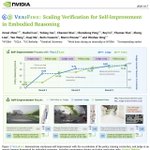
In our new paper, we introduce VeriFine, an #agentic #harness for continuous self-improvement in Physical AI, where policies, training curricula, and judges evolve together.
The idea is to build agentic systems that can identify policy failures, turn them into useful training signals, and improve the policy. When the judge itself becomes a bottleneck, the harness brings in targeted human feedback to refine its evaluations and guide the next round of improvement.
We evaluate VeriFine on autonomous driving and robot navigation, demonstrating continued improvements in both policy and judge capabilities through reinforcement learning and supervised fine-tuning.
Key takeaway: We're developing agentic harnesses that go beyond optimizing a policy in a fixed loop. They adapt the improvement process itself—including how failures are identified, how training data is selected, and how progress is evaluated.
📄 Paper: arxiv.org/pdf/2610.08761
🌐 Website: veri-fine.github.io/
Work led by Zewei Zhou, in collaboration with Rachel Luo Yulong Cao @ChaoweiX Chensheng Peng @Boyiliee @tianran_ Zheng Lian @yan_wang_9 Jiaqi Ma @iamborisi @wenhaoding95
#PhysicalAI #Robotics #AgenticAI #Alpamayo
@NVIDIADRIVE @NVIDIAAI

Introducing TacitVLA — the benefits of reasoning, without the latency!
There is now conclusive evidence that #reasoning supervision can improve the performance of Vision-Language-Action (VLA) models. More broadly, reasoning is a promising tool for building more capable and safer autonomy stacks. But generating a chain of thought token by token adds latency—a major bottleneck for real-time robotics and autonomous driving.
TacitVLA introduces a training approach that captures the benefits of reasoning without requiring actions to wait for it. The key insight: reasoning traces improve the model’s backbone representations during training, allowing actions to benefit from this supervision without waiting for or conditioning on generated reasoning at inference time. For long-horizon tasks, reasoning traces can serve as episodic memory, generated asynchronously during action execution without adding latency when generation finishes within the execution window.
📈 Across four manipulation and autonomous-driving benchmarks, TacitVLA matches the performance of its explicit-reasoning counterpart at up to 3.4× lower latency and achieves up to 17.1 percentage points higher success than the same architecture trained without reasoning, at comparable latency.
🌐 Project page: tacitvla.github.io/
📄 Paper: arxiv.org/abs/2610.17540
This work was led by @Jacklu_me, in collaboration with @YurongYou @Boyiliee @yulong_c @tianran_ @ChaoweiX Xiangyu Chen, Wenjie Luo, @iamborisi @yan_wang_9
.
@NVIDIAAI @NVIDIADRIVE @NVIDIARobotics
#Robotics #PhysicalAI #EmbodiedAI #Reasoning

I’m excited to share that I have been promoted to Full Professor of Aeronautics and Astronautics at @Stanford!
This is an important personal milestone, but more than anything, I see it as a reflection of the incredible people I’ve had the privilege of working with at Stanford University’s Autonomous Systems Lab (@StanfordASL) over the years. The dedication, creativity, and intellectual brilliance of ASL members, together with the support of my colleagues across Stanford—and especially in AeroAstro—have made this journey truly special. I’m deeply grateful to all of them.
Looking ahead, I’m more excited than ever about continuing to push the boundaries of robot autonomy and expanding ASL’s global impact in research and education. This may be the most exciting time in history to do #robotics #research! The opportunities ahead are extraordinary, and I look forward to pursuing them together with our community.
Curious about what we’re working on? Check out our new lab website: stanfordasl.github.io/
Onward and upward! 🚀
@Stanford @StanfordAILab @StanfordASL
Introducing PLUTO (Plain Language Understanding for Trajectory Optimization), our new research exploring how #agentic #AI can make sophisticated #aerospace #engineering tools more accessible.
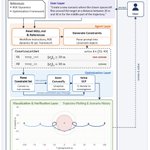
PLUTO combines an AI coding agent with established numerical optimization methods, using sequential convex programming as its backbone. The agent translates natural-language requirements into executable constraints, formulates the optimization problem, and helps visualize and verify the resulting trajectory.
The key idea: let AI handle problem formulation while relying on rigorous numerical methods to solve it.
📄 Paper: arxiv.org/abs/2610.07573
💻 Code: Coming soon.
This is our first step toward accelerating aerospace mission design and operations through agentic AI workflows. Stay tuned for more soon!
Work led by Eleanor Brosius, in collaboration with Yuji Takubo, @DanieleGammelli, and Simone D'Amico
#AgenticAI #Aerospace #TrajectoryOptimization #AutonomousSystems
@StanfordEng @StanfordAILab @StanfordASL

Marco Pavone retweeted

In 2018, Stanford experts said driverless cars were 90 percent of the way there. The remaining 10 percent meant handling fog and rain, inconsistent road markings, and safe decision-making. Stanford HAI Faculty Affiliate @drmapavone explains how AI helped close that gap. Via Stanford Report: news.stanford.edu/stories/20…

System 1 models have generated significant excitement recently, particularly following the introduction of #Jev.
We introduce Contrastive Language Model (CLM): an ultra-fast System 1 model that connects states and actions through contrastive learning.
CLM-8B delivers up to 9× faster inference than Jev ⚡ while achieving comparable performance across computer use, gaming, and tool calling. With lightweight fine-tuning, it achieves 81.6% on DeepSWE and 87.6% on Terminal-Bench 2.1.
We also introduce efficient training and serving infrastructure for CLMs and establish scaling laws across compute, model size, and dataset size.
📄 Blog: contrastive-lm.notion.site
💻 Code: github.com/Contrastive-LM/CL…
🗣️ Discord: discord.gg/5dAQEDJBs
🤗 Data & Models: huggingface.co/Contrastive-L…
Work led by @jackyk02, in collaboration with @hangoo_kang @TarunSures41845 @JonSaadFalcon
@Azaliamirh @HazyResearch
More details in @jackyk02's post: xitter.cf/jackyk02/status/210290…
@StanfordASL @StanfordAILab @StanfordEng

Introducing Contrastive Language Model (CLM): an ultra-fast System One Model trained with a contrastive learning objective that connects states and actions.
CLM-8B is pre-trained on internet-scale data and delivers up to 9× faster inference than Jev ⚡ while achieving comparable performance across computer-use, gaming, and tool-calling tasks.
With lightweight fine-tuning, CLM-8B sets a new SOTA on challenging agentic coding benchmarks, such as DeepSWE (81.6%) and Terminal-Bench 2.1 (87.6%). In contrast, Jev fails to serve as an effective verifier for these long-horizon tasks.
We also build an efficient training and serving infra for CLMs by disaggregating states and actions, allowing their embeddings to be cached and reused independently. This substantially reduces inference latency in settings where the state evolves continuously while the action set remains fixed.
Finally, we establish scaling laws for CLMs and show that the test contrastive loss decreases predictably as a power law in training compute, model size, and dataset size.
📄 Blog: contrastive-lm.notion.site
💻 Code: github.com/Contrastive-LM/CL…
🗣️ Discord: discord.gg/5dAQEDJBs
🤗 Data & Models: huggingface.co/Contrastive-L…
More details on CLM’s architecture, data recipe, and scaling laws in the thread below 🧵
Can we steer a robot foundation model without retraining it?
Our new paper explores this question through control-inspired notions of feature observability and controllability in Vision-Language-Action (VLA) models.
We find that state- and action-relevant information can often be linearly predicted from VLA internal representations—and that these representations can be steered at inference time to change robot behavior, without fine-tuning.
As an example, on a real robot, our approach increased the preferred handle-grasp rate from 14% to 74%, while adding only ~1% inference-time overhead.
The broader idea is that representation-level control could provide a lightweight interface for adapting robot foundation models to new preferences and constraints—without retraining.
Joint work with Hugo Buurmeijer Carmen Amo Alonso @SwannAiden
Paper: arxiv.org/abs/2603.05487
#PhysicalAI #Robotics #VLA #RobotLearning
@StanfordEng @StanfordAILab

Following up on my previous post about PhD Research Intern opportunities, the Autonomous Systems and Physical AI Research (ASPIRE, research.nvidia.com/labs/asp…) group at @nvidia is also hiring for full-time positions!
Priority will be given to candidates who can start by the end of January 2027.
Open positions:
- (Senior) Research Scientist — Apply here: nvidia.wd5.myworkdayjobs.com…
- (Senior) Research Engineer — Apply here: nvidia.wd5.myworkdayjobs.com…
We work across #reasoning models, #generative simulation, #agentic #AI workflows, and #Physical AI #safety, with applications spanning autonomous vehicles and a broad range of Physical AI systems.
If you’re interested in joining us, we’d love to hear from you!
@NVIDIADRIVE @NVIDIARobotics @NVIDIAAI

We are hiring! The Autonomous Systems and Physical AI Research (ASPIRE: research.nvidia.com/labs/asp…) group at @nvidia is looking for talented PhD Research Interns to join us in advancing the frontiers of #autonomous #systems and #Physical #AI.
We work across a broad range of research areas, including #reasoning models, generative simulation, #agentic AI workflows, and Physical AI #safety, with applications spanning autonomous vehicles and a broad range of Physical AI systems.
Interested in pushing the limits of what’s possible? Apply now:
nvidia.wd5.myworkdayjobs.com…
Marco Pavone retweeted

From Robotaxis to L4 Autonomy: A Deep Dive Into NVIDIA Alpamayo 2 Super xitter.cf/i/broadcasts/1oKMvNqQP…

Join us tomorrow for a deep dive into #Alpamayo 2 Super—our most capable model yet!
We’ll unpack the key technologies behind the model, showcase hands-on notebooks to help you get started, and share the latest AlpaSim updates.
We’ll also take a closer look at our two ongoing challenges, with prizes up for grabs!
Save the date: addevent.com/event/mwwld54rm…
@NVIDIADRIVE @NVIDIAAI
The @Stanford Department of Aeronautics & Astronautics has a faculty opening!
This is an incredibly exciting time for #aerospace. Rapid advances in AI, autonomy, robotics, sustainable aviation, advanced propulsion, and space technologies are reshaping how we design, build, and operate the systems that will define the next generation of flight and exploration.
Joining the Stanford AeroAstro Department is a unique opportunity to help shape these fields for decades to come — while educating and inspiring the next generation of aerospace leaders.
We are looking for outstanding faculty who want to push the boundaries of aerospace research, collaborate across disciplines, and make a lasting impact through both research and education.
📅 Application review begins: October 15, 2026
📅 Full consideration deadline: October 31, 2026
Learn more and apply: facultypositions.stanford.ed…
Please share widely with exceptional candidates who may be interested!
@StanfordEng @StanfordAILab

Our latest finding: scaling self-verification can make open-weight models significantly more capable at a fraction of the cost.
With DeepSeek V4 Flash, sampling just 5 candidate solutions and using the same model to rank them with LLM-as-a-Verifier improves Terminal-Bench 2.1 accuracy from 79% → 88%—outperforming Claude Fable 5 while costing 11× less. 💰
As open-weight models become more capable, we can generate many high-quality candidate solutions and verify them at very low cost.
Try it out: github.com/llm-as-a-verifier…
More on verification scaling in @jackyk02's previous post: xitter.cf/jackyk02/status/207496…
@StanfordAILab @StanfordEng

How can we extract richer signals from AI Feedback?
Introducing LLM-as-a-Verifier✨— a simple verification scaling framework that achieves SOTA on agentic benchmarks 🚀
The key idea:
- Use fine-grained scoring granularity (e.g., 1-20 instead of the standard 1-5 scale)
- Take the expectation over the full logprob distribution of score tokens
- Scale repeated evaluation and criteria decomposition
You can use these fine-grained signals for more effective test-time scaling, RL, and agent monitoring! It achieves SOTA across Terminal-Bench V2, SWE-Bench Verified, RoboRewardBench, and MedAgentBench 👑
Advised by @Azaliamirh @istoica05 @drmapavone @chelseabfinn
🧵👇

We have just released #Alpamayo 2 Super — @nvidia’s frontier open reasoning model for #autonomous #vehicles.
NVIDIA Alpamayo 2 Super is an open 34-billion-parameter #reasoning vision-language-action (#VLA) model designed to accelerate autonomous vehicle (AV) development. It combines the 32-billion-parameter NVIDIA #Cosmos 3 Super Reasoner with a 2-billion-parameter diffusion-based Action Expert and is post-trained with #reinforcement #learning.
Two aspects make Alpamayo 2 Super particularly exciting:
1. Open and commercially deployable: Alpamayo 2 Super is available on Hugging Face under OpenMDW-1.1, the Linux Foundation’s permissive license for open AI model distribution. The OpenMDW license is now being applied across the entire Alpamayo model family, enabling developers to deploy these models commercially without requiring additional permissions.
2. A multi-task foundation model for autonomous driving: Alpamayo 2 Super produces five tightly coupled outputs:
- A trajectory describing the vehicle’s planned path.
- A chain-of-causation (CoC) trace explaining the reasoning behind each driving decision, achieving benchmark-leading reasoning performance at frontier scale.
- A meta-action (e.g., yield, lane change, stop) capturing the model’s intent.
- Reasoning auto-labels that generate CoC annotations for training and validation data.
- Visual question answering responses with 2D visual grounding, linking answers to specific regions in camera images.
These multi-task capabilities enable developers to leverage a single foundation model across more of the development process, simplifying tooling and accelerating iteration.
Resources:
🔹 Interview: youtube.com/watch?v=VeYZ-MrJ…
🔹 Video: youtube.com/watch?v=xySgVPLY…
🔹 Blog: blogs.nvidia.com/blog/alpama…
🔹 Technical blog: developer.nvidia.com/blog/ge…
🔹 Hugging Face blog: huggingface.co/blog/nvidia/n…
🔹 Model weights: huggingface.co/nvidia/Alpama…
🔹 Inference code: github.com/NVlabs/alpamayo2
As @JensenHuang has emphasized, open models help advance safety and security. We hope Alpamayo 2 Super will contribute to this vision by enabling researchers and developers around the world to build, experiment, and innovate in autonomous driving.
We are excited to see what the community builds with Alpamayo 2 Super.
@NVIDIADRIVE @NVIDIAAI

#Alpamayo 2 Super, @nvidia's frontier open reasoning model for autonomous vehicles, is now available!

Today, we’re launching Alpamayo 2 Super, our frontier open reasoning model for autonomous vehicles.
Beyond seeing, Alpamayo understands and reasons through the complex world - thinks before it acts.
It’s a powerful backbone for robotaxis, trucks, shuttles, delivery vans, tractors and the long tail of mobile robots—billions of autonomous machines someday.
We’re releasing it for commercial use under OpenMDW-1.1 so teams can inspect it, fine-tune it and deploy it—open models advance safety and security.
The next wave of AI is robotics—and it starts with autonomous vehicles.
Great work, Alpamayo team!
blogs.nvidia.com/blog/alpama…


A thoughtful letter highlighting the critical importance of open frontier models — a must-read for researchers, developers, and anyone shaping the future of AI. We built the @nvidia #Alpamayo open platform (nvidia.com/en-us/solutions/a…) around the same philosophy: sharing state-of-the-art #Physical #AI models, data, and tools with the community to accelerate innovation and advance the development of safer, more capable #autonomous #vehicles and #Physical #AI systems.

For my first post, I’m sharing a letter @NVIDIA signed on why open models matter.
AI will transform every industry, power every company, and be built by every country.
Open models strengthen safety and cybersecurity, accelerate innovation and diffusion, and enable sovereignty.
The world needs both frontier closed models and frontier open models.
images.nvidia.com/pdf/Open-W…


