

Author - Winner of the Rome Prize. FRSA. Artist, & Historian Published by Hachette, Newton Compton, Head of Zeus & Quercus https://teapawt.org/t.co/injxCb30ye
UK
Joined December 2012
- Tweets43.4K
- Following9.6K
- Followers10.4K
- Likes20.5K





Pinned Tweet
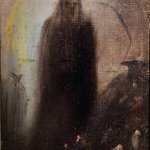
Painted in a wall in an alleyway in Naples.
Now this is true art, done from love and the pure joy of creation.


Alex Connor retweeted

🇨🇭📚
Connaissez-vous la bibliothèque de l'Abbaye de St-Gall, en Suisse ?
Il s'agit de l'une des plus anciennes et plus belles bibliothèques monastiques au monde.
Achevée en 1767, elle abrite une collection de manuscrits médiévaux rares, dont certains datant d'avant l'an 1000.🤩
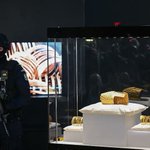
An armed police officer guards ancient golden objects at the National Museum of History of Romania. The artefacts were stolen from the museum in January 2025 and recovered in April 2026.
Photo: Daniel Mihailescu/AFP via Getty Images

Alex Connor retweeted

OTD Sept 5, 1958 Boris Pasternak’s Soviet-banned Doctor Zhivago published in U.S. Smuggled out by Brit intelligence, published by CIA worldwide, including in Russian.

Alex Connor retweeted

Hollywood isn't the only one who can shoot like this anymore / LeronX opens up this level of production to everyone — free, with 1,000 starter credits. Even a kid could do it.
Alex Connor retweeted
🇮🇹⛪️✝️
Avez-vous déjà assisté à l'ouverture des portes de la basilique Santa Croce de Florence ?
Un instant magique à apprécier chaque matin...🤩


Alex Connor retweeted

What dreadful hot
weather we have!
It keeps one in a
continual state of
inelegance. - Jane Austen.
•
Oil painting by
Robert George Harris (1911-2007)


Alex Connor retweeted
LONDRES EN 1943 ET 1944 🇬🇧
Images de Londres pendant la seconde guerre mondiale, avec les couleurs d'origine.
Chapeaux, uniformes et GI américains, sur une chanson de l'artiste britannique Vera Lynn.
La vie continuait malgré les horreurs de la guerre...🧐
(🎥official_babelcolour/IG)
Alex Connor retweeted
🇮🇹⛪️✝️
Quand vous irez à Rome, profitez-en pour entrer dans la basilique des Saints-Apôtres.
Ce magnifique édifice du VIe siècle, situé près de la fontaine de Trevi, abrite sous son autel les reliques de Saint-Jacques le Jeune et de Saint-Philippe.
🤩
Alex Connor retweeted

A mother and daughter watch a sailing ship navigate the Thames assisted by a steam tug, London, England, c. 1880.

Alex Connor retweeted

He was only eighteen years old. His weapon of choice was not a gun, but a tiny bottle of acid. Yet, this teenage boy managed to save fourteen thousand lives from certain death.
In 1943, Paris was a dark place under Nazi occupation. Adolfo Kaminsky was just a young apprentice working in a textile dyeing shop. He spent his days learning how colors reacted with chemicals, which solvents could dissolve certain pigments, and how to alter tones at a molecular level.
He had no idea that this highly specific knowledge about ink and fabric would soon become the thin line between life and death for thousands of innocent people.
During the occupation, the Gestapo used paperwork as their primary weapon to hunt down Jewish people. Identity cards, travel permits, and food rations were all strictly monitored. On the documents of Jewish citizens, the authorities stamped one single word in blue ink: "JUIF".
That one word was a direct ticket to a concentration camp.
The French Resistance desperately needed a way to erase that word without ruining the paper. Standard forgery techniques failed because the official ink was designed to be permanent.
Any attempt to scrape it off left obvious marks that would get someone killed.
They brought the problem to Kaminsky.
The boy analyzed the paper under a dim lamp and remembered a trick from his textile work. Lactic acid could dissolve that exact blue ink while leaving the paper fibers perfectly intact.
It worked.
But erasing the stamp was only the first step. He had to rewrite names, birthdays, and signatures perfectly. The Resistance set up a secret laboratory for him in a hidden attic on the Left Bank of Paris. The demands poured in constantly.
He needed to make fifty birth certificates for children escaping to Switzerland, two hundred food cards for families hiding in cellars, and hundreds of passes to Spain.
The conditions were brutal. Bleach and acid fumes filled the tiny room, burning his throat and making his eyes water constantly. His fingers were permanently stained with dark ink. Kaminsky realized that each document took him about two minutes to make.
That meant he could save thirty people every single hour.
This realization turned into an obsession that haunted him. He looked at the clock and thought, "If I sleep for an hour, thirty people will die."
So, he stopped sleeping.
One week, word came that a local orphanage with three hundred Jewish children was about to be raided by the Nazis. They needed fake papers immediately or they would be put on a train to Auschwitz. Kaminsky locked himself in the attic.
He worked for two straight days and nights without a pause. His vision blurred and his hand cramped so badly he had to physically massage his fingers to keep writing.
Eventually, his body gave out and he collapsed onto the desk.
He slept for exactly one hour. When he woke up, panic gripped him. He cried out, "Thirty people are dead because I was lazy!"
He refused to eat or rest until the remaining papers were finished.
Thanks to his sacrifice, the children were moved to safety in time.
Kaminsky spent years in that suffocating attic, constantly upgrading his skills as the Nazis upgraded their security measures.
When Paris was finally liberated in 1944, the young genius had saved roughly fourteen thousand people.
He never accepted a single penny for his work, believing that taking money to save a life was deeply wrong.
After the war, Kaminsky became a photographer and lived a quiet, modest life. He never bragged.
He did not tell his neighbors, his coworkers, or even his own children about his wartime heroism for decades.
He simply faded into the crowd as an ordinary man.
Adolfo Kaminsky passed away in 2023 at the age of ninety-seven.
He did not want monuments or medals. His true legacy lives on today in the children, grandchildren, and great-grandchildren of the thousands of people who survived the darkness simply because a brave teenager chose to stay awake.

Alex Connor retweeted

He was a very good man from an era of true gentlemen. Here he is in a publicity photo with Basil Rathbone, Peter Lorre, & Vincent Price


Alex Connor retweeted
LONDRES EN 1924 🇬🇧
Voici le premier film couleur connu de Londres.
(Non colorisé)
Ce sont les images et couleurs originales.
Magnifique ! 🤩

