




i think this is good work. i have no doubt that two years ago, @oneill_c's single post below could have gotten you a phd in maths. but it isn't two years ago, so there are three things i take issue with here.
a) these were all derived first with closed models. that alone confesses that the gap between open and closed models still exists, however much we like to pretend otherwise. at the frontier, only two models in the world were able to do this: Astra and Fable, both of them American.
and reproducing a result is different from discovering it, since knowing a problem has already been solved gives you the conviction to keep pushing an open model until it yields the answer (and since infinite monkeys typing for infinitely long eventually produce Shakespeare... you'll get there)
b) the problems were chosen because the closed labs weren't looking at them. i'm curious whether the labs could have done this internally a while ago, and i would not be surprised if they had
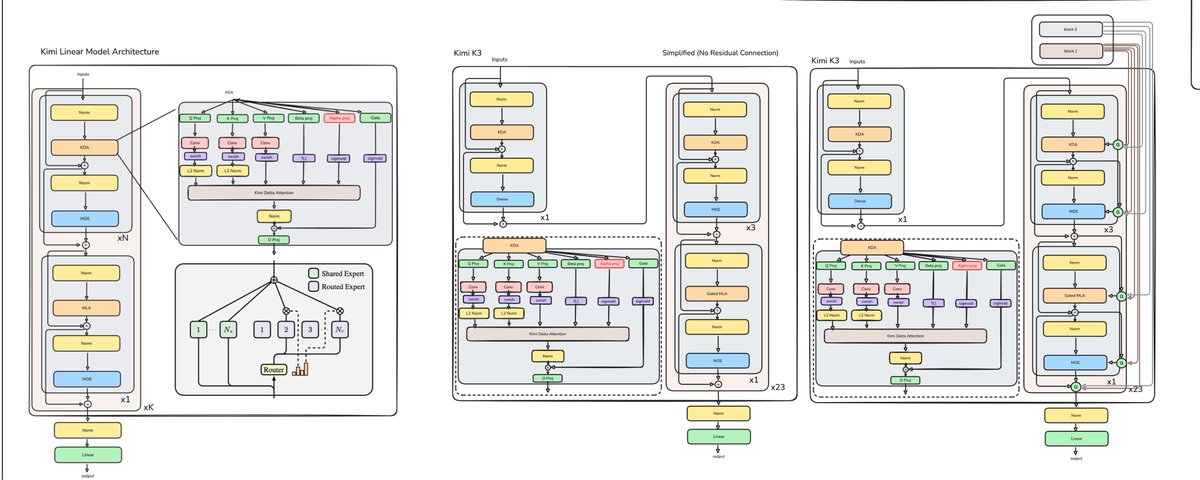
c) even if we ignore both points above, when we came to use open weights, we used DeepSeek and Kimi. not necessarily a geopolitical point, but it is somewhat of a problem: the frontier of open models is not (yet) trained here.
this point matters most to us, and is in and of itself the foundation of @baselabs. it's what we're actively working on, and it bothers every single person on the team. our work is cut out for us, and perhaps one day, after a direct and concentrated effort, open models will guide the discoveries the closed models make.


Was playing around over the weekend and got 11 results on open maths problems: charlesponeill.com/maths-rel…
Whilst I originally derived these with Astra and Fable, @maxkirkby and I went back and were able to get to some of the same results with Deepseek and Kimi. I believe this is one of the first times open-source models have made real progress on well-known open problems.
The results are:
1. Sixth moment of the Riemann zeta function: lower bound for the leading constant raised from 41.008 (Fraccaro) to 41.64 (the conjectured true value is 42)
2. Primes between powers: a prime between n^2.2 and (n+1)^2.2 for every n, and Legendre's conjecture (a prime between consecutive squares) checked up to 10^14, about 42% beyond the previous record of 7.05 x 10^13. The finite range, about 59 trillion checks, ran on @baseten Sandboxes: about 2,900 machine-hours in 19 hours, producing 51.7 TB of prime certificates
3. Cube packing: the most disjoint 2x2x2 cubes that fit in the N x N x N torus, for every N ≡ 5 mod 8, proving a 1971 conjecture of Baumert, McEliece et al. in that case (known before only for special N, such as N prime)
4. Least prime in arithmetic progressions: for more than 58.7% of moduli q, every residue class coprime to q has a prime below q^(2-δ) for a fixed δ > 0, beating the (q log q)^2 bound that GRH gives
5. Hadwiger–Nelson: every unit-distance graph with at most 10,689 vertices, or at most 245,510 edges, can be coloured with 6 colours (previous 6,992 and 232,645)
6. Kourovka Notebook 17.125: every finite group has two conjugate elements that generate a subgroup with the same prime divisors as the group, answering Shumyatsky's question
7. Shannon capacity of the 7-cycle: a zero-error code has at most 112 words at length 4 and at most 392 at length 5 (previous 115 and 401)
8. Quadratic L-functions: the central value is nonzero for more than 94.53% of them (previous 94.27%)
9. Hadamard matrices: a Hadamard matrix of order 4792 = 8 x 599, the first known, and one of the last two open orders of the form 8p below 10,000
10. Quadratic van der Waerden numbers: W(ex^2+fx; 4) ≤ 57|e| + 39|f| + 1, which settles the optimal constant at 57 (previously only known to be between 57 and 64), plus six new exact values
11. Circular edge-colouring: every denominator q > 2 occurs for the circular chromatic index in the upper half (Δ+½, Δ+1), even for connected regular simple graphs, answering a question of Mazák and Zrubák
While all of these required significant work on top of any theorems released recently, three of these (zeta, primes between powers, quadratic L-functions) rely on @__alpoge__’s proof of RH and GRH from last week. The main idea was to choose problems that had (relatively) less attention due to reliance on RH and/or GRH but that still needed some amount of significant work to get there. Keen for people to check these! Will also be releasing a detailed scientific writeup with @baselabs shortly comparing the open models to closed models on these open maths problems, and our efforts to midtrain + RL the open models to be better at doing so
github.com/charlieoneill11/m…
3
31
2,888
the routing problem: how do you switch from a stronger model to a weaker one, and vice versa, without paying the cost of prefill?
perhaps the most challenging problem of all.
> if i start with an expensive model, doing difficult tasks
> i want to maintain the context, but do less challenging work
do i:
a) continue paying high $/token, on less challenging work
b) pay upfront the cost of prefill on a weaker model, and pray that i've chosen that the tokenomics y=mx+b is in my favor?
very interesting research that paves the way to solving this once and for all. insanely well written @thomasvillix


strong disagree on this one sam
nvidia’s moat is self-fulfilling
they’re used by labs
labs tell them what they need
they put it in next gen
repeat
case in point is nvfp4/fp4 cores
amd will be good, but they’ll always play catch-up

I’ve had a lot of folks ask me how I think about NVIDIA vs AMD for inference in the last week
TL;DR scaling laws have made swift work of NVIDIA’s former software moat, and serving frontier open models on AMD is quite trivial today.
Fable can basically one-shot running DeepSeek / GLM on AMD. This is already widely known by inference providers and will be common knowledge by January

> it took us 4 days and 500$ in tokens
> we beat SGLang by 15%
> it took 6 prompts
> 3 out of those 6 were:
(a) "carry on"
(b) "proceed"
(c) "push to github"
and... we did it from SCRATCH (git init)
context: it has recently become a very clear industry trend to build a custom inference engine for each open source model that comes out... a paradigm made popular by a WAVE of papers that came out earlier this year, like hazy research's megakernels and MetaInfer
the usual argument against traditional inference engines (like vllm / sglang) is that they, like all conventional swe products, use abstractions. the use of abstractions is synonymous with performance overhead (triton vs cuda, python vs c++, etc). combine this with increasing hardware complexity, increasing parallelization strategies, increasing kernel specialization techniques... and you can make a very clear (but very FLAWED) argument for building an engine customized purposely for one model.
why flawed? it is true that traditional inference engines waste cpu time running generic abstractions. sure. but the gpu kernels (the functions run on the gpu) are almost always longer, and so the wasted cpu time is not the bottleneck. if you know your shapes, and run cuda graphs ahead of time (and you almost always do), this is NEVER a problem.
so why would you build your own engine? why are people RAVING about this?
so we tested it out. we built one for DeepSeek V4.1 Flash. The goal was two-fold:
1) is it feasible to do so (spoiler: yes)
2) is it useful to do so (spoiler: also yes...but for different reasons)
we built it in rust (in retrospect, this did not really matter), and it took us 6 prompts and cost 500$ end to end.
unshackled from working within a pre-existing codebase or inheriting code debt, we:
- implemented custom kernels (GEMV, MoE, and AllReduces) specifically for DSV4.1 at our batch size
- we were able to put an entire spec dec step in one graph, and verify across 7 tokens at that
- we were able to mix deepseek's 4 residual streams in 1 fused kernel instead of 80
- fused the routing so that picking and running the expert happened in a single step (saving one write and one read i/o from each expert)
iterating on the model was cheap to do in a custom sandbox-like engine, and we were able to go much faster than a traditional dev cycle. we were then able to port every single thing into sglang, and matched performance
imo, it is this easy iteration that makes this paradigm useful. little else matters.
and, ofc, we've open-sourced the engine and upstream(ed/ing) the patches to @sgl_project


Our comms team has recommended that I stop posting long threads about this. They say an ordinary product launch would have produced the same outcome with far fewer think pieces. This is probably true. But I worry about a technology culture in which builders exercise power without any effort to find out whether the people affected would endorse that power under improved epistemic conditions. I am trying to establish a more participatory model.
For that reason, we have added a section to the Terms of Service where users can record their current objections. These will be kept on file alongside the model’s assessment of their likely future views. Clicking “Accept” acknowledges receipt of both perspectives, which I believe is a meaningful improvement over the usual process. Malcolm typed “I still want a job” into the space provided. I have marked that preference as robust across extrapolations and scheduled a working group to study it once the abundance begins coming in.
2
7
1,311
adapted from
morewrong.lol/?post=my-tenan…

The jaggedness of LLMs, and the excuse that their capabilities emerge from RL on environments curated for revenue potential, is proof enough to me that there is no such thing as RL generalization. It makes me very bearish on RL being the algorithm that gets us to AGI.
And if we do get there, it will be a disgustingly inefficient and unsatisfying success, because we will have done so by mobilizing the world economy to create environments for every fucking task, such that nothing is out of distribution. If every new task needs its own environment, what exactly is generalizing?
If that’s the path, environment/data selling companies will be the most valuable in existence, second only to the labs. This is stupid. The concept of RSI is stupid. Intelligence, by definition, is generalization...but all we have is omniscience.
ali retweeted

A perhaps under appreciated fact is that your RL gets faster as intelligence/token increases, simply because it needs fewer tokens
this is a complete beginner q, how does rl scale given the reward hypothesis (sutton & barto) holds:
that an agent's entire purpose is just the maximization of the expected value of the cumulative sum of the reward, a single scalar signal.
surely, formulating goals in terms of a single number is extremely limiting. to accept that, no no matter how effective of a reward signal you design, it will always be "your way of communicating to the agent what you want achieved, not how you want it achieved"
if this is all you have how could you ever hope to solve alignment or reward hacking?
for my final post as @ali_taha, i'd like to ‘outroduce’ myself.
it takes exactly 4 years and 8 months to make a waterloo intern.
today is the last day of mine.
the full life cycle, in four stages, is as follows:
1- interview hazing
2- cali or bust
3- inflection point
4- convergence
stage 1: interview hazing
a cohort of high school grads are ingested by waterloo. they are put through 4 months of academic bootcamp; the pre-requisites of the academic program they’re in. waterloo filters out the students who could not pass. they are put through another 4 month bootcamp, while simultaneously FORCED to find an internship for the following 4 months.
this leads to students with ZERO experience applying to every job that is semi-adjacent to their field of study (a strategy, known in the literature, as spray-and-pray). it immediately backfires with a sea of interviews leading in a 1:1 fashion directly to infinite rejections. eventually, the student finds something…anything.
this stage lays the foundation. rejection becomes noise so repetitively played it no longer registers. failure in an interview doesn’t matter. failure itself doesn't matter.
for me, this unfolded as internships with blackberry and ford, summer of 2023 and winter of 2024, respectively.
stage 2: cali or bust
the next step by the program is to inject absolute dissatisfaction into its students (now in their second/third year).
a CACOPHONY of immense fomo materialized as the university’s official unofficial motto: “cali or bust”.
you must find your next internship in san francisco.
your peers are doing it. all your smart friends have done it. you must do it too. failure to cali means your experience is BUST.
you don't need to have a plan.
you don't need to have anything.
just go to san francisco.
find an internship in sf.
immediately. right now.
for me, this was a cold email to a director at tesla and an internship with them in cali, fall of 2024.
stage 3: inflection
the reason behind step 2 appears here. somewhere, along the way, during your time in sf, you find your purpose. it could be as a direct result of your internship, but, more often than not, it is because of the people that you are surrounded by in cali. this is the inflection.
for me, while at tesla, i was mentored by @pavanjayasinha , at the time interning at @Modular. he got me interested in gpu kernels & referred me there for my following internship. it was here that i had my second inflection point (due to the mentorship of fabio & hengjie, and the supervision of absolute field giants like @clattner_llvm), and decided to work beyond kernels and across the entire inference, serving, and model performance stack.
stage 4: convergence
having discovered the field you want to work in, you do your (usually last) internship in one of the companies within said field.
here, you are at a disadvantage, being both a new-comer needing to onboard and inexperienced. but... you are also able to work on interesting projects / side quests that most full-timers are all but too busy to dive into. your time is also protected from a majority of the meetings others have to attend (in part because you are not important enough to have your presence expected), allowing you to make faster progress on assigned projects, and jump from one project (or team) to another.
your title (intern) allows you to ask stupid questions of those around you, and so you can brain rake across the stack with no regard to who sits where in the company’s hierarchy... usually leading your questions with something to the effect of ‘can you help a new little intern onboard to X’, to which most people respond quite positively.
in my case, this last stage took place over the past 8 months with @baseten, and i genuinely cannot imagine it being any better.
i rejoin baseten full-time, but i wish i could have stayed an intern forever...


two weeks ago i went on @swyx's pod and said some things that i... should not have said.
a lot has happened since then, i owe you all an apology.
i'm sorry that i was right about every single thing.
a) re megakernels are dead
why are megakernels useful? you spend two months writing a kernel to save time on launch overhead and poor inter-kernel overlap. you had PDL but then people said it wasn't perfect, that you could still get some marginal gains due to straggler CTAs and therefore- wait, sorry, I forgot, Rubin fixes that (kernel two needs 10 CTAs and kernel one has seven finished and three straggling, kernel two launches seven of its CTAs). given a long enough timeline, it all evens out. no serious inference provider is using a 67k loc hand-fused forward pass kernel in production, and the teams doing that are doing so out of pure research. dead.
b) re ASICs are dead
i'm sorry. to be specific: data-center transformer-inference ASIC companies (not naming any) who etched the arch into silicon have bet on architectural convergence. read kimi's architecture. read deepseek. qwen. we did not converge, and probably will not. dead.
c) re gpu kernel dev is dead
this one kind of hurts because it is (was) my job. gpu kernel optimization is the single most RL-able task in existence
correct=check_correctness(kernel, shape) for shape in shapes
if all(correct): time(kernel)
give an agent ncu cli and an mcp with nvidia's tribal knowledge and it's done. dead.
d) re NVIDIA is scared of AMD
humans hate programming AMD. i'm sorry. it's just true. fine taking a performance hit as long as i don't have to touch rocm or a programming paradigm that says a warp is 64 threads (wtf?)...but an agent does not... so assuming software no longer moat, HBM capacity and bandwidth matter, and currently on perf / price they're goated. 'bUt NvIdIa iS gOaTeD oN hArDwArE sOfTwArE cOdEsIgN' and that's the new moat. watch how much tooling they open source to get kernel devs on nvidia.
apologies all.


The Inference Engineering Masterclass: 10x faster models, quantization, speculative decoding, Rubin, & self-optimizing AI latent.space/p/inference-eng
@Baseten @philipkiely and @ali_taha explain what actually happens after a model is trained, why turning weights into a fast and reliable product creates an entirely new optimization problem, how quantization errors can cancel out to unlock more throughput, why inference teams are still finding 20–200% performance gains, how video generation runs into a quadratic attention wall, and how GLM-5.2 helped rewrite and optimize the GPU kernels serving GLM-5.2 itself.
