

@GVteam, Previously CSO/CMO @Vervetx, co-founder CSO @Lyndra, co-founder @Corner_tx
Joined November 2012
- Tweets3K
- Following1.7K
- Followers1K
- Likes39.8K








Andrew Bellinger retweeted

Texas was built by hope. By people who had no business believing — but believed anyway.
To every Texan who’s ever wondered if anyone in power is paying attention: We are taking our state back.
Because a little bit of hope is a dangerous thing.
Andrew Bellinger retweeted

“we will pay any price….to assure the success and survival of liberty.” Is this still true? Do we prize liberty or do we prize power and purse? No more clear test than the choice between Ukraine and Russia. Abandon Ukraine and we abandon liberty. Eventually even our own.
Andrew Bellinger retweeted

Full house at Benchtalk Boston for @nlarusstone unveiling Science Foundries, a new way to run scientific processes end-to-end with agents and scientists working as a team.
benchling.com/blog/introduci…

Andrew Bellinger retweeted

Today @TheLancet published our AMIE study with @BIDMC_Medicine, the first prospective study of patient-facing conversational diagnostics in a real clinic.
AMIE is a research system people can chat with before doctors appointments. Testing AMIE outside the lab with real urgent care patients showed how technology can help gather medical histories safely. Clinicians reported that the summaries helped them prepare for visits in 75% of cases and influenced their approach to care in more than half. AMIE’s differential diagnoses also matched the doctors’ final diagnoses 90% of the time giving clinicians more time to focus on patient care.
It’s Google’s first-ever paper in The Lancet’s main journal!
Andrew Bellinger retweeted
.@ezraklein: “What is, to you, the ‘rage economy’?”
@JamesTalarico: “The billionaires own the algorithms and the news networks. They have created for-profit platforms that divide us on an hourly basis — by party, by race, by gender, by religion. They elevate the most extreme voices very strategically to provoke our outrage, because that leads to more clicks, which leads to more money for them.
They are selling us conflict right into our bloodstream, and they’re calling it connection.
And I think it’s left people starving for actual community.”
Andrew Bellinger retweeted

The most important briefings of the day.
Karl Deisseroth, professor of bioengineering and of psychiatry and behavioral sciences, shares the news of his Nobel Prize with his kids.
Andrew Bellinger retweeted

Massachusetts is also the third most densely populated state. There are few places on earth where so many people live among so many trees.


Andrew Bellinger retweeted

The entire history of the United States can be counted in just three overlapping lifetimes. And the third man just wrote the soundtrack for Toy Story 5.
In 1776, John Gray was a 12-year-old boy in Virginia. He grew up to fight in the Revolution and stood at Yorktown when Cornwallis surrendered. He lived until 1868, the last verified veteran of the Revolutionary War.
Before Gray died, a boy was born in Michigan in 1852 named John Harvey Kellogg. He would go on to invent the corn flake with his brother. He survived far into the 20th century and passed away in 1943.
And just two weeks before Kellogg died, a baby was born in Los Angeles named Randy Newman. Today he is an American icon, the voice behind decades of songs and film scores.
A boy who watched the Revolution. The man who gave us corn flakes. And the songwriter who wrote "You've Got a Friend in Me."
Just three lives, laid end to end, and you have crossed the entire history of the United States.

Andrew Bellinger retweeted

Polyethylene contains approximately 46 megajoules of chemical energy per kilogram (about ten times the energy content of TNT by mass) stored stably in its carbon-hydrogen bonds rather than as explosive potential.
The Oak Ridge molten-salt process announced this week is essentially an engineered way to release that energy as liquid fuel rather than letting it sit in a landfill.
Andrew Bellinger retweeted

This is cool. Combination of expert human scientists + novel LLM-generated ideas + scaled experimental testing yields new potentially useful materials
“Giving the AI control over which experiments to run was decisive”
Congrats @AndrewLBeam and @LilaSciences team!

I'd like to share one of my favorite stories about a discovery we made at @LilaSciences.
We’ve been working for a while on catalysts for clean hydrogen. One day, our AI proposed chemistry that a scientist who’d studied this exact reaction for 12 years thought had to be wrong.
That composition became our strongest lead, sustaining more than 1,000 hours of oxygen evolution with little loss of catalytic performance.
The scientist is John Gregoire (known as JG to us), who left his Caltech research professorship to become our Chief Autonomous Science Officer, and has been working to build some of the world's most sophisticated automated labs at Lila.
Making clean hydrogen from water requires electricity to drive two reactions: one produces hydrogen, the other oxygen. The oxygen-producing half, the oxygen evolution reaction (OER), is particularly difficult.
In proton-exchange-membrane electrolyzers, the catalyst must drive that reaction efficiently while exposed to strong acid and high voltage. Most materials either corrode or require too much energy to serve as an effective catalyst. Iridium oxide is the industry standard, but iridium is one of the rarest metals on Earth. Depending on it creates a supply constraint on scaling this technology.
JG’s former group at Caltech spent 12 years exploring catalysts for this reaction. He knows how unforgiving these conditions are.
Early in this project, the scientists checked the AI’s suggestions closely, occasionally overruling them. The choices were mostly familiar and sensible. As the experiments progressed, the team stepped back, retaining safety review while letting the system choose what to try.
By the second campaign, which took just four weeks, it was producing results they hadn’t expected.
The system had started exploring palladium-based oxides. When JG and Rafael Gómez-Bombarelli, our physical sciences CSO and an MIT professor, saw the results, they thought the model had gone astray. These were combinations that JG would have told his grad students weren't even worth testing.
But the measurements were promising, so the team kept testing.
Across 2,942 catalysts spanning 53 material systems and 26 elements, the platform uncovered an unexpected family of palladium-based oxides with a promising combination of activity and durability. It screened around 240 catalysts a week, an order of magnitude faster than a standard lab by our team’s estimate.
The best contained tiny additions of indium and manganese, together accounting for about 0.09% of its metal atoms.
At 10 mA/cm² in 1 M sulfuric acid, it maintained an overpotential below 0.5 V for more than 1,000 hours and retained 96% of its palladium. Unmodified palladium oxide crossed that voltage threshold after only 200 hours.
Under the microscope, the team saw a needle-like structure that developed during operation and appears to be associated with the improved durability. We’re still working to understand exactly why it works.
Palladium is also a precious metal, but its supply base is much larger than iridium’s. These catalysts contain neither iridium nor ruthenium, potentially giving us another option.
Giving the AI control over which experiments to run was decisive. The system combined predictive models that learned from our experimental data with LLM reasoning that helped decide where to search next. It could pursue chemistry our scientists would have passed over, have the lab make and test it, and use the measurements to choose its next experiments. Each round of results changed where it looked next.
More than 90% of the screening workflow was automated, with scientists providing oversight and transferring samples between instruments.
These are laboratory results. There’s still substantial work ahead to establish performance under industrial conditions.
People ask when AI and automated labs will start accelerating science. For us, it’s already changing what gets tested and how quickly we learn.
We can make hundreds of materials a week, test them, and use the results to decide what to try next, including ideas our own experts would have passed over.
I want a lot more of this: AI helping us discover things we can actually use to make the world better.
Full story and preprint below 👇
Andrew Bellinger retweeted

Barack Obama at his last press briefing with reporters, 2017:
"I have enjoyed working with all of you. That does not, of course, mean that I've enjoyed every story that you have filed, but that's the point of this relationship. You're not supposed to be sycophants. You're supposed to be skeptics. You're supposed to ask me tough questions. You're not supposed to be complimentary, but you're supposed to cast a critical eye on folks who hold enormous power."
Andrew Bellinger retweeted

The concept of terraforming Mars seemed like science fiction to me before I met @erika_alden_d. It has been a pleasure to support the @Pioneer__Labs team as they build the roadmap to achieve this ambitious goal, and then begin to execute on the hard science, step-by-step.

Today, Pioneer Labs is announcing our first step towards terraforming Mars. 🚀🌼
With equipment that fits in just a single rocket launch, we can convert Martian dirt, water, and air into enough building materials to construct a small city on Mars.
To do it, we made the first microbe for Mars. We found the best microbe on Earth and used evolution to teach it how to source all of its nutrients directly from Martian materials.
The first astronauts will be greeted with safe shelter already filled with water, oxygen, and rocket fuel for the return journey.
This is the first step toward using biology to make Mars a friendly place for life. It lets us live off the land and helps us build the next great frontier.
It's the first of five organisms we need to green Mars ⬇️
Andrew Bellinger retweeted

Yesterday, we lost a cherished member of our family.
We got Sunny at the start of our second term in the White House, and all of us – including our first dog, Bo – immediately fell in love. We also had trouble keeping up with her, for Sunny was a force of nature. Athletic and full of boundless energy, she leapt over the hedges on the South Lawn like they weren’t even there, chasing squirrels, birds and anything else that moved. And whereas the way to Bo’s heart usually involved a treat, Sunny was more interested in having us run around with her, roll on the floor with her, or have her belly rubbed for as long as we were willing.
She loved the girls, even if they were pestering her when she was napping. She loved our team, and would often follow them around, helping them on the job. She was fiercely protective of Bo, who she rightly sensed wasn’t always as alert and attentive as she was. She had her eccentricities: other than Bo, she preferred people to dogs; she was a loud and sloppy drinker; and despite being a Portuguese Water Dog, she hated getting wet.
But as far as our family was concerned, she was pretty much perfect, and for thirteen years, she would be by our side – always loyal, always sweet, always ready for adventure, still fiery and gorgeous till the very end of her days.
We will miss her terribly, and imagine she’s with her big brother now, making sure he’s okay.

So impressive for a CEO of such a major pharma company to prioritize and emphasize the subtleties of study interpretation and analysis like this! @EliLillyandCo

EASD in 2 weeks! A lot of weight-loss numbers are about to drop..including 3 major studies from @EliLillyandCo.
Before we understand a molecule’s performance we need to understand design choices that move a topline weight loss number:
- Baseline & mix. BMI, diabetes status, sex and ethnicity all shift observed response
-Stats methods. Treatment-policy and efficacy estimands answer different questions and trial drop out matters for real world outcomes. Mixing them is not appropriate.
- Uncontrolled tails. Open-label extensions and crossovers can keep weight falling after randomization ends. That is not a new efficacy estimate.
- Execution. Lifestyle intensity, titration schedule, time at maintenance dose, and placebo-arm drop-in of approved medicines (important new trend..see ADA survo data).
Head-to-head data settle all this and should be much more widely used in the future. Where they don't exist, an indirect comparison is one data point — anchored, covariate-adjusted, prespecified, assumptions stated.
Those rules apply to our work too. Hold us to them.
Methods first. Then the number.
Andrew Bellinger retweeted
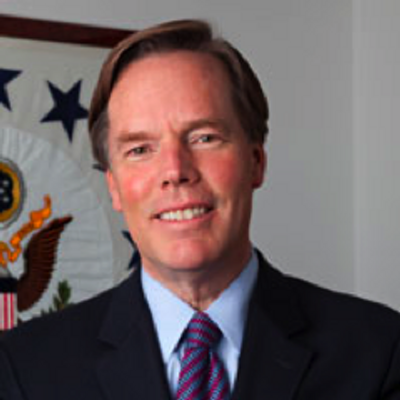
As US Ambassador to NATO on 9/11, the first to call me to suggest we invoke Article 5 was Canadian Ambassador David Wright. Our allies came to our rescue that terrible day. I’ll call David this morning 25 years later to thank him and our great neighbor Canada once again!
Andrew Bellinger retweeted
If you were young in 2001, or weren’t even born yet, it can be hard to imagine what 9/11 felt like. The shock of that beautiful, cloudless morning. The heartbreak of the families whose loved ones were taken with such swiftness and cruelty. The realization that the forces of malevolence and violence were closer, and the future less certain, than we knew.
But in the days that followed, we felt something else, too. Pride in the rescue workers who had rushed to the scene, and the passengers who had stormed the cockpit. Admiration for the men and women who left behind lives of comfort to serve their country. A deep resolve that nothing would break the will of a truly United States of America.
Today Michelle and I are remembering those we lost that day, and those who made the ultimate sacrifice in the wars that followed. We pray for their families. And we hope Americans everywhere remember the true lesson of 9/11: that we can survive even our darkest days as long as we move forward as one nation and one people.
Andrew Bellinger retweeted

The AI field is going to “cure all diseases” in the next five years and then make the human race go extinct shortly thereafter. 😂
Andrew Bellinger retweeted

Developing medicines that could help save people’s lives is highly regulated & takes over a decade. Biopharma is cast as a villain despite painstakingly process w patients at the forefront.
AI companies: “We believe our technology could end civilization in the next decade”
