

Principal Road Safety Officer, MoWT. All opinions are mine not MOWT If it is possible, as far as it depends on you, leave at peace with everyone. Rom. 12:18
Kampala, Uganda
Joined May 2009
- Tweets12.1K
- Following1.7K
- Followers7K
- Likes6.5K





I questioned it too a couple of weeks ago after seeing so many interdiction letters signed by him. As someone who is currently living through what I believe is an unjust interdiction, I had every reason to be sceptical. But when I drew upon my 26 years of experience in public service and revisited the very principles upon which decentralisation was founded, I realised the issue is more nuanced than it first appears.
1. The Permanent Secretary of the MoLG is not the Accounting Officer for Local Governments. Each financial year, the Permanent Secretary and Secretary to the Treasury appoints Accounting Officers, and in most cases these are the Chief Administrative Officers (CAOs), who are financially answerable to him.
2. Most officers holding key positions in districts are recruited through the District Service Commissions, not by the line ministries through the Public Service Commission.
3. Every district is required to have an Internal Auditor. In addition, the Office of the Auditor General (OAG) and the Inspectorate of Government (IGG) have structures and personnel responsible for oversight across districts. So it seems all these people have been asleep that is why Hon. Balaam is even causing the arrest of RDCs.
4. Unlike ministries, districts operate alongside their own political leadership. The LC V Chairperson and councillors are not mere spectators; they are part of the frontline accountability framework responsible for overseeing service delivery before matters escalate to the Central Government.
5. A friend who is active in politics explained that Hon. Balaam Barugahara is implementing the "Kisanja No Sleep, No Corruption" approach. That matters because these districts form the core of the NRM's support base. If service delivery has stagnated, then hard questions must first be asked of the local political leadership, CAOs, and other officials who have been entrusted with these responsibilities but appear to have been asleep at the wheel.
We also have to recall the purpose of decentralization. Uganda's decentralisation policy was introduced in 1992 to transfer political, administrative and financial authority from the central government to local governments. Its objectives were to bring decision-making closer to citizens, improve service delivery, enhance accountability and transparency, promote local development, and strengthen participatory democracy.
In essence, the policy sought to ensure that decisions, resources and public services are managed as close to the people as possible, with the ultimate goals of local empowerment, improved service delivery, and democratisation of governance. For example since since 2023 each districts is supposed to get UGX 1 Billion directly from MoFPED without disbursing it through the Ministry of Local Government.

But given the corruption and administrative rot Hon. @BalaamBarugahar is reportedly uncovering on the ground, one critical question remains: Where was Ben Kumumanya, the Permanent Secretary of @MoLGUganda , all this time? Does he bear any responsibility, and will he be held accountable? Or does he remain untouchable? 🤔

Okay, it seems I was not the only one who initially misunderstood the story about Mr. Bagada. I see @TonyNatif, @bartlettdaron and @JackieAkampwera made the same mistake.
But even after reading the story carefully, serious questions remain. How does someone lose UGX 129 million through mobile banking in a single night? Mobile money and mobile banking systems are not limitless. Accounts are linked to specific phone numbers, transactions are logged, and withdrawal and transfer limits exist. The circumstances as presented simply raise more questions than they answer.
What is equally striking is the reported account balance. If UGX 129 million was allegedly taken and UGX 570 million remained in the account, then we are talking about an account that reportedly held close to UGX 700 million.
I have no idea what Mr. Bagada's legitimate sources of income are, and that is precisely why an objective analysis is necessary. If he has spent his career in @ODPPUGANDA since he left school, then the question is what are the income streams that accumulated such wealth? If every shilling is legitimate, there should be a clear and verifiable explanation.
One of the reasons I have consistently maintained that no one in Public Service is clean (and I include myself here) is that their wealth is disconnected from their known earnings. Civil servants are not paid salaries that would ordinarily enable them to accumulate vast fortunes, construct expensive properties, or build large investment portfolios without substantial additional income. Unless there is an inheritance.
We cannot even secure substantial salary loans to invest in lucrative business ventures. If someone has legitimately grown modest savings and loans into a thriving business empire, they must have brilliant business brains. But extraordinary wealth demands extraordinary transparency.
If the story is accurate, then @IGGUganda or @CID1_UG should not focus solely on the alleged theft. It should also examine the source of the funds, the movement of the funds, and whether the accumulation of such cash is consistent with declared income.
The sensational story of a sauna and a woman stealing from him should not divert attention from the cash on his account.


“We have cut expenditure and tightened monetary policy.”
Sir, with all due respect, 95% of Ugandans do not know what "tightening monetary policy" means. You were not seated in a boardroom speaking to economists. You were on radio speaking to ordinary Ugandans. If your message cannot be understood by the people you are addressing, then it has failed its purpose.
Break it down. Explain it in simple language. Tell people what you have done, why you have done it and how it affects the money in their pockets.
When you say government has cut expenditure, are you describing a deliberate policy decision or simply the reality that URA collected less revenue and there was less money available to spend? Those are two very different things.
If fuel prices are high, explain how international crude oil prices affect the price at the pump. Explain why government cannot reduce the tax burden on fuel. Every litre of petrol sold in Uganda carries a significant tax component. Through excise duty, VAT and other regulatory levies, government takes roughly UGX 2,400 or more from every litre purchased. Tell us that this revenue is indispensable. But please do not divert the discussion to what Trump has said about the Strait of Hormuz.
You are telling us to "swim with the tide", by consuming less imported goods ("spaghetti") and adjust our lifestyles to suit economic conditions. The irony is government revenue depends heavily on taxes levied on imported goods. If Ugandans stop buying imported products, import duty collections fall. If people stop eating imported "spaghetti" and switch entirely to "lumonde", government collects less revenue from those imports.
With respect, we are not employed to manage the economy on government's behalf by continuously lowering our standard of living. We are supposed to pursue better lives, enjoy the fruits of our labour and seek greater prosperity. Government's responsibility is to manage the economy effectively and create conditions in which that prosperity is possible.
Stop speaking in technical jargon Sir. Stop offering excuses sir. Speak plainly sir. Explain the choices government has made, explain the consequences of those choices, and explain how those choices will improve the lives of ordinary Ugandans.
Otherwise, the impression created is not that the economy is being managed, but that citizens are being asked to quietly swim along with a collapsing economy.

WE HAVE CUT EXPENDITURE & TIGHTENED MONETARY POLICY-GGOOBI
PSST @rggoobi while appearing on @933kfm #KFMVPN this morning called upon Ugandans to learn to "swim with the tide" by changing their lifestyle especially when the macroeconomy changes.
"You have to lose some level of happiness or enjoyment to survive," said the PSST, adding that Ugandans need to learn to substitute imported household staples and buy more locally produced goods using the shilling. He said the prices may not rise as much compared to imported items.
"Why are you eating spaghetti at a time when inflation is rising and the exchange rate is high," asked Ggoobi,adding that Uganda has potatoes,cassava and matoke which are more affordable even when prices change due to fuel prices.
" If you have a car and you are used to buying fuel full tank and dropping random people home,this is the time you drop your self home," said Ggoobi.
For Government he said half of the budget for fuel has been released for quarter two FY 2026/27,adding that less money has been released for consumptive items,while the growth drivers including agriculture and tourism have been protected.
I see people calling out, castigating and ridiculing Andrew Mwenda over this post (I wanted to also). But do you honestly believe a man of his calibre did not know exactly what he was doing? Do you think he needed this post to make his point?
Andrew Mwenda has spent decades operating in and around issues of power, governance and statecraft. He likely has more experience in those matters than many of his critics combined. Nothing about this appears accidental. There is a reason he posted it. There is a reason he framed it the way he did. And there is a reason he deliberately invoked the CDF in the discussion.
People may disagree with his position, but let us not pretend we are teaching him the right way to handle such a matter. He does not need sensationalism to attract attention. He does not need controversy to make himself relevant. He is Andrew Mwenda. Every word, every reference and every implication was most likely calculated. Whether one agrees with him or not is a different matter entirely, but assuming he did not understand the consequences of what he was doing is a serious misreading of the man.

Yesterday the Inspector General of Government (IGG) interdicted the current CEO of Uganda National Mining Company (UNMC), Mr Gerald Banaga-Baingi, and the Corporation Secretary, Lelia Bwambale, to pave way for a full investigation of the organization. Now, sources at UNMC say that Mr Banaga-Baingi is still in office.
Apparently, the chairperson of the board, Mrs Maria Kiwanuka, has not officially notified Mr Banaga-Baingi of this decision - for whatever reasons. Nonetheless, Banaga-Baingi must have read the official statement of the IGG on X (Twitter). His continued presence in office is obvious defiance of the IGG. It must therefore be aimed at covering up evidence.
I have spoken to the CDF who is also chairman of PLU and the leading person in the anti corruption crusade, Gen Muhoozi Kainerugaba. He says he fully supports the decision of the IGG. Mr Banaga-Baingi’s defiance of the IGG cannot be tolerated. He is advised to leave office immediately or face the full force of the state to evict him forcefully by police or UPDF.
There is no road in Uganda more important that Kampala-Jinja Road which should have been prioritised as Uganda's foremost road infrastructure project, given its strategic importance to the economy. The majority of Uganda's imports enter the country through this route, and the country's continued dependence on imported goods makes the efficient movement of traffic along this corridor a matter of national economic significance.
The decision to prioritise the Kampala-Entebbe Expressway (KEE) was largely influenced by an "attractive" financing proposition in which the project would be funded through a loan from the Chinese EXIM Bank and repaid through road toll revenues. At the time, this presented a seemingly viable model that reduced the immediate fiscal burden on government.
However, after the project's completion, a willingness-to-pay assessment reportedly indicated that toll levels acceptable to road users would not generate sufficient revenue to fully service the loan. The project lacked a comprehensive, independent preliminary feasibility study and financial appraisal prior to the government committing to the Chinese loan.
The Kampala-Jinja Expressway (KJE) had attracted alternative financing interest. According to a letter from the President dated 18 September 2019, the state-owned Chinese company China Railway No. 17 Bureau Group Co. Ltd. had expressed willingness to construct the expressway using its own capital. At the same time, UNRA had already initiated a Public-Private Partnership (PPP) model involving development financing from the African Development Bank (AfDB), the European Investment Bank (EIB), the French Development Agency (AFD), and a private sector concessionaire.
Yet, despite the importance of the road/ project and years of discussion regarding financing and procurement models, we are now in 2026 and construction has still not commenced. It puzzles me why a project of such critical economic importance has remained under consideration for so long without tangible implementation. For a corridor that carries a substantial share of the country's trade and economic activity, the cost of delay may ultimately exceed the cost of construction itself.

@amronaldo I am having a small exchange with some gentlemen about Entebbe expressway and the KJE project. On the surface the latter would have taken priority, but the former received almost limitless priority. What was the logic at least within the Ministry..
Calling political integrity intact in this country is like a Reverend Father claiming priests are merely 'seen' as celibate because it ignores an obvious reality. Corruption isn't an exception in our politics; it's the primary survival mechanism.
Members of Parliament have simply perfected the craft by institutionalising it by keeping their official salaries deliberately low to dodge PAYE tax, while funneling the bulk of their income through untaxed allowances and benefits. Corruption, morality, and politics are fundamentally bound together in Uganda. If corruption is a moral failure and a betrayal of public trust, then in politics, that betrayal occurs at the highest level imaginable.

Rt Hon @Thomas_Tayebwa: Corruption has been made to seem like a political issue; politicians, we are being seen as corrupt people, but corruption is a moral issue.
#NBSUpdates #NBSParliamentLive

Is that why he has refused to return the UGX 500m generator he bought using public funds?

🇺🇬 TAYEBWA WARNS UGANDA MAY FACE ANOTHER POWER SHORTAGE
Deputy Speaker Thomas Tayebwa (Ruhinda North County) says expanding factories will drive up electricity demand, despite growth in generation over the years.
He urges faster work on planned dams to avoid what he describes as an approaching power crisis.
This isn't unique to Parliament; government ministries do the same. However, the reason isn't what some might assume. Many individuals prefer not to be seen purchasing condoms openly, so these supplies are made available for employees to discreetly take what they need for personal use.

🚨UPDATE: Today one of our colleagues (names withheld) visited parliament of Uganda, he had an appointment with a certain minister
The minister made him wait for about 3hrs, our colleague asked one of the parliamentary staff to direct him where toilets are.
Upon reaching in toilets, he found packets of condoms in every conner as a matter of fact the number of condoms in toilets are higher than toilets papers
Qtn. What is the use of having condoms in toilet at parliament?

But how do you sign a contract in 2021 without a lawful and assured source of funding to pay the contractor, then stipulate that the financing model must be developed within six months after signature? Really? It is the equivalent of signing a contract to construct a road before you have any idea where the money to pay the contractor will come from or how much it is. That is the very definition of recklessness in public administration.
What was the hurry? If the project was so urgent, why was it not implemented until around 2024? Three years later. Why rush to sign a contract when there was no clear financing mechanism in place and no immediate implementation to justify the haste? These are the hallmarks a highly compromise project that prioritises unclear funding mechanisms over lawful planning, financial prudence, and public accountability.
Now, take a look at the questions the Committee is putting to officials from the Ministry of Works and Transport. In 2017, I stood or sat alone before a similar Committee and faced the same assumed hostility. I asked both the Permanent Secretary and Gen. Katumba Wamala to appear alongside me. Neither did. Whether they feared being associated with my position or knew there was nothing to gain from defending SGS, I cannot say. What I do know is that I was left to defend the facts on my own.
That Committee even had an internal memo that I had personally drafted and signed, requesting the Head of Procurement to release the performance security. I defended that decision as well. Yet I emerged intact for one simple reason: the truth is singular. Truth does not change with circumstances. It does not bend under pressure. It does not require rehearsed talking points. It does not shift according to the audience in the room. The goalposts do not move when the facts are genuine.
That is the burden of those defending falsehoods: they must constantly adjust the narrative to fit the moment. Those who speak the truth have no such burden. They simply repeat the same facts today, tomorrow, and ten years later because the truth remains exactly what it was from the beginning.
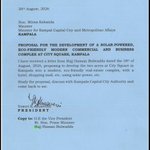
So, on the strength of the vague letter from the President, Kampala City Square is now to be handed over to a “businessman” for yet another concrete structure in the heart of the capital?
Why do we despise our own country so much? How can this possibly be justified?
When I saw the President’s letter in September directing the Minister to “study the proposal”, I feared the outcome was already predictable: the “businessman” would somehow assist the relevant stakeholders in “studying” his own proposal, and the President would eventually receive his desired positive feedback.
Some national assets must be untouchable. Kampala City Square and the Railway Grounds should be permanently protected public spaces, not commercial opportunities waiting for the next well-connected investor.
How, in 2026, does Kampala still lack an enforceable urban plan capable of stopping such a selfish endeavours? We remember nothing, preserve nothing and plan for nothing. We simply accept anything, provided the right pockets are lined with the right currencies.


This is a good write-up, but it misses the central issue. The problem is not a slow or gradual decline in electricity supply after the transition. The system appears to have suffered an abrupt and dramatic deterioration. It is as though UMEME departed with more than just its management mandate, leaving with vital equipment, technical expertise, and experienced personnel whose absence is now being felt across the network.

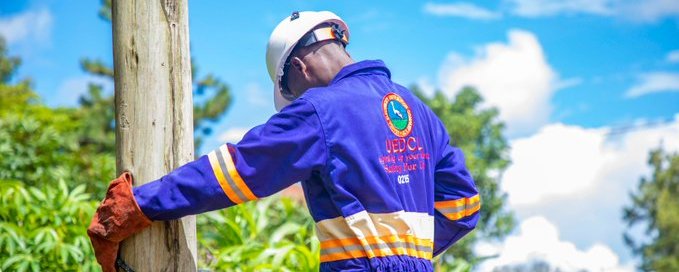
Why does the power keep going off, and what is @UEDCLTD doing about it?
Read on to understand the challenges behind frequent outages and the interventions underway to strengthen the electricity distribution network.
From the highest offices to the lowest levels of administration, across all three arms of government and even the Fourth Estate, Uganda is afflicted by a cancer called corruption. That is the fundamental problem. The greatest casualty of this disease has not merely been public resources but public trust.
For nearly four decades, confidence in government institutions and those who wield power has been steadily eroded. Today, many Ugandans instinctively distrust government interventions, regardless of how well-intentioned they may be. Once trust is lost, facts become irrelevant, motives are questioned, and every proposal is viewed through a lens of suspicion.
I witnessed this reality firsthand during the SGS controversy. Having been in the middle of that storm, I can confidently state that SGS was as serious and credible an investor as this country was ever likely to attract. Uganda was fortunate that it was SGS that chose to terminate the contract and was prepared to liquidate its assets. Had circumstances been different, the consequences for the country could have been far more severe (Trillions of Shillings).
This crisis of trust does not end with public perception. It also shapes political behaviour. Many Members of Parliament quickly join public opposition to government initiatives, not necessarily out of a commitment to oversight, but often because they recognise the political and personal opportunities that arise when public confidence in government is already weak.
Equally troubling is the inability of some leaders, particularly Ministers, to articulate and defend complex or innovative projects before Cabinet, Parliament, or the public. Traditional projects such as roads, hospitals, and schools require little explanation because their benefits are self-evident. Novel technological or institutional reforms are different. They demand competent leadership capable of explaining their purpose, costs, risks, and benefits in a convincing and transparent manner. When that leadership is absent, suspicion fills the vacuum.
This situation is well explained by Stephen R. Covey's concept of the "Emotional Bank Account" in The 7 Habits of Highly Effective People. Covey argues that trust is built through consistent deposits and destroyed through repeated withdrawals. Governments, like individuals, must make continual deposits into the public's emotional bank account through integrity, honesty, transparency, accountability, loyalty, and the fulfilment of commitments. If withdrawals far exceed deposits over an extended period, the account becomes overdrawn. At that point, even sincere actions are met with doubt and resistance.
That is precisely where Uganda finds itself today. The public's emotional bank account with many institutions of government has been drawn down over decades. Until trust is restored through consistent actions rather than rhetoric, even the most well-conceived government initiatives will continue to face scepticism, resistance, and controversy.
The challenge is no longer simply the quality of government projects. The challenge is that the reservoir of public trust has been depleted. Without trust, every policy becomes a battle, every reform becomes controversial, and every intervention is presumed guilty before it is understood.


These clips regarding Joint Stock Company Global Security Contract are damning.
1, An Assistant Commissioner for Finance and Planning in the Office of the President admitted they are relied on the "appetite" of new motor vehicle buyers to shell out UGX 714K for these controversial "Digital Plates," while banking on penalizing motorists with heavy traffic fines to finance a security. What do economists have to say.
2. Then JSGS conducted its own feasibility study and arrived at a project cost of USD 127 million. Yet, somehow, the PMT awarded them USD 257 million, more than double their own estimate. That glaring discrepancy raises serious questions. Something about this does not add up, and it smells like a rotten rat.
3.The Chairman of the PMT was openly trying to set a trap for the Chief Mechanical Engineer (CME) who was only in the room because he was acting Permanent Secretary. The CME has had zero involvement in this project. None. Hence the confusion and endless questions.
Yet his office / team is, without question, the most technically competent unit in government when it comes to motor vehicles. At the end of this clumsy entrapment attempt, he calmly dismantled the whole thing by citing a project that actually sits under the very person who tried to trap him.
The President’s letter (posted by @TonyNatif) made his preference clear: the project must be under the Ministry of Security. Whether that was genuine policy direction or someone with ulterior motives pushing for a “security umbrella,” the reality remains that a large part of what must be done is technical, not administrative.
All government-owned mechanical engineering equipment, including the entire motor vehicle fleet, falls under the Office of the Chief Mechanical Engineer. They specify and approve vehicle standards for every MDA. They process registrations. They maintain the central database. They inspect vehicles before boarding off. They manage the fleet from acquisition to disposal. That is their job. That is their mandate. That is their expertise. That is why they should be leading implementation of this project.
Speaking of motor vehicles, why is motor vehicle registration and inspection overseen by a department that can be headed by virtually any professional: given that previous heads have included an economist, an engineer, and an acting head with a background in social science?
Following the recent parliamentary discussions on the Digital Number Plates saga, it felt as though local tech talent was being completely overlooked. Uganda has a thriving community of skilled software developers capable of building robust solutions, you just need to do a better job of showcasing and marketing your expertise. You need to compel the government to reduce paperwork. If you have some kind of association.

Let’s settle this one real quick! 😂🔥
Name: Kaitesi
🎓 Bachelor’s Degree: Makerere University — Information Technology
🎓 Master’s Degree: Kansas State University (K-State) — Computer Science
💻 Job Title: Software Developer
🏢 Company: Delta
Now, let’s hear it! 👀
Which university produces more employable graduates:🥊🔥
Let the debate begin! 😂
You are the Traffic Police spokesperson, yet you casually post a photo of an overloaded motorcycle with a laughing emoji. To the ordinary citizen, what exactly is the lesson here? That road safety violations are amusing? The custodians of road safety enforcement should not laugh at such conduct because it obviously endangers lives. You undermine every road safety message they claim to champion.

